Nails

Best Cuticle Removers of 2026

Few beauty tools punish a bad choice as fast as a cuticle remover. A dull jaw grabs and tears where a sharp one bites clean, and a softener left on too long leaves the skin around your nails stinging for days. What you actually want is unglamorous: dead tissue gone, no sting, no ragged edges, and a tool that still cuts properly months from now instead of rusting in a drawer. Get that right and your hands look finished — tidy cuticles, no hangnails, and one less standing salon appointment.

There are really two ways to do this job, a gel or cream that dissolves dead cuticle and a nipper that trims it, and most of us end up wanting both. My own rule, learned the hard way after one memorable slip, is to only ever cut what's already dead: soften first, push gently, then nip the dry bits. We spent four months working through 16 cuticle removers and trimmers, and the spread between the ones that made the process easy and the ones that made it worse was wider than I expected.

1

Sally Hansen Instant Cuticle Remover

Top Pick
Sally Hansen Instant Cuticle Remover

Weekly at-home upkeep

Our Score 9.2/10
Check Price

Worth Noting

  • Small 1-ounce bottle for weekly use
Size
1 oz
Working Time
15 seconds
Key Ingredients
Aloe and chamomile

Fifteen seconds is the whole claim, and it holds: you paint it around the nail, do the other hand while it works, then push the softened tissue back. What we noticed first is how little the product asks of you. No bowl of warm water, no soaking, no sitting still with your hands out of commission. That is why it's the one we recommend to most people.

The softening is what earns it. On thick, overgrown cuticles it turns tissue that would otherwise need trimming into something a pusher clears with light pressure, and the aloe and chamomile leave the nail edge comfortable rather than tight and dry. We worked one hand at a time and reapplied on the nails that needed a second pass; that habit is the difference between a tidy result and a patchy one. The short timing is also what makes it easy to learn from, since you can see the tissue go soft while you watch rather than guessing.

It softens, it doesn't lift, so pair it with a pusher and keep a nipper for the ragged tag that catches on a sweater. Keep it off broken skin and respect the clock rather than leaving it on longer for a stronger result. What keeps it at the top of this list is the margin for error: a product that works this fast is hard to get badly wrong.

Bottom line: The one we recommend to most people: fifteen seconds of work, no soaking, and cuticles soft enough that a pusher does the rest.

2

ProLinc Cuticle Eliminator

ProLinc Cuticle Eliminator

Thick, overgrown cuticles

Our Score 9.0/10
Check Price

Worth Noting

  • Stings on broken or raw skin
Size
4 fl oz
Cruelty-free
Yes
Working Time
45 seconds

If your cuticles are the thick, overgrown sort that a fifteen-second product only softens at the edges, ProLinc is the stronger dissolver here. It goes after the tissue rather than just loosening it, and it's the one treatment on this list that genuinely doesn't need a nipper afterward. Apply, wait under a minute, push back, done.

That extra strength is why it's our pick for anyone who has stopped trimming because nippers make them nervous, or whose cuticles thicken faster than a mild remover can keep up with. The formula is cruelty-free, the whole job takes less time than heating a bowl of water, and nothing about it is fussy: one drop per nail, one hand at a time, no scrubbing.

The four-ounce bottle is the other thing in its favor. At a drop per nail it covers months of weekly manicures rather than weeks, and the gel stays where you put it, so there's no chasing a bead of liquid down the side of your finger the way a thin formula makes you do. For thick cuticles on healthy skin, nothing else here dissolves this much this fast.

Bottom line: Buy it if your cuticles are genuinely thick: it dissolves more tissue than anything else here, as long as the skin around the nail is intact.

3

Blue Cross Cuticle Remover & Softener

Blue Cross Cuticle Remover & Softener

Salon-size refills

Our Score 9.0/10
Check Price

Worth Noting

  • Higher up-front cost than a small bottle
Size
32 oz
Formula
Extra-strength liquid
Key Ingredient
Lanolin

Blue Cross is practically water. Tip the bottle and it beads off a fingertip and runs down the side of the nail before you've reached the next finger, which is the one thing standing between this and an unqualified recommendation. Get past it and you have the best value here: a salon-size bottle that softens as thoroughly as the small ones, with lanolin that leaves the nail edge soft rather than stripped.

The fix costs nothing. Decant it into a small dropper bottle and the runniness stops mattering, because one drop lands exactly on the cuticle, nothing pools at the sidewall, and you stop pouring product down the drain. Refill the dropper from the big bottle and a 32-ounce supply makes sense even for one person, which is not true of the small bottles you replace every couple of months.

It works on feet as well as hands, where the cuticles are thicker and a remover earns its keep faster, and the lanolin does visible work on the dry skin around the nail. If you do manicures for other people, or you're tired of buying the same little bottle over and over, this is the one that ends the repeat purchase.

Bottom line: The value pick, and the one to buy if you do nails often, provided you decant it into a dropper before it runs off the nail.

4

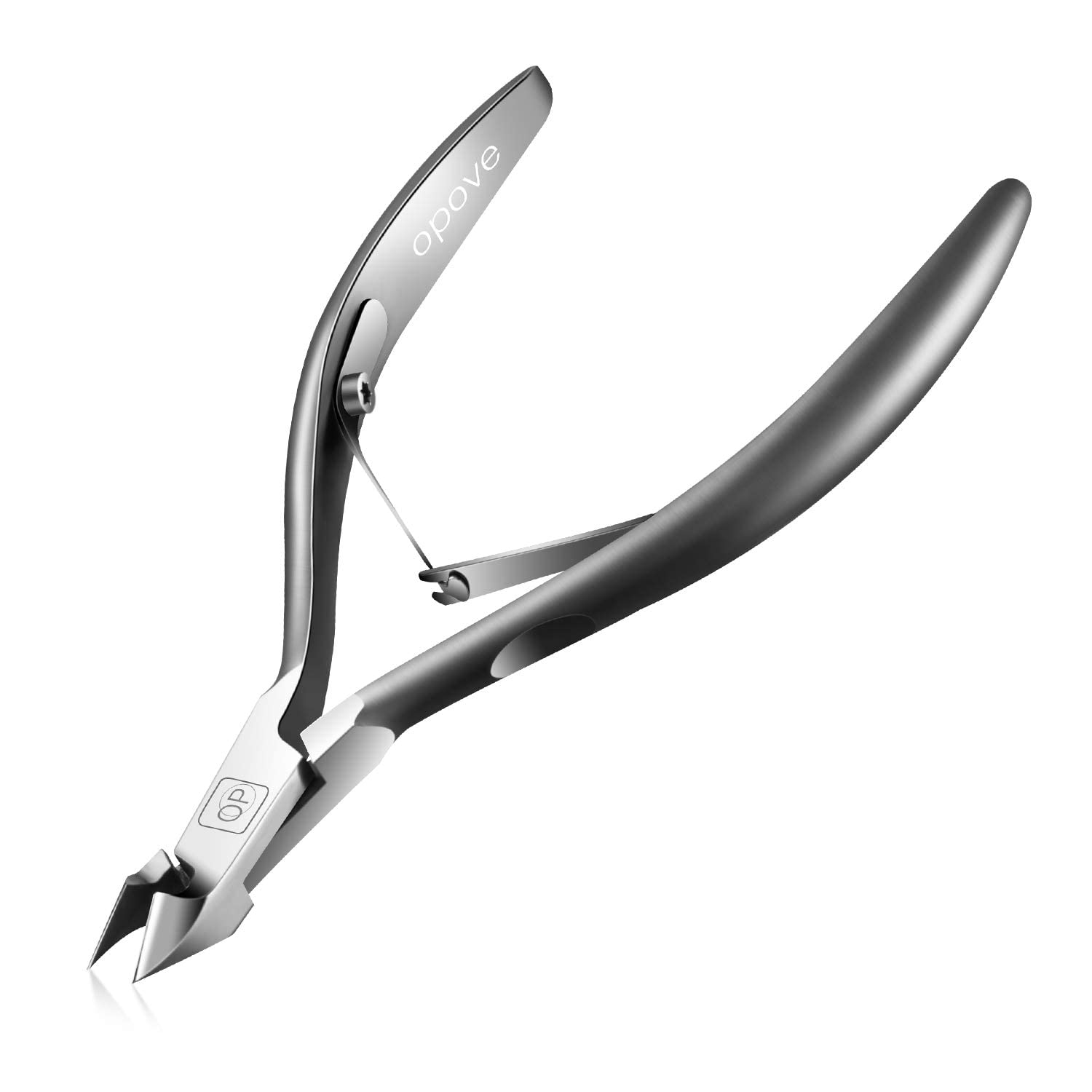
opove X7 Cuticle Trimmer

opove X7 Cuticle Trimmer

Precision trimming

Our Score 9.2/10
Check Price

Worth Noting

  • Handle is large for smaller hands
Jaw Size
3/4 jaw
Material
Surgical-grade stainless steel
Warranty
Lifetime replacement

The opove X7 is sharper than most people need, and that is rather the point of it. A three-quarter jaw that has been hand-filed and polished takes a cuticle off in one clean pass instead of dragging at it, and the difference between that and a cheap pair is obvious the first time you close these jaws on softened tissue.

Everything around the blade is built for control: surgical-grade stainless steel, a protective coating that resists rust and friction, a textured grip that works in either hand, and enough jaw to reach the sides of the nail without tilting your wrist. It's the most precise cutter here, and the one where a mistake shows.

That's the trade. This is a nipper for someone who already trims every couple of weeks and wants the tool to stop being the limiting factor. If you're learning, the quarter-inch jaw further down is the safer teacher, because a blade this sharp punishes a shaky angle. Springs and hinges are what eventually fail on any nipper, and opove covers this one with a lifetime replacement, which is a good part of what the price buys.

Bottom line: A serious nipper for someone who already trims regularly; the best edge here, and the price buys a lifetime replacement when the spring goes.

5

GREEN ESTETICA Cuticle Trimmer

GREEN ESTETICA Cuticle Trimmer

Budget first nipper

Our Score 9.2/10
Check Price

Worth Noting

  • Edge quality varies from pair to pair
Material
Surgical-grade stainless steel
Blade Edge
Curved eagle mouth
Blade Length
0.25 inches

Plenty of nippers cost several times what this one does; the useful question is what the cheapest pair here gets you. In this case: surgical-grade stainless jaws with a curved eagle-mouth edge, a double spring and a metal pusher in the box.

The quarter-inch jaw is the part that earns the recommendation. Small bites let you work along the nail wall and stop before you've taken too much, the double spring keeps the squeeze light enough to repeat across ten fingers without cramping, and the grip doesn't slip when your fingers are damp. Close to the expensive nippers on everything short of heavy tissue, which is why it's the budget pick here.

Where it gives ground is the heaviest work: this is a fine trimmer for cuticles and hangnails, not the tool for thick callus at the edge of a big toe, and the small jaw takes longer on a full set than a three-quarter will. For weekly upkeep on ten fingers, neither matters. We hand this to a first-timer without a lecture, which is more than we can say for the sharper nippers here.

Bottom line: The pair we hand a beginner: small jaw, light spring, and a cut that holds up well past what it costs.

6

FERYES Cuticle Cutters

FERYES Cuticle Cutters

Hangnails and corners

Our Score 9.4/10
Check Price

Worth Noting

Jaw Size
1/2 jaw
Material
4R13 stainless steel
Warranty
Lifetime replacement

A half jaw is the detail tool of this group. The tip is narrow enough to slide along the nail wall and take a hangnail at its base without pulling the skin around it, which is the whole job on fingers that have been picked at, and on toes where the corner curls under.

FERYES builds it from 4R13 stainless steel with a blackened coating, a double spring and a widened handle, and ships it in a tin. That last part matters more than it sounds, because a nipper loose in a drawer loses its edge on everything else in there. The cut is crisp rather than crushing, and the squeeze is smooth enough that you're steering with your fingertips instead of fighting the spring.

It sits just behind the opove on raw precision and ahead of it on control, which makes it the better choice for anyone who trims nervously or has small nails to work around. The widened handle suits a medium-to-large hand, and smaller hands may find it bulky. The centre screw is the one thing to watch: it can stiffen between uses, and a drop of oil at the pivot brings the action back.

Bottom line: The most controllable nipper here, which makes it the one for hangnails, nervous hands and small nails to work around.

7

LePinko Cuticle Trimmer 4-Pack

LePinko Cuticle Trimmer 4-Pack

Nail techs

Our Score 9.4/10
Check Price

Worth Noting

  • Four nippers is more than one person needs
Jaw
5mm jaw in 20 degree design
Length
3.94 inches
Pack Count
4

Four nippers in one box is an odd thing to sell a household and an obvious thing to sell a working tech. LePinko's pack is aimed at the second group, or at a family that keeps losing them, and the quantity is the reason it's here rather than any trick the tool performs.

The nipper itself is a classic shape: 5mm jaw, a 20-degree blade design, a double spring and a 3.94-inch body that fits a normal hand. The jaws close along a straight line, so a trim comes out squared off rather than curved, which suits the sides of the nail and the little dry tags that show up after gel removal.

The spring is light, and in a pack like this that matters, because a tool you'll use across a whole set of nails shouldn't tire your thumb by the eighth finger. They wipe clean without fuss, the steel takes sanitizing, and nothing about the shape is proprietary, so replacing one later is uncomplicated.

The one thing to flag is the edge. A straight jaw squares off the trim rather than following the curve of the nail, so soft cuticles that grow in ribbons along the sides want the smaller quarter-inch jaw above. For a tech kitting out a station, or two people splitting a pack, it's a straightforward buy.

Bottom line: Worth it for techs and shared households; one person is better served by a single good nipper.

8

YINYIN Cuticle Trimmer Set

YINYIN Cuticle Trimmer Set

One-box starter set

Our Score 9.2/10
Check Price

Worth Noting

  • Trimmer edge and spring vary from set to set
Spring
Adjustable
Includes
Trimmer, pusher and cutter
Material
Polished stainless steel

The YINYIN box is what we hand to someone who has never bought a nail tool: a trimmer, a pusher and a cutter, boxed, for about as little as anything on this list. Bought separately the three cost more and take longer to assemble, which is most of the argument.

The pusher is the surprise. It's wide, flat and firm enough that it doesn't flex when you lean into it, and the non-slip handle means you can push back a whole hand without readjusting your grip. On softened cuticles, after a remover, it does as much of the visible work as the nipper does.

The trimmer is the variable one. The steel is fine and the tension is adjustable, but the jaws don't open far past their resting angle, so cleaning between them takes a brush rather than a rinse.

So buy it for the pusher and the box, and treat the trimmer as the spare it may turn out to be. For a first kit, or a second set to leave at a partner's place, that's a fair trade. If you already know you'll be trimming every week, put the money into the GREEN ESTETICA and keep this one for the pusher.

Bottom line: Treat this as a starter box: the pusher alone justifies it, and the trimmer is the part that varies.

How We Tested Cuticle Removers and Nippers

We started with the shelf rather than a lab bench: the best-selling softeners and trimmers across major retailers, plus the tools our testers already owned and kept reaching for. From about 60 candidates we filtered on jaw size and steel, ingredient lists and whether anything soothing sat behind the active, and price, landing on 16 that covered every format. Three of us used them for four months on nails ranging from strong to peeling and ridged.

Most of the testing happened on Sunday nights at the bathroom counter, right after a shower when cuticles are softest. With the gels and creams we timed how long each actually took to loosen skin, since the gap between two minutes and five is the gap between a manicure and a chemical burn, then pushed, nipped, and checked the surrounding skin for redness the next morning. Consistency mattered here as much as strength; a few separated in the tube or dried to a film before we finished one hand.

For the nippers, we watched the bite. We snipped the edge of a latex glove to see whether the jaw closed cleanly or chewed the material, then moved to real hangnails and dead cuticle, noting whether the blade grabbed skin or slid off it and whether the spring snapped back after every squeeze. Each pair lived loose in a drawer between sessions and got wiped down but never babied, which is how we caught the ones that rusted, drifted out of alignment, or went dull by month three. The tools that held their edge were also the ones that felt steadiest in hand, and that combination is what earned a spot on the list.

How to Choose a Cuticle Remover

Dissolving and trimming are different jobs

Dissolving removers soften dead tissue so a pusher can wipe it off the nail plate; nippers cut the pieces that stand up. Neither replaces the other, and neither is optional if you want a clean finish. Start with a liquid if your cuticles are overgrown or you have never done this before, because softening first makes every later step, including trimming, safer and more accurate.

A trimmer used on dry, unsoftened cuticles drags at the skin and takes live tissue with it. Most people end up owning both, and the liquid gets used far more often than the nipper does.

How the liquid sits on the nail matters as much as strength

Strength is easy to advertise and hard to use if the formula won't stay put. Thin, watery removers such as Blue Cross bead off the nail and run to the fingertip before they have done anything, while thicker formulas sit where you place them. Neither is a defect in performance; they need different handling.

If you buy a thin one, decant it into a dropper bottle so you can place single drops, and work one hand at a time. Then respect the stated time, fifteen seconds for Sally Hansen and under a minute for ProLinc. Leaving either on longer does not give you a stronger result.

Match the jaw to the work

Jaw size changes what a nipper can reach. A quarter-inch jaw like the GREEN ESTETICA takes small bites and gets into the corners beside the nail wall; a half jaw like the FERYES is the hangnail tool; a three-quarter jaw like the opove X7 removes more per squeeze but demands a steadier hand and a clearer view.

Bigger isn't better, it just moves more tissue per bite, which is exactly what you don't want while you're learning. Start small and stay there until the shape of your own cuticles is familiar.

Springs, edges and what actually wears out

A nipper fails at two points: the edge and the spring. Double springs give a lighter, smoother squeeze and are worth having if you trim a whole set at once, and coatings slow rust and friction. Cheap tools aren't automatically worse cutters, but the sharpening varies pair to pair.

Check the jaws before the first use: close them and look for a clean meeting line with no gap. A pair that gaps will pull and tear instead of cutting, and that is a return rather than a technique problem. Replacement coverage, like the lifetime terms from opove and FERYES, is the other thing your money buys.

Sensitive skin and what to do afterward

Alkaline removers sting. On intact skin that is nothing; on a nick, a picked cuticle or a torn hangnail it is sharp enough to make you reconsider the whole idea, so clear those spots first and apply around them. Don't leave a remover on past its stated time to chase a stronger result, and don't cut tissue that hasn't been softened.

Once the remover is rinsed away, a rich cream or oil is the right follow-up. Skin that has just been stripped of a layer wants conditioning, not another round of work.

Frequently Asked Questions

Final Verdict

The default is Sally Hansen. Fifteen seconds, no soaking, and a cuticle soft enough that a pusher finishes the job: that's the fastest route to tidy nails for most people, and the one we recommend without qualifications.

Change the recommendation when your cuticles are genuinely thick. ProLinc dissolves more and skips the nipper entirely, provided the skin around the nail is intact. And if you would rather cut than dissolve, the opove X7 has the sharpest edge here, for practiced hands only. Beginners should start with the GREEN ESTETICA's small jaw and work up to it.