Makeup

Best Contour Kits for Beginners of 2026

Contouring has a reputation problem: beginners picture a hard brown stripe down each cheek, blended by lunchtime into something gray and faintly dirty. The reality is quieter — a good contour is just shadow placed where your face already dips, and the right kit makes that placement close to foolproof. You need shades that sit near your own undertone, a texture that moves under your fingers before it sets, and enough range that one pan isn't doing all the work.

I learned that the hard way with a bronzer two shades too warm, which left me looking sunburned rather than sculpted for an entire semester. Since then my team and I have spent four months cycling 14 kits — cream sticks, pressed powders, six-pan palettes — through ordinary mornings: school drop-off, office days, one sticky outdoor wedding. Color selection surprised me most; a palette with one perfect shade and three you'll never touch is worse value than a smaller one you use down to the pan. The picks below are the ones I'd put in a first-timer's hands.

1

e.l.f. Contour Palette

Top Pick
e.l.f. Contour Palette

First-time contouring

Our Score 9.2/10
Check Price

Worth Noting

  • Light/Medium variant leaves deep skin out
  • Shades lean warm on cool undertones
Size
0.56 oz
Extras
Built-in mirror
Shades
4
Formula
Pressed powder

Four pressed powders and a lid mirror, and nothing in the pan is strong enough to ruin a first attempt. That combination is what makes this our default first kit. Two deeper shades shape the cheekbones, jawline and the sides of the nose; the two lighter ones go down the center of the face and along the brow bone. It's the most forgiving layout here, and forgiving is the whole job at this stage.

We noticed the difference on the second pass. These powders build rather than dump color in one swipe, so you can place a little, look, and add more — which is how placement actually gets learned. They do kick up a fine dust in the pan, so tap the brush off before it goes near your cheek; that one habit keeps the finish clean and stops the palette looking battered after a month of use.

It closes flat, and the mirror inside is big enough to work from without propping up a second one. For anyone still deciding whether they even like a sculpted face, this is a sensible amount of money to risk — a fraction of what the Smashbox kit costs for the same basic three-step layout. Creams blend faster; powder forgives more.

Bottom line: We recommend it as the first contour kit for most beginners: four buildable powders, a mirror, and a light-medium range that doesn't demand a steady hand.

2

Black Radiance Creme Contour Palette

Black Radiance Creme Contour Palette

Medium-to-deep skin

Our Score 9.0/10
Check Price

Worth Noting

  • Range stops at medium-to-dark
Size
0.26 oz
Formula
Cream
Guidance
How-to guide on back
Shade Range
Medium to Dark

The first swipe tells you what kind of kit this is. The cream glides instead of dragging, a small amount covers a cheekbone, and pressing harder simply means more blending later. It's a genuinely pigmented formula, so the correct dose is roughly half of what feels natural the first time you use it.

What we appreciate most is how the shades are pitched. On medium-to-deep skin they read as warm, bold shadow rather than grey smudges, and the highlight leaves a soft sheen instead of a chalky stripe across the cheekbone. Black Radiance prints a short guide on the back of the palette, which is more direction than most kits at this price bother to give — and for a beginner, direction is half the battle.

Cream means one step people skip: dust translucent powder over the top or it will migrate by mid-afternoon. The finish is dewy, so anyone who prefers a matte base will want to set it more heavily. Where it beats the Aesthetica creams is straight-from-the-pan softness — no warming between the fingers required before it moves.

Bottom line: We point anyone with medium-to-deep skin to this one: pigmented cream shades that blend with fingertips, a printed guide, and a dewy finish that reads like skin.

3

Aesthetica Cream Contour Kit

Aesthetica Cream Contour Kit

Learning placement

Our Score 8.6/10
Check Price

Worth Noting

  • Lightest highlight fades fastest
  • Costs more than the drugstore creams here
Pans
Removable, refillable
Shades
6
Formula
Cream
Guidance
Face-shape maps and instructions

The face-shape maps are the reason this kit exists. If you've watched the tutorials and still aren't sure whether the shade goes above or below the cheekbone, the printed diagrams answer that before you touch your face. Nothing else in this group teaches placement so directly, and that's worth more to a beginner than an extra shade of anything.

We think it earns its mid-range price on the extras as much as the formula. The pans lift out and can be refilled, which is unusual at this level and means one empty shade doesn't retire the whole palette. In use the creams blend without lines or caking, and the finish stays on the natural side of heavy.

The shades run warm, and on cool or very fair skin the deeper pans can pull orange — sheer them out with a damp sponge before deciding they're wrong for you. These are also the richest creams here, so if your skin is breakout-prone, patch test along the jaw first and keep the layers thin. One small annoyance: the lightest highlight fades long before the contour pans do.

Bottom line: We reach for it when someone wants to be taught: six blendable creams, removable pans, and face-shape maps that take the guesswork out of placement.

4

Smashbox Cali Contour Palette

Smashbox Cali Contour Palette

All-in-one face

Our Score 9.2/10
Check Price

Worth Noting

  • Range suits fair-to-medium skin only
Shades
6
Formula
Pressed powder
Includes
Blush, bronzer, two highlighters
Dimensions
0.63 x 5.04 x 4.02 inches

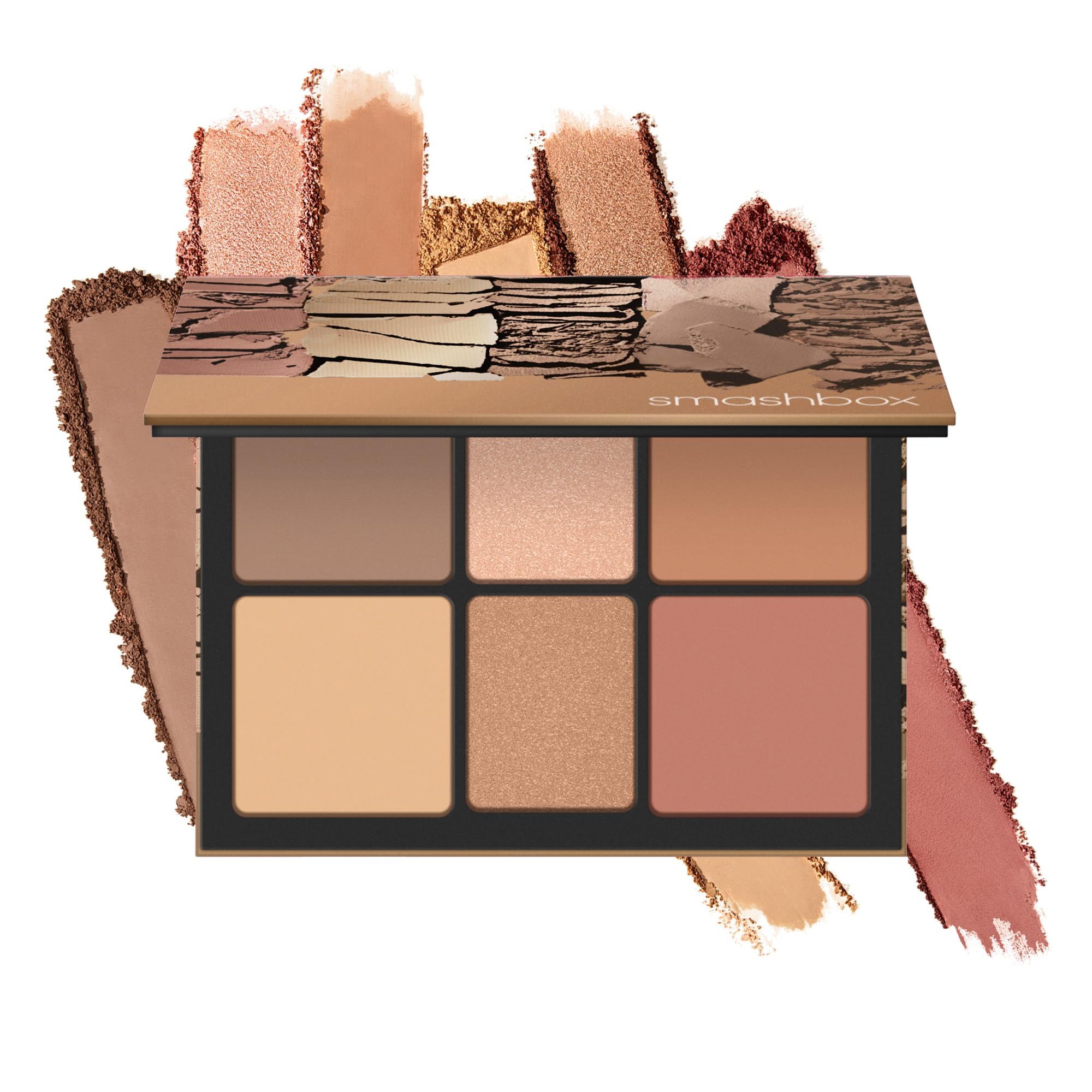
The most expensive kit here is also the only one that gives you a blush. Six powders — three matte contour and bronzer shades, two pearlescent highlighters and a blush — cover the whole face in a single case, which is why it sits at the top of the price range in this group.

The formula is what keeps us coming back. The pans aren't overly soft, so there's minimal kickback and waste, and the contour shades are more taupe than red — the difference between a shadow and a smudge of terracotta if warm bronzers tend to turn on you. The highlighters build from a sheen to something more obvious without going frosty.

It's also the pick for anyone who already knows they'll use blush. The other kits here give you contour and highlight only, so a separate blush is another purchase and another thing rolling around in the bag. Here it's the pan next to the bronzer, in tones that were chosen to sit together.

The trade-off is range and cost. Six shades aimed at fair-to-medium skin leave deeper complexions better served elsewhere on this list, and at this price it only makes sense if you'll use most of the pans. If the contour shade is all you're after, the e.l.f. compact does that job for a lot less.

Bottom line: We think it's worth the splurge if you want contour, bronzer, blush and two highlighters in one compact — refined shades, little fallout, and it travels well.

5

NYX Wonder Stick

NYX Wonder Stick

On-the-go touch-ups

Our Score 8.4/10
Check Price

Worth Noting

  • Universal Light suits fair-to-medium skin
  • Highlight end adds little visible glow
Shade
Universal Light
Format
Dual-ended stick
Formula
Cream

Two ends, one stick, and the least fuss of anything here: swipe the deeper end along the cheekbone and jaw, swipe the lighter end down the nose and over the brow bone, blend, done. There's no brush to wash and no palette to open, which is the point of the format.

It goes on creamy and blends out under liquid foundation without streaking, which matters more than it sounds — plenty of cream contours sit on top of a base rather than melting into it, and this one behaves. Oily skin is the exception. The formula is rich, and by afternoon it will slide unless you set the cheekbones with a light powder.

What tips it for us is the format rather than the formula. A stick is what actually gets used on a busy morning — no counter space, no tools, no decisions — and this one is small enough to live in a bag without being noticed. It's the version of contouring that fits into a real routine.

Bottom line: The stick we hand to anyone who wants definition in a hurry: creamy, blendable and bag-sized, as long as your skin isn't very oily.

6

NYX 3 Steps to Sculpt

NYX 3 Steps to Sculpt

Longwear powder

Our Score 8.6/10
Check Price

Worth Noting

  • The Light palette runs deeper than expected
Shades
3
Formula
Pressed powder
Dimensions
0.67 x 3.82 x 3.82 inches
Shade Range
Light

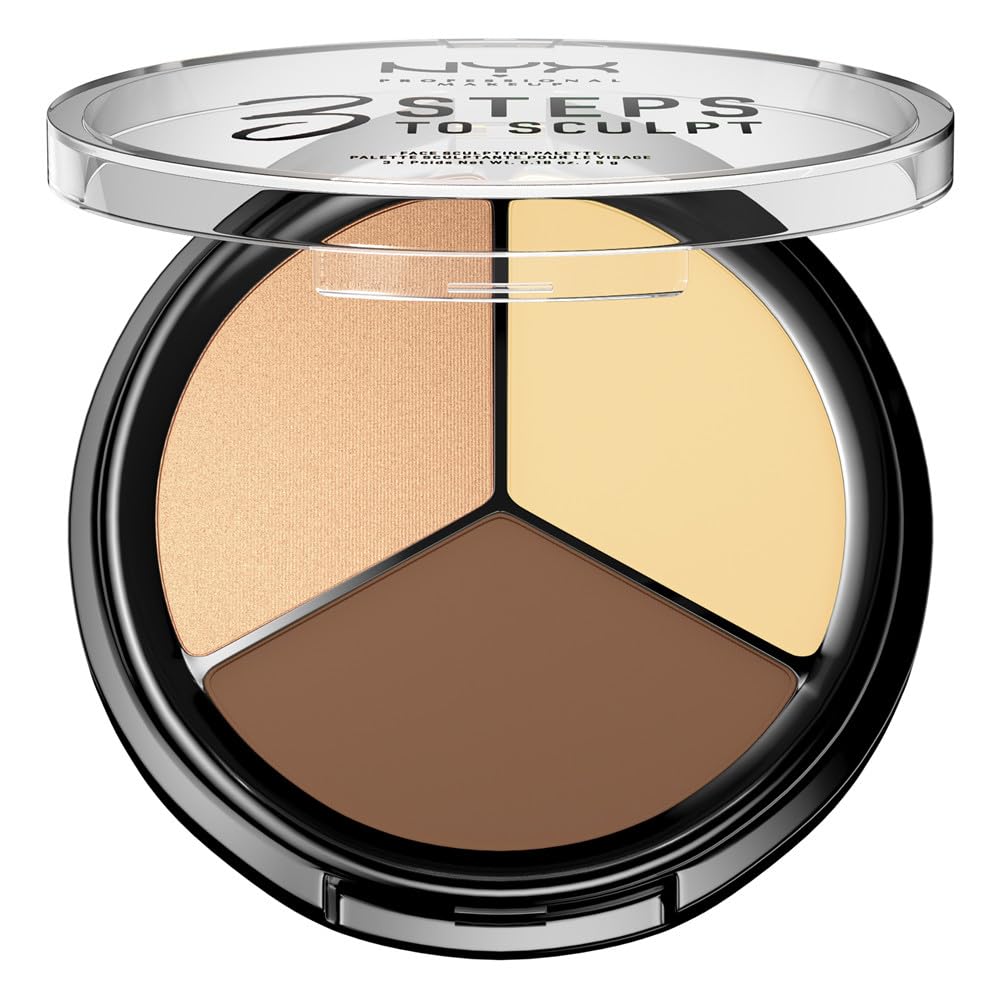
The darkest pan in this trio is not a beginner's shade. It is strong, it needs a light hand, and it needs real blending before it reads as a shadow rather than a stripe down the cheek. Get that right and the payoff is a genuinely sculpted face at a price that leaves room to make mistakes.

The other two pans do the light work — one to brighten under the eye and down the nose, one with a soft shimmer for the top of the cheekbone. That shimmer is satin rather than glitter, which is why the palette sits better in daylight than under a night-out makeup look.

Wear is the strong point. We found the powder grips foundation and stays through a long day without caking, and unlike a cream it won't slide in heat. It's a workhorse trio rather than a treat, and a sensible next step once you've decided powder is your formula.

Bottom line: We like it for anyone who wants three powder shades that wear hard and cost little — but treat the dark pan gently until you've practiced.

7

wet n wild MegaGlo Contour Stick

wet n wild MegaGlo Contour Stick

Trying cream cheaply

Our Score 8.6/10
Check Price

Worth Noting

  • Light Medium shade only
  • Ends can snap off in the tube
Shade
Light Medium
Format
Dual-ended stick
Formula
Cream

It's the size and shape of a lipstick, and it's the least expensive way into cream contouring here. The wet n wild stick is what we hand someone who wants to try a sculpted cheek without buying a palette and a brush to go with it.

Both ends are creamy and the deeper one blends out with fingers or a damp sponge, over bare skin or over foundation. It sits at the sheer end of the scale — you get a soft shadow rather than a carved cheekbone, which for a first attempt is probably the safer result to aim for. Blend sparingly, though, because it keeps sheering out the longer you work it.

Where it earns its place is the touch-up case. The two ends cover the small fixes — a bit of shadow under the cheekbone before dinner, a touch of light down the nose — without unpacking a palette and a brush in a restroom. At this price we'd rather have it in the bag than not, and the shade range is the honest reason to look elsewhere if your skin is deeper than a medium tan.

Bottom line: We keep this one for trying cream contour on a budget: sheer, blendable and pocketable, though the shade and the stick itself are limited.

How We Tested Beginner Contour Kits

We started by gathering every contour palette and shaping stick we could find that claimed to suit a beginner, then filtered hard: out went kits with a single deep shade, anything that topped out at light and medium, and formulas that only held if you set them with a separate powder. From roughly 40 candidates we kept 14 and lived with each one for about four months, passing them among testers with fair, medium, and deep skin and with both cool and warm undertones.

Every kit got the same morning. Applied at 6:40 a.m. in a bathroom with one small window and a bulb that runs warm, half a face done with fingers and half with a damp sponge so we could feel how the product moved before it set. We swatched each shade along the jawline rather than the wrist, because a color that vanishes into your forearm can still pull gray on your face, and we kept track of which pans actually got touched — a six-shade palette where two shades never left the box lost points on value. We also opened and closed each compact daily to see whether the hinge or clasp gave out in a makeup bag.

Then we wore them out. Full workdays under office lighting, one outdoor wedding in 85-degree humidity, and a long Saturday of errands, checking at the four-hour mark for fading, patchiness, and the orange turn creams can take on oilier skin. We pressed a blotting sheet to each cheek at hour six and checked a white collar for transfer. Texture decided most of the close calls: creams grabbed pigment fast and forgave a heavy hand, while powders were easier to correct but settled into pores by mid-afternoon.

How to Choose a Beginner Contour Kit

Powder, cream, or stick

Powder is the most forgiving place to start. It builds slowly, you can see exactly where it landed, and a stray swipe brushes away. Cream and stick formulas melt into skin and look more like real shadow, but they set fast and reward a light hand: the Black Radiance cream glides without dragging, while the wet n wild and NYX sticks trade some control for speed. Oily skin and matte bases do better with powder; dry skin looks less tight with cream.

Whichever you choose, the finish depends on the step after. Cream needs a light dusting of translucent powder over the top or it will travel, and powder needs a base that has fully dried down or it grabs and patches.

Match the deepest pan, not the prettiest one

Contour is shadow, so the shade should sit one to two steps deeper than your foundation and lean cooler and greyer than a bronzer. The common mistake is judging a palette by its lightest or most photogenic swatch — look at the deepest pan and picture it along your jaw instead. If it's barely darker than your skin it won't sculpt anything, and if it's four shades deeper you'll spend the morning blending.

Undertone matters as much as depth. The Smashbox powders are the most taupe-leaning in this group, which is why they read as shadow; deeper complexions should start with the Black Radiance cream, whose shades are pitched for that range rather than adapted to it.

What's actually in the box

Three coordinated shades cover what a beginner needs: a contour, a highlight, and something in between. Past that you're buying blush and bronzer, which is worth it only if you'll use them — otherwise the extra pans are clutter you paid for. Instructions and diagrams are worth more than a fourth shade while you're learning, which is where the Aesthetica kit's face-shape maps and the Black Radiance guide on the back earn their place.

A mirror in the lid sounds trivial until you're doing your face somewhere without one. A compact that closes flat and fits in a bag gets used; a bulky palette stays in a drawer.

What you're paying for

Money buys finer pigment, sturdier packaging and a wider shade range — not the ability to learn. The cheapest kits here can absolutely produce a first contour, and the wet n wild stick is the least you can spend to find out whether cream even suits you. Spend more when you already know the shade you want and the compact will travel with you.

One practical caution: open the box the day it arrives. Pressed powders in thin compacts can turn up cracked, and that's a return rather than a formula problem.

Frequently Asked Questions

Final Verdict

Start with the e.l.f. Contour Palette. Four coordinated powders, a usable mirror and buildable pigment make it the least punishing place to learn, and it costs little enough that you aren't committing to a technique you might not keep. If your skin is medium-to-deep, switch to the Black Radiance cream — it's the kit here whose shades were built for that range rather than stretched to reach it.

And if you want the whole face in one compact and will genuinely use the blush, the Smashbox kit is the one to stretch for.