Hair Care

Best Bond Repair Treatments of 2026

Bond repair isn't conditioner wearing a fancier label. The treatments that genuinely work go after the disulfide links in your hair, the ones that bleach, daily flat-ironing, and even a tight ponytail snap apart, and temporarily reconnect them. That's also why one person's miracle product is another person's greasy regret: the format has to match how damaged your hair is and how much time you'll realistically give it in the shower. Get that pairing right and you're looking at far less snapping when you brush, calmer frizz on a muggy day, and hair that feels like hair again instead of straw.

I've been coloring mine since college, so I've been the target customer for these things for years. Over the past six months my team and I worked through 11 bond treatments, from four-minute leave-ins to masks that want a full half hour, and the spread surprised me — a couple left hair stiff and coated, a few did nothing I could see, and the best ones were obvious by the third wash. Here's the mistake first-timers make: more product is not more repair, and oversaturating is exactly how these end up greasy at the roots. The picks below earned their shelf space, in whatever bottle size suits your routine.

1

Olaplex No. 3PLUS Pre-Shampoo

Top Pick
Olaplex No. 3PLUS Pre-Shampoo

Serious damage repair

Our Score 9.2/10
Check Price

Worth Noting

  • 3.53 oz bottle goes fast on long hair
Size
3.53 oz
Format
Pre-shampoo treatment
Used With
No. 4 Bond Maintenance
Wait Time
As little as 3 min

Three times stronger after one use is the line on the front of the box, and the footnote is the part worth reading: Olaplex measures that result with the No. 4 Bond Maintenance shampoo and conditioner in the same wash. That does not make No. 3 a marketing exercise — the bond-building chemistry is the reason the brand exists — but it does mean you are buying one step of a routine rather than a single bottle that does everything.

We still make it the default pick, because nothing else here has as much behind it: a three-minute treatment worked into damp hair before you shampoo, and a consistent record of hair breaking less at the brush afterward. On highlighted hair the change is less about shine than about how much stays on the brush and in the shower drain.

It is a repair treatment, not a conditioner. Hair that is already porous and dry can feel a little brittle after it, so we follow with a hydrating mask or a richer conditioner on the ends rather than treating this as the moisturizing step. That one adjustment makes the difference between hair that feels stronger and hair that simply feels rough.

What we appreciate most is how little it disrupts. It goes on before the shampoo you were going to use anyway, so nothing in your wash day gets replaced, and the three-minute minimum is easy to hit while you are doing something else in the shower. The change builds across repeated washes rather than arriving in one.

Bottom line: We recommend No. 3 as the default for colored or heat-damaged hair: three minutes before shampoo, and less breakage is the change you will notice first.

2

L'Oréal EverPure Bond Repair+ Concentrate

L'Oréal EverPure Bond Repair+ Concentrate

Budget pre-shampoo

Our Score 9.2/10
Check Price

Worth Noting

  • Scent is strong in a small bathroom
Size
5.1 fl oz
Format
Pre-shampoo concentrate
Free From
Sulfates
Wait Time
5–10 minutes

If a pre-shampoo treatment appeals but you are not ready to spend salon money on one, this is where we start. It does the same job in the same slot of your routine — damp hair, five to ten minutes, rinse, then shampoo — and it is sulfate-free. We think it is the most sensible way to find out whether the extra step earns a place in your week before you commit to a pricier bottle.

The 5.1-ounce size is the practical argument: you can be generous with it, which is not true of every concentrate in this group. The bond and amino acid complex is aimed at colored, bleached, and heat-damaged hair, and shine is what stands out most — hair looks glossier after the wash, not just softer.

The wait is the trade-off. Five to ten minutes before you even lather up makes this a wash-day task rather than something you fit in at the sink. In exchange you get a formula gentle enough for hair that color has already dried out, and a bottle that does not make you ration every application.

Bottom line: We point budget-minded shoppers here first: it is the same pre-shampoo step as the famous bottles, at a price that makes trying the format easy.

3

Dove Bond Strength Serum Mask

Dove Bond Strength Serum Mask

Fast weekly mask

Our Score 9.2/10
Check Price

Worth Noting

  • Headline repair claim assumes the four-step system
Size
9.2 fl oz
Format
Rinse-out mask
Wait Time
1 minute
Key Complex
Peptide complex

One minute is the entire commitment. After shampoo and conditioner, work the mask from mid-length to ends, wait a minute, rinse. Nothing else here asks so little, and on a week when you are washing your hair at eleven at night, that is the difference between doing a treatment and going to bed.

Dove's own numbers carry an asterisk: the ten-signs-of-damage and three-years-of-visible-damage results are measured across the four-step Bond Strength system, not the mask alone. Read that as a reason to use the mask as the finisher of a routine rather than as a solo rescue.

What it does on its own is the everyday work — slip, softness, and enough moisture that combing wet hair stops being a fight. The peptide formula is light, so fine hair does not come out flat or coated, and the label allows daily use if your hair is going through a rough patch.

One minute, a big 9.2-ounce jar, and no weight is a combination that makes this the budget mask we recommend first. It will not transform bleach damage the way a dedicated bond treatment can, but as the weekly maintenance step for hair that is merely rough, it is the best value among the masks here.

Bottom line: Our favorite budget mask: one minute, a big jar, and light enough that fine hair does not go flat — maintenance rather than rescue.

4

Redken Acidic Bonding Leave-In

Redken Acidic Bonding Leave-In

Color-treated hair

Our Score 9.0/10
Check Price

Worth Noting

  • Premium price for a 5.61 oz bottle
Size
5.61 oz
Format
Leave-in cream
Key Ingredient
Citric acid
Heat Protection
450°F

Olaplex asks you to add a step; Redken's leave-in asks you to add nothing. It goes on damp hair after washing and stays there, which is why it is the one in our rotation on mornings with no slack in them.

The formula is citric acid plus a bonding care complex, aimed at color-treated hair, and it carries 450°F heat protection — enough to blow-dry or flat-iron over without a separate protectant. It also claims color-fade protection and a visible reduction in split ends. The qualification sits with very dry hair, where it can leave ends feeling a little taut, so we keep a richer conditioner in the routine for the last few inches.

We rate it the best leave-in of the group, and the protection is what earns that: hair that goes under a dryer every week gets repair and heat defense in one step instead of two, and the cream sinks in rather than sitting on top of the strand. If you air-dry and never touch a hot tool, that advantage largely disappears.

Bottom line: Our pick for anyone who heat-styles: repair and 450°F protection in one leave-in step, provided the premium bottle fits your budget.

5

Marc Anthony Repair Bond Spray

Marc Anthony Repair Bond Spray

Fine, thin hair

Our Score 8.8/10
Check Price

Worth Noting

  • Easy to over-apply and end up greasy
Format
Leave-in spray
Best For
Fine, thin hair
Key Oils
Rice bran, rosemary
Starting Dose
3 sprays

Three sprays is the dose Marc Anthony prints for thin, fine hair, and it is the most useful thing on the bottle. Mists like this are usually a guessing game; a printed starting point means you are not learning by trial. Three to six sprays, worked through with a comb, covers shoulder-length hair.

For fine hair, this is the leave-in we reach for. Rescuplex plus rice bran oil, rosemary oil, hydrolyzed quinoa, and vitamin C detangles without the weight a cream adds, and the difference shows on day two — hair still moves, and the ends are not stuck together.

It is also the least expensive leave-in in this group, and the bottle lasts because you are using sprays rather than palmfuls. Spraying into your hands first gives more control than misting straight at the head, especially around the hairline and at the crown.

Bottom line: The leave-in we hand to fine, thin hair: a printed three-spray dose, real detangling, and the smallest outlay of any leave-in here.

6

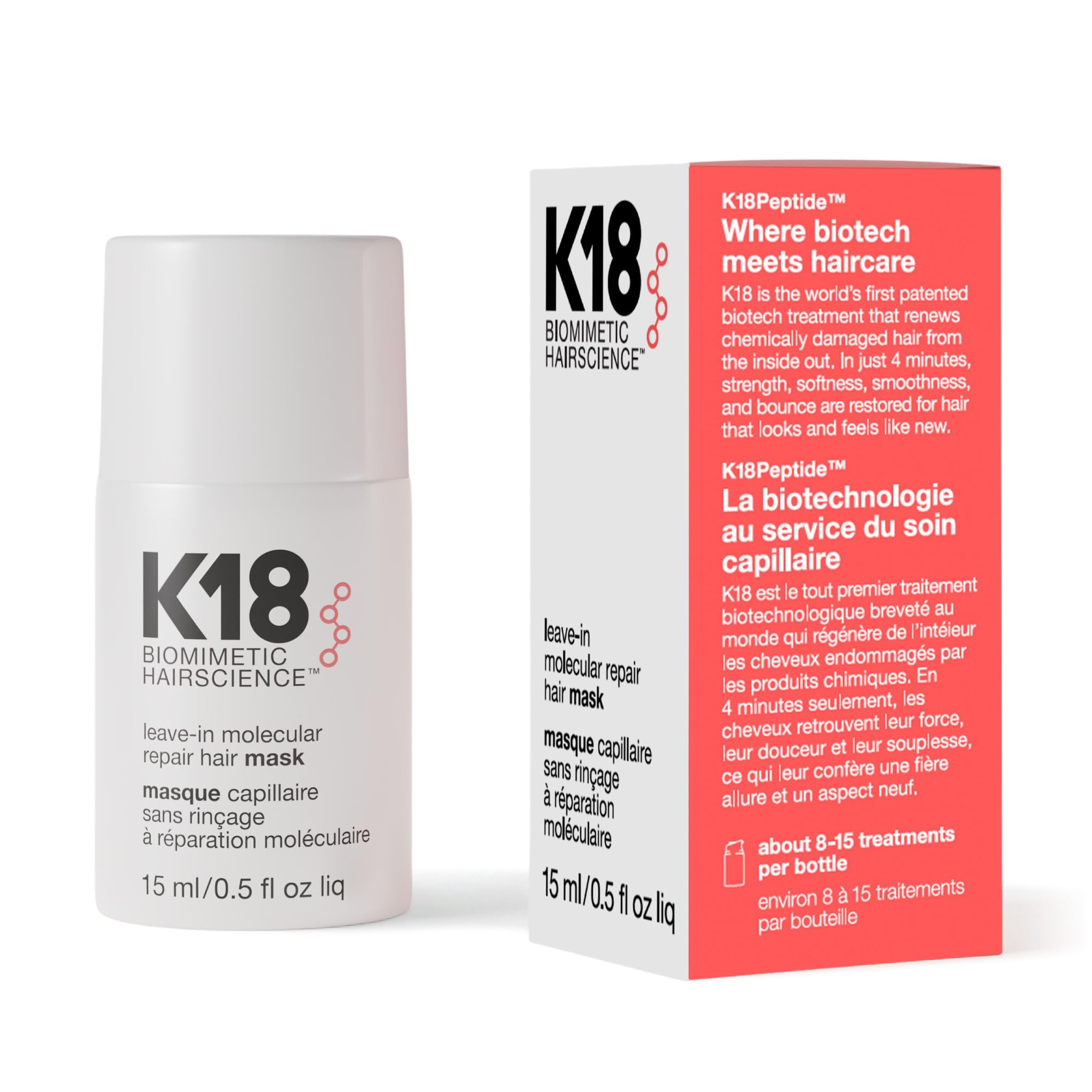
K18 Leave-In Molecular Repair Mask

K18 Leave-In Molecular Repair Mask

Bleach damage

Our Score 8.6/10
Check Price

Worth Noting

  • Can leave very dry hair feeling crisper
Size
0.53 oz
Rinse
Not required
Format
Leave-in mask
Wait Time
4 minutes

The tube is 0.53 ounces, and that number decides everything about whether K18 makes sense for you. What you are paying for is concentration rather than volume — one to three pumps on towel-dried hair — so it stretches further than the box suggests, though long hair will finish it quickly.

The method is what separates it from everything else here. Shampoo, skip conditioner entirely, work the peptide cream through, wait four minutes, and style without rinsing. No extra step before the shower and nothing to rinse out, which makes it the one we suggest to people who know they will not keep up with a mask.

The peptide works at the innermost layer of the hair rather than sitting on the cuticle, so the visible results lean toward shine, bounce, and less frizz rather than a soft, coated feel. That is a different kind of improvement from a mask, and it is why hair can look glossier without feeling especially conditioned.

We call it the splurge because it costs the most per use here and asks you to give up conditioner. For repeatedly bleached hair that needs repair without another shower step, that trade is worth making — it is the pick we hand to someone whose last mask is still sitting half-used in the cabinet.

Bottom line: Worth the splurge if bleach damage needs a four-minute, no-rinse fix and you will trade conditioner for it.

7

amika the kure Repair Mask

amika the kure Repair Mask

Dry, coarse hair

Our Score 9.2/10
Check Price

Worth Noting

  • 3.53 oz jar is small for a generous scoop
Size
3.53 oz
Format
Rinse-out mask
Key Benefit
Intense hydration

Every mask claims to strengthen; the kure is the one we hand to hair that feels rough, dry, and straw-like, because moisture is where it is strongest. It is a rinse-out mask for coarse, frizzy, or winter-dry hair, and it leaves that hair pliable rather than merely coated.

Softness is the headline. It is intensely hydrating and holds moisture past the wash, so the frizz that usually reappears at the crown by day two stays smooth, and detangling after the shower is a shorter job. Hair also looks glossier afterward without any styling product doing the work.

It suits hair that drinks moisture more than hair that snaps. If your damage shows up as brittleness and breakage rather than roughness, one of the bonding treatments above will do more for you; if it shows up as straw, this is the mask to reach for.

Bottom line: The mask we reach for when hair feels like straw rather than brittle: moisture first, and it holds past wash day.

8

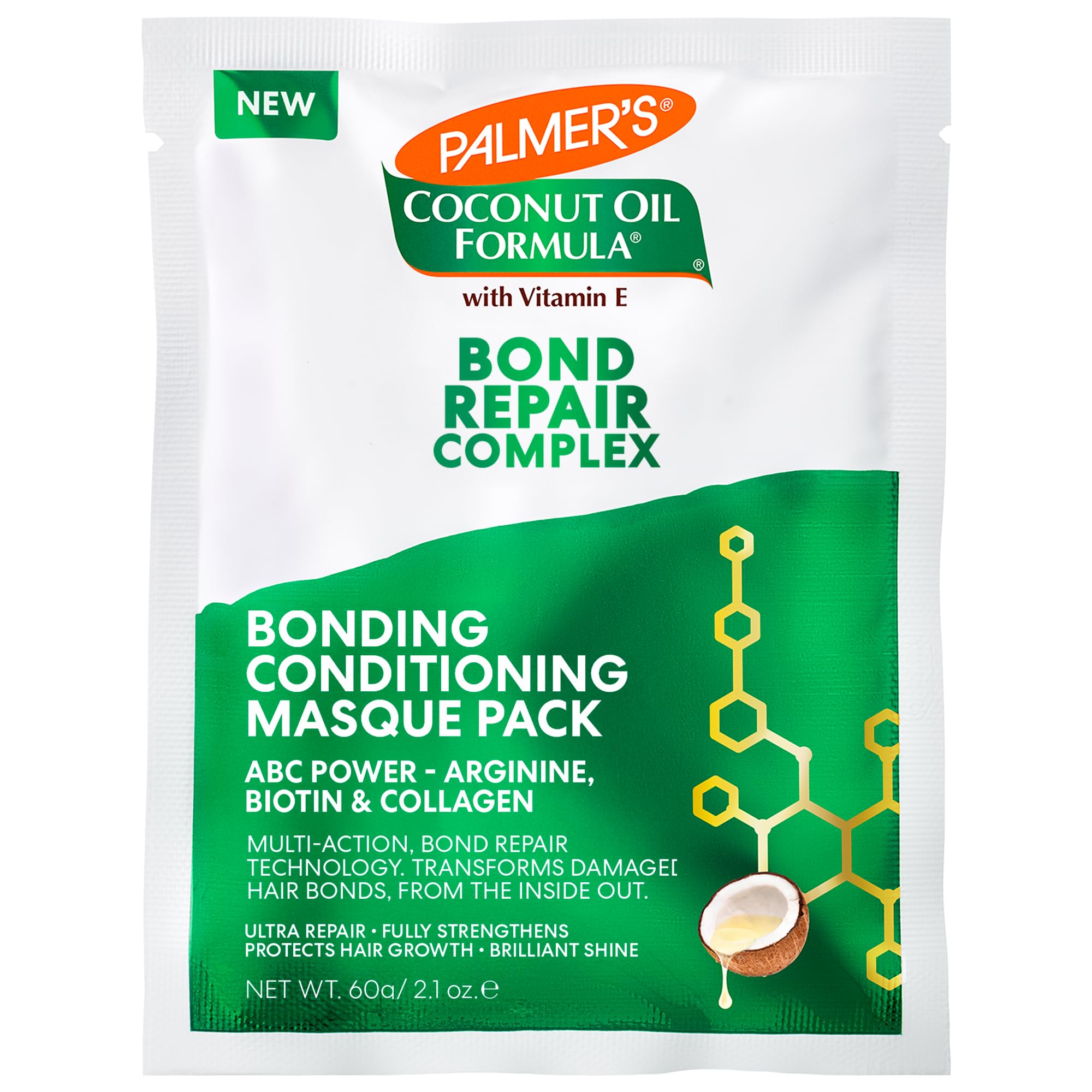
Palmer's Amino Bonding Hair Mask

Palmer's Amino Bonding Hair Mask

Travel and trial

Our Score 9.2/10
Check Price

Worth Noting

  • Small packet means frequent repurchasing
Size
2.1 oz
Format
Single packet
Heat Protection
450°F
Key Ingredients
Arginine, biotin, collagen

A single 2.1-ounce packet is an odd format for a hair mask until you think about where it goes: a gym bag, a carry-on, a hotel bathroom, or the hands of someone who wants to try a bonding treatment without committing to a whole jar. It is also the least expensive thing in this group by a wide margin, which makes the experiment an easy one to run.

There is more inside than the format suggests: coconut oil and vitamin E for conditioning, plus arginine, biotin, and collagen in what Palmer's calls its natural bonding technology, and heat protection to 450°F. On over-bleached hair it leaves strands soft without the heavy film that coconut-rich masks can leave behind.

We treat it as the sampler. Use it on a wash day when hair feels rough, and within one application you will know whether a bonding mask is worth buying in a bigger format — and it survives a carry-on in a way none of the tubs here do.

Bottom line: The lowest-risk way to try a bonding mask: one packet, one wash, and you will know whether to buy a jar.

How We Tested the Bond Repair Treatments

We started with ingredient lists rather than the front of the bottle. Anything whose only claim to bonding was a conditioning agent with a new name got cut, as did anything priced noticeably higher per ounce than the salon-standard versions. That left 11 treatments spanning three formats — pre-shampoo, rinse-out mask, and leave-in — in bottles from a travel-size 2 ounces to a 9-ounce tub, and we noted how easy each one would be to actually repurchase.

For six months, three of us used them on a three-wash-a-week schedule: one tester with platinum bleach, one who swims laps twice a week, and me, with years of color and a heat-tool habit. We timed how long each treatment needed to sit and whether that fit inside a normal shower, then combed wet hair with a wide-tooth comb and counted the strands left behind.

Mid-lengths and ends were checked for softness and for the tight, straw-like dryness that signals a formula has gone too far. On one wash we deliberately worked each product into the roots to see which turned greasy by day two. We let hair air-dry with no styling products during a humid stretch to judge frizz, smelled each one wet and again the next morning, and kept notes on whether we actually looked forward to reaching for it — which matters more than it should. Last, we tracked how many washes a bottle lasted, because a small bottle that works beats a tub that doesn't.

How to Choose a Bond Repair Treatment

Start With the Step You'll Actually Do

Bond treatments occupy three slots: before shampoo, in the shower instead of conditioner, and after the shower as a leave-in. A pre-shampoo treatment like Olaplex No. 3 or L'Oréal's concentrate is the most repair-focused version, but it happens before you have even lathered, which is exactly why some bottles sit unused in a cabinet. A rinse-out mask such as Dove's fits into the shower you were taking anyway. A leave-in like Redken's or K18 skips the rinse entirely.

Pick the slot first. The formula only matters after that, because a treatment you skip has no effect at all.

Match the Treatment to the Kind of Damage

Bond builders target the disulfide bonds broken by bleach, color, and heat. Moisturizing masks target how hair feels and behaves. The two overlap, but they are not the same purchase. If hair snaps, feels brittle, and breaks when wet, a bond-focused treatment earns its place. If it feels rough, tangles easily, and frizzes, a moisture-first mask like amika the kure will feel like faster progress.

One trap: hair that has had a lot of repair treatments can start to feel stiff rather than weak. That is the moment to add moisture, not to layer on another bonding step.

Read What the Headline Claim Assumes

Three times stronger after one use and three years of visible damage reversed both come with footnotes, and the footnotes usually say the result was measured with the brand's matching shampoo, conditioner, or full four-step system. That does not make the product dishonest — it tells you what you are actually buying.

If you want the result printed on the front of the box, buy the whole routine. If you want a treatment to drop into products you already like, judge it on how your hair behaves across the next few washes instead.

Compare Concentration, Not Just Size

A 0.53-ounce concentrate and a 9.2-ounce jar are not competing on the same terms. Concentrates like K18 are dosed in pumps and used sparingly; masks are scooped generously, and a big jar disappears faster than the number suggests. The useful question is how many treatments a package gives you, not how many ounces it holds.

If you are unsure whether bonding treatments suit your hair, start small. Palmer's single packet is the least expensive trial in this group and the easiest to take with you.

Watch the Finish on Your Hair Type

Fine hair has less tolerance for oils and creams, which is why the Marc Anthony spray earns its place for thin strands and why a rich mask can flatten hair that is otherwise healthy. Coarse or dry hair goes the other way: it can take, and often needs, the richness of a mask.

If you blow-dry or flat-iron regularly, check for a stated heat-protection temperature. Redken's leave-in and Palmer's mask both list 450°F.

Frequently Asked Questions

Final Verdict

Olaplex No. 3 is the one we buy first. It is a three-minute step before the shampoo you already use, it is aimed squarely at color and heat damage, and it has the most convincing record in this group of hair breaking less rather than merely feeling softer.

If you know you will not do a step before shampoo, take the Redken leave-in instead: repair plus 450°F heat protection in a product you never rinse out. For fine hair and a smaller outlay, the Marc Anthony spray does the same job in mist form.