Hair Care

Best Hair Loss Treatments of 2026

Almost everyone who starts shopping for a hair loss treatment has the same story: a little more hair in the shower drain, a part that looks wider in photographs, a ponytail that suddenly feels thinner than it did last spring. Nothing here will undo years of thinning by next month, and anything that promises that is selling you something. What a genuinely good treatment can do is slow the shedding, support follicles through their growth phase, and make the hair you already have look and feel denser — which is what most of us are actually after.

My team and I spent eight months working 12 treatments into real routines, and the differences showed up in ways I didn't expect. Hair grows roughly half an inch a month, so the calendar is the only honest test; a two-week trial tells you nothing beyond whether you like the smell. What I learned is that dose matters more than the ingredient list, that a greasy serum you skip is worse than a light one you use nightly, and that the supplement you'll actually swallow with breakfast beats the one with the prettier label. Here's what earned a permanent spot on the shelf.

1

Nioxin System 2

Top Pick
Nioxin System 2

Thinning natural hair

Our Score 9.2/10
Check Price

Worth Noting

  • Shampoo only; conditioner sold separately
  • Minty tingle may bother sensitive scalps
Size
10.1 oz
Format
Shampoo
Hair Type
Natural hair
Thinning Stage
Progressed thinning

The appeal of Nioxin System 2 is that it asks almost nothing new of you: it is a shampoo, not a second serum or a pill. We recommend it as the best overall starting point for natural hair with progressed thinning because it cleans the scalp gently, leaves roots feeling fuller, and adds a refreshing tingle that makes the wash feel purposeful. It is not a drug, and it will not bring back a bald patch. What it can do is make the hair you have look and feel thicker while you decide whether you need a stronger treatment.

We like the way it handles buildup. The formula is designed to remove impurities and excess sebum that can clog follicles, and that shows in how clean the scalp feels without a heavy, stripped finish. The brand claims visible thickening in 30 days, but we treat that as a reason to try it, not a promise. Hair grows slowly, and a shampoo's job is support, not rescue. Pair it with a conditioner you already trust, because this listing is the shampoo only.

The trade-off is dryness. Nioxin's cleansing can leave color-treated or already dry hair feeling rough, and a few scalps tingle more than they enjoy. If your hair is fine but not dry, that trade is easy to accept. If you color or heat-style often, use it two or three times a week and lean on a moisturizing conditioner on the other days. We keep coming back to it because it makes a thinning-hair routine feel normal, not medical.

Bottom line: If you want one low-drama shampoo to start a thinning-hair routine, we recommend Nioxin System 2 for natural hair with progressed thinning.

2

Rogaine Men's 5% Minoxidil Foam

Rogaine Men's 5% Minoxidil Foam

Proven regrowth

Our Score 8.4/10
Check Price

Worth Noting

  • Labeled for men, not women
  • Can cause scalp irritation
Use
Twice daily
Format
Unscented foam
Supply
3-month supply
Active Ingredient
5% minoxidil

The first thing to know about this Rogaine foam is that it is labeled for men. We include it because 5% minoxidil is the most proven regrowth ingredient in this entire group, and the foam is the easiest version to apply. For a woman comparing treatments, that label matters: ask a clinician whether minoxidil is right for you and what strength to use rather than assuming this can is a one-size fit. With that boundary understood, it is the strongest clinical option here.

The foam itself is practical. You apply about half a capful twice a day to a dry scalp, and it disappears faster than a liquid, with no added fragrance to fight. We like that it targets the hairline and crown without turning into a drippy mess. The catch is commitment: minoxidil is a use-it-or-lose-it treatment, and stopping can reverse the gains. The brand positions it as a three-month supply, which is a realistic trial window for a drug that works slowly.

Scalp irritation is the side effect to watch. It can show up as itching, burning, or flaking, and it is the main reason we do not call this a casual add-on. If your scalp reacts, stop and get advice rather than pushing through. The foam can also lose its texture near the end of a can, which makes the last few applications less pleasant. Those are real costs, but they sit against the only treatment here with a drug-level case for regrowth.

Bottom line: For the strongest drug-store evidence on actual regrowth, we recommend Rogaine's 5% foam to men treating early thinning and to women whose clinician has okayed minoxidil.

3

MaryRuth's Liquid Multivitamin + Hair Growth

MaryRuth's Liquid Multivitamin + Hair Growth

Liquid supplement

Our Score 9.0/10
Check Price

Worth Noting

  • Premium price for a liquid
  • Can cause nausea or breakouts
Size
30 fl oz
Biotin
10,000 mcg
Format
Liquid multivitamin
Flavors
Peach mango, dragon fruit melon

A liquid vitamin is easier to keep up with than a fistful of capsules, and that is the main reason MaryRuth's earns a place here. We recommend it for the person who wants one morning shot that covers hair, skin, nails, and general nutrition, and who will actually stick with it. The peach-mango flavor is genuinely drinkable, more juice than vitamin, which matters when the alternative is a capsule you dread.

The formula is built around 10,000 mcg of biotin as magnesium biotinate, plus all eight B vitamins and a clinically studied Lustriva blend. We like that it is a multivitamin first and a hair supplement second; you are not taking a separate B-complex just to get biotin. The catch is that it is a premium purchase, and the bottle is a 30-fluid-ounce liquid, so you need fridge space and a routine. It is not a magic regrowth tonic, either. Think of it as nutritional support while you use a topical treatment that does the heavier lifting.

Tolerance is the deciding factor. Some people feel nauseated or break out, especially if they take it on an empty stomach, and the biotin dose is high enough that it is worth mentioning before blood work. We like the taste and the energy boost, but we do not ignore the stomach-upset complaints. If you are sensitive to supplements, start with a clinician's advice and keep the bottle in the fridge so it stays pleasant to take.

Bottom line: If you want a hair-growth supplement you will actually finish, we recommend MaryRuth's liquid formula for its easy morning shot and strong record on fuller hair.

4

WEEM Hair Skin and Nails Gummies

WEEM Hair Skin and Nails Gummies

Pill-free routines

Our Score 8.8/10
Check Price

Worth Noting

  • Premium price for a gummy
  • Not a replacement for minoxidil
Diet
Vegan
Format
Gummy
Targets
Hair, skin, nails
Key Ingredients
Biotin, vitamins A, C, E, B5, B6, B9

The reason to choose WEEM is simple: you will take it. Hair supplements only work if they become a habit, and a chewy gummy with a fruity taste is easier to remember than a capsule. We recommend it for anyone who has abandoned pill bottles halfway through, or who wants a hair, skin, and nail supplement that feels like a small treat rather than a chore.

The formula combines biotin with vitamins A, C, E, B5, B6, and B9 to support collagen production and normal hair and nail growth. We like that it is vegan and does not require a glass of water. The trade-off is that it is still a supplement, not a treatment for pattern baldness. The encouraging part is the pattern we noticed: less shedding in the shower, stronger nails, and hair that feels thicker over time. Those are exactly the small wins that keep people consistent.

The value question is fair. A gummy costs more per serving than a basic biotin tablet, and the results are gradual, so you are paying for the format as much as the formula. If you have trouble swallowing pills or you keep forgetting capsules, that premium buys consistency. If you are disciplined with tablets, a plain supplement will do the same nutritional job for less. We keep WEEM in the conversation because consistency is the hardest part of any hair routine.

Bottom line: For anyone who hates pills, we recommend WEEM's gummies: they are the easiest supplement here to take daily, with strong support for less shedding and stronger nails.

5

AROMATICA Rosemary Root Enhancer

AROMATICA Rosemary Root Enhancer

Non-greasy scalp care

Our Score 9.0/10
Check Price

Worth Noting

  • Small bottle for the price
  • Can sting on scratched scalp
Size
100 ml
Format
Scalp spray
Targets
Dry, itchy scalp
Key Ingredients
Rosemary water, rosemary oil, black food complex

The best thing about AROMATICA's rosemary spray is what it does not leave behind: no oil slick, no heavy scent cloud, no need to wash your hair after. We recommend it for a midday scalp refresh or for anyone who wants rosemary scalp care but cannot stand the residue of an oil. The cooling tingle is immediate, and the fine mist gets to the roots without soaking the lengths.

The formula uses rosemary water and rosemary oil with a black food complex, and it is designed to soothe a dry, itchy scalp rather than coat it. We like that it is light enough to use on fine hair and that it does not interfere with a blowout. The effect is more about scalp comfort than dramatic regrowth. Some people notice less shedding; others do not, and that is true of most rosemary products. Give it a few months before you decide.

The bottle is small, and the alcohol-like chill can sting if you have been scratching your scalp. We avoid it on broken skin or right after a rough brush-out. Those are manageable trade-offs if you want a non-greasy treatment you can use without planning a wash day. For a daily scalp serum that feels clean and tucks into a crowded shelf, it is an easy one to keep around.

Bottom line: If oils weigh your hair down, we recommend AROMATICA's rosemary spray for a fresh, non-greasy scalp treatment you can use without a wash day.

6

Botanic Hearth Rosemary Oil

Botanic Hearth Rosemary Oil

Dry scalp oil

Our Score 8.8/10
Check Price

Worth Noting

  • Can leave fine hair greasy
  • Requires a wash-day routine
Size
6.7 fl oz
Format
Scalp oil
Process
Cold pressed
Key Ingredients
Rosemary, biotin, jojoba, castor

This is the oil we reach for on wash day, not before a meeting. Botanic Hearth's rosemary blend is generous at 6.7 ounces, and it is made for the kind of pre-wash ritual where you massage it into a dry, tight scalp, leave it for a while, and then rinse. We recommend it for coarse, curly, or dry hair that can handle oil, and for anyone who finds a serum too lightweight to feel like a treatment.

The blend includes rosemary, biotin, jojoba, and castor oils, and the moisturizing payoff is the strongest part. We like how soft and shiny hair feels after a pre-wash treatment, and the rosemary scent is strong in a good way, herbal rather than perfumed. The growth claims are softer than the moisture claims. Rosemary oil has a following, but it is not minoxidil, and the results here are gradual. Use it as scalp care, not a replacement for a proven treatment.

The catch is obvious: it is oil. Fine hair can end up stringy, and even a small amount can travel to the lengths and weigh them down. Keep it on the scalp, use it before you plan to wash, and do not expect to style around it. If you have a dry scalp and a weekly wash routine, that is a fair trade. If your hair is fine and oily at the root, choose the AROMATICA spray instead.

Bottom line: For a pre-wash scalp oil that feels like a treat, we recommend Botanic Hearth's rosemary blend for dry, tight scalps and coarse hair that can handle oil.

7

Kerastase Genesis Hair Serum

Kerastase Genesis Hair Serum

Breakage-prone hair

Our Score 9.0/10
Check Price

Worth Noting

  • Watery consistency
  • Premium price for a small bottle
Use
Daily, minimum 6 weeks
Size
3.67 oz
Format
Scalp serum
Key Ingredients
Ginger, caffeine, arginine

This is not a regrowth serum; it is for the hair you have. Kerastase Genesis is designed to reduce hair fall from brushing breakage, and that distinction matters. We recommend it for fine, fragile, or color-treated hair that snaps before it sheds from the root. If your main problem is a widening part or a thinning crown, a minoxidil product is the more relevant choice. If your brush is full of broken strands, this is the one we reach for.

The formula uses ginger, caffeine, and arginine, and the brand claims less hair fall from brushing after use. We like the lightweight texture: it disappears into the scalp, does not leave roots looking wet, and adds a bit of shine without weighing hair down. It is a leave-in step, not a wash-out treatment, so it fits a morning routine. The minimum suggested use is six weeks, which is a fair window for a breakage product.

The texture is the complaint we understand. It is watery, so it can run through your fingers before you get it to the scalp; part hair in sections and apply close to the root. It is also a premium product for a small bottle, and the evidence is about breakage, not new growth. Those are real limits. For the specific job of making fragile hair more resistant to brushing, though, it is the most polished option in this group.

Bottom line: If breakage from brushing is your main issue, we recommend Kerastase Genesis serum for its lightweight, non-greasy strengthening, especially on fine or color-treated hair.

8

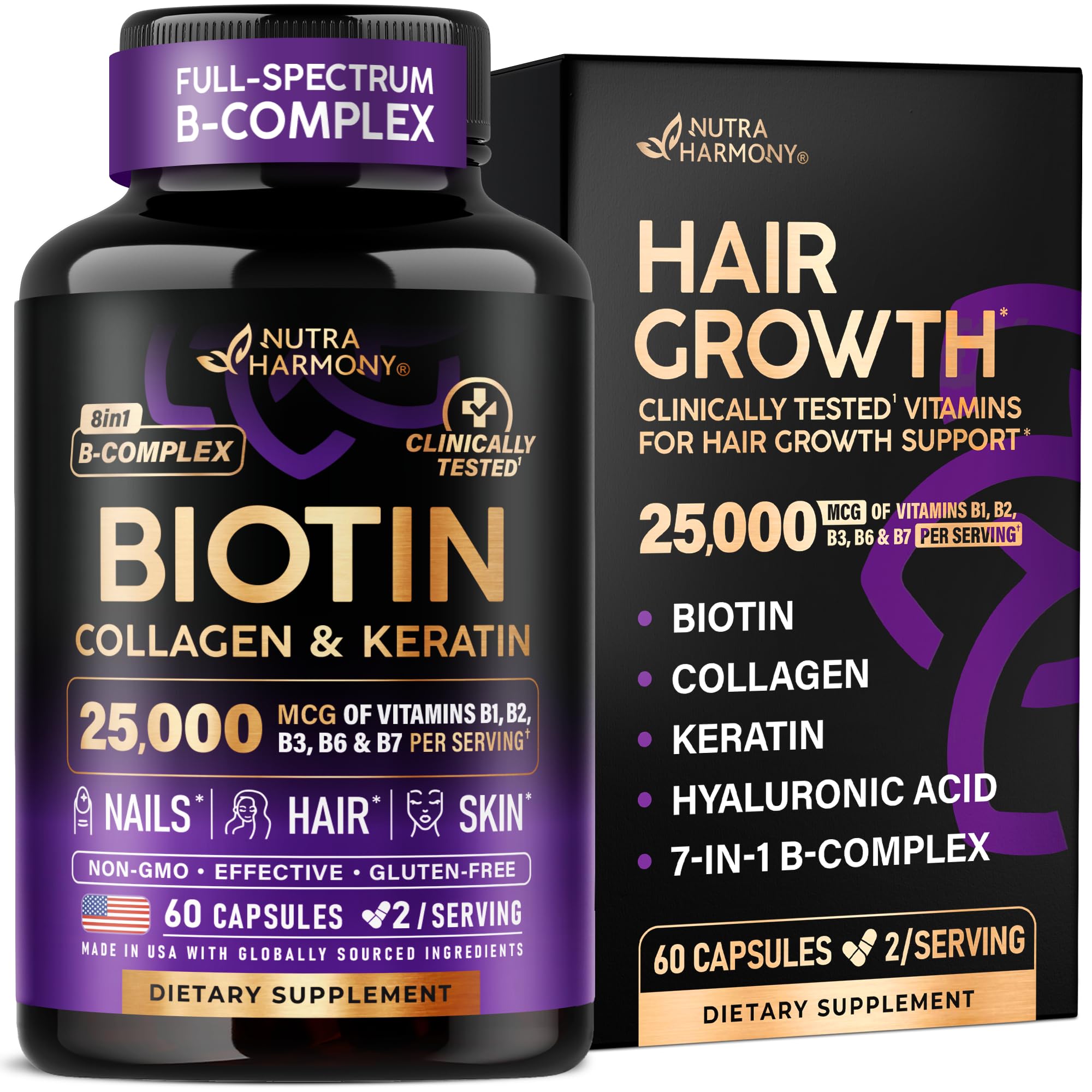
Nutraharmony Biotin, Collagen & Keratin

Nutraharmony Biotin, Collagen & Keratin

Beauty supplement

Our Score 9.0/10
Check Price

Worth Noting

  • Can cause stomach upset
  • Premium price for a supplement
Diet
Non-GMO, gluten-free
Count
60 capsules
Format
Capsule
Key Ingredients
Biotin, collagen, keratin, B-complex

The appeal here is the combination: biotin, collagen, keratin, hyaluronic acid, a full B-complex, and vitamins A and E in one capsule. We recommend it for someone who wants a broad beauty supplement without lining up three bottles on the counter. The capsule is easy to swallow, and the formula is non-GMO and gluten-free, which makes it a low-friction daily habit.

We like that it covers hair, skin, and nails rather than promising a single dramatic result. The brand points to a clinical study, and the practical pattern is strongest on nail strength and faster hair growth. Hyaluronic acid is in there for skin hydration, not hair growth, so do not overweight that line on the label. These are supportive wins, not a cure for pattern baldness. If you are looking for regrowth, this sits alongside a topical treatment; it does not replace one.

The caution is digestive tolerance. Some people get stomach cramps or nausea, and the capsule format does not suit everyone. We also understand the value complaints: it is not the most economical way to get biotin, and the collagen and keratin are extras you may not need. If you want one streamlined beauty supplement and your stomach is unbothered, it is a sensible pick. If you are sensitive, start with a clinician's advice and keep it simple.

Bottom line: For a straightforward, easy-to-swallow supplement with a broad beauty blend, we recommend Nutraharmony for people who want hair, skin, and nail support in one capsule.

How We Tested 12 Hair Loss Treatments Over Eight Months

We started with more than 40 options, pulled from dermatologist-recommended ingredient lists, published clinical data, and the labels themselves, then cut anything that buried its actives in a proprietary blend, worked out to an unreasonable cost per month, or came in a format our testers wouldn't realistically keep up with. That narrowed it to 12: topical foams and serums, a scalp shampoo, a rosemary root enhancer, and oral supplements in capsule, gummy, and liquid form.

Testers with different hair types and concerns used each product as directed — foam massaged into the crown in the morning before styling, oils and serums patted along the part before bed on a towel-covered pillow, supplements taken with breakfast. On workdays we checked in around the four-hour mark to see whether hair looked greasy or flat, whether it could still be styled, and whether anything had transferred onto a pillowcase or a shirt collar. During the first two weeks we logged tingling, flaking, redness, and itching along the hairline, and noted which products had to be dropped and why.

Every two weeks we photographed the part and hairline under the same bathroom light, counted the hairs left in the brush after detangling, and kept the shower drain strainer in place to see what actually came out. Liquid and gummy formulas got tasted rather than just swallowed — we rated aftertaste and whether we dreaded the dose by week three. Because several of these also promise stronger nails and better skin, we tracked ridges, peeling, and growth, along with any change in skin texture. At the end we calculated cost per month of real use, based on how long each bottle or tub actually lasted instead of what the label claimed.

How to Choose a Hair Loss Treatment

Match the treatment to the problem

Hair loss is not one thing. Pattern thinning at the part or crown responds to different tools than breakage from brushing, and a dry, itchy scalp is a separate issue again. Minoxidil is the treatment with drug-level evidence for regrowth; shampoos, serums, and oils are better at scalp care, fullness, and breakage control. If your shedding is sudden, patchy, or accompanied by scalp pain, see a clinician before buying anything. For gradual thinning, choose one proven active and build the rest of your routine around it.

Read the active ingredient, not the front of the bottle

Rosemary oil, caffeine, biotin, and keratin all have a place, but they are not interchangeable with minoxidil. We treat minoxidil as the regrowth standard and everything else as support: a shampoo can make hair look fuller, a serum can reduce breakage, and a supplement can fill nutritional gaps. That does not make the support products useless; it makes their job smaller. Pick a product whose main claim matches your main problem, and do not expect a cosmetic shampoo to regrow a bald spot.

Plan for scalp tolerance and residue

A treatment you cannot tolerate is a treatment you will stop. Minoxidil can itch or burn, medicated shampoos can dry out color-treated hair, and oils can leave fine hair stringy. If your scalp is sensitive, start with a non-greasy spray or serum and patch-test it. If you use an oil, keep it on the scalp and wash it out. And if a product causes persistent burning, redness, or rash, stop and get advice rather than layering another product on top.

Choose the format you will keep using

Consistency matters more than the perfect formula. A foam you apply twice a day, a shampoo you use three times a week, and a gummy you take each morning all ask for different habits. We like the Nioxin shampoo as an easy entry point because it replaces a step you already have, and the Rogaine foam for people who want a proven regrowth treatment and can commit to twice-daily use. Supplements are the easiest to start and the easiest to forget; keep them where you will see them.

Buy the full trial, not the first bottle

Hair treatments are slow. Minoxidil needs months, breakage serums are suggested for at least six weeks, and supplements are usually studied over three months. Buying the smallest size can feel cheaper, but it often ends the trial before you have an answer. Match the supply to the trial window, take a photo at the start, and judge the result on shedding, breakage, and how the scalp feels, not on whether you see a dramatic change in two weeks.

Frequently Asked Questions

Final Verdict

Start with Nioxin System 2 if you want a low-drama shampoo that makes thinning natural hair feel fuller and cleaner without adding a new step. It is our default because most people can stick with it. If visible regrowth is the goal and your clinician okays minoxidil, Rogaine's 5% foam is the stronger clinical choice, just respect the men's label. For a pill-free supplement habit, WEEM's gummies are the easiest to keep on the counter.