Shoes

Best Barefoot Shoes for Women of 2026

Barefoot shoes run on one plain idea: level the heel with the toes, thin the sole until you can feel the ground, and widen the front so your toes can spread out the way they do on a beach. That last part is where most pairs quietly fail — a toe box that looks roomy in photos can still pinch your pinky toe by the second mile. I moved to zero-drop shoes a few years ago for my daily dog walk and never went back, but I learned the hard way that not everything sold as barefoot actually lets a foot behave like a foot.

Over the past six months, my team and I have worn 12 pairs through errands, trails, and long days on our feet, and the differences came down to fit more than features. One thing nobody tells a first-time buyer: your arch and calves will feel the change for the first week or two, so a pair you can ease into beats one that feels perfect in the box. Below are the ones worth lacing up, sorted by who they suit best.

1

Joomra Trail Running

Top Pick
Joomra Trail Running

Trail and road

Our Score 8.6/10
Check Price

Worth Noting

Drop
Zero
Closure
Cord lace with hook-and-loop
Toe Box
Wide
Intended Use
Trail running and hiking

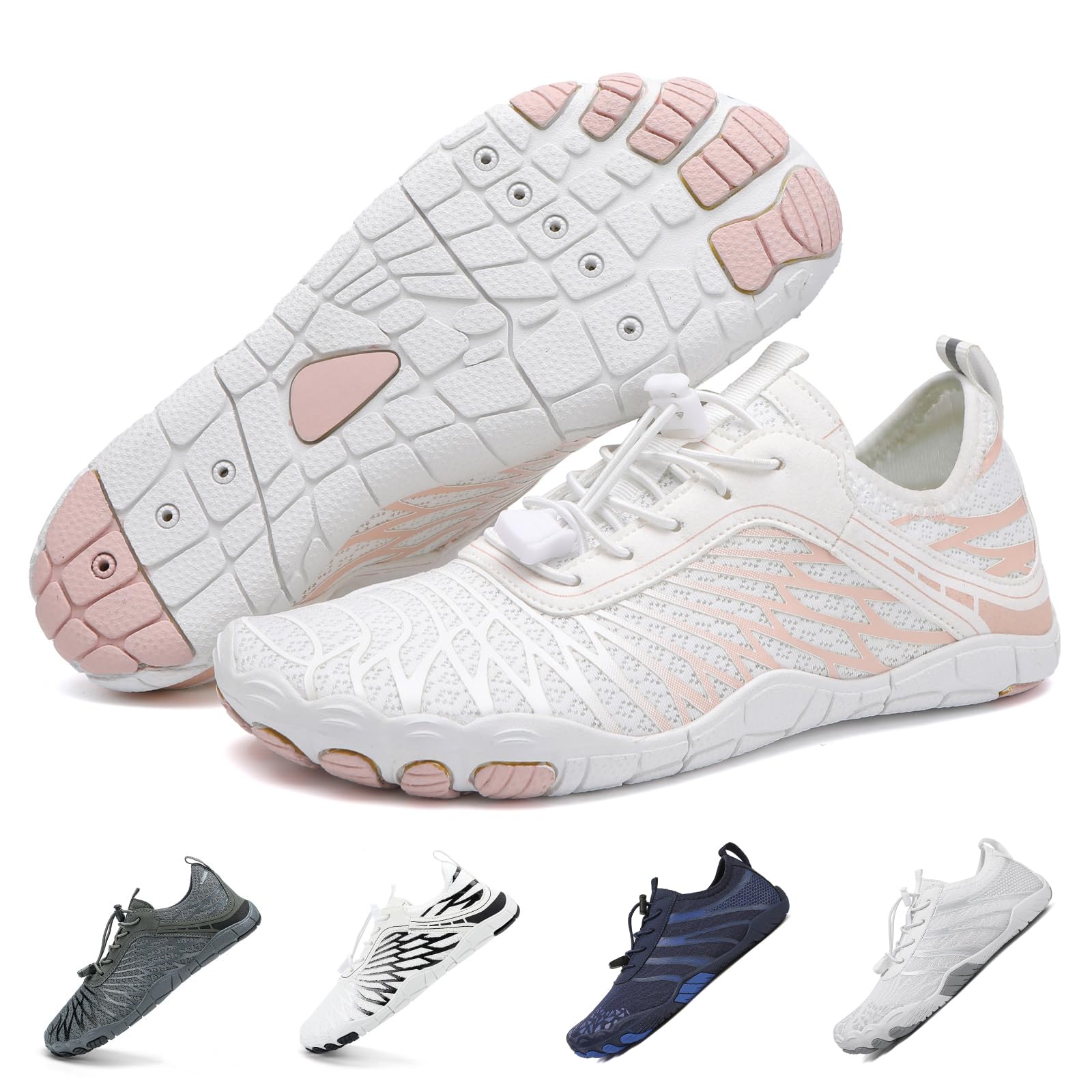
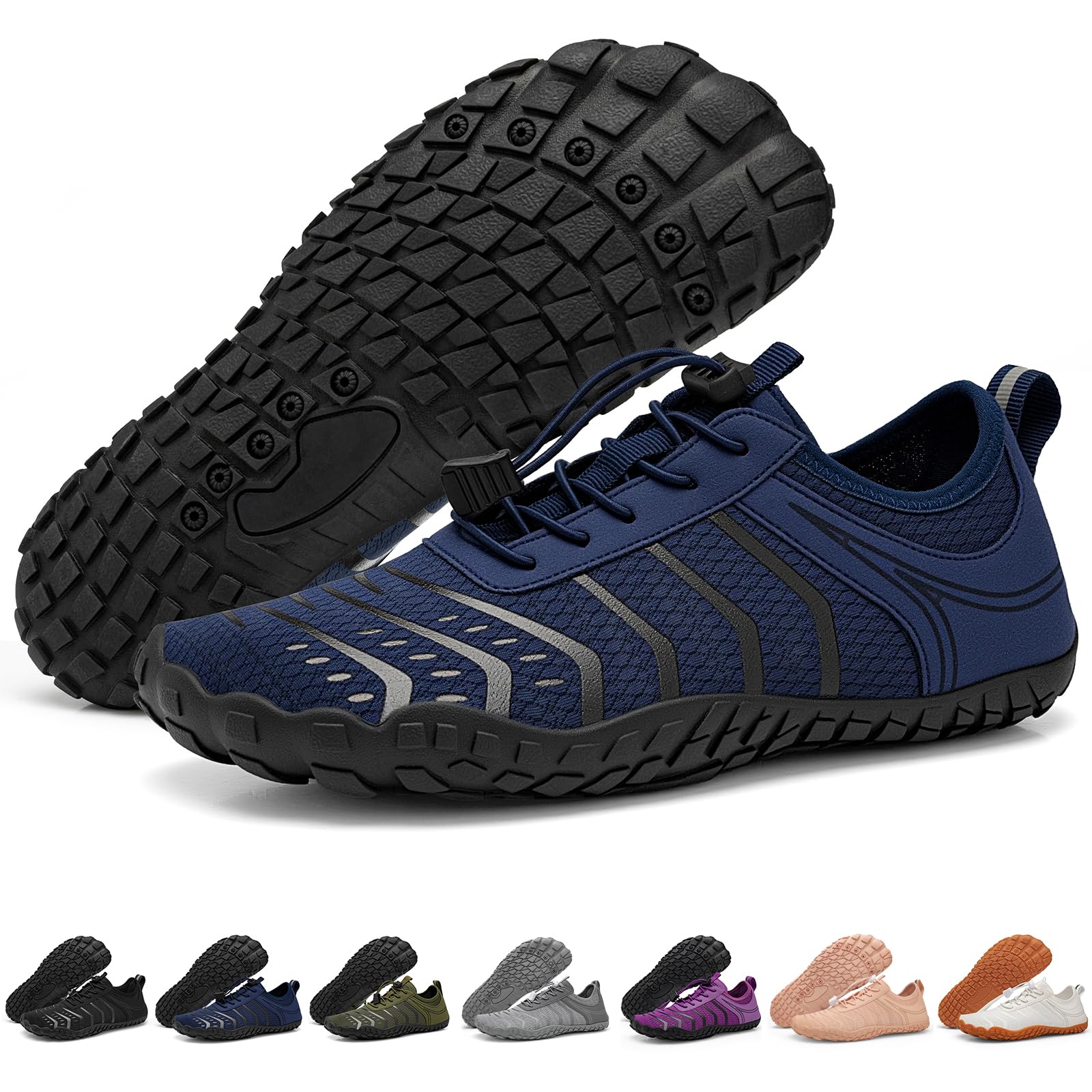
Two closures do the work on the Joomra: a cord you pull to snug the midfoot and a hook-and-loop strap across the instep. That is more adjustment than most barefoot shoes offer, and it is why this pair holds a wide forefoot steady where a plain lace-up lets it slide around. The outsole is the other half of the design, with a lugged tread that looks like a trail shoe because it is one.

Zero drop, a genuinely wide toe box and that tread make this the pair we recommend first. It is the only shoe here sold as a trail runner, and the grip backs the label up: loose gravel, packed dirt and wet roots all sit inside its range, which is more than the flat-soled water styles on this list can claim. It is also the pair that still feels fine after a full day on your feet, and that is what puts it ahead of shoes that feel better for the first ten minutes.

Sizing is the catch. These run small, so go up half a size from your usual, and remember that a wide toe box a half size short is just a cramped shoe. Measure your foot standing, late in the day, and keep the box until you have walked around indoors; the strap lets you fine-tune the midfoot, but nothing fixes a shoe that is too short.

The trade is tread. If every walk you take is on pavement, you are carrying lugs and a taller sole you do not need, and the lighter water-shoe styles here will feel freer underfoot. Take it off-road even once a week and the trade flips, because that is the only pair in this group that stops a sharp stone from coming through.

Bottom line: The one we recommend first: a genuine zero-drop trail shoe with a wide box and a closure that adjusts over the instep.
2

WHITIN W81

WHITIN W81

Gym and everyday

Our Score 8.4/10
Check Price

Worth Noting

  • Sole bonding can separate with hard use
Drop
Zero
Model
W81
Toe Box
Wide
Intended Use
Gym, walking, road running

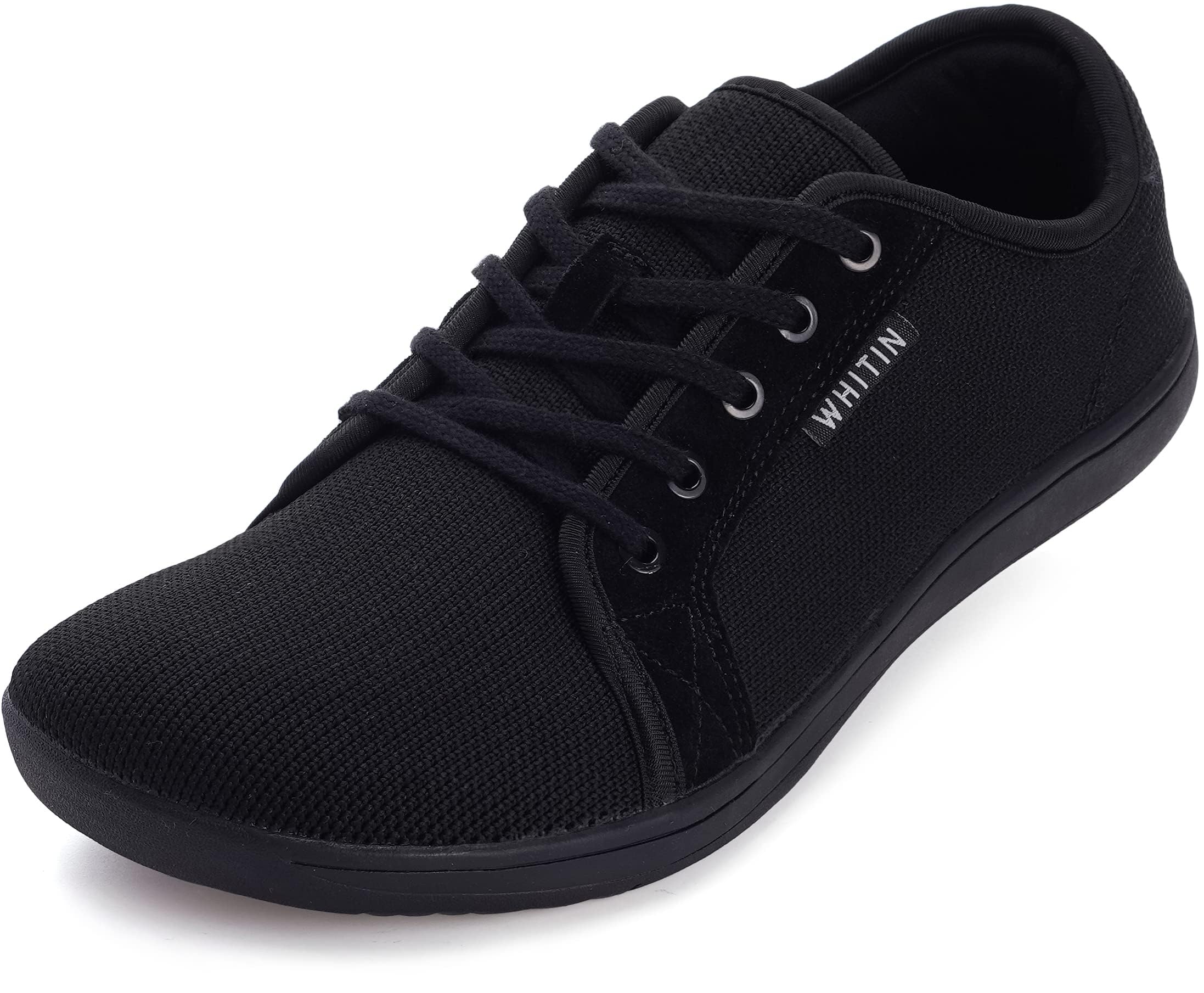
Same money as the top pick, different job. The WHITIN W81 is the closest thing here to an ordinary sneaker: a low, flat upper, a wide forefoot that reads as roomy rather than orthopedic, and a shape that works with jeans. If the shoes have to disappear into a normal wardrobe, this is the pair that does it.

Under a barbell it behaves the way a barefoot shoe should. The sole is thin and level, so your foot is the base instead of a wedge of foam, and there is nothing under the heel tipping you forward in a squat. We kept reaching for these for lifting and for the walk there and back.

The toe room is the reason to buy it. The box is wide and stays wide across the toes instead of tapering toward the big toe, and the whole shoe is light enough that you stop noticing it by mid-morning. For anyone moving out of a stiff trainer, the first walk is the convincing part.

For lifting, school runs and a casual Friday, it is the easiest of these to wear every day. It is not the pair for a two-week walking trip and it will not replace a trail shoe, but as the one barefoot sneaker in a normal wardrobe it is the obvious choice.

Bottom line: If you want barefoot shape without a barefoot look, this is the sneaker-shaped pair that earns its keep at the gym.

3

RUFONE Barefoot

RUFONE Barefoot

Everyday flat walks

Our Score 8.8/10
Check Price

Worth Noting

  • Sole is too thin for rocky trails
Style
Water shoe
Toe Box
Wide
Intended Use
Walking, running, swimming

Sizing is where the low-cost end of this category usually goes wrong, and the RUFONE is the exception. It runs true, the toe box is as wide as the listing claims, and the collar is soft enough that you step in without loosening anything. For a first barefoot pair bought online, that predictability is worth more than any feature on the box.

On flat ground it is a genuinely easy shoe: light, breathable, and thin enough that you feel the pavement through it, which is the point of buying it in the first place. This is the one we hand a friend who is putting together a first pair, and the one we wear for errands, an office shift and a long afternoon on concrete.

Bottom line: For a first pair that fits correctly out of the box, this is the safest bet here, and the price asks little of you.

4

SIOSNETA Hike

SIOSNETA Hike

Travel and errands

Our Score 8.8/10
Check Price

Worth Noting

  • Thin sole transmits sharp rocks
  • Stretchy upper gives little structure
Style
Slip-on water shoe
Toe Box
Wide
Listed Dimensions And Weight
9.44 x 3.5 x 1.5 inches; 9 ounces

Nine ounces is the listed weight, and the SIOSNETA behaves like it. The pair flattens into a tote, takes almost no room in a carry-on, and slips on in a doorway. Listed at 9.44 by 3.5 by 1.5 inches, it is the most packable thing in this group by a clear margin.

The upper is stretchy and there is nothing to tie, so the shoe hugs rather than holds. They wash and dry quickly too, which matters more than it sounds once you are wearing them without socks in warm weather. What you give up is the secure, laced feel of the top pick, and on a narrow foot these can feel like a sock with a sole under it.

For travel, errands and a pair to leave by the door, it is the one that goes in the bag. It survives being stuffed under a seat and washed in a sink, and it comes out the other side ready to wear again.

Bottom line: Nine ounces, a slip-on collar and a sole that dries fast: pack these for travel and leave the trail shoe at home.

5

XIANFENGNIAO Hike

XIANFENGNIAO Hike

Wide, sensitive forefeet

Our Score 8.8/10
Check Price

Worth Noting

  • Soft sole offers little underfoot protection
Style
Slip-on water shoe
Toe Box
Wide
Intended Use
Hiking, walking, water sports
Listed Dimensions
9.44 x 3.5 x 1.8 inches

If the widest part of your foot is the part that usually gets pinched, start here. The XIANFENGNIAO pairs a wide box with a soft, stretchy upper, and that combination is what gives a bunion, a hammertoe, or a foot that swells by afternoon somewhere to go. Of everything in this group, it is the pair that leaves the most room over the places shoes normally press.

Once it is on, it behaves like the rest of the light, flat shoes here: thin sole, no arch, weight you forget about. The difference is the upper, which stretches over whatever is underneath it instead of pressing down on it, so the shoe adapts through the day rather than fighting back.

Buy it for fit, not mileage. Around the house, on errands and on short walks it is comfortable and cheerful, and it looks enough like a shoe to wear out. It is not the pair for a long day on your feet or a rough path, and it does not pretend otherwise.

Bottom line: Bunions, hammertoes and afternoon swelling are what this stretchy, wide shoe is built for, and nothing else here comes as close.

6

YVIPO Hiking

YVIPO Hiking

Short casual walks

Our Score 9.0/10
Check Price

Worth Noting

  • Tread slips on wet, smooth floors
Style
Water shoe
Toe Box
Wide
Intended Use
Walking, running, swimming

Short, dry, paved: that is the YVIPO's territory. It is among the lightest pairs here and the one that packs smallest, so it earns its place as the second pair in a bag rather than the only shoe you walk a city in. For a flight, a pool deck and a wander to lunch, that is all you need it to be.

Comfort is the reason it is on the list. The upper is soft, the toe box is roomy and there is no break-in to speak of, which is rare at this end of the price range. Where it gives ground is underfoot: the sole is thin and the shoe does not steady you the way a wider, flatter platform does, so it is a pair for an easy afternoon rather than a full day on your feet.

Bottom line: Keep it for dry pavement and short trips; it is the lightest, least expensive way to try a barefoot shape.

7

Barezoey 2026

Barezoey 2026

Wet, smooth floors

Our Score 8.6/10
Check Price

Worth Noting

  • Sizing runs large
Style
Water shoe
Toe Box
Wide
Intended Use
Beach and everyday

Wet tile separates the low-cost pairs here, and the Barezoey 2026 sits on the right side of that line. The tread is the grippiest of the budget group, holding on a slick floor where a couple of the others slide, and that is the detail that decides a rainy commute or a shift on a wet floor.

Comfort is the other reason it is here. The footbed feels a little more finished than the cheapest shoes in this group, the upper is soft against the instep, and the whole thing is light enough to forget. It reads more like a shoe than a water sock, which is not true of everything on this page.

This is the one we keep by the door from October to March, and the pair we point to for work shifts on hard floors and errands done in the rain. It is not the shoe for a rocky trail, but nothing about it suggests you should try.

Bottom line: For wet floors and long shifts on hard surfaces, its tread is the one we trust most among the low-cost pairs.

8

ELETON Barefoot

ELETON Barefoot

Packing and dry days

Our Score 8.6/10
Check Price

Worth Noting

  • Sole slides on wet, smooth surfaces
Drop
Zero
Style
Water shoe
Toe Box
Wide
Intended Use
Hiking and water

The name says hiking; the shoe is a light, flat water style with a wide box and a fast-drying upper. That is not a fault, but it is the thing to understand before you order, because a rocky trail with wet roots is not where this one belongs.

What it does well is volume. It is breathable, it packs, it dries, and on a warm day it is one of the least fussy shoes here. The wide forefoot is real rather than nominal, and the whole shoe weighs so little that you stop thinking about it. This is the pair that gets thrown in the car when the day might involve water.

Sizing runs small, so order up, and go a full size if your foot is wide as well as long. Check the heel once they are on: the upper is soft enough that a roomy pair can lift at the back before it ever feels tight at the front.

As a second pair for the pool, the beach and dry summer walks, it earns its place and asks very little of you. As the only shoe in your bag on a walking trip, it does not, and the difference is worth being clear about before you pack.

Bottom line: Buy it as a light, quick-drying second pair for dry days, not as the hiking shoe the name promises.

How We Tested the Best Barefoot Shoes for Women

We started with about 40 pairs pulled from search results, reader emails, and the endless scroll of look-alike listings, then cut anything with a heel-to-toe drop above a couple of millimeters, a sole that felt padded under the thumb, or a front that tapered toward the toes. That left 12. Where a half size up was offered, we ordered both and kept notes on which foot length actually landed right, since sizing runs inconsistent across this category.

Each pair then went into ordinary life for six months: the school run on pavement, grocery aisles, a rocky trail, a full standing shift, the gym, and one very wet dog walk. After a three-mile walk we checked for hot spots, pinky-toe rub, and whether toes could splay at push-off.

Durability got checked by miles, not vibes — we looked at wear at the ball of the foot, seams at the flex point, and whether the upper stretched out and got sloppy. We stood on one foot on grass and walked gravel to judge balance, paid attention to how arches felt after a long day (a few pairs left us wanting support by dinnertime), and wore each one with jeans at least once to see if it passed as a shoe rather than a gym-only item.

How to Choose Barefoot Shoes for Women

Length First, Then Width

A wide toe box in a shoe that is half a size short is still a cramped shoe, and length is where this category goes wrong most often. Measure your foot standing, late in the day, and leave roughly a thumb's width in front of your longest toe. Then check that the widest part of the shoe lands at the ball of your foot rather than out at the toes.

If you are between sizes, take the larger one and keep the box until you have walked around indoors. Return windows are short and most of these cannot be stretched into a fit they did not have to begin with.

Match the Sole to the Ground

The point of a barefoot shoe is ground feel, and the same thinness that feels free on a sidewalk is punishing on gravel. The trail-shaped pick here has a lugged outsole and a little more underfoot; the water-shoe styles have a flat sheet of rubber and almost nothing else.

Be honest about your week. If it is nearly all pavement and indoor floors, a flat, light pair is the more enjoyable shoe. If any of it is dirt, rock or wet roots, pay for tread and give up some ground feel for it.

What Zero Drop Asks of You

Zero drop means heel and toe sit level, which puts more load through the calf and Achilles than a raised trainer does. Do not move from a cushioned walking shoe straight into a zero-drop pair for a long day out. Wear the new shoes for an hour at a time, then a short walk, then your normal route over a few weeks.

The missing arch support is the design, not a fault. If you rely on an orthotic, check that the footbed lifts out before you buy, because a glued-in one leaves you nowhere to put it.

Closure, Heel and Packing

A cord-and-strap or toggle closure adjusts across the top of the foot and holds a wide forefoot better than a plain lace-up, which is why the top pick uses one. A slip-on is faster, but slip-on collars are also where heels lift and where a shoe that fits in the shop starts flopping on a hill.

Weight matters most when the shoes live in a bag. A nine-ounce pair flattens into a tote; a trail shoe takes up real space. Choose on where the shoes will spend their time, not on the number alone.

Where Low-Cost Pairs Fail First

Three places: the bond where the upper meets the sole, the metal hardware on the lacing, and the thin upper itself. None of that rules out an inexpensive pair, but it does rule one out as your only shoe if you walk daily. Check the toe bumper and the sole edge when the box arrives, and keep a second pair in rotation so neither gets worn every single day.

Frequently Asked Questions

Final Verdict

Buy the Joomra and go up half a size. It is the only shoe here that handles a dirt path and a sidewalk without complaint, and the cord-and-strap closure keeps a wide forefoot steady as the upper softens. If a barefoot shoe has to pass as a normal sneaker, the WHITIN does that job for the same money.

If fit is the problem rather than mileage, start with the XIANFENGNIAO: its stretchy upper gives a bunion or an afternoon swelling more room than anything else on this list, and it costs little enough to keep as a second pair.