Bags & Accessories

Best Backpacking Backpacks for Women of 2026

A backpacking pack either carries you or fights you, and for a long time the women's version of that problem was a men's frame in a smaller size — hipbelts that rode too high, shoulder straps that cut in at the collarbone. I've finished enough trips with sore hip bones to be picky. What a pack that actually fits does is simple: it puts the weight on your hips, so mile eight feels like mile eight instead of mile fifteen. Pockets and compression straps only matter after that.

The other thing I've learned is that capacity numbers flatter. A 50-liter pack with pockets in the right places holds more than a sloppy 65, and a pack that's too big quietly talks you into filling it. Over the past eight months, my team and I have carried 12 packs through weekend overnights and longer trips, loading each with the same gear and weighing it before we set out. Fit and durability sorted the field fast. The ones below are the packs we kept reaching for.

1

Teton Sports Scout 65L

Top Pick
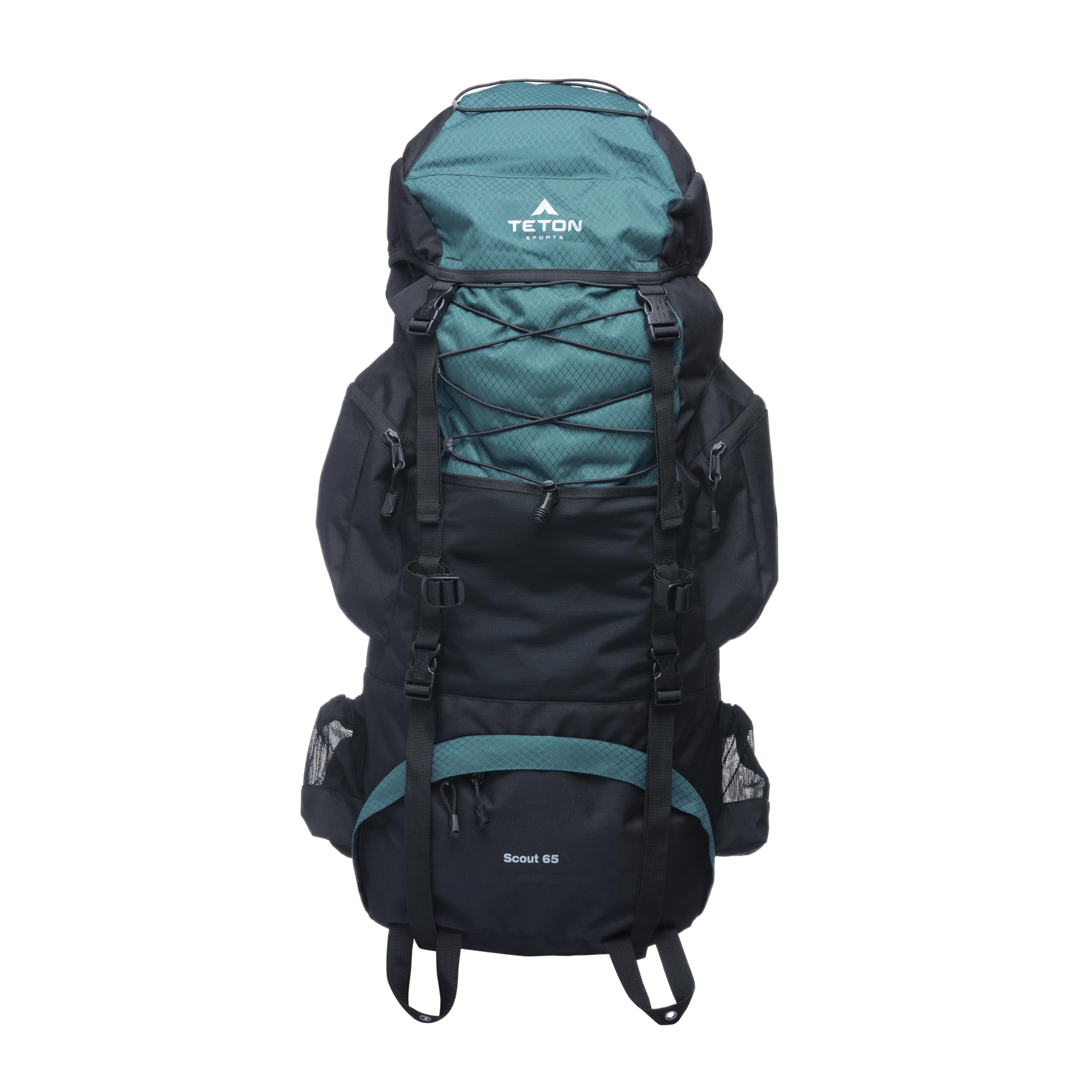
Teton Sports Scout 65L

Multi-day trips

Our Score 9.4/10
Check Price

Worth Noting

  • Bottle pockets are tight for wide bottles
  • Straps run long and leave loose tails
Frame
Internal frame
Weight
4.5 lb
Capacity
65 liters
Torso Fit
Multi-position adjustment

The harness on the Scout slides up and down the frame, and that adjustment is the reason we recommend it first. Teton builds this pack around a smaller fit, and of everything here it is the one that puts the hip belt on a shorter woman's hip bones rather than her waist. That is the whole ballgame when you are carrying weight: a belt that lands on bone can take the load, and a belt riding high just squeezes.

Underneath the harness is a real internal frame with an open-cell foam lumbar pad and molded ventilation channels, and 65 liters for a three- to five-night load. Empty, the pack weighs 4.5 pounds, which we do not love on paper and minded far less once it was loaded — the structure is what keeps a heavy pack from sagging into your shoulders by mid-morning. If you count grams, this is not your pack; the N NEVO RHINO below saves more than two pounds.

Organization is generous for the money: a sleeping bag compartment with its own zipper, a lid, six pockets and compartments, a hydration sleeve, and a rain cover included. The compartment itself is snug, so a bulky synthetic bag takes a fight — plan on a compression stuff sack, or lash the bag outside and keep shoes in the pocket.

Two small irritations: the bottle pockets want slim bottles, and the straps run long enough that you will have tails to tuck. Neither is worth passing on the pack over. The limited lifetime warranty is, though — you will load and unload this thing for years, and it is the longest backing in this group.

Bottom line: For multi-day loads on a shorter frame, the Scout is our default: an adjustable harness, a genuine internal frame, and a rain cover in the box.

2

N NEVO RHINO 50L

N NEVO RHINO 50L

Short backpacking trips

Our Score 9.0/10
Check Price

Worth Noting

  • Torso adjustment is awkward on shorter frames
  • Mesh bottom pocket wears through
Frame
Internal frame
Weight
2.4 lb
Capacity
50 liters
Rain Cover
Included

At 2.4 pounds, the N NEVO RHINO is the lightest pack in this group that still has an internal frame and a hip belt worth tightening. That combination is why it earns a spot: several of the cheaper 50-liter packs here are sacks with shoulder straps, and this one has an arched frame that holds the bag off your back.

We like it best for two- and three-night trips where the gear is compact. The listing calls the body 45+5 liters — a main compartment plus an expander — with 50 liters stated overall, and there is a zip into the middle of the pack so you do not have to excavate from the top to reach a layer. Twelve pockets and ten compartments is more organization than a pack this light usually offers.

Fit is the caveat. The frame adjusts, but the adjustment gets fussy at the short end of the torso range, and the shoulder padding is thinner than the Teton's — fine for a moderate load, less so if you are hauling heavy for a week. The mesh bottom pocket is also the first thing to wear through, so keep abrasive gear away from it.

The arched back panel is the detail we keep coming back to: it holds the pack off your spine through the middle of the load, which matters more on a humid climb than any pocket count.

Bottom line: The lightest framed pack here — the one to take on two- and three-night trips when you are packing lean.

3

Loowoko 50L

Loowoko 50L

First backpacking trips

Our Score 9.0/10
Check Price

Worth Noting

  • Usable volume runs under the 50-liter listing
Weight
2.8 lb
Capacity
50 liters
Dimensions
7.9 x 11.8 x 23.6 inches
Rain Cover
Included

The first thing to know about the Loowoko is that the harness, not the fabric, is where the money was saved. Everything else is generous: 50 liters, a rain cover in the box, and enough pockets and outside pouches to keep a weekend organized. The shoulder straps are the part to watch once the pack is full.

We still think it is a sensible buy for a first backpacking trip, or for a traveler who wants one bag for a flight and a couple of nights out. At 2.8 pounds it carries all day, the load sits reasonably well through the waist belt and chest strap, and it cinches down small when it is half empty — more than a lot of budget packs manage.

Check the strap stitching where the shoulder straps meet the body of the pack before your first trip, and again after a season; that is the failure point, and a five-minute look costs far less than a repair on trail. Keep the load to a sleeping bag, a pad, clothes and food rather than a week of water, and the harness has an easier time of it.

The rest of the details are sensible: side pouches you can reach without swinging the pack off, a lid pocket that swallows a headlamp and a day of snacks, and a rain cover that is actually in the box rather than promised.

Bottom line: A light, roomy 50-liter pack for a first trip or a travel-and-camping week, as long as you keep the load reasonable.

4

WoneNice 50L

WoneNice 50L

Travel and camping

Our Score 9.0/10
Check Price

Worth Noting

  • No structural support in the back panel
  • Straps can fail under a full load
Weight
2.4 lb
Capacity
50 liters
Rain Cover
Included
Sleeping Bag Compartment
Yes

If your version of backpacking involves a hostel, a train, and one night under the stars, the WoneNice makes more sense than a full framesheet pack. It weighs 2.4 pounds, holds 50 liters, and adds a sleeping bag compartment, a rain cover, and enough straps and mesh to lash gear on the outside.

It is a travel pack that can handle a night out rather than a load hauler. There is no structural support in the back panel, so once the pack is full the weight migrates to your shoulders and the waist belt stops earning its place. It is the right shape for a festival weekend or a car-camping base, and the wrong one for a five-day traverse.

For what it is, the details are right. The S-shaped shoulder straps are padded, the chest and waist belts adjust without a fight, the sleeping bag compartment keeps a damp bag away from clean clothes, and the rain cover is included — this is a lot of pack for the outlay. One practical note: the listing says hand wash only, and the coating on the nylon is the reason, so a machine cycle will shorten its life.

Bottom line: A light 50-liter pack for travel and one-night camping, not for hauling a multi-day load on your back.

5

Maelstrom 40L

Maelstrom 40L

Day hikes

Our Score 9.0/10
Check Price

Worth Noting

  • No frame, so weight rides on your shoulders
Weight
2.2 lb
Capacity
40 liters
Material
210D ripstop nylon
Rain Cover
Included

Forty liters is the size that makes sense if your backpacking is one night at a time, and the Maelstrom is the pick of the small packs here. It weighs 2.2 pounds, comes with a rain cover, and its side pockets actually swallow a large bottle — a small thing that stops being small on a long day.

Where it stops is heavy loads. There is no frame, just a padded back panel and a waist belt, so once you are past a light overnight the weight pulls on your shoulders instead of settling onto your hips. For day hikes, a hut trip, or a hostel-to-trailhead week, we think that is a fair trade for a pack this light.

Durability is the question mark: the fabric and zips hold up for some and give out early for others, and there is not much in the listing to tell you which you will get. The reflective print on the front is a genuine plus if you walk roads before dawn, and the one-year warranty is worth knowing about before you commit.

Bottom line: The 40-liter pick for one-night trips and long day hikes, where a frame is just weight you do not need.

How We Chose and Tested These Packs

We began with roughly 40 packs sold for women and narrowed by the specs that decide whether a pack can fit at all: published torso range, hipbelt sizing and wrap, frame type, capacity options, and price. Reviews from people who had owned a pack for a season or more carried more weight than first-impression write-ups, especially anything about pockets tearing or straps loosening. Twelve packs made the cut and were ordered.

Each one was loaded with the same kit — tent, sleeping bag and pad, three days of food, two liters of water — weighed on a kitchen scale, and carried on a two-hour loop before it ever saw a trail. Then they went out on overnight shakedowns, a wet three-day trip, and plenty of driveway adjustments while we dialed in torso length. We noted where the hipbelt landed on the hip bone, whether shoulders ached after the first hour, and whether the load shifted on descents.

Pockets and capacity got checked the practical way: we packed each bag from empty and counted what didn't fit, then tried to reach a snack and a water bottle without taking the pack off, and again with gloves on. Sturdiness meant setting a loaded pack down on uneven ground to see if it stayed upright, and cranking the compression straps tighter than we would ever need. Durability meant mud, wet brush, and a season of seams, zippers, and buckles checked after every trip. Any pack whose hipbelt sagged or whose stitching started to fray didn't get recommended.

How to Choose a Backpacking Backpack for Women

Start With Torso Length, Not Your Height

Pack sizing runs on torso length, measured from the bony bump at the base of your neck to the top of your hip bones — not on how tall you stand. Two women of the same height can be two sizes apart. If the shoulder straps lift off your collarbones or the belt climbs toward your ribs, the torso length is wrong, and no amount of padding fixes it.

That is why we put so much weight on an adjustable harness. The Scout's shoulder straps slide on the frame so you can shorten the torso, and the pack is built on a smaller fit to begin with. Measure yourself with a soft tape before you order; it takes two minutes and settles more of the decision than any feature list.

The Hip Belt Carries the Load, Not the Straps

On a real backpacking pack, most of the weight should sit on your hips through a padded belt attached to a frame. On a daypack with a webbing waist strap, the belt only stops the pack from swinging and your shoulders take everything. That is the line between the Teton and N NEVO RHINO packs and the lighter, cheaper sacks in this group.

Test a pack loaded, never empty. Put your gear in, tighten the belt first and the shoulder straps second, and see whether the weight settles onto bone. If the pack sags backward or the belt digs into your stomach, you are fighting the fit rather than carrying with it.

Match Liters to Nights, Then to Your Sleeping Bag

Forty liters covers one night with compact gear, 50 gets most people through two or three nights, and 65 is where you land for longer trips or a bulky synthetic sleeping bag. Those numbers assume you are not strapping half your kit to the outside of the pack.

The trap is that liters are measured to the seams. A pack with a shallow sleeping bag compartment or a narrow body can list 65 liters and still fight you at 50. Stuff your bag into its sack, measure the bundle, and compare it with the compartment before you commit.

Weight and Harness Quality Pull in Opposite Directions

The lightest pack here weighs 2.4 pounds and the heaviest 4.5, and the difference is mostly frame and padding. A light pack is a pleasure on a short trip with a modest load; a heavier one keeps a full pack from turning into a shoulder ache by the second morning.

The place budget packs give ground is the harness — strap stitching, buckle quality, padding that flattens under weight. If you get out once a year, a lighter harness is a reasonable bet. If you are out every month, spend on structure instead of saving grams.

Frequently Asked Questions

Final Verdict

The Teton Scout 65L is the pack we point most women to. It is the one here that pairs a load-carrying internal frame with a harness that adjusts down to a shorter torso, and it adds a rain cover and a limited lifetime warranty.

For two- and three-night trips with compact gear, the N NEVO RHINO saves more than two pounds without giving up the frame. And if your backpacking is really one night plus a lot of day hiking, the Maelstrom 40L is the honest choice.