Bags & Accessories

Best Hiking Backpacks for Women

The telltale sign of a women's hiking backpack that was only scaled down from a men's pattern is a hip belt that sits somewhere near your ribs — which means the whole load rides on your shoulders for the last three miles. Torso length, shoulder strap spacing, and a hip belt that lands on your actual hip bones are the whole ballgame. Get those right and a 25-pound load feels like a fraction of it; get them wrong and even a light daypack turns into a shoulder rub by lunch.

I've hiked in plenty of borrowed packs that left a bruise across my collarbone, so fit was the first thing my team judged and the last thing we stopped arguing about over the past six months, during which we carried 14 women's hiking backpacks on real trails. Here's something worth knowing before you shop: stated capacity matters less than how a pack carries, and a well-fitted 40-liter that hugs your back beats a sloppy 50-liter every time. Pockets only help if you can reach them with the pack on, and lightweight only helps if the suspension can still handle a loaded day. The picks below are the ones that got all of that right.

1

Teton Scout 55L

Top Pick
Teton Scout 55L

Backpacking trips

Our Score 9.4/10
Check Price

Worth Noting

  • Sleeping bag compartment is snug for bulky bags
  • Carries more volume than a day hiker needs
Pockets
11
Capacity
55 liters
Torso Fit
Multi-position adjustable harness
Rain Cover
Rainfly included

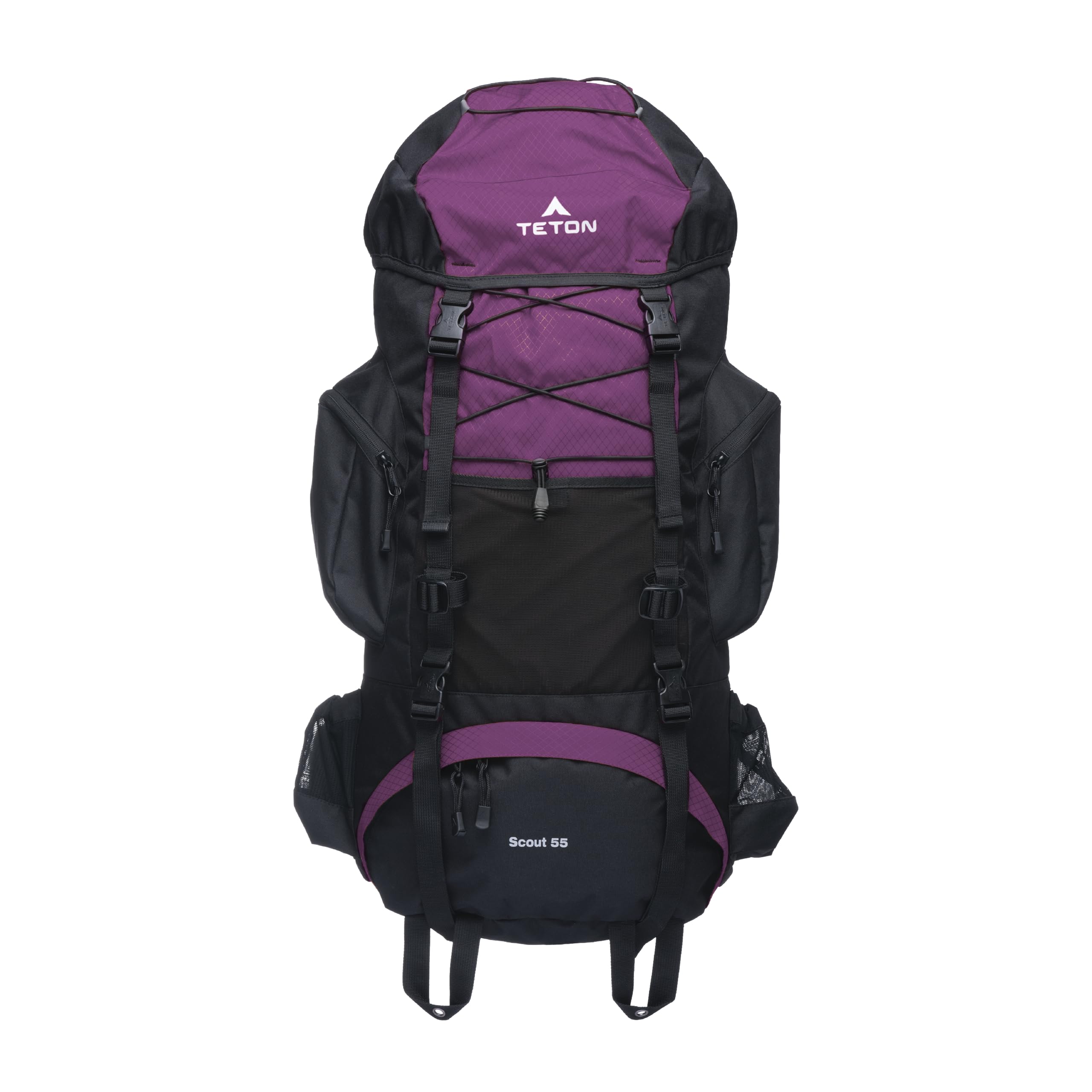
Most hiking packs ask your body to meet them halfway. The Scout works the other way: the shoulder harness slides along a multi-position track, and the torso is cut small enough that the hip belt can sit on a shorter frame instead of floating up around the ribs. That single adjustment is why we lead with it. None of the other packs here offer it, and it is the difference between a pack you fight for eight miles and one you forget you are wearing.

Load it for a weekend and the rest of the design follows through. The open-cell foam lumbar pad and molded back channels put the weight on your hips, where a 55-liter load belongs, and there is a separate sleeping bag compartment at the base so you are not excavating the whole pack at camp. There are 11 pockets and compartments, which at this size is organization rather than clutter. A rainfly comes with it, and a limited lifetime warranty covers the whole thing, the kind of backup we want on a pack headed for granite, mud, and baggage handlers.

The small irritations are worth knowing. The side bottle holders are tight, so a wide-mouth bottle takes a shove, and the pack reads smaller than 55 liters when you first unroll it. Neither changes how it carries. What we keep coming back to is the harness: with the torso set right, a fully loaded Scout sits still on the descent, and that is the whole argument for spending more on a framed pack.

Bottom line: If the pack has to fit a shorter back and carry real weight, this is the one we hand women first: the harness adjusts, the rainfly comes with it, and the construction holds up.

2

SKYSPER 20L Daypack

SKYSPER 20L Daypack

Day hikes

Our Score 9.2/10
Check Price

Worth Noting

  • Strap seams are the wear point
  • Resists rain but is not waterproof
Weight
1.1 lb
Pockets
10
Capacity
20 liters
Water Resistance
Water resistant

Ten pockets and seven compartments inside a 20-liter bag sounds like a way to lose things in progressively smaller holes. It is the opposite, and it is why this is our daypack pick: each pocket is sized to a job, with a lid pocket for keys and sunscreen, a front pocket for a shell, and deep side pockets for bottles, so you can find a snack without stopping to unpack on a rock.

At 1.1 pounds it barely registers on a climb, and the wide shoulder straps, chest strap, and waist strap keep it from sliding when you scramble. The back panel is grooved and mesh-covered, which matters more than the spec sheet suggests once you are climbing in July. Trekking pole fixtures on the front and an anti-theft zip on the valuables pocket are the details that make it feel like a hiking pack rather than a school bag.

What it will not do is carry weight. The pack is rated to 7 kilograms, around 15 pounds, so it is for water, layers, lunch, and a camera, not a tent and a stove. Stay inside that and the SKYSPER does everything a day hike asks of it.

Bottom line: The daypack we point most people to: ten pockets keep a full day's gear findable, the 20-liter body stays out of the way, and it weighs barely a pound.

3

Maelstrom 40L

Maelstrom 40L

Budget overnighters

Our Score 9.0/10
Check Price

Worth Noting

  • Fit is hit or miss across body types
Weight
2.2 lb
Pockets
10
Capacity
40 liters
Rain Cover
Included

Forty liters is the awkward middle of backpacking: more than a day hike needs, less than a week. It is also, for a lot of people, exactly right. One night out, or two if you are tidy, with a sleeping bag, a pad, a stove, food, and a layer you never end up wearing.

What comes with the Maelstrom is more than the price suggests: a rain cover that lives in its own pocket at the base, reflective printing across the front, elastic loops that hold a pair of trekking poles, and ten pockets including a hydration sleeve. The back panel is padded and channeled, and at 2.2 pounds it does not feel like a penalty on the climb.

Here is our honest read: the value is the best in this group, and the compromise is the fabric. Two-hundred-ten-denier ripstop is light, and it is where this pack gives ground to the Teton. Treat it as a maintained-trail pack and it will do what you ask, but pushing through sharp scrub is asking for a tear. For a first overnighter or a few seasons of weekend trips, we think that is a fair trade.

Bottom line: Forty liters, a rain cover, and enough pockets for a two-night trip, for less than the framed packs here: this is how you try backpacking without committing.

4

MOUNTAINTOP 40L

MOUNTAINTOP 40L

Long day hikes

Our Score 9.2/10
Check Price

Worth Noting

  • Hydration bladder sold separately
Fabric
400D polyester
Weight
2.47 lb
Capacity
40 liters
Hydration Sleeve
Yes

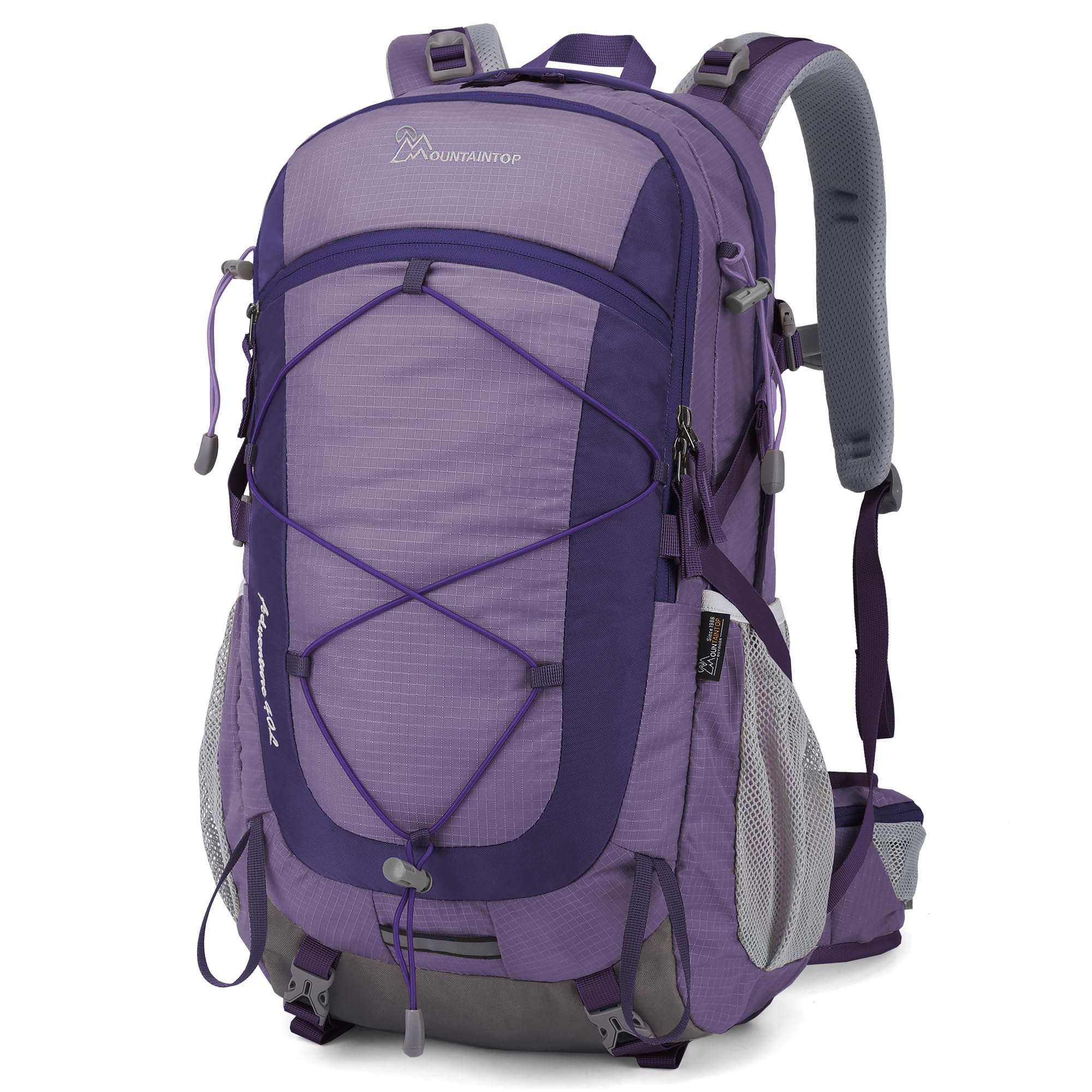
If you hike with a hydration bladder, the details that matter are a sleeve that holds it upright and a port to run the hose through. The MOUNTAINTOP has both, plus a chest strap and a hip belt to keep the load from shifting when you stop to take a drink.

The build is what surprised us at this level: 400-denier polyester with a water-repellent finish and YKK zippers, which are the two places budget packs usually economize. The purple is a welcome change from the usual black and olive, and it is easier to spot on a busy trail. At 1.12 kilograms it is light enough for a long day out, and the deep side pouches take a full-size bottle.

Fit is the weak spot. It suits some backs and not others, and that is not a problem you can adjust your way out of, so buy it somewhere with easy returns and load it before you commit to a trip. When it fits, the padded straps and the hip belt make a long day feel shorter.

Bottom line: For long days where you drink from a bladder, this is the tidiest 40-liter here: a dedicated sleeve, YKK zips, and a water-repellent shell.

5

SKYSPER 15L Foldable

SKYSPER 15L Foldable

Packable travel

Our Score 9.4/10
Check Price

Worth Noting

  • No hip belt for heavier loads
  • Water-resistant only, not waterproof
Weight
0.75 lb
Capacity
15 liters
Chest Strap
Built-in whistle
Folded Size
7.9 x 6.7 inches

Our test for a packable pack is simple: does it disappear into a carry-on and then act like a backpack at the other end? This one folds into a pouch roughly the size of a paperback and weighs three-quarters of a pound, so it costs you almost nothing in luggage space.

Unfolded it is a real 15-liter daypack: four zippered compartments, deep side pockets that take a 32-ounce bottle, a chest strap with a whistle built into the buckle, and water-resistant polyester. The fabric is light but it is put together cleanly, and there is enough organization that a map, a jacket, and a lunch each have a place.

On a short hike it behaves the way a daypack should. The chest strap takes the sway out of the shoulder straps, the wide straps sit flat instead of digging in, and the side pockets are deep enough that a bottle does not slide out when you set the pack down.

Where it earns its place is the trip where you would otherwise be carrying nothing: it turns a city day or a two-hour trail into a two-shoulder carry and then vanishes back into the suitcase. It is not the pack for a full day above the treeline, but that was never the job.

Bottom line: Keep one in your luggage: it folds to the size of a paperback and gives you a real daypack at the other end of the flight.

6

BECOJADDE 15L

BECOJADDE 15L

Short day hikes

Our Score 8.8/10
Check Price

Worth Noting

  • 15 liters is tight once layers come out
Weight
10.9 oz
Capacity
15 liters
Packability
Folds into its own pocket
Strap Pockets
Phone and drawstring

A zippered phone pocket on the left shoulder strap and a drawstring pocket on the right is a small idea that changes how a hike feels. Your phone, keys, and a snack sit within reach without stopping, and it is the one feature here that nothing else in this group offers.

The rest is competent rather than remarkable: 15 liters, 310 grams, an adjustable chest belt, ten pockets, and a body that folds into its own zippered pocket. It holds a short day's gear comfortably and swings up onto one shoulder without a fight.

The weak point is the chest strap and its buckle, which is where these come apart. That is a small part to fail on a pack that is otherwise well thought out for the money, so give the buckle a look before you trust it with anything heavy.

Bottom line: The strap pockets are the reason to pick this one: your phone rides on your chest instead of buried in the main bag, and the rest is a capable small daypack.

7

MIYCOO 35L

MIYCOO 35L

Wet-weather hikes

Our Score 9.0/10
Check Price

Worth Noting

  • Thin straps under a full load
  • IPX4 handles splashes, not sustained rain
Weight
12.8 oz
Capacity
35 liters
Wet Compartment
Yes
Water Resistance
IPX4

A wet compartment is one of those features you do not think about until you are stuffing a soaked rain shell back into your bag at the summit. The MIYCOO has one, along with an IPX4 rating on the shell and anti-theft clips that hold the zipper pulls together.

The rest is a lot of pack for its weight: 35 liters at 12.8 ounces, folding into its own inner pocket, with a whistle on the sternum strap. It slides under an airplane seat and still holds a day's gear, which is the combination we want on a trip where the itinerary keeps changing.

For travel and damp day hikes, it does more than its size and weight suggest. The wet compartment and the packability are the two things that keep it in the suitcase between trips, and the price of admission is low enough that we treat it as a spare that earns its place rather than a backup.

Bottom line: A packable 35-liter that shrugs off splashes and keeps wet gear separate, which makes it the one we take when the forecast is uncertain.

8

Loowoko 50L

Loowoko 50L

First backpacking trips

Our Score 9.0/10
Check Price

Worth Noting

  • Size reads smaller than the liter count suggests
Frame
Internal frame
Weight
2.8 lb
Capacity
50 liters
Rain Cover
Included

Fifty liters, a rain cover, and 2.8 pounds is a compelling set of numbers for a first backpacking trip. What we cannot ignore is where these come apart: the shoulder straps and the seams that hold them are the weak point, and they can give way early under a full load. Load it at home, tug the straps, and look at the stitching before you rely on it.

Get past that and the layout is sensible. A big main compartment swallows a tent and a bag, there are pockets on the lid and the sides, and the rain cover stays with the pack rather than in a drawer at home. At 2.8 pounds it is easy to carry for the capacity, and it compresses down small when it is empty.

Weight sits reasonably when the load is modest, which is where this pack is happiest: one or two nights of gear, a sleeping bag, a stove. It is not fussy about body type either, which is more than we can say for some packs here.

Our advice is straightforward. For a first overnighter, or as a car-camping pack that gets carried a mile from the trailhead, it is a reasonable buy, and the rain cover is a genuine bonus. For a multi-day carry where the pack is on your back for six hours, put the money toward the Teton instead.

Bottom line: A roomy, light 50-liter with a rain cover included, and a sensible way to try backpacking without committing to a framed pack.

How We Tested Women's Hiking Backpacks

We started by gathering the women's-specific packs that kept surfacing in customer reviews and on hiker gear lists, plus a few unisex daypacks our testers already hike in, then filtered by adjustable torso length, capacity spread from 15 to 55 liters, and whether replacement buckles and strap hardware were available. That left 14 packs, which three testers of different heights and torso lengths carried for six months on weekday evening loops, longer weekend climbs, one overnight, and a couple of trips that involved stuffing them into overhead bins.

Fit got most of our attention. We measured each tester's torso with a tape before the first hike, loaded every pack to roughly 20 pounds, and noted where the hip belt landed, whether it stayed put on steep descents, and which straps needed constant readjusting. We also tracked the smaller things: whether the shoulder straps pressed into a collarbone, whether a hip belt pocket held a phone without bouncing, and how each pack felt in hour four compared with hour one.

For pockets and storage capacity, we packed the same load into every bag — layers, a liter of water, snacks, a first aid kit, a headlamp — then counted how many times we had to take a pack off to reach something. Durability was judged in the field rather than on paper: we set packs down on granite, overstuffed them past their stated capacity to see where seams strained, and ran each rain cover under a faucet for five minutes to check what soaked through. Every pack also went on a kitchen scale, empty and loaded, so we could tell which lightweight models stayed comfortable once filled.

How to Choose a Hiking Backpack for Women

Start with torso length, not liters

A pack's weight is supposed to land on the hip belt, and that only works if the distance from your shoulders to your hips matches the pack. Women often have shorter torsos than the frames on the shelf were built for, which is why a unisex pack can ride with the belt around the ribs while every pound pulls on your shoulders. Look for an adjustable harness, as on the Teton Scout, whose shoulder straps slide on a multi-position track. Then check it loaded: belt on the hip bones, not the waist.

Match capacity to the trip you actually take

Capacity is the easiest thing to overbuy. Fifteen to 20 liters covers a day hike: water, a layer, lunch, a first-aid kit. Thirty-five to 40 liters takes a night or two of gear and is the size most people genuinely need. Fifty and up is for multi-day trips with a tent and a sleeping system. The trap is buying the 55-liter for day hikes. You carry the extra structure and fabric every time, and the empty space invites weight you do not need.

What a harness has to do

Two packs of the same weight can carry completely differently, and the difference is the harness. A padded hip belt with a real buckle, a sternum strap you can adjust one-handed, and a back panel that holds the pack off your spine matter more than a few ounces of fabric. Ventilation is the one place we do not compromise on a summer pack: a grooved, mesh-covered back panel is the difference between damp and soaked. On a narrower frame, check that the shoulder straps do not gap at the chest; that is what a sliding sternum strap is for.

Weatherproofing and the seams that fail first

Water-resistant fabric handles mist and a passing shower; it is not a rain cover, and on anything bigger than a daypack you want both. Read the claim carefully. IPX4 means splashes, and water-repellent fabric wets out in steady rain. The other thing to check is stitching at the strap attachment points and the base panel, which is where packs in this group fail first. Run a thumb along those seams before you commit, and work each zipper: a smooth pull with a covered slider matters more in the cold than it sounds.

Frequently Asked Questions

Final Verdict

Buy the Teton Scout if your hiking involves real weight. The adjustable harness is the only one here that accounts for a shorter torso, and with the belt sitting where it should, a 55-liter load stops pulling on your shoulders, which is the entire reason to own a framed pack.

Day hikes only? The SKYSPER 20L is the better everyday answer: lighter, organized enough that you stop digging, and small enough to forget you are wearing it. And if you want a pack that lives in a suitcase until the trailhead, the folding SKYSPER 15L earns its space.