Skincare

Best Azelaic Acid for Rosacea of 2026

The flush arrives on a schedule nobody agreed to: after a hot shower, a glass of wine, a tense afternoon. Azelaic acid is one of the few ingredients that goes after both halves of that problem at once, calming redness while quieting the small bumps that tend to travel with it. What separates one formula from another is less about the percentage than the vehicle it rides in. The same 10 percent can land as a cooling layer or as a five-minute sting, and on reactive skin that difference is the whole ballgame.

Over the past three months, my team and I folded 14 formulas into our routines, some nightly and some only on days when our cheeks were already angry. Texture surprised me: a few of the thicker ones pilled under sunscreen, and one left a grit that never dissolved. The unscented, unglamorous ones beat the fragranced, fast-absorbing crowd nearly every time. None of these replaces a dermatologist's plan, but the right bottle is quiet, comfortable, and cheap enough to use without rationing, which is the bar everything below had to clear.

1

Cos De BAHA Azelaic Acid 10% Serum

Top Pick
Cos De BAHA Azelaic Acid 10% Serum

Rosacea-prone redness

Our Score 8.6/10
Check Price

Worth Noting

  • Can sting very reactive skin
Bottle Size
1 fl oz
Azelaic Acid
10%
Formula Base
Aloe leaf extract
Key Additions
Niacinamide, panthenol

The hardest part of shopping for rosacea-prone skin is finding an azelaic acid that helps calm the look of redness without adding a fresh sting. Cos De BAHA's 10% serum is the one we recommend first because it treats soothing as part of the job, not an afterthought. The formula suspends azelaic acid in an aloe leaf base with niacinamide and panthenol, and it is fragrance-free. That combination gives reactive skin a softer landing than a bare acid serum, and it is the pick we trust most for everyday use.

The texture is light and quick to absorb, with none of the richness of a cream. We like that it layers under moisturizer and sunscreen without much fuss, and a pea-sized amount covers the face. The 1-ounce bottle is not the largest in this group, but the serum spreads well, so it lasts longer than the size alone suggests. It also stays simple: no added fragrance, no extra exfoliating acid, and no complicated mixing step.

Paula's Choice is the more elegant booster and Metroruboril offers a stronger cream, but Cos De BAHA is the best balance of calming support, daily texture, and price here. We appreciate that it does not try to do three exfoliating jobs at once; for a compromised barrier, that restraint matters. If your skin is very reactive, introduce it slowly, but this is the formula we reach for when redness is the main concern.

Bottom line: Our top pick for rosacea-prone redness: a fragrance-free 10% serum with aloe, niacinamide, and panthenol that makes daily azelaic acid feel calming rather than harsh.

2

Paula's Choice 10% Azelaic Acid Booster

Paula's Choice 10% Azelaic Acid Booster

BHA layering

Our Score 8.6/10
Check Price

Worth Noting

  • Premium price for a small bottle
Fragrance
Fragrance-free
Bottle Size
1.06 oz
Azelaic Acid
10%
Additional Exfoliant
Salicylic acid

The first thing we noticed about Paula's Choice is how much more polished the texture feels than a typical azelaic cream. It is a lightweight, oil-free gel-cream that spreads easily and disappears under moisturizer, which makes it the easiest formula here to layer in a hurry. The core is 10% azelaic acid, and the addition of salicylic acid gives it a second job: clearing the look of congested pores while azelaic acid goes after uneven tone and visible redness.

The BHA is the reason to consider this one, and also the reason to pause. For skin that already tolerates exfoliating acids, the combination can be clarifying and elegant. For a barrier that flushes at the first sign of a new active, the extra acid is more likely to tip it over. We see this as a booster for someone with a settled routine, not the first azelaic acid for a reactive face.

It earns its place for the buyer who wants the most refined layer in this group and is willing to pay for that polish. It works best as a targeted booster mixed with moisturizer rather than a generous full-face treatment. If you want maximum soothing per dollar, Cos De BAHA is the safer call; if you want a silkier finish and your skin tolerates BHA, this is the upgrade.

Bottom line: A refined 10% azelaic booster with salicylic acid for skin that wants extra clarifying and can tolerate a more active formula; the premium price is the catch.

3

The Ordinary Azelaic Acid Suspension 10%

The Ordinary Azelaic Acid Suspension 10%

Low-cost starter

Our Score 9.0/10
Check Price

Worth Noting

  • Tube can feel underfilled
  • Can sting reactive skin
Use
AM and PM
Formula
Cream-like suspension
Bottle Size
1.06 oz
Azelaic Acid
10%

The Ordinary's azelaic acid is the least expensive way into this group, and the thick cream-like suspension is the first clue about how it behaves. It is 10% azelaic acid in a velvety cream that feels more like a moisturizer than a serum, so it suits someone who wants a simple, low-cost treatment and does not mind a heavier finish. We recommend it as a budget starting point, not as the most elegant formula here.

It spreads best in a thin layer, and the cream-like texture is comfortable on dry or normal skin. On oily skin, it can feel like one layer too many under sunscreen, so a lighter serum may be easier to live with. We also like that the tube is small enough to keep in a bathroom drawer and that the formula is straightforward: no complicated routine, just azelaic acid in a cream base.

Bottom line: The budget pick for someone who wants low-cost daily azelaic acid and prefers a simple cream over a silky serum.

4

Anua Azelaic Acid 10 Hyaluron Serum

Anua Azelaic Acid 10 Hyaluron Serum

Hydrating redness care

Our Score 9.0/10
Check Price

Worth Noting

  • Can burn very reactive skin
Hydration
3 types hyaluronic acid
Bottle Size
1.01 fl oz
Azelaic Acid
10%
Key Botanicals
Cica, blue tansy oil

A green-tinted serum sounds like a gimmick until you consider how often rosacea-prone skin wants both calming and hydration from the same layer. Anua's 10% azelaic acid serum is the most hydrating formula in this group, with three types of hyaluronic acid, panthenol, cica, and blue tansy oil. The green tint is a cosmetic touch, but the watery texture is the real reason to choose it: it sinks in fast and leaves a soft, non-greasy finish.

The one we choose for dry or dehydrated skin that reddens easily. The hyaluronic acid and panthenol give the azelaic acid a cushion, so it feels more like a soothing essence than a treatment. It is not the strongest formula here, and it is not the cheapest, but it is the most comfortable to layer under moisturizer and makeup. The dropper also makes it easy to start with one or two drops, which is the right way to introduce it.

It is a serum, not a barrier cream: if your skin is actively irritated, you will still need a moisturizer on top. We also prefer it as a morning layer because the green tint and light finish sit well under sunscreen. For a reactive face, start with one or two drops a few times a week; that slow introduction is the best way to judge whether the formula suits you.

Bottom line: The most comfortable hydrating serum here for dry, redness-prone skin, with a watery finish and a green tint that makes the routine feel calming.

5

Metroruboril A.Z Anti-Redness Cream

Metroruboril A.Z Anti-Redness Cream

Visible redness cream

Our Score 9.4/10
Check Price

Worth Noting

  • Compact tube for twice-daily use
Formula
Non-comedogenic
Fragrance
Unfragranced
Bottle Size
1.06 oz
Azelaic Acid
15%

Fifteen percent azelaic acid in a plain, unfragranced cream is an unusually direct answer to visible redness. Metroruboril A.Z is the strongest formula in this group and the only one that reads as a dedicated anti-redness cream rather than a general serum. It is non-comedogenic and designed for morning and evening use, which makes it a simple choice for someone who wants one step after cleansing.

The buyer we have in mind already knows their skin tolerates azelaic acid and wants a cream texture with no fragrance and no extra exfoliating acid. The tube is compact and easy to control, and the cream has a straightforward, no-frills feel that suits a minimal routine. It does not try to be a hydrating serum or a makeup primer; it is a redness cream first.

The limitation is the concentration. Fifteen percent is not the gentlest starting point, and very reactive skin may do better with a 10% formula while it builds tolerance. If your skin is already comfortable with azelaic acid and you want the strongest cream in this set, this is the one we point to.

Bottom line: The strongest cream here for visible redness, and the simplest fragrance-free option for someone who wants one step after cleansing.

6

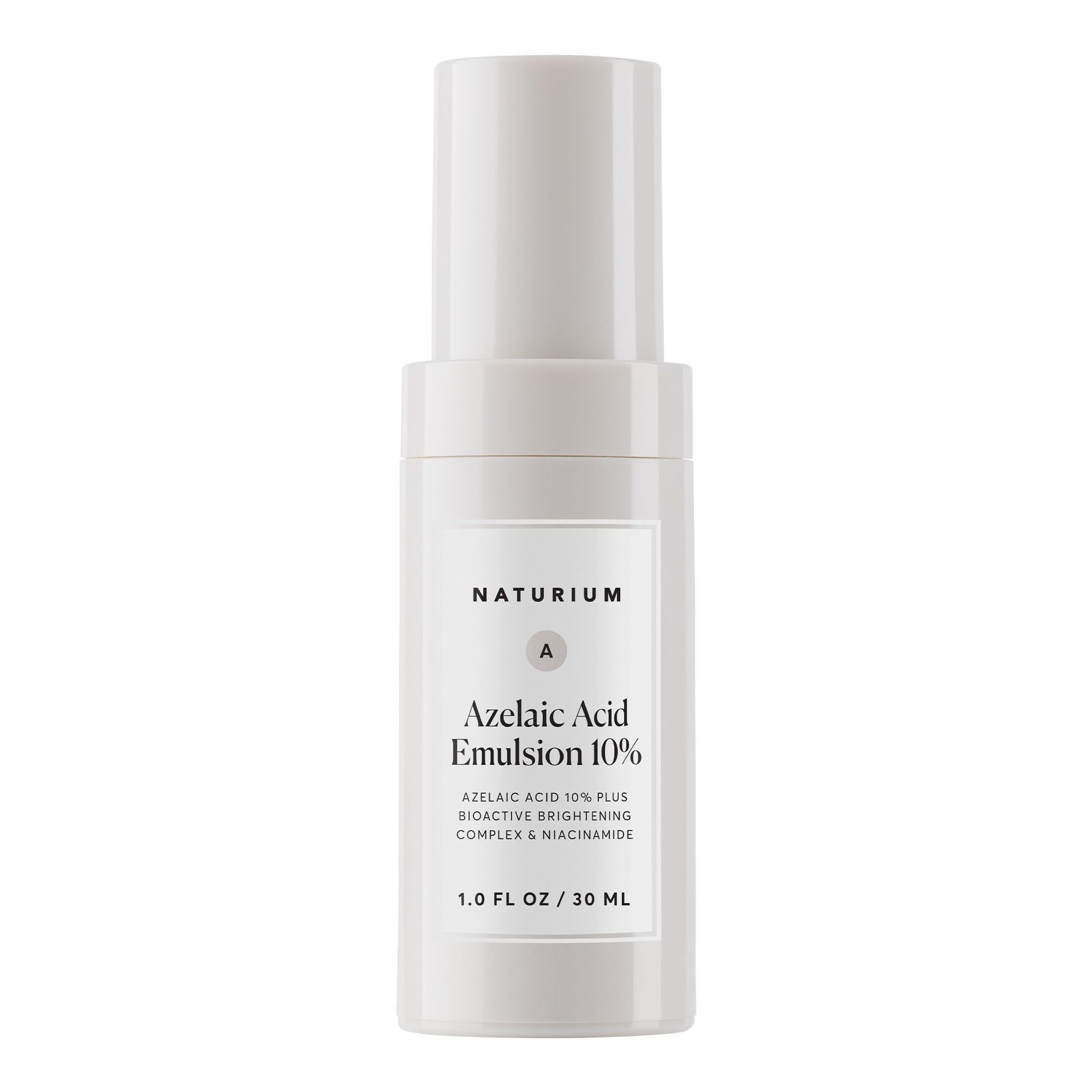
Naturium Azelaic Acid Emulsion 10%

Naturium Azelaic Acid Emulsion 10%

Reactive dry skin

Our Score 8.8/10
Check Price

Worth Noting

  • Can sting very reactive skin
Format
Emulsion
Bottle Size
1 oz
Azelaic Acid
10%
Key Additions
Niacinamide, bioactive complex

The Naturium emulsion takes the edge off azelaic acid by putting it in a creamier base. It combines 10% azelaic acid with niacinamide and a bioactive complex, and the texture is closer to a light moisturizer than a watery serum. That makes it a good fit for dry, reactive skin that finds clear serums too sharp, especially if you want the acid to sit in something emollient rather than disappear immediately.

The niacinamide is a useful partner for redness-prone skin, and the emulsion layers neatly under sunscreen and moisturizer. We like that it does not ask you to choose between treatment and comfort: it is one step that does a bit of both. It is not the most elegant formula here, and the finish can be a little uneven as it dries, but it is easy to work with if you apply a thin layer and let it settle.

It earns a place for someone who wants a buffer and does not mind a creamier texture. For oily skin, the Cos De BAHA serum is lighter; for a dedicated cream with more strength, Metroruboril is the alternative. The Naturium sits between those two, which is exactly why it belongs here.

Bottom line: A barrier-friendly emulsion for dry, reactive skin that wants 10% azelaic acid in a creamier base, not the silkiest finish in the group.

7

Anua Azelaic Acid 10 Toner Pads

Anua Azelaic Acid 10 Toner Pads

Targeted calming masks

Our Score 9.0/10
Check Price

Worth Noting

  • Pads can feel sticky after use
Formula
7 types of CICA
Hydration
Multi-weight hyaluronic acid
Pad Count
90 pads
Pad Design
Stretchable fabric

The Anua pads turn azelaic acid into a five-to-ten-minute mask, which is useful on days when a full serum routine feels like too much. There are 90 stretchable pads in the jar, and the fabric expands to cover cheeks, forehead, or the nose bridge. That makes them more versatile than a round cotton pad: you can use one on a flushed cheek, or lay a pair over the whole lower face.

The formula pairs its azelaic acid blend with seven types of cica and multi-weight hyaluronic acid, so the pad is as much about hydration and cooling as the acid. We like the jar format for the bathroom shelf, and the pads are soaked well enough to stay put for the recommended five to ten minutes. They are not a replacement for a full-face serum, but they are a pleasant way to add a targeted step without another bottle.

Use them after cleansing, leave them on for five to ten minutes, then wipe gently and pat in the remaining essence. A light hand helps if you plan to layer a heavy moisturizer afterward. They are also not the most economical way to get azelaic acid over the whole face every day; think of them as a spot treatment or a quick mask.

The pads make sense for someone who likes a mask step and wants a portable way to calm the look of redness on specific areas. If you want one product for full-face daily use, a serum or cream is more straightforward. The pads earn their place as the targeted option in this group.

Bottom line: A clever targeted treatment for quick calming, best for someone who likes a mask step rather than another daily serum.

8

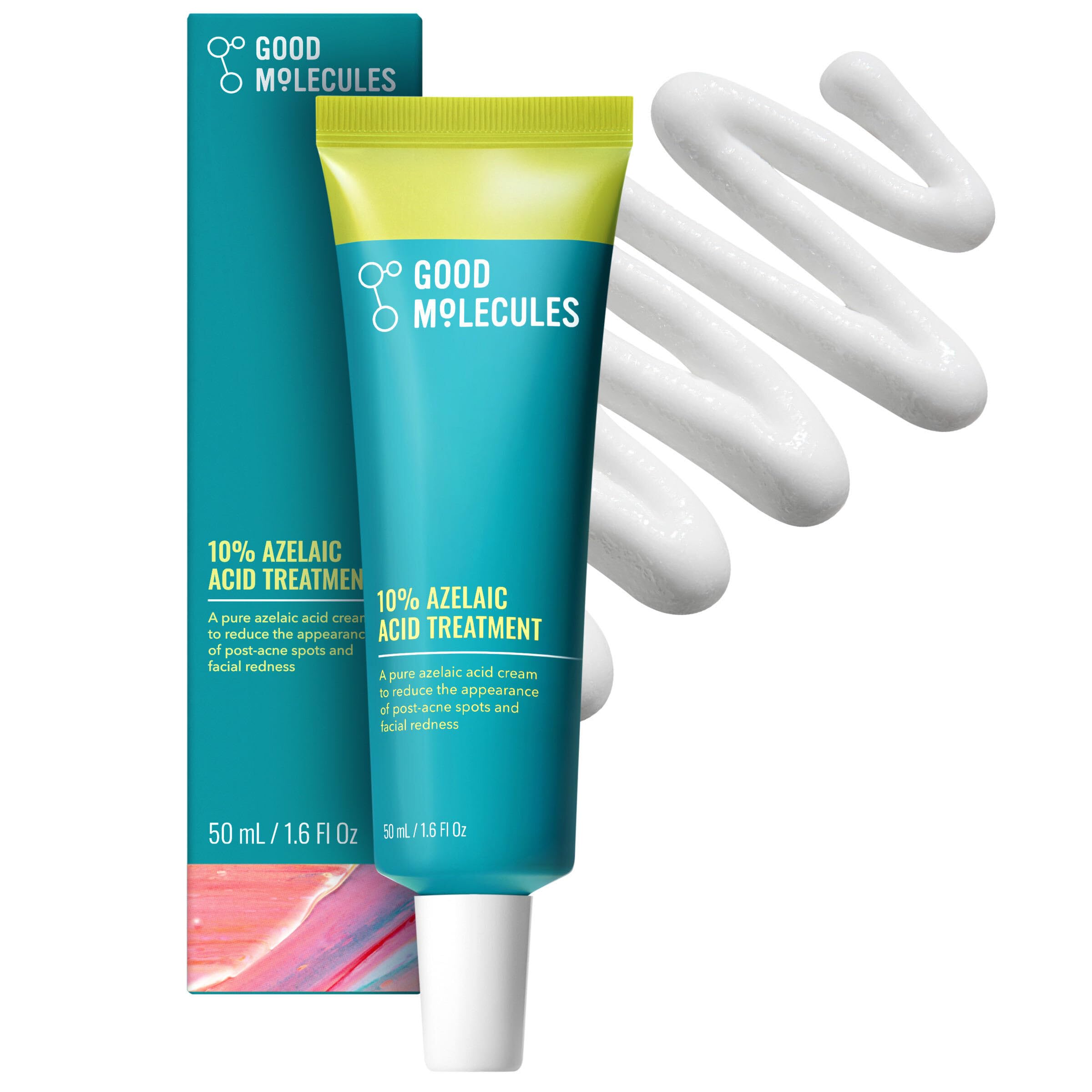
Good Molecules 10% Azelaic Acid Treatment

Good Molecules 10% Azelaic Acid Treatment

Simple daily cream

Our Score 9.0/10
Check Price

Worth Noting

  • Can sting very reactive skin
Use
AM and PM
Formula
Buffered cream
Bottle Size
1.7 fl oz
Azelaic Acid
10%

A 1.7-ounce tube of 10% azelaic acid cream is the kind of unglamorous staple that makes a routine easier to keep. Good Molecules' treatment is a buffered cream, not a watery serum, and the larger size means you can use it on the full face without rationing. For someone who wants one product to cover the whole face morning and night, that is a real practical advantage.

The formula is non-comedogenic and non-acnegenic, and the brand lists it as suitable for sensitive skin. It has no noticeable scent, which helps if fragrance is a trigger. It goes on like a cream and absorbs without a heavy residue, though the texture can feel slightly gritty as it dries.

We like the simplicity of the routine: cleanse, tone, apply a thin layer, follow with moisturizer, and finish with sunscreen in the morning. The cream is buffered, so it feels less sharp than a bare acid serum, but it is still 10% azelaic acid and deserves a gradual start. The larger tube makes it tempting to use more than you need; a pea-sized amount is enough for the whole face.

It is a sensible choice for someone who wants a bigger tube, a cream texture, and a straightforward formula. It is not the most elegant texture in this group, and very reactive skin can still sting, so patch-test first. For a simple daily cream that does not ask for much, it earns its place.

Bottom line: A generous 10% cream for simple full-face routines, with a buffer that suits sensitive skin if the texture doesn't bother you.

How We Tested Azelaic Acid Formulas on Reactive, Flushing Skin

We started with a list of more than 40 azelaic acid products and cut anything outside the 10 percent concentration dermatologists most often recommend, anything with added fragrance or essential oils, and anything whose full ingredient list the brand wouldn't publish. That left 14 formulas in serum, cream, emulsion, and toner-pad form, which we tested over 12 weeks. Each one got a three-day patch test along the jawline before it went anywhere near a cheek.

From there the products went into real routines: a thin layer after cleansing in the morning, a five-minute wait, then sunscreen, and a second application at night under moisturizer. We kept bottles in gym bags and on nightstands, so formulas got used after workouts and on the mornings after a hot shower, when flushing runs hottest. We rated sting at application, at five minutes, and at the one-hour mark, and a formula that lit up and stayed lit was out. We also photographed the same cheek in the same window light at the start, at week four, and at week 12, since redness is nearly impossible to judge from memory.

Texture was judged in the hand first, then on the face: how far a pea-sized amount spread, whether it left grit, and whether it pilled under sunscreen. To gauge moisture, we skipped night cream on half the panel and noted how tight skin felt an hour later. We counted how many weeks a bottle lasted at twice-daily use, which turned cost per ounce into a number that meant something. Half our panel had diagnosed rosacea and half had sensitive skin that flushes easily; comparing notes told us whether a formula was genuinely gentle or just gentle on the person who happened to be testing it.

How to Choose an Azelaic Acid for Rosacea

Match Strength to Tolerance

Ten percent azelaic acid is the comfortable middle for most rosacea-prone routines: enough to go after uneven tone and visible redness without automatically overwhelming the skin. Fifteen percent, as in Metroruboril A.Z, is the strongest cream here and a reasonable step for someone who already tolerates azelaic acid. A derivative is not automatically the same as pure azelaic acid, so read the ingredient list rather than the front label. Start with three nights a week and build up.

Pick a Format You Will Actually Use

Serums are the easiest to layer, creams and emulsions cushion the acid, and pads work best as a targeted mask rather than a full-face daily treatment. If your skin is dry, the Naturium emulsion or a cream gives the acid a softer landing; if you are oily, a light serum such as Cos De BAHA is easier to wear under sunscreen. Pads such as Anua's are useful for a flushed cheek or a quick five-minute step, not as your only full-face routine.

Look for Soothing Support

Azelaic acid does the work, but the supporting ingredients decide how comfortable it feels. Niacinamide, panthenol, cica, aloe, and hyaluronic acid can make a formula feel calmer and more hydrating. We prioritize a short, recognizable support list over a long botanical blend, especially when the label also promises exfoliation. If your skin is already irritated, a cream or emulsion with these ingredients is usually easier to tolerate than a bare serum.

Screen Out Irritation Triggers

Fragrance is the first thing we check in a rosacea-focused formula, followed by extra exfoliating acids. A fragrance-free cream or serum removes one avoidable variable. Salicylic acid can be useful for congested skin, but it adds another active, so it is not the gentlest choice for a barrier that is already reactive. Introduce one new product at a time, buffer with moisturizer, and use sunscreen every morning.

Check the Package and the Usable Amount

A 1-ounce serum, a 1.7-ounce cream, and a 90-pad jar are not interchangeable kinds of value. A pump that will not dispense, a tube that feels mostly empty, or a pad jar that dries out can make a good formula frustrating. Check the net weight or pad count against how you plan to use it, and buy from a seller with a return policy if the packaging has a known weak point. The best formula is the one you can actually get out and use consistently.

Frequently Asked Questions

Final Verdict

Cos De BAHA is the azelaic acid we recommend first for rosacea-prone skin because it pairs a genuine 10% serum with aloe, niacinamide, and panthenol instead of asking sensitive skin to tolerate a bare acid. It is the best balance of calming support, daily texture, and price in this group. If you want a cream and the highest strength here, Metroruboril A.Z is the alternative; if you prefer a silkier booster and your skin tolerates BHA, Paula's Choice is the upgrade.