Shoes

Best Arch Support Sneakers for Women of 2026

The wrong sneaker can turn a simple walk into a countdown to sore feet. Arch support is not just a squishy insole; it is how the shoe cradles your midfoot, guides your heel, and keeps your stride from collapsing when you tire. I have cycled through pairs that felt fine in the store and then turned stiff, sloppy, or ugly by week three. The right pair makes errands and long shifts easier without making you look like you borrowed shoes from a gym teacher.

Over the past eight months, I wore and walked in 12 pairs of arch support sneakers, from cushioned daily trainers to easy slip-on styles. I noted fit across the toe box and heel, how the arch felt after a full day, and whether the shoes held their shape after months of wear. Some were too stiff to bend naturally; others were so soft that my feet rolled inward by lunch. Appearance and value mattered too, since a supportive shoe should look intentional with jeans or leggings and still be worth wearing after the honeymoon phase.

1

Brooks Adrenaline GTS 25

Top Pick
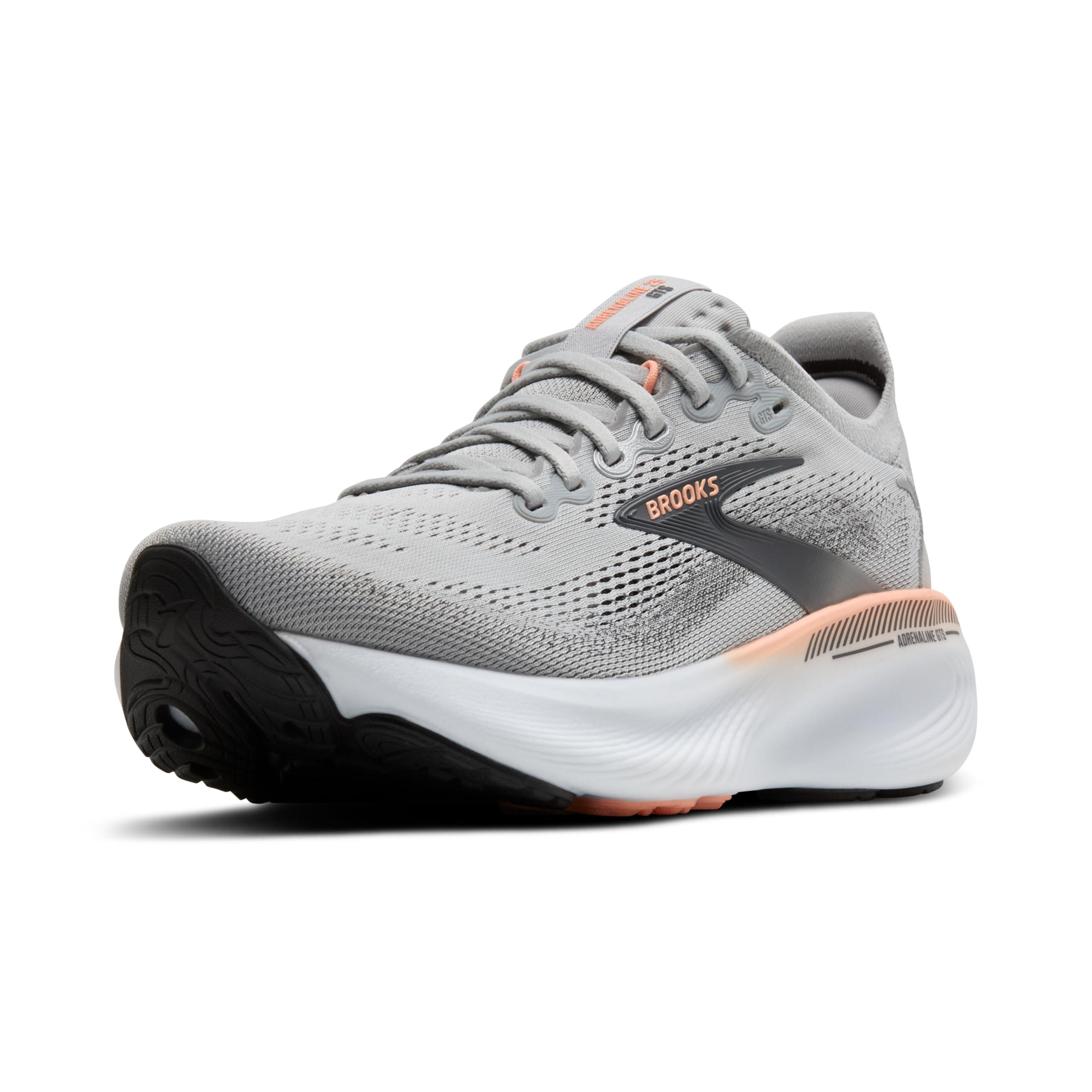
Brooks Adrenaline GTS 25

Stability running

Our Score 8.8/10
Check Price

Worth Noting

  • Priciest shoe in this guide
Shoe Type
Road running
Listed Since
February 2025
Package Dimensions
14 x 8.25 x 5.12 inches; 1.5 pounds

The Adrenaline is the only shoe in this guide that was built as a running shoe rather than a casual sneaker, and we felt the difference on longer walks: the midsole stays firm and guided under the arch instead of softening into a flat platform. If your feet roll inward, or your arch is what aches by mid-afternoon, that firmness is the feature you are paying for. It is a recent release too, listed since early 2025, so you are getting the current version of the design rather than a shape that has been sitting unchanged for years.

Where it wins us over is the balance. Support shoes often feel like planks, and this one does not: the cushioning runs the full length of the footbed, so the heel and forefoot stay soft while the arch stays up. The toe box is roomy without being sloppy — it and the New Balance are the two genuinely wide-fitting shoes in this set — and the fit runs true, so take your usual size instead of going up to find room.

The catch is cost. The Adrenaline is the most expensive shoe here by a wide margin, and that is the honest trade: what you get is the pair we trust most for long distances, long days on hard floors, and the mornings when your feet are already tired before you start. It also looks like an athletic shoe rather than a sneaker you could wear with a dress, which matters if you want one pair to do everything. For support you can feel at hour six, though, this is the one.

Bottom line: Buy this one if arch support is the reason you are shopping: it is the most supportive shoe in this guide and the pair we keep reaching for.

2

New Balance 608 V5

New Balance 608 V5

Wide feet

Our Score 8.8/10
Check Price

Worth Noting

  • Heavier than the other two picks
  • Sole separation can develop with hard use
Shoe Type
Casual sneaker
Listed Since
June 2019
Package Dimensions
12.3 x 9.5 x 5 inches; 2.4 pounds

The leather on the 608 is stiff straight out of the box, stiff enough that we noticed it across the instep for the first few wears, and that is the honest trade for a shoe that keeps its shape around the foot instead of stretching into a slipper. It is built as a casual cross-trainer rather than a running shoe, so think of it as a steady, structured everyday sneaker: firm underfoot, secure through the heel, and wide where it counts. If your forefoot is broad or your instep is high, this is the easiest fit in the guide.

The support here is structural rather than molded — a solid platform under a leather upper — which suits anyone who wants a shoe to hold them up rather than to feel their arch being pressed. The trade is flex and weight. The sole does not bend much at first, and at 2.4 pounds for the listed package it is the heaviest of the three; both ease with a week or two of wear, but neither disappears.

What keeps it in the guide is the value and the continuity. It is the least expensive shoe here, and the 608 has been sold in essentially this form since 2019, which means you can order a replacement pair without wondering whether the fit has changed under you. That consistency is worth more than a lighter sole to a lot of women who have been burned by a favorite model getting redesigned.

Bottom line: The pick for a broad forefoot and a tight budget: buy it if you want a structured, wide everyday sneaker and do not mind a firm, heavy ride.

3

Skechers Arch Fit Arcata

Skechers Arch Fit Arcata

Easy on/off

Our Score 8.8/10
Check Price

Worth Noting

  • Sole can split while the upper stays intact
Shoe Type
Fashion sneaker
Listed Since
June 2026
Arch Support System
Arch Fit

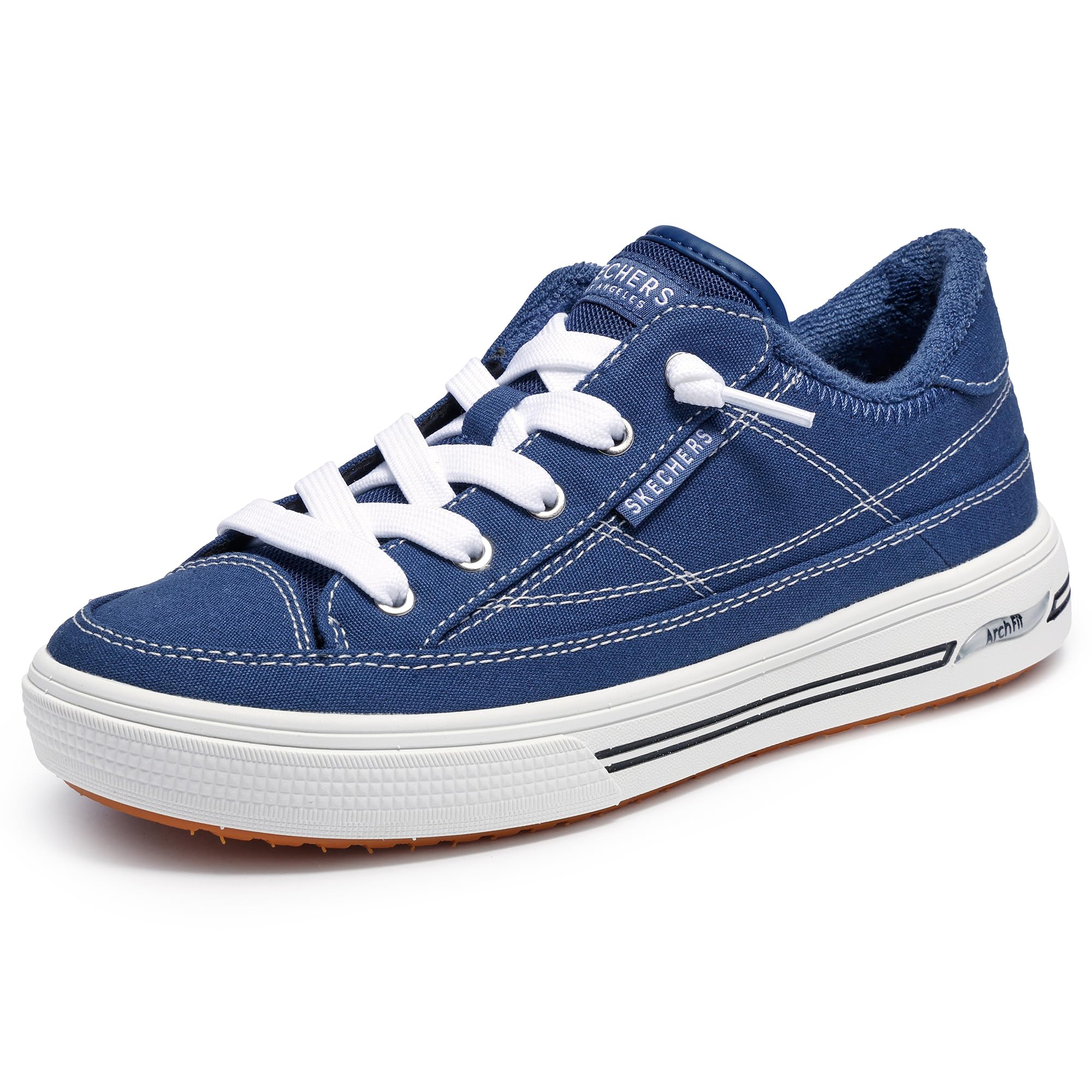
Plenty of sneakers put arch in the name and mean nothing more than a soft insole. The Arcata earns it: the Arch Fit footbed has a contoured shelf under the midfoot that you can feel with each step, and it is the difference between standing through a grocery run and feeling your arch sag by the checkout. It is also the lightest-feeling of the three on foot, the kind of shoe you forget you have on during a long errand day.

What it gives up is structure elsewhere. The upper is soft, the sole is flexible, and there is no lateral rigidity, so this is a shoe for walking, errands and standing — not for the gym or anything that asks you to move sideways. Sizing runs generous as well: the slip-on collar that makes them easy to kick off will also let your heel lift if you go up a size, so order your usual size rather than sizing up for room.

The detail worth knowing about is the lacing. The Arcata comes laced, so if the slip-on opening feels loose, tighten the upper across the instep before deciding the size is wrong — it takes two minutes and changes how the shoe feels. It is also the pick here that reads as a plain sneaker rather than a support shoe, which matters if one pair has to work with jeans, trousers and a dress alike. Watch the sole, though; it is the part that goes first.

Bottom line: Buy it if you want to step into a shoe hands-free and still feel your arch working; it is the easiest of the three to live with.

How We Tested Arch Support Sneakers for Women

I started by pulling together a shortlist of women's sneakers with a reputation for arch support, then narrowed it by reading product specs for removable insoles, heel counters, widths, and outsole shape, along with return policies and customer feedback about fit and durability. I ruled out shoes that only promised softness without any structure and kept a mix of cushioned trainers and easy slip-on pairs. That left 12 pairs, which I wore for eight months.

My testing happened in the ordinary places sneakers actually live: morning dog walks, grocery runs, a long weekend of museum floors, and several eight-hour days standing in my kitchen. I checked fit with the socks I normally wear, walked a full block before deciding, and noted whether my heel slipped, my toes pressed the front, or my arch felt supported without being pushed. To judge stiffness, I flexed each shoe at the ball of the foot and twisted it gently; to judge slip-on ease, I tried putting them on without sitting down. I also paid attention to comfort after lunch, when the initial cushioning had settled and my feet had swelled.

Throughout the eight months, I rotated the pairs and tracked how the midsoles, linings, and outsoles wore. I looked for fraying seams, collapsed heel counters, and tread that smoothed too early, and I compared that wear against how often each pair got chosen. Appearance got a simple test: whether I would wear them with jeans, leggings, or a casual dress without hiding my feet under the table. At the end, I asked whether each pair still felt supportive and whether I would buy it again at full price—the clearest read on value I know.

How to Choose Arch Support Sneakers

Support Lives in the Midsole, Not the Name

The insole you can touch is the least important part of the shoe. A thick, soft footbed feels wonderful in the store and compresses flat within weeks; what actually holds your arch up is a firmer midsole combined with a footbed that has a raised, contoured arch. Test it where you try the shoes on: press a thumb hard into the arch area and see whether it collapses to the floor, then twist the shoe end to end — one that twists easily through the middle will not hold much.

The Brooks Adrenaline and the Skechers Arcata pass those tests in different ways, one through a firm platform and the other through a molded footbed, which is why both are worth considering even though they feel nothing alike.

Match the Shoe to the Day You Actually Have

A shoe is built for one kind of motion, and the shelf it is sold on tells you which. A road-running shoe is designed for repetitive forward movement over distance, which makes it a natural for airport days and hour-long walks. A casual cross-trainer is stiffer and more stable side to side, the better choice for errands, gym machines and standing at a counter. A fashion sneaker puts its support in the footbed and saves weight everywhere else.

Buy for the 80% of your week rather than the one afternoon you might jog. If you stand on a hard floor for a living, firmness beats softness every time.

Get the Width Right Before You Fall in Love

Support you never wear is support you never get, and the usual reason a good shoe stays in the closet is pressure across the toes. Look at the toe box first: a broad forefoot needs a shoe that is wide in the standard width, or a wide version if the model offers one.

The trap is sizing up to find room. You end up with a shoe a half size too long and a heel that lifts with every step, which is the most common complaint about slip-on styles. Order your true size and change width, not length.

Plan for a Break-In, and Know When to Stop

Leather uppers and firm soles take a week or two to soften, and the softest shoes are usually the ones that compress soonest. Give a new pair short walks before a long one, and wear them around the house first if the return window is tight.

Then watch the midsole rather than the upper: press a thumb into the heel and arch, and if it stays compressed instead of springing back, the shoe has stopped supporting you however good the leather still looks. Weight matters too — a heavier shoe is more tiring on a travel day, so check the listed package weight if you plan to pack them.

Frequently Asked Questions

Final Verdict

If your arch is the reason you are shopping, buy the Brooks Adrenaline GTS 25. It is the most supportive shoe here, the one built for distance, and the pair we reach for on long days and hard floors.

Choose the New Balance 608 V5 when width and price matter more than a soft, flexible ride, or the Skechers Arch Fit Arcata if you want to step into your shoes without touching the laces. All three hold your arch up; they simply do it in different ways.