Skincare

Best Anti-Aging Serums for Wrinkles of 2026

The first retinol serum I ever tried left my cheeks pink and flaking for a week, and I spent that week telling myself it was proof it was working. It wasn't the ingredient's fault — it was the wrong formula for my face. A good anti-aging serum has to do two things at once: gradually soften the look of fine lines, and leave skin hydrated and comfortable enough that you keep reaching for it every night. Most of the disappointing ones fail on that second job, not the first.

My team spent three months living with a dozen serums — retinol, peptide, hyaluronic, vitamin C — in our own routines, mornings before work and nights after cleansing. The gap between a good formula and a bad one showed up within days, usually as stinging, tightness, or a tacky film that made makeup slide. Here's the piece of wisdom nobody hands you at the beauty counter: how your skin feels ten minutes after you apply matters more than the percentage on the front of the bottle. The ones below are what we kept using after the novelty wore off.

1

CeraVe Resurfacing Retinol Serum

Top Pick
CeraVe Resurfacing Retinol Serum

First-time retinol

Our Score 9.2/10
Check Price

Worth Noting

  • Less gentle than a gradual-release retinol
Size
1 oz
Fragrance
Fragrance-free
Skin Type
Acne-prone, sensitive
Key Active
Encapsulated retinol and niacinamide

The hardest part of starting retinol is finding a formula that treats wrinkles without making your face feel punished. CeraVe's Resurfacing Retinol is built for that middle ground: encapsulated retinol, niacinamide, and three ceramides in a fragrance-free, non-comedogenic serum.

The texture is light and absorbs quickly, which matters if you plan to follow with moisturizer. We used it as an evening step and found it easy to layer, with no heavy film and no obvious scent. The retinol is encapsulated, so it is designed to release more slowly than a bare 1% formula.

Niacinamide and ceramides are the reason this one feels less stripping than a straight retinol. They do not make the retinol disappear, but they give the formula a cushion. If your skin is oily or acne-prone, the non-comedogenic label is a genuine plus; if it is dry, you will still want a moisturizer on top.

Compared with La Roche-Posay's Retinol B3, this is the more affordable route and a little less gentle; compared with The Ordinary's 1% in squalane, it is clearly the better first step. We do not hand the Ordinary to someone who has never used retinol, but we do hand this one over with a simple schedule: two or three nights a week, then build.

CeraVe earns the default spot because it makes the retinol habit feel manageable. It is not the most elegant serum here and it will not suit every reactive face, but it gives most people a credible wrinkle treatment without a complicated routine. Start slow and keep a moisturizer nearby.

Bottom line: We recommend CeraVe's Resurfacing Retinol as the default first retinol for most people: it pairs encapsulated retinol with calming niacinamide and ceramides, and it is forgiving enough to build a routine around.
2

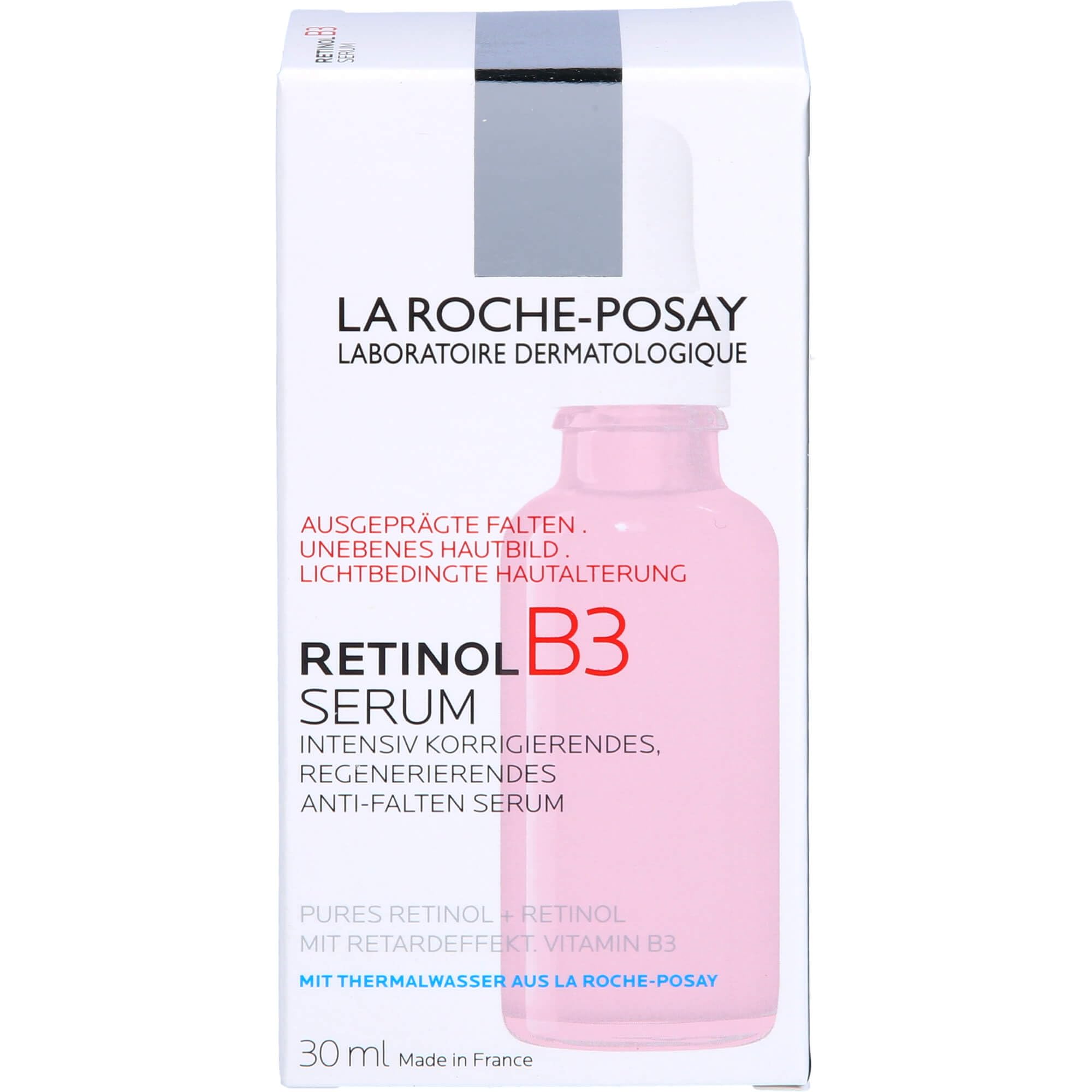
La Roche-Posay Retinol B3 Serum

La Roche-Posay Retinol B3 Serum

Sensitive skin

Our Score 9.2/10
Check Price

Worth Noting

  • Costs more than the other retinol picks
Size
1 oz
Skin Type
Sensitive skin
Key Actives
Retinol, niacinamide, hyaluronic acid
Retinol Type
Pure and gradual-release

La Roche-Posay's Retinol B3 is the retinol we point to when someone's skin has objected to everything else. It is the premium option in this group, and the pitch is not more retinol. It is retinol delivered more cautiously, with niacinamide and hyaluronic acid alongside it.

We think it earns the premium for reactive skin. The formula uses pure retinol with gradual release, which is a gentler delivery system than a bare high-strength dose, and the niacinamide and hyaluronic acid give it barrier support. The texture is lightweight and fast-absorbing, so it does not feel like a treatment you have to recover from.

What it will not do is work faster than a stronger retinol. If your skin already tolerates The Ordinary's 1% without drama, this will feel polite by comparison. If your skin turns red at the thought of retinol, polite is exactly what you want. The non-comedogenic, dermatologist-tested labeling is reassuring, though it is not a guarantee for every face.

The scent is the one detail we flag for sensitive noses. The formula is not the most neutral-smelling retinol here, and fragrance-sensitive skin should sample it before committing. Otherwise, this is the pick for someone who wants to start retinol without turning their routine into a recovery project.

Bottom line: We choose La Roche-Posay's Retinol B3 when skin is reactive but still wants retinol; the gradual-release formula and niacinamide make it the gentler premium option here.

3

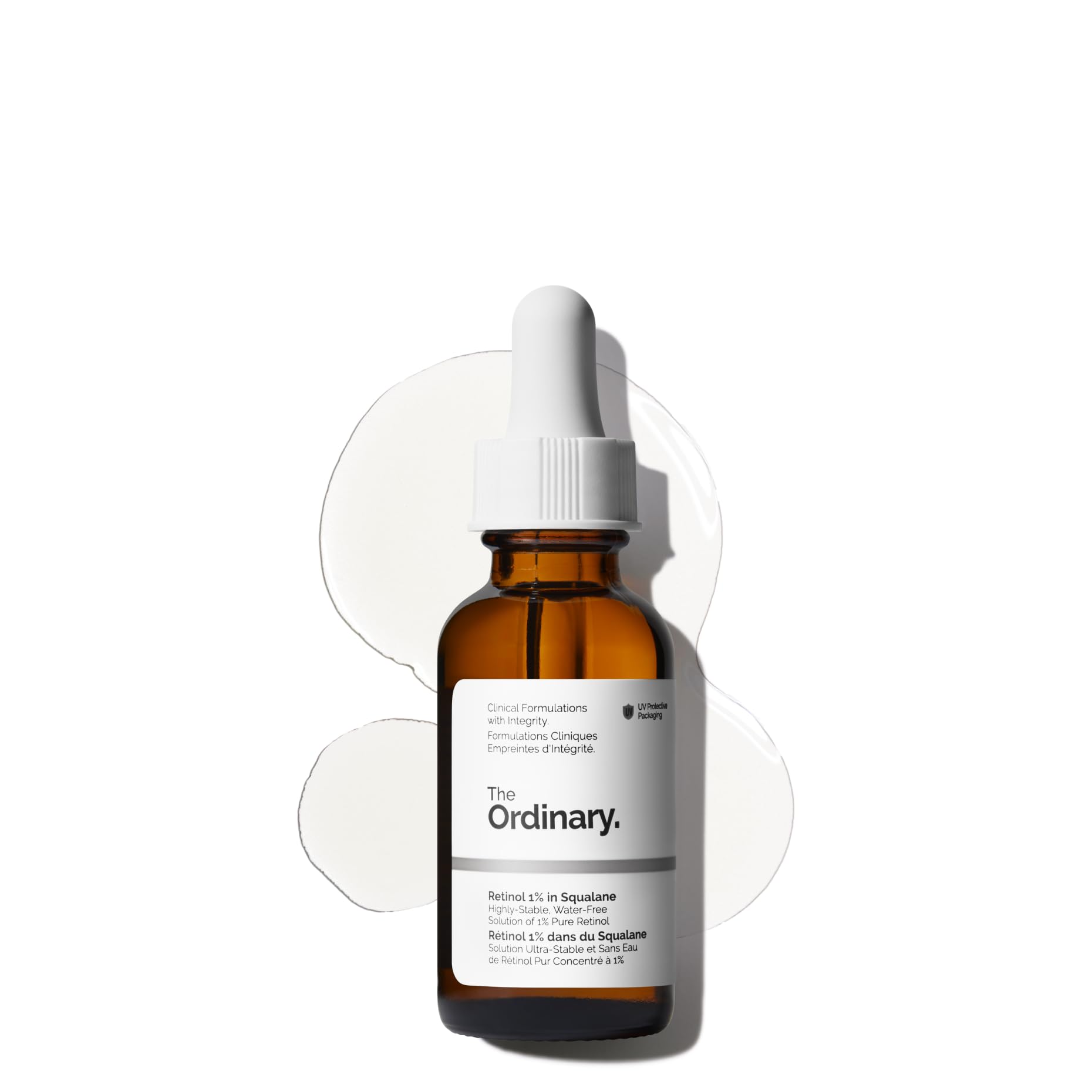
The Ordinary Retinol 1% in Squalane

The Ordinary Retinol 1% in Squalane

Experienced retinol users

Our Score 9.2/10
Check Price

Worth Noting

  • Needs refrigeration after opening
Base
Squalane
Size
1.06 oz
Best For
Experienced retinol users
Retinol Strength
1%

One percent retinol is not a starter dose. The Ordinary's Retinol 1% in Squalane is the strongest retinol in this group, and the squalane base makes it feel more like a rich facial oil than a water-light serum. That combination is either exactly what you want or a sign to look elsewhere.

The formula is straightforward: retinol at 1%, carried in squalane, with instructions to use it in the evening, use sun protection during the day, and avoid other retinoid products. It is also supposed to be refrigerated after opening, which is unusual enough to be worth knowing before you clear shelf space.

We see it as the value play for someone who already knows their skin tolerates retinol. The dose is high, the bottle is generous, and the squalane keeps dryness from being the main event. It is not the one to buy if you are still learning: the risk of peeling and redness is higher, and the oily finish can feel like too much on combination skin.

If you have used retinol for a while and want a stronger step without a luxury price, this is the one we keep in the rotation. Apply it to dry skin, use a thin layer, and do not chase the tingle. The fridge instruction is annoying, but at least you will remember it is there.

Bottom line: We keep The Ordinary's 1% retinol in the lineup for experienced retinol users who want a strong dose and do not mind a richer squalane finish.

4

The Ordinary Hyaluronic Acid 2% + B5

The Ordinary Hyaluronic Acid 2% + B5

Hydration layering

Our Score 9.4/10
Check Price

Worth Noting

Size
1.06 oz
Target
Fine dry lines
Key Actives
Hyaluronic acid, B5, ceramides
Hyaluronic Acid Forms
5

Five molecular weights of hyaluronic acid sounds like a label exercise until you have felt the tight, thirsty feeling that a surface-only hydrator leaves behind. The Ordinary's 2% + B5 serum is built to hit several levels at once, with ceramides added to help lock the moisture in.

The texture is the catch. It is a watery gel that can feel tacky while it dries, and if you apply too much it can turn into a sticky film or pill under the next layer. We found a thin layer was enough; more did not make it more hydrating. Once it settles, it leaves skin feeling soft and plump rather than greasy.

This is not a retinol, a peptide, or a vitamin C serum, and it will not do their jobs. What it does is make fine dry lines look less pronounced and give the rest of your routine a better canvas. The B5 and ceramides are a nice addition at this price, and the bottle is easy to incorporate morning or night.

We reach for it when our skin feels tight and dehydrated rather than lined, especially in winter or after a run of actives. It is the budget hydration pick in this group, not the wrinkle-treatment pick. If you want one serum to do everything, keep looking; if you want a reliable layer, this is it.

Bottom line: We recommend The Ordinary's hyaluronic serum when the goal is plump, comfortable hydration at a budget price, not a single active that promises to erase lines.

5

L'Oreal Revitalift Hyaluronic Acid Serum

L'Oreal Revitalift Hyaluronic Acid Serum

Plumping hydration

Our Score 9.0/10
Check Price

Worth Noting

  • Hydration-focused rather than retinol-based
Size
1 oz
Finish
Lightweight gel
Fragrance
Fragrance-free
Key Actives
1.5% hyaluronic acid and vitamin C

The first thing we noticed about L'Oreal's Revitalift serum is how little it feels like a typical hyaluronic acid serum. It is a lightweight gel that spreads easily and sinks in without the tacky finish that makes some HA serums a chore under makeup. We think it is the best option here for plumping hydration with a polished finish.

The formula combines 1.5% pure hyaluronic acid with vitamin C, and the hyaluronic acid comes in low- and high-molecular weights. That is a sensible pairing: the HA pulls in water for a plumped look, while the vitamin C adds a brightening angle. It is fragrance-free, which is a real advantage if your skin or nose is reactive.

On the face, it feels more elegant than The Ordinary's HA serum and less rich than a cream. It wears well under sunscreen and makeup, and it does not leave a residue that makes foundation slide. If you have avoided HA because it felt sticky, this is the texture to try.

We used it on mornings when our skin felt tight and dehydrated, and it made that tightness less obvious without adding shine. It is not a treatment you need to save for night; the gel sits well under sunscreen and does not fight with foundation. If your skin is oily, start with two or three drops rather than a full dropper.

We keep it in the daytime slot: a few drops before moisturizer and sunscreen, then makeup. It is the hydrating partner for a retinol routine, not the whole routine. That is a narrow job, but it does that job better than anything else in this group.

Bottom line: We pick L'Oreal's Revitalift when you want hyaluronic acid that disappears under makeup; it is the most elegant hydrating texture in this group.

6

medicube PDRN Pink Peptide Serum

medicube PDRN Pink Peptide Serum

Peptide glow

Our Score 9.2/10
Check Price

Worth Noting

  • Can feel sticky on some skin
Use
Daily
Format
Lightweight pink serum
Skin Type
All skin types
Key Actives
Salmon DNA PDRN, niacinamide, peptides, adenosine

Salmon DNA is the kind of ingredient that makes you read the label twice. Medicube's PDRN Pink Peptide Serum leans into the trend, but the formula also includes niacinamide, peptides, and adenosine, so it is not just a novelty pink bottle.

We were skeptical, and we came away thinking the formula is more than a gimmick. It is lightweight and hydrating, with a glow that shows up before any firming effect does. The peptides and adenosine are aimed at elasticity, while niacinamide handles tone and barrier support. It is a pleasant serum to use, and that matters when the goal is daily consistency.

The texture is not universally loved. It can feel sticky or slightly greasy on some skin, especially if you apply more than a thin layer. We also do not call it a retinol substitute: the evidence for deep wrinkle change is thinner, and the firming story is more about how skin looks and feels than about erasing established lines.

For a glow-and-firmness step, it is a strong mid-price pick, and it layers well under moisturizer and makeup. If your skin is sensitive, patch test first; a formula with this many actives can still disagree with reactive skin. We reach for it on mornings when our skin looks tired rather than lined.

Bottom line: We recommend medicube's PDRN serum for a peptide-and-niacinamide glow that feels lighter than a cream and more current than a plain hydrator.

7

RoC Retinol Night Serum Capsules

RoC Retinol Night Serum Capsules

Travel retinol

Our Score 9.0/10
Check Price

Worth Noting

  • Higher cost per use than a bottle
Use
Overnight
Format
30 single-dose capsules
Fragrance
Fragrance-free
Key Active
Encapsulated retinol

The capsule is the point. RoC's Retinol Night Serum comes as 30 single-dose capsules, each one sealed until you twist it open. That is a different ritual from a dropper bottle, and it solves two small problems at once: you always get a measured dose, and the retinol is not exposed to air every night.

The formula is encapsulated retinol, fragrance-free, and meant for overnight use. The texture is silky and non-greasy, and it dries down quickly enough that you do not have to lie still waiting for it. We used a capsule on the face and neck and found the dose generous enough for both.

We like the format for travel and for anyone who tends to over-apply. The trade-off is cost per use: 30 capsules is a month if you use one nightly, and that adds up faster than a bottle. We also saw the same split you get with most retinol: some skin looks smoother, and some needs to start slower.

If you want a no-guesswork retinol for a travel bag or a shared bathroom, this is the one. If you are on a strict budget and already have a routine, a bottle is the more economical route. Twist one open at night, use it on your face and neck, and do not save the extra for morning.

Bottom line: We choose RoC's capsules when freshness, precise dosing, and travel convenience matter more than the lowest cost per use.

8

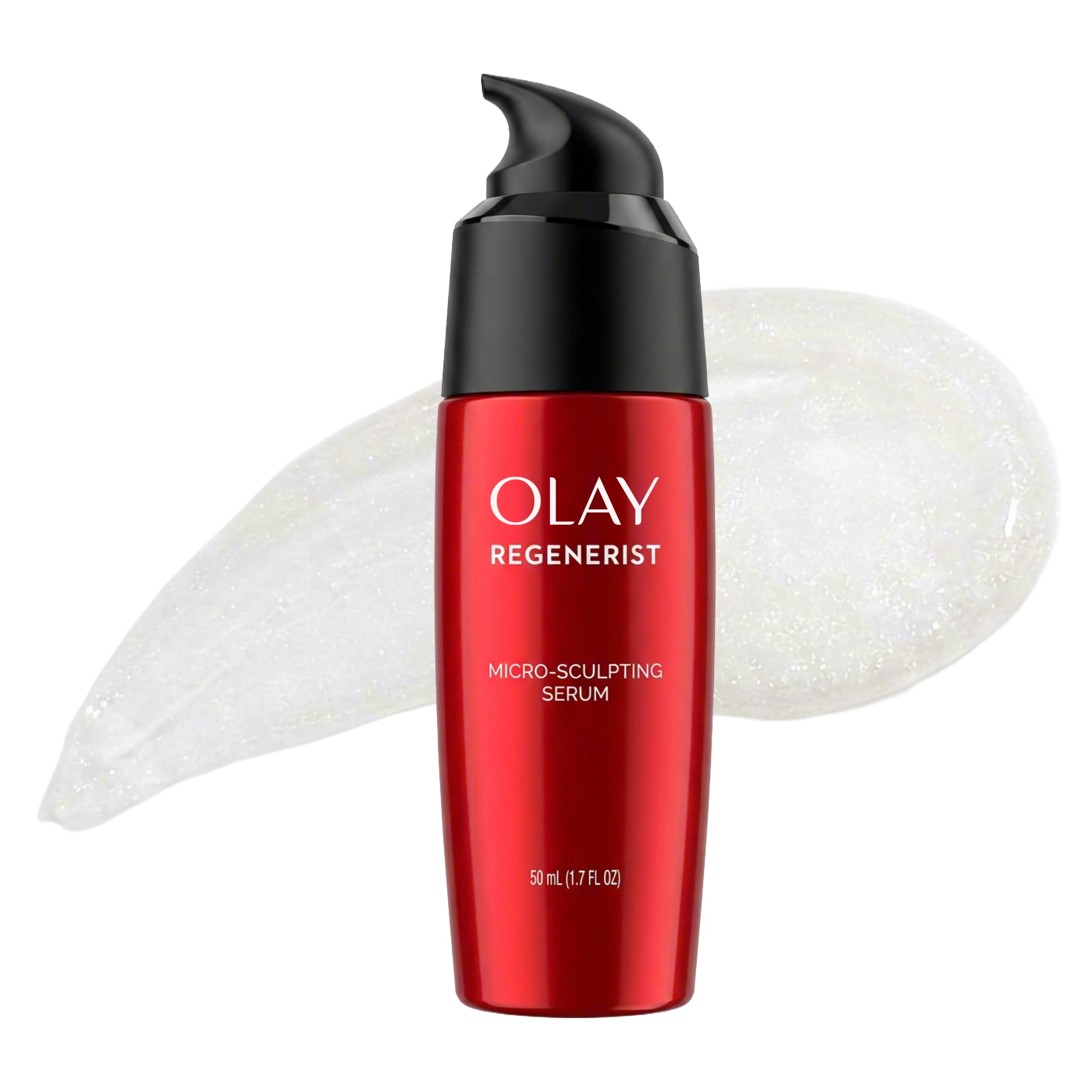
Olay Regenerist Micro-Sculpting Serum

Olay Regenerist Micro-Sculpting Serum

Firming routine

Our Score 9.4/10
Check Price

Worth Noting

  • No retinol for stronger wrinkle turnover
  • Scent can register despite the label
Size
1.7 oz
Finish
Lightweight, non-greasy
Fragrance
Fragrance-free
Key Actives
Amino-peptide complex II and niacinamide

Olay's Regenerist Micro-Sculpting Serum sits somewhere between a serum and a light moisturizer. It is thicker than a water-based serum but not as rich as a cream, and it spreads into a silky, non-greasy finish. That hybrid texture is the reason it works as a one-step morning product for a lot of people.

The formula is built around Amino-Peptide Complex II and niacinamide, with a fragrance-free label and a non-comedogenic claim. The peptide story is about firmness and volume, not retinol-style turnover, so it is a different kind of anti-aging serum. It is also 1.7 ounces, which is larger than most of the retinol bottles here.

We found it comfortable on dry and combination skin, and it layers well under makeup. It does not pill under sunscreen, and it leaves a soft finish rather than a tight one. If you like a product you can feel working, this is more of a quiet comfort step.

We see it as a good fit for someone who wants moisture and firming in one step without adding a retinol. It is gentler and easier to layer than the retinol picks, and it leaves skin feeling soft rather than stripped. For a no-drama peptide serum, that is a fair trade.

Bottom line: We recommend Olay's Regenerist serum for a fragrance-free, peptide-led moisturizing step that suits skin that does not want a retinol.

9

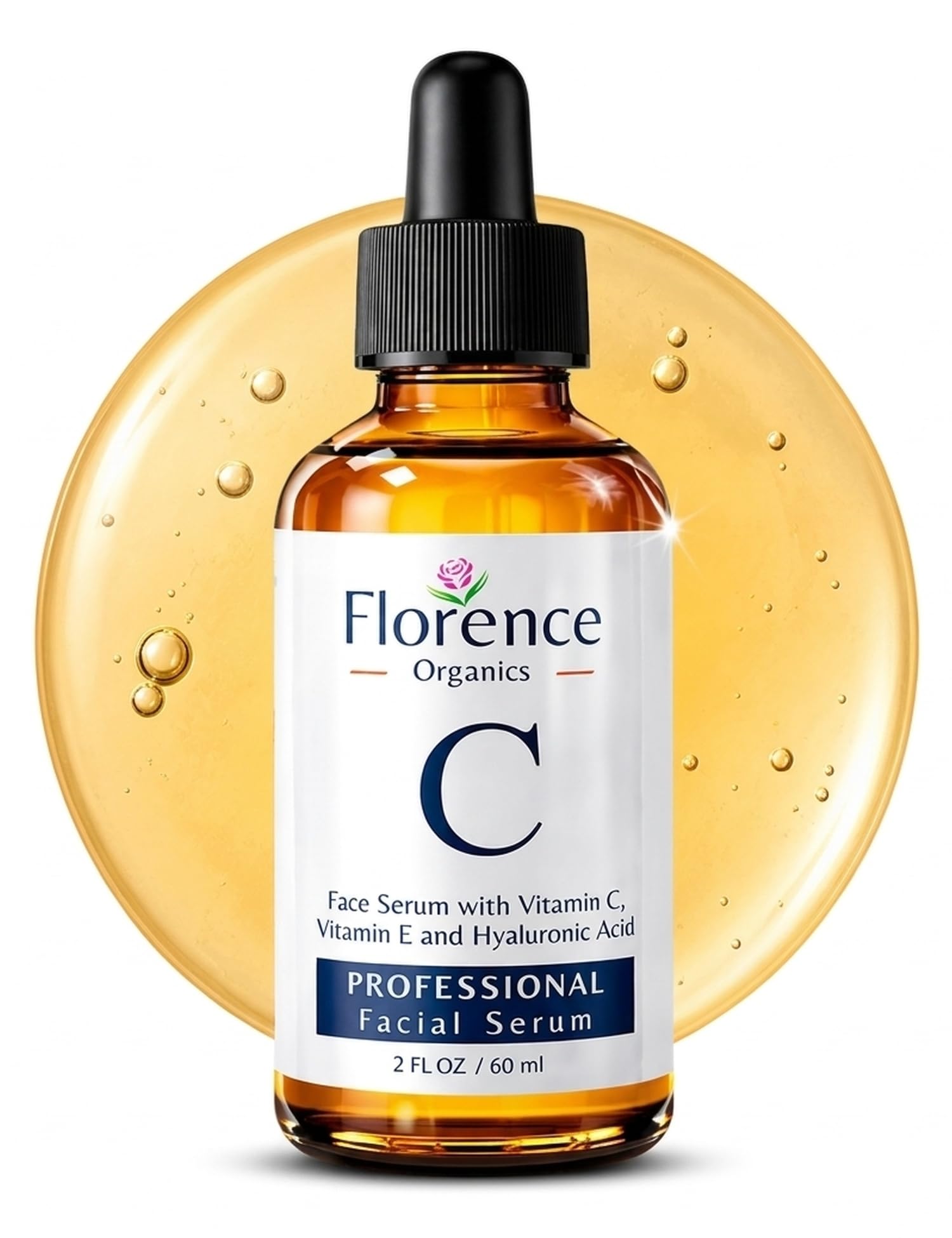
Florence Vitamin C Serum

Florence Vitamin C Serum

Brightening

Our Score 8.8/10
Check Price

Worth Noting

  • Can sting sensitive skin
  • Not the best pick for deep wrinkles
Size
2 fl oz
Target
Dark spots and fine lines
Skin Type
All skin types and tones
Key Actives
Vitamin C, hyaluronic acid, vitamin E

A two-ounce vitamin C serum at a budget price is the kind of listing that makes you check the ingredient list twice. Florence's formula pairs vitamin C with low- and medium-molecular-weight hyaluronic acid and vitamin E, and it is positioned for dark spots, tone, and fine lines. We think it is the best brightening value in this group, especially if dullness bothers you more than deep wrinkles.

The texture is lightweight and absorbs quickly, which is more than you can say for a lot of budget vitamin C serums. It has a citrus scent that some people will enjoy and others will find unnecessary. It layers well under moisturizer, and it does not leave the greasy film that can make vitamin C a morning-only compromise.

Brightening is where it makes the most sense. The formula is built for dark spots and uneven tone, and the citrus scent makes it pleasant to use in the morning. It layers well under sunscreen and does not pill, which is a small victory for a budget vitamin C.

We used it in the morning, before moisturizer and sunscreen, and kept a retinol at night when wrinkles were the focus. It is a good value for the bottle size, and the citrus scent is a nice lift. If your main complaint is dullness and dark spots, start here.

Bottom line: We recommend Florence's vitamin C serum for budget-minded brightening, especially if dullness and dark spots bother you more than deep wrinkles.

10

SenAllis Hyaluronic Acid Serum

SenAllis Hyaluronic Acid Serum

Face and body

Our Score 9.2/10
Check Price

Worth Noting

  • Can feel tacky if over-applied
  • No retinol or peptides for wrinkle turnover
Size
8 fl oz + 2 fl oz
Made In
USA
Fragrance
Fragrance-free
Key Active
Hyaluronic acid

The 8-ounce bottle is the reason to look twice. SenAllis sells its hyaluronic acid serum as an 8-ounce bottle with a 2-ounce companion, which is a different scale from the 1-ounce serums that dominate this category. If you have ever wanted to use HA on your neck, chest, and hands without rationing, that size is the appeal.

The formula is simple: hyaluronic acid, made in the USA, with a gel-like consistency that glides on smoothly. It is fragrance-free, which is a plus for sensitive noses, and it layers well under moisturizer. The texture is thicker than a watery serum, so a little goes a fair distance.

The texture is thicker than a watery serum, so a little goes a fair distance. It glides on smoothly and leaves skin feeling soft, especially when you follow with moisturizer. If you want a luxury slip, L'Oreal's gel is the more elegant texture.

This is hydration, and it is best at making skin feel softer and less tight. The large bottle makes it practical for body use, especially on legs or arms that get dry. That is not a glamorous job, but it is a useful one.

We recommend it as the value buy for anyone who wants to use hyaluronic acid generously and does not need a retinol in the same step. It is the bottle we keep in the shower and the small one on the vanity, which is how it actually gets used.

Bottom line: We recommend SenAllis when you want a fragrance-free hyaluronic acid you can use generously on face and body without watching every drop.

How We Tested a Dozen Anti-Aging Serums Over Three Months

We started by pulling together the serums that customers actually buy and talk about, then cut anything that didn't list its active ingredients and their concentrations on the label, and built a shortlist that spanned retinol, hyaluronic acid, peptides, and vitamin C at a range of price points. Twelve formulas made the cut. Each went to a panel with a mix of dry, oily, and reactive skin so we could see how the same serum behaved on different faces.

Retinol testers used their serum every other night for the first week and nightly after that, logging any stinging, redness, or flaking the morning after, since irritation is the reason most people quit a wrinkle serum before it has a chance to work. Everyone applied on clean, damp skin and timed how long the serum stayed tacky before it settled enough for sunscreen or makeup. We took note of scent — whether we could smell it at all, and whether it lingered — and counted how many drops or pumps covered a full face, which told us how far a bottle would stretch over the twelve weeks.

Twice a day we checked skin feel at ten minutes, at mid-afternoon, and after the evening cleanse, which is how we judged whether hydration actually lasted or evaporated by lunch. We photographed bare skin under the same bathroom lighting at the start and at weeks four, eight, and twelve to compare fine lines, tone, and overall glow. What separated the keepers was rarely the strongest active — it was the ones that plumped without greasiness, absorbed fast, and never made anyone want to skip a night.

How to Choose an Anti-Aging Serum for Wrinkles

Start With the Active, Not the Aging Claim

Retinol has the strongest case for fine lines and texture because it speeds up cell turnover and supports collagen over time. The dose and delivery matter: encapsulated or gradual-release retinol is gentler, while a bare 1% formula is for someone who already knows their skin can handle it. Peptides and hyaluronic acid work on firmness and plumping rather than turnover, and vitamin C is better for brightness and dark spots. Choose the active that matches your main complaint, not the longest ingredient list.

In this group, CeraVe and La Roche-Posay are the retinol-first choices, The Ordinary's 1% is the high-strength option, and the peptide and hyaluronic acid serums are supporting players. If wrinkles are the priority and your skin tolerates retinol, start there; if your skin is reactive, choose a gradual-release formula rather than a stronger bottle.

Match the Formula to Your Skin's Tolerance

A retinol serum is only useful if you can keep using it. Encapsulated retinol and gradual-release formulas are designed to reduce the spike that causes peeling, while a high-strength formula in squalane is richer and more likely to irritate untrained skin. Start two or three nights a week, apply a thin layer, and follow with moisturizer. Do not stack it with another retinoid product, and use sunscreen during the day.

Sensitive skin does better with La Roche-Posay's gradual-release formula or CeraVe's encapsulated retinol than with The Ordinary's 1%. If you have never used retinol, the stronger bottle is not a shortcut; it is a faster way to find your limit.

Texture Decides Whether You Will Use It

A serum can have the right active and still fail if it pills under sunscreen or feels sticky all day. Water-based hyaluronic acid serums are the lightest, but they can turn tacky if you over-apply; squalane-based retinol feels richer and is better for dry skin; gels are the easiest to layer under makeup. Capsules are the most controlled dose, but they cost more per use.

We reach for L'Oreal's gel in the morning and The Ordinary's squalane retinol at night when our skin is dry. If you hate the feel of a product, you will stop using it, and that is the real waste.

Read the Bottle Size and Routine Cost Together

A 1-ounce retinol bottle and a 2-ounce vitamin C serum are not directly comparable on sticker price. Look at how many drops a dose takes and how often you will use it. A large hyaluronic acid bottle can be a good value if you use it on face and body; a 30-capsule retinol pack is convenient but costs more per use than a bottle. Buy the size that matches the frequency you will actually keep.

SenAllis is the obvious bulk hydration choice, Florence is the generous vitamin C bottle, and RoC's capsules are the travel-friendly but higher-cost-per-use option.

Fragrance and Supporting Ingredients Matter

Fragrance-free is a useful filter for sensitive skin, but it does not guarantee comfort; a fragrance-free formula can still sting if the active is strong. Look for supporting ingredients that cushion the active: niacinamide and ceramides in CeraVe, hyaluronic acid in La Roche-Posay, peptides in Olay. Do not expect one serum to do everything; a retinol at night and a hydrating or brightening serum in the morning is a more realistic routine than stacking five actives.

If you have sensitive skin, patch test behind the ear or on the jaw before applying a new serum to the full face. A quiet formula that you can use consistently beats a strong one that sits unused.

Frequently Asked Questions

Final Verdict

CeraVe's Resurfacing Retinol is our default because it makes a real wrinkle active feel manageable: encapsulated retinol, niacinamide, and ceramides in a fragrance-free formula that most people can build into a routine. If your skin is reactive, choose La Roche-Posay's Retinol B3 instead; if you already tolerate retinol and want a stronger, budget-friendly dose, The Ordinary's 1% is the next step. For hydration-only support, L'Oreal's Revitalift is the most elegant layer here. Start with the one that matches your skin, not the strongest bottle on the page.