Skincare

Best Anti-Aging Devices of 2026

Anti-aging devices ask for a lot: weeks of steady use before anything shows, and a price that would buy a decent winter coat. The pitch is simple enough — red light, microcurrent, or gentle heat nudging skin toward more collagen — but a jar of cream promises the same thing for a fraction of the cost. I wanted to know which ones actually turn on, stay comfortable for a full session, and do something about the fine lines and dullness no serum has managed to touch.

Over the past eight months, my team and I have worn 12 of them — full-face masks, handheld wands, a heated gua sha tool, even a floor lamp — through a real nightly routine, not a single photo-op session. The thing I didn't expect is that the deciding factor is rarely the light itself. It's whether you'll sit with the thing for ten minutes a night, every night, without the strap slipping or the battery dying halfway through — and that's what separates the picks below.

1

iRestore LED Face Mask

Top Pick
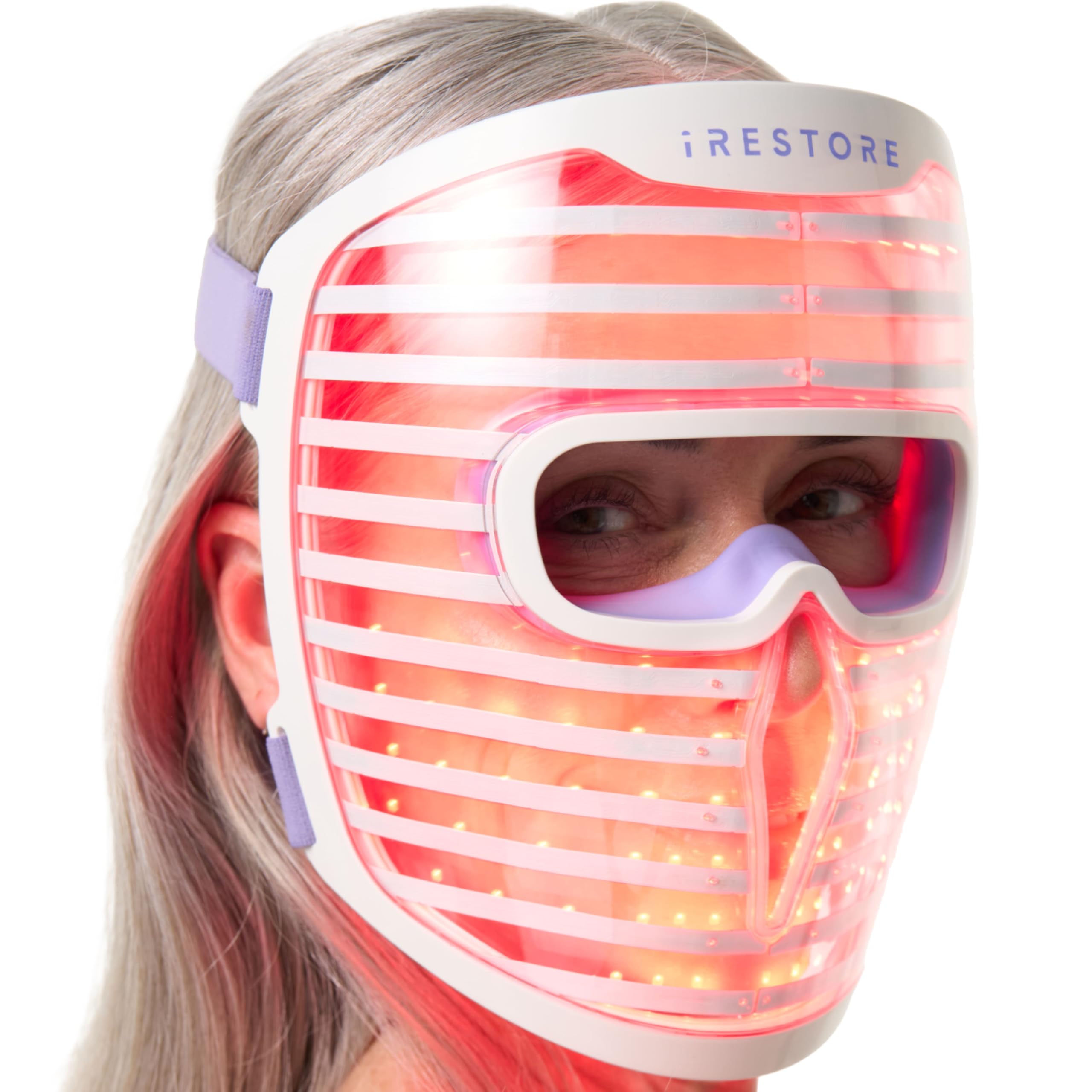
iRestore LED Face Mask

Overall LED mask

Our Score 9.0/10
Check Price

Worth Noting

  • Battery charging is the recurring weak point
  • Face only
LEDs
360
Power
Rechargeable
Wavelengths
635nm red, 830nm infrared, 415nm blue
Session Time
10 minutes

Three hundred and sixty LEDs is what's printed on the box; the part that changed our sessions was the suspension. Two straps hold the shell away from your face instead of pressing it against your cheekbones, so the light spreads across the whole face rather than concentrating wherever the plastic lands. We finished sessions without the pressure marks a close-fitting mask leaves behind, and the shell blocks direct light from your eyes, so you can keep them open.

What settles it for us is the pairing of coverage and comfort, because those are the two things that decide whether a mask gets worn in week six. The three wavelengths split the work as well: red at 635nm and infrared at 830nm for firmness and lines, blue at 415nm for the breakouts that keep arriving in your forties. Sessions run ten minutes, three to five times a week, and the rechargeable shell means no cord trailing across the bathroom counter.

It sits at the top of this group on price, and that premium buys the third wavelength, the floating fit, and a build that feels like equipment rather than a toy. Whether that's worth it comes down to one question: will you actually wear it three nights a week? The comfort is the argument for yes.

The adjustable straps also make it the easiest mask here to share between two people with different face shapes — one loosens the top strap, the other tightens it, and neither has to rethread anything. It arrives with a case too, which matters more than it sounds if the mask lives on a shelf between sessions.

Bottom line: This is the mask we recommend first: 360 LEDs across red, infrared, and blue, and a suspension fit that never presses on your face.

2

INTEO Wireless LED Mask

INTEO Wireless LED Mask

Face and neck

Our Score 9.2/10
Check Price

Worth Noting

  • Fit runs large on smaller faces
  • Runtime can fall short of the stated 120 minutes
Modes
Red 630nm, blue 460nm, amber 605nm, near-infrared 850nm
Battery
2000mAh remote, 120 minutes per week per charge
Coverage
Face and neck
Light Beads
680

If you want the most coverage per dollar in this group, this is the one: a wireless mask that treats the neck as well as the face for a good deal less than the premium options. We think that combination is the best value here, full stop.

The coverage is the real story. Most masks stop at the jaw, which leaves the neck — often the first place laxity shows — to a separate wand. This one runs a hundred beads across the face and seventy down the neck, each bead holding four LEDs, so the whole chain gets the same dose in one sitting. The soft silicone drapes rather than clamps, which is why it can run down under the chin without digging in.

Controls sit on a separate 2000mAh remote with a timer, so you can set a session and lie back without a cord tugging at your chin, and the four modes — red 630nm, blue 460nm, amber 605nm, and near-infrared 850nm — switch without the mask coming off. The stated runtime is 120 minutes a week on a charge, which covers several sessions.

Small things make it feel less like a bargain-bin device than the price suggests: the straps go on without a diagram, and it packs into the bag it comes with. None of that is the reason to buy it, but all of it is the reason it gets used.

Bottom line: Buy this one if the neck matters as much as the face — a wireless mask that covers both for far less than the premium options.

3

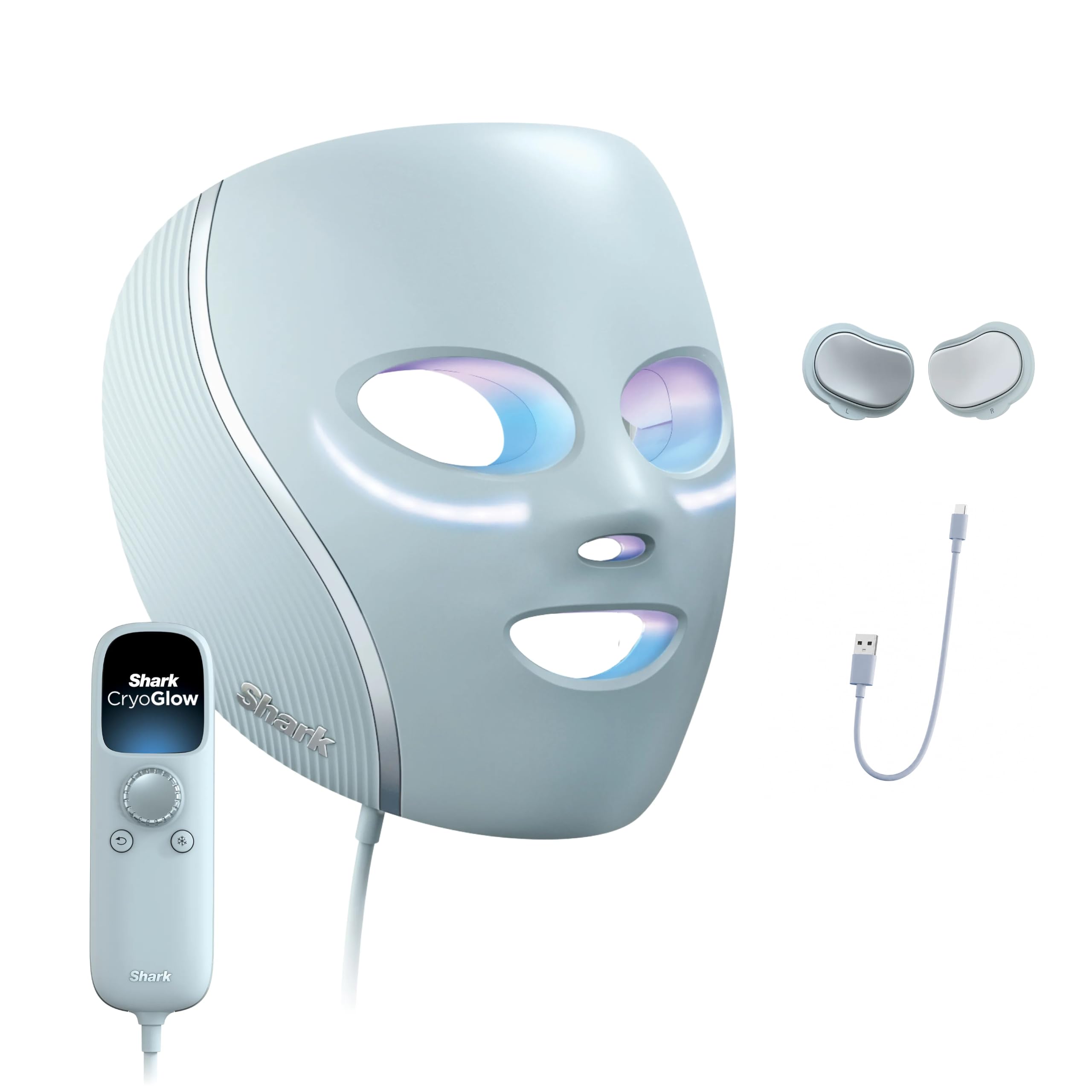
Shark CryoGlow LED Mask

Shark CryoGlow LED Mask

Fastest routine

Our Score 8.8/10
Check Price

Worth Noting

  • Battery needs charging almost daily
  • Sits at the top of this group on price
Extra
Under-eye cooling pads
Light
Red, blue, deep infrared
Programs
4 (Better Aging, Skin Clearing, Skin Sustain, Under-Eye Revive)
Session Time
6 minutes

Six minutes is the entire commitment with the Better Aging program, and the cooling pads under the eyes are why we kept reaching for it on tired evenings. Cold and red light at the same time is a combination no other mask here offers, and it turns a chore into something closer to a treatment.

The documentation is what tips it for us. Four programs — Better Aging, Skin Clearing, Skin Sustain, and Under-Eye Revive — split red, blue, and deep infrared light, and the Better Aging cycle is backed by a twelve-week clinical study of 119 participants run by an independent third party, with FDA clearance on top. Nothing else in this group arrives with that much paperwork, and for a device you're meant to use daily, documented beats aspirational.

The programs are labeled in plain English rather than by wavelength, which makes this the easiest device here to hand to someone who doesn't want a lesson first. Under-Eye Revive is the one we noticed most, because nothing else in this set does anything specific for that patch of skin.

Bottom line: For anyone who won't hold a ten-minute habit, this is the pick: six-minute programs, cooling under-eye pads, and the most clinical documentation here.

4

Viconor Red Light Therapy Lamp

Viconor Red Light Therapy Lamp

Face and body

Our Score 8.6/10
Check Price

Worth Noting

  • Stand shifts and can topple when repositioned
  • Takes up floor space permanently
Use
Face and body
LEDs
120
Mount
Adjustable tripod stand
Wavelengths
660nm red, 850nm infrared

This is a lamp on a tripod rather than something you wear, and that changes the routine completely. You sit in front of it and point it wherever you need — face, shoulders, lower back, knees — which is a different proposition from lying still in a mask and hoping the coverage reaches your jaw.

The head carries 120 LEDs, each pairing one 660nm red emitter with two 850nm infrared ones, and the curved face concentrates the light instead of scattering it. The stand adjusts for height and angle, so a session on your shoulders doesn't put you on the floor, and the wired controller means nothing to charge and nothing to lose.

For versatility per dollar, nothing else here comes close: one device covers a face session and a post-run recovery session, and it's the only pick that reaches your back. The stand is the compromise. It holds once it's set, but it can shift when you move the head, and it occupies a corner of a room permanently in a way a mask never does.

Bottom line: The one to choose when you want light on your shoulders and back as well as your face; a lamp beats a mask for reach.

5

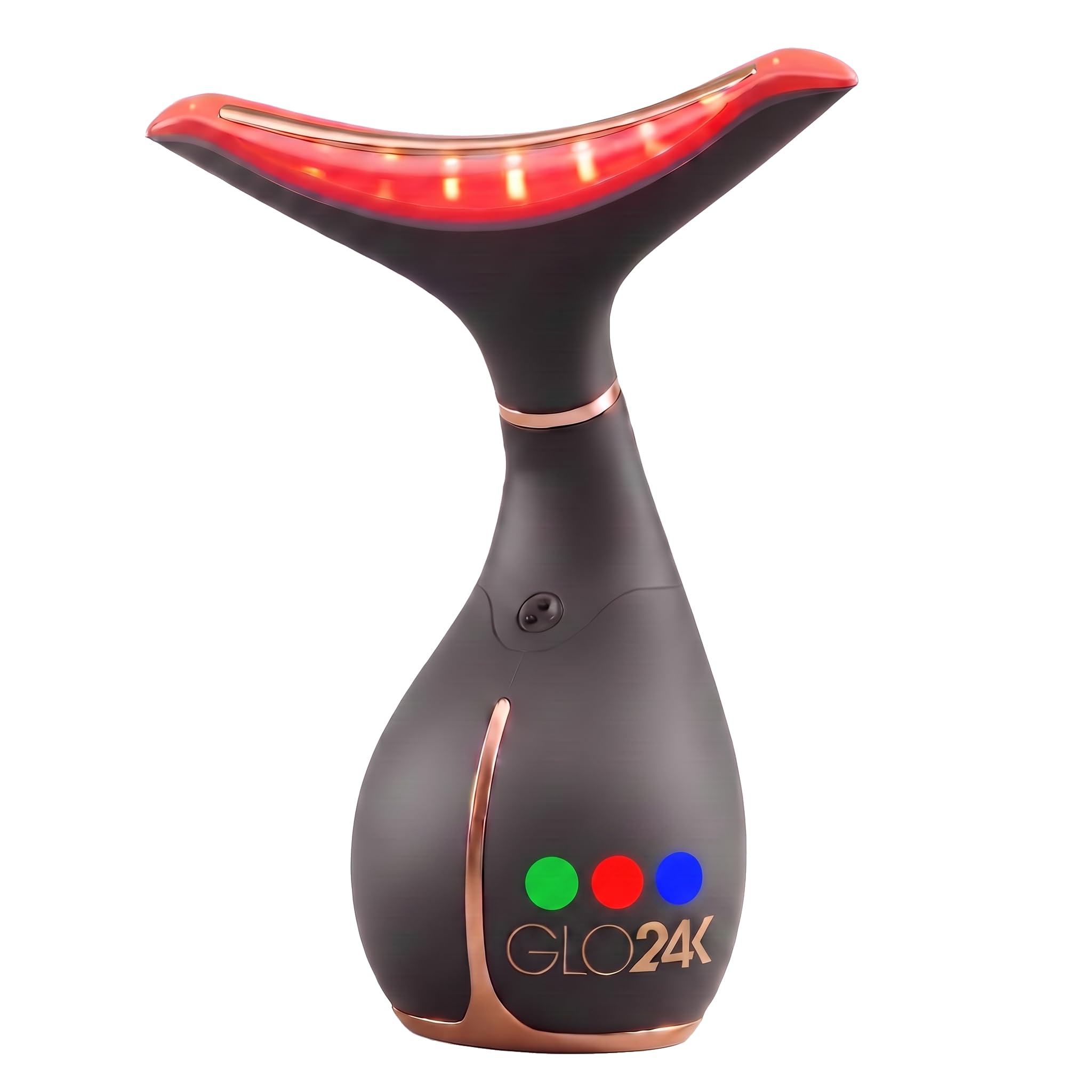
GLO24K LED Face and Neck Wand

GLO24K LED Face and Neck Wand

Neck and jawline

Our Score 8.6/10
Check Price

Worth Noting

  • Small head means a slow pass over jaw and neck
Use
Face, jawline, neck, décolletage
Modes
LED light and vibration
Power
Rechargeable, USB-C cable included

The head is shaped for the places a mask can't reach — under the jaw, down the sides of the neck, across the collarbone — and that's why it earns a spot here even though a wand asks more of you than a mask does.

It pairs LED light with vibration and a gentle warmth, and the warmth is the part we noticed: it makes a thick night cream spread and sink rather than sit on the surface. There are several light modes and vibration settings to move between, which helps on an evening when your skin is feeling sensitive and you still want the massage.

What it isn't is a light-therapy session. The light is a supporting act to the warmth and the massage, which is what you're buying — and on a night when a full mask session feels like too much, this is the tool that still gets picked up. That's worth something in a category where consistency does most of the work.

Bottom line: A warm, well-shaped wand for the jaw and neck, and the tool we reach for on a puffy morning rather than a full session.

6

ZSP Electric Gua Sha

ZSP Electric Gua Sha

Travel and puffiness

Our Score 9.8/10
Check Price

Worth Noting

  • Light output is incidental next to a full mask
Weight
5.64 oz
Battery
800mAh, Type-C
Heat Settings
3
Vibration Settings
3

A heated brass plate with eight red-light beads is a different proposition from a jade stone and a jar of balm. The warmth does most of the work, and the curved edge keeps contact along the jaw instead of skipping over the bone the way a flat stone does.

Three heat levels and three vibration settings let you start cool and work up, and at 160 grams it's light enough to hold through a full pass without your hand cramping. The 800mAh battery charges over Type-C, it comes with a small bottle of oil, and at 8 by 9 by 3 centimeters it disappears into a toiletry bag.

It's the least expensive device here and the one that travels easiest. For a five-minute jaw massage on a puffy morning it does more than wands twice its size, and the warmth that lingers after you set it down is the reason it stays in the rotation rather than the drawer.

Bottom line: The travel pick: a heated brass gua sha that makes a five-minute jaw massage feel like a spa appointment, at the lowest cost here.

7

INIA FLARE 3-in-1 Device

INIA FLARE 3-in-1 Device

Multi-mode routine

Our Score 8.6/10
Check Price

Worth Noting

  • Reliability is uneven; some units stop working
Use
Face and neck
Head
3D articulating
Modes
3 (Lift, Tighten, Infuse)
Weight
1.22 lb

Three modes — Lift, Tighten, and Infuse — divide the job in a way that's easy to keep straight: one is vibration for contouring, one pairs that vibration with red light, and one uses negative-ion electrodes to help product sink in.

The head articulates in three dimensions, so it follows the jaw and cheekbone instead of skating over them, and at 1.22 pounds it feels substantial without tiring your wrist. It's also an easy handle to hold at the angle the side of the neck requires, which is more than we can say for most wands.

The current is where it gets personal. A gentle tingling is the point; a sharp pinch isn't, and higher settings can tip into a shock on some skin. Start at the lowest level, keep the head moving, and only step up once a full pass feels unremarkable.

Used that way it's a well-made tool that turns a routine into a ritual, and the three named modes make it easy to remember what you meant to do. It's the one here we treat as a second device rather than a first — a good companion to a mask, and a lot of device for the money.

Bottom line: A pleasant, well-shaped three-mode tool for a nightly ritual — start on the lowest setting and let your skin decide about the current.

8

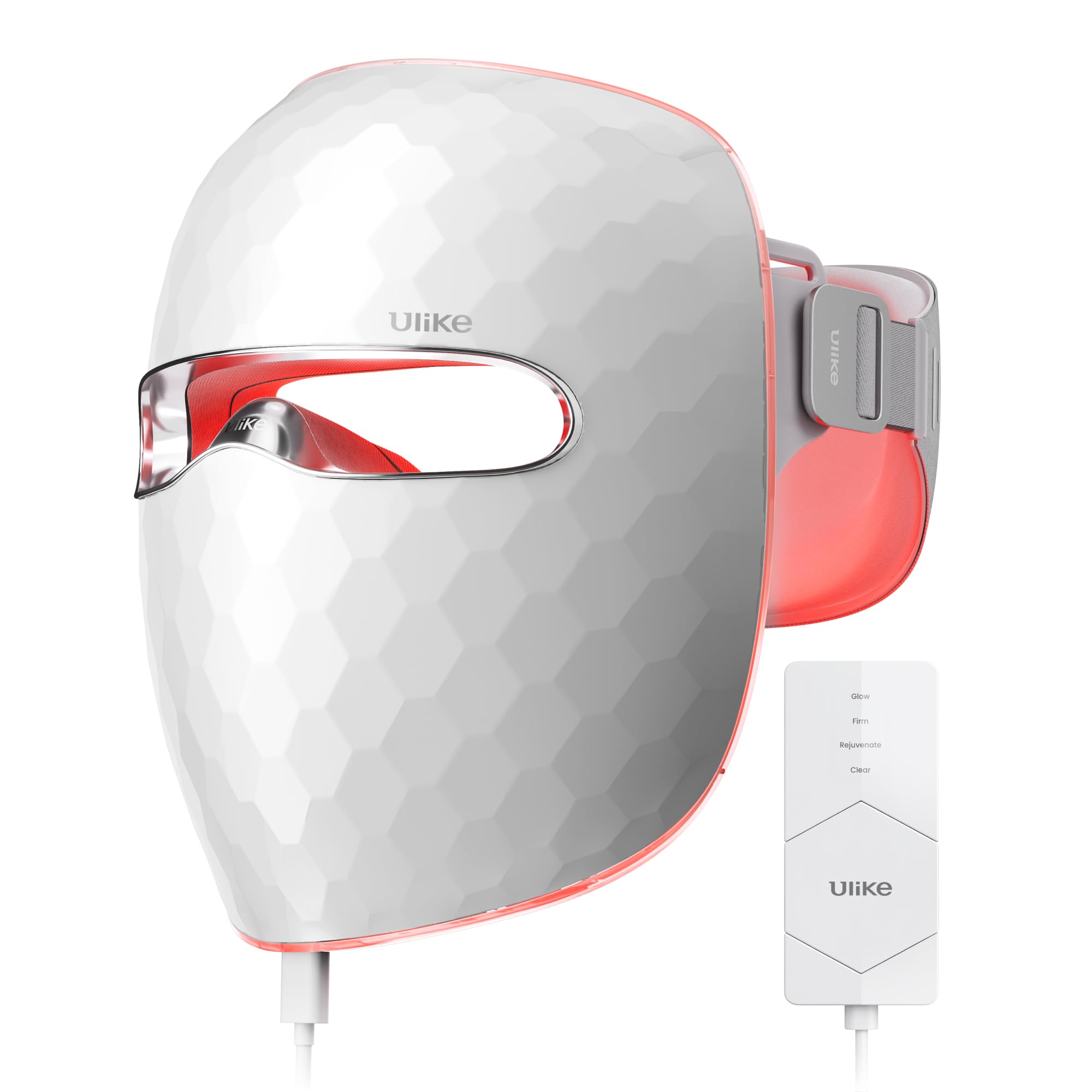
Ulike Reglow LED Mask

Ulike Reglow LED Mask

Premium full-face

Our Score 9.0/10
Check Price

Worth Noting

  • Weight rests on the nose bridge and can ache
Modes
4 (Glow, Firm, Rejuvenate, Clear)
Coverage
360° full face
Skin Gap
1 cm
Session Time
8 minutes

Four modes in eight minutes is the pitch, and the one-centimeter gap between the shell and your skin is the detail that makes it more than a light-up mask. The light spreads instead of concentrating wherever the plastic touches, which is why the coverage feels even rather than spotty.

Glow, Firm, Rejuvenate, and Clear cover brightness, firmness, and breakouts, and the 360-degree shell wraps around the sides of the face rather than stopping at the cheekbones. The silicone eye piece is a small thing that makes the whole session easier to sit through.

Eight minutes is short enough to do with wet hair and long enough to feel like something happened, and the modes are labeled in plain language rather than by wavelength — which sounds trivial until you're comparing four devices and can't remember which one is which.

It's the newest of the premium masks here, so there's less history behind it than the iRestore or the Shark, and that's the honest reason it sits a tier down. What it does have is range: four modes, a short session, and a shell that covers the sides of the face rather than just the front.

Bottom line: A short, adjustable session from a mask that wraps the sides of the face — the premium option for someone who wants options, not a single program.

How We Tested 12 Anti-Aging Devices

We started by pulling every red light, microcurrent, and heated tool we could find, then cut the list by what the specs actually promised: wavelength, LED count, whether it ran corded or on a battery, session length, and price. That left 12 devices, which we've lived with for eight months — on the bathroom counter during weeknight routines, on the couch with a book, and packed into a carry-on for two work trips.

Each one got the same welcome: fully charged, weighed on a kitchen scale, and worn for its full recommended session with the lights off and a timer running. I noted where a mask pressed — the bridge of the nose, the under-eyes, the jaw — and whether the warmth ever crossed from pleasant into something I wanted off my face. Straps, hinges, and seams got a two-month handling check, and I kept a log of any session that wouldn't start, reset itself mid-cycle, or needed the cable re-seated.

For the cordless devices, we ran back-to-back sessions until the battery died and wrote down the count. Skin was photographed bare in the same window light every two weeks, so we could compare cheek texture, under-eye firmness, and overall glow side by side instead of trusting memory. We also timed how long each device took to start one-handed and divided its price by the number of full, comfortable sessions we actually finished — the honest version of value.

How to Choose an Anti-Aging Device

Start with the mechanism, not the feature list

LED masks and panels deliver light; wands add warmth and massage; galvanic tools add a mild current. They aren't interchangeable. If lines and texture are the concern, red and infrared light is the most direct route, and every mask here pairs those two wavelengths.

If puffiness and jaw tension are what bother you at seven in the morning, a heated wand does more in five minutes than a mask does in ten. We start by asking which morning you're trying to fix, not which device has the most modes.

Coverage: face, neck, or both

A "full face" mask covers the face and stops at the jaw, which leaves the neck to a second tool — and the neck is where plenty of people notice laxity first. If one purchase has to cover both, look for a mask that extends below the chin, like the INTEO, or a wand you can run down the sides of the neck, like the GLO24K.

Panels solve it differently: they never touch you, so the same lamp works on a face, a shoulder, or a knee.

Minutes per session and hands-free use

Ten minutes three to five times a week is a real commitment, and the devices here span six minutes to a session you set yourself. The better question is whether you can do something else while it runs. A strapped mask with a separate remote lets you read or answer email; a wand needs a hand the whole time.

A six-minute program you finish beats a twenty-minute one you skip, and that math favors the Shark for a lot of people.

Fit, weight, and where it presses

A mask that rests on your face leaves marks; one that hangs from a strap doesn't. Look at how the shell is held — the iRestore suspends it, while a close-fitting silicone mask sits right on the skin. If you have a small face or a prominent nose bridge, that contact point is the first thing to check, because a mask that aches is a mask that stays in a drawer.

Panels avoid the question entirely, at the cost of floor space.

Power, upkeep, and running costs

Cordless masks trade the cord for a battery, and on several masks here the battery is the weakest part of the design — a daily session can mean a daily charge. Wired panels and handheld wands sidestep it.

None of these devices need replacement heads, gels, or cartridges, so once you own one the running cost is close to nothing. The money goes into the device, and then into the habit.

Frequently Asked Questions

Final Verdict

Our pick is the iRestore. Three wavelengths, 360 LEDs, and a shell that hangs off your face rather than pressing into it — that combination is what makes a ten-minute habit survivable, and a habit is the only thing that makes any of these devices work.

If the neck matters as much as the face, the INTEO covers both wirelessly for far less. If six minutes is genuinely the longest routine you'll keep, the Shark is the one to look at. Everything else here is a good answer to a narrower question.