Skincare

Best Zinc Oxide Sunscreens of 2026

Zinc oxide sunscreen has a reputation problem: the protection is excellent, but the finish can feel like a mask. It sits on top of skin to deflect UVA and UVB rays, which is exactly why it can leave a white cast, ball up under makeup, or turn a T-shirt collar chalky. The newer generation is better, but the trade-offs haven’t disappeared—tinted versions can be too pink or too orange, baby formulas can still sting sensitive skin, and a thick sport lotion can make your sunglasses slide down your nose. What you want is a formula you’ll actually reapply, because a sunscreen only protects as well as your willingness to wear it.

I’ve spent six months rotating 14 zinc oxide sunscreens through morning walks, outdoor lunches, sweaty jogs, and a few beach afternoons, on my own face and arms and on testers with drier, oilier, and more reactive skin. Some disappeared; some felt like paste. The good ones made daily application feel like less of a negotiation.

1

EltaMD UV Clear SPF 46

Top Pick
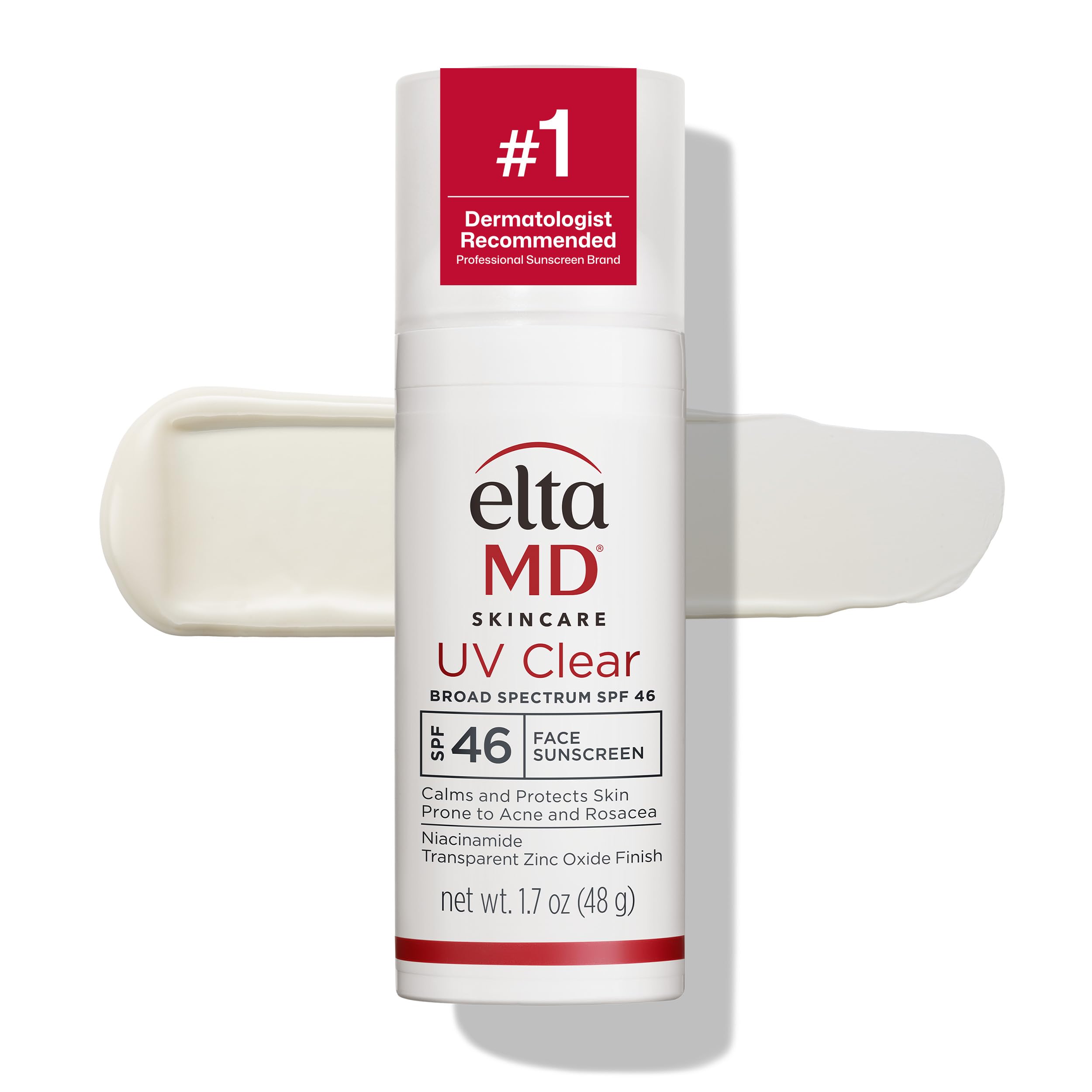
EltaMD UV Clear SPF 46

Daily face wear

Our Score 9.0/10
Check Price

Worth Noting

  • Premium price for 1.7 ounces
SPF
46
Size
1.7 oz
Skin Type
Normal, oily, acne-prone
Active Filter
Zinc oxide

Mineral sunscreen and acne-prone skin are usually a bad bargain: the filters that protect you are the ones that sit in your pores. UV Clear is the formula that stopped us treating those as a trade-off. It's an oil-free, non-comedogenic SPF 46 built on transparent zinc oxide, with niacinamide for tone and blemishes, aimed at normal, oily, rosacea-prone, and acne-prone skin rather than at everyone in general.

Of everything here, this is the one we tell people to buy first. The finish is the reason: it sinks in without the tacky layer that makes foundation slide, it doesn't leave a cast behind, and it behaves like a light moisturizer rather than a coating. The 1.7-ounce pump is small enough for a makeup bag and a carry-on, which matters more than it sounds — the sunscreen you actually wear is the one within reach.

The caveat is reactive skin. A formula can be gentle on paper and still sting a barrier that's already compromised, so patch-test along your jaw for a few days if you're mid-flare. Once your skin is calm, this is the closest thing in the set to a face sunscreen you forget you're wearing, and it's the one we restock without thinking about it.

Bottom line: Our default recommendation: a clear-finishing zinc oxide face sunscreen that suits acne-prone and sensitive skin and layers under makeup without pilling.

2

Coppertone Sport Mineral SPF 50

Coppertone Sport Mineral SPF 50

Body and pool

Our Score 9.4/10
Check Price

Worth Noting

  • Leaves a visible film on deeper skin tones
SPF
50
Size
5 fluid ounces
Active Filter
Zinc oxide
Water Resistance
Water resistant

Per ounce, nothing else here costs less than Coppertone Sport Mineral — and it's fragrance-free, which is unusual in a sport formula and the detail that sold us. A five-ounce tube of 100% mineral zinc oxide at SPF 50 is the one we buy two of: one for the beach bag, one for the car.

It's built for sweat and water, and it behaves that way: broad-spectrum SPF 50, water resistant, and free of oxybenzone, octinoxate, PABA, parabens, phthalates, and dyes. It's thick going on and takes real rubbing over a squirming kid's shoulders, which is the cost of a mineral body lotion that stays put in the pool. For arms, shoulders, and legs at the beach, we minded less than we expected to.

Where we're careful is the face. Around the nose and hairline the texture shows more than it does on a back, and there are better face-specific picks here — CeraVe's stick does the touch-up job with less fuss. Buy this one for volume, for family use, and for the price per ounce.

Bottom line: The body sunscreen we buy in multiples: fragrance-free mineral SPF 50 that stays on in the water and costs less per ounce than anything else here.

3

EltaMD UV Sport SPF 50

EltaMD UV Sport SPF 50

Swimming and sweat

Our Score 9.4/10
Check Price

Worth Noting

  • Premium price for a 3-ounce tube
SPF
50
Size
3 oz
Active Filter
Zinc oxide
Water Resistance
80 minutes

Every sport sunscreen claims water resistance; far fewer claim you can put them on wet skin and mean it. UV Sport is one of the few that does, and that single property is what earns it a place here. At the pool you can climb out, reapply straight onto damp shoulders without toweling off first, and get back in.

The rest of the spec sheet backs it up: SPF 50 on zinc oxide, 80 minutes of water and sweat resistance, fragrance-free, and formulated for all skin types. What we noticed most in use was the eyes. Sweat carries sunscreen down your forehead, and this one doesn't punish you for it, which is the test that matters on a long run or a hot afternoon in the water.

It's the one we reach for on a hiking or swimming day, and the one we hand to someone who burns through sunscreen in chlorinated water. It also wants thirty seconds of working in — straight from the tube there's a faint film, and it settles clear once you give it that. What you pay for all this is the price, in a tube that holds only three ounces.

Bottom line: Worth the premium if you'll be in and out of the water: 80-minute sweat and water resistance that goes on wet skin and doesn't sting your eyes.

4

CeraVe Tinted Mineral SPF 30

CeraVe Tinted Mineral SPF 30

Tinted daily face

Our Score 8.8/10
Check Price

Worth Noting

  • Warm medium tint misses very fair skin
SPF
30
Size
1.7 oz
Tint
Medium
Active Filters
Zinc oxide, titanium dioxide

CeraVe sells this tinted sunscreen in three flexible shades, and this medium is the warmest of them. The percentage of zinc oxide is high enough that you're getting a real mineral sunscreen rather than a tinted moisturizer with a token SPF, and the iron oxides are the reason it can blur redness instead of whitening it.

At drugstore money, this is the tinted pick we recommend, and the reason is the finish. It spreads like a moisturizer, gives light coverage that takes the edge off redness, and leaves a glow rather than the flat matte most tinted SPFs deliver. Niacinamide, three ceramides, and hyaluronic acid mean it behaves like skincare too, which is why it works as a base on days you skip foundation.

Two things to know before you buy. A full pump is more than you need — a pea-sized amount covers a whole face, so one tube lasts far longer than the size suggests. And it sets dewy: on an oily T-zone that can slide by mid-afternoon, so set it with powder and save it for cooler months if your skin runs slick in summer.

Bottom line: The tinted one to buy on a budget: light, glowy coverage that evens out redness, with ceramides and niacinamide in the formula — as long as the warm medium matches you.

5

Thinkbaby SPF 50+

Thinkbaby SPF 50+

Babies and families

Our Score 9.2/10
Check Price

Worth Noting

  • Leaves a visible cast on deeper skin
  • Takes soap and patience to wash off
SPF
50+
Size
6 oz
Age Range
6 months to 5 years
Water Resistance
Water resistant

Six ounces of baby sunscreen usually means a thick paste you wrestle onto a toddler who has decided they'd rather be elsewhere. Thinkbaby spreads more like a body lotion than a mineral block, and it smells faintly sweet rather than of the beach — small things that decide whether a sunscreen actually gets used on a moving child. This is the tube we keep by the back door for the whole family.

It's SPF 50+ on a mineral formula, water resistant to the highest level the FDA recognizes, and labeled for daily use on infants from six months up. The eye test is what sold us: it doesn't sting when sweat carries it toward the lash line, and eye sting is the reason a lot of kids' sunscreens get refused after the first application of the day.

Where it lands for us is family volume. This is the largest tube in the guide, the price sits in the middle, and it's the one we don't feel precious about when a kid squeezes out twice what they need. Six months and up, body and face, one tube in the beach bag — that's the whole case for it, and it's a good one.

Bottom line: Our family pick: a six-ounce mineral SPF 50+ that spreads like lotion, smells faintly sweet, and doesn't sting eyes — the tube that actually gets used on kids.

6

Blue Lizard Baby SPF 50+

Blue Lizard Baby SPF 50+

Infants and toddlers

Our Score 9.6/10
Check Price

Worth Noting

  • Leaves a cast on deeper skin tones
SPF
50+
Size
3 oz
Active Filter
Zinc oxide
Water Resistance
80 minutes

The cap on this tube turns blue when UV is strong — a bit of theater that turns out to be useful, because it's a reminder in your hand that a baby in the shade still needs another coat. We were skeptical of the gimmick. We came around inside a week.

Underneath it is a straightforward mineral formula: zinc oxide at SPF 50+, calendula and organic aloe for comfort, no fragrance, and 80 minutes of water resistance. It's the one we reach for on an infant's face and hands, and the one we suggest to parents whose baby reacts to everything else they've tried.

Three ounces is a baby-bag size rather than a family size. For one child's face, hands, and feet it's the right amount, and a small tube gets finished instead of left in a cupboard while the season runs out. If you're covering three kids, Thinkbaby's six ounces is the better buy.

What settles it for us is the combination: a high SPF, a short fragrance-free ingredient list, and a texture that doesn't fight back while you're holding a wriggling baby. Of the baby options here, this is the one we restock, and the one we hand over when a parent tells us their child's skin reacts to everything.

Bottom line: Our pick for babies and toddlers: fragrance-free SPF 50+ that spreads without drag, holds through 80 minutes of water, and has a cap that flags strong sun.

7

Sun Bum SPF 50 Face Cream

Sun Bum SPF 50 Face Cream

Beach bag travel

Our Score 9.4/10
Check Price

Worth Noting

  • One ounce goes fast with daily use
SPF
50
Size
1 oz
Active Filter
Zinc oxide
Water Resistance
80 minutes

Sun Bum built a following on scent, and this face cream is the purest version of it: a beach-day smell that lands the moment you flip the cap. On a face, that's the whole question — either it's why you'll reapply without being nagged, or it's why you hand the tube to someone else.

The formula underneath is more than a fragrance delivery system. SPF 50 on zinc oxide, 80 minutes of water resistance, Hawaii Act 104 compliance, and a texture that rubs in clear rather than sitting white, which is not a given in this category. It's also one of the few sunscreens here we didn't have to think about before putting it near our eyes.

For us it's the travel pick: one ounce fits where a full-size bottle won't, and the price means buying a second one isn't a decision. It isn't our everyday face sunscreen — the scent is a lot for a Tuesday at the office — but as the tube that lives in the beach bag, we're fans.

Bottom line: The tube to throw in a beach bag: clear-finishing SPF 50 with a vacation scent in a one-ounce size that travels anywhere.

8

CeraVe Mineral Sunscreen Stick

CeraVe Mineral Sunscreen Stick

Face touch-ups

Our Score 9.0/10
Check Price

Worth Noting

  • White cast on deeper skin tones
  • Feels tacky before it dries
SPF
50
Size
0.47 oz
Format
Stick
Active Filters
Zinc oxide, titanium dioxide

Point four-seven ounces sounds like a sample. It isn't: a stick goes further than a lotion because you're dragging it across a nose, a cheekbone, an ear — you aren't covering a whole back. What the size changes is where the tube lives. Glovebox, gym bag, school bag, jacket pocket.

The formula is what we want in a stick. SPF 50 on zinc oxide and titanium dioxide, oil-free, fragrance-free, water resistant, non-comedogenic, built around what CeraVe calls InVisibleZinc technology. It's a stick you can hand to a teenager without a lecture about skin damage.

Two passes over a toddler's cheeks and you're done — no lotion running toward the eyes, no wrestling a cap off a tube one-handed. That's the job. What it won't do is a whole body: you'll finish the stick before you finish one leg, so pair it with a lotion rather than replacing one.

As a specialist it earns its place. It's the sunscreen we keep in the car for the drive home from the pool, and the one we hand to anyone who won't reapply otherwise. Buy it alongside a bottle, not instead of one, and it will be the tube you actually finish.

Bottom line: The one to keep in the glovebox: a tiny, fragrance-free SPF 50 stick for noses, ears, and touch-ups — not a substitute for a body lotion.

How We Tested Zinc Oxide Sunscreens

We started by checking active-ingredient labels, keeping only formulas that list zinc oxide and cutting near-duplicates, tiny trial sizes, and formulas that didn't seem worth the price. That left 14 sunscreens, which we tested for six months, from early spring through the first hot weeks of summer. They lived in gym bags, a diaper bag for the baby-formula testers, and my bathroom shelf. I wore them on morning walks, outdoor lunches, sweaty jogs, and two beach afternoons, and three other testers—oily, dry, and eczema-prone—kept notes on irritation and whether they'd put each one on again.

Application was the first filter. I timed how long each formula took to rub in, whether it dragged over dry cheeks or glided on as a stick, and whether it pilled under moisturizer or makeup. For white cast and tint, I compared faces in daylight and asked testers with light, medium, and deep skin tones to weigh in; tinted formulas got extra scrutiny for turning orange around the hairline. Greasiness got a tissue test ten minutes after application, plus a look at smeary phone screens and sliding sunglasses. I also smudged each one onto a white cotton tee, let it sit, and washed it on cold to see what remained.

For protection, we followed each label's reapplication instructions and used a UV camera after two-hour outdoor stretches to spot thinning coverage and pink patches. Water and sweat resistance got a 30-minute run for sport formulas and a pool afternoon for baby and sport options, with notes on eye sting and running. Sensitive-skin testers tracked itch and breakouts for a week. We counted realistic full-body applications per package and asked the blunt question: would you buy this again? The keepers were the ones nobody had to talk themselves into wearing.

How to Choose a Zinc Oxide Sunscreen

Start With the Active Ingredients

Zinc oxide is a mineral filter that covers UVA and UVB on its own, which is why it anchors so many formulas built for sensitive skin. Plenty of tubes labeled mineral pair it with titanium dioxide, and a few use titanium alone — so if zinc oxide is the reason you're shopping, read the drug facts panel rather than the front of the bottle.

The pairing changes how a sunscreen wears. Titanium dioxide is the more transparent of the two, which is why blends turn up so often in tinted products like CeraVe's, while zinc-heavy lotions tend to be creamier and whiter.

Expect Some Cast, and Shop Around It

Mineral particles sit on the surface of the skin, so a certain amount of white is built into the category — it's the complaint we hear most about zinc oxide sunscreens. Higher zinc percentages and thicker lotions show more; finely milled formulas and tinted versions with iron oxides show less.

If you have a deep skin tone, start with a tinted option rather than hoping a sheer lotion disappears, and swatch along your jaw in daylight before committing to a full face. On shoulders and arms, a slight cast is the price of protection that survives a swim.

Pick a Format You'll Actually Reapply

Reapplication is where sunscreens fail, and format decides how much friction it involves. A stick covers a nose and two cheekbones in seconds, a one-ounce face tube travels anywhere, and a five- or six-ounce lotion is the only sensible way to cover a family's arms and legs.

Compare cost per ounce rather than the number on the shelf tag. A small face tube can cost more per use than a big body lotion, and the reverse is true when a cheap tube is too thick to finish.

Buy Water Resistance for Water Days

Eighty minutes is the maximum water resistance the FDA allows, and it's the number to look for if you swim, surf, or sweat hard. Sport formulas earn that claim with heavier bases, which is exactly why they feel like more on the skin.

If your exposure is a commute and a lunchtime walk, skip the sport label. A lighter daily formula you'll reapply at your desk beats a stubborn one you avoid because of the texture.

SPF 30 Is Enough If You Use Enough

The step from SPF 30 to SPF 50 is worth roughly one more percentage point of UVB blocked; the gap between a thin smear and a full application is far larger. Don't pay a premium for a higher number.

Pay it for a finish you like, a formula that doesn't sting, or a tint that matches — the things that make you apply properly and go back for a second coat. Two mid-priced tubes kept in two places beat one expensive one left at home.

Frequently Asked Questions

Final Verdict

The decision comes down to where the tube lives. For a face sunscreen you'll wear every day, EltaMD UV Clear is the pick: clear-finishing, oil-free, and built for skin that breaks out, with the one caveat that it costs more than anything else here.

If your budget has to cover a family and a beach, buy Coppertone Sport Mineral for bodies and keep CeraVe's stick in the car for noses and touch-ups. That pair handles most summers for less than a single premium tube.