Fashion

Best Winter Coats for Women of 2026

Every winter coat asks you to pick a side: the ones that genuinely hold heat tend to make you look like a sleeping bag, and the sharp wool ones leave you shivering at the bus stop by 8 a.m. I've owned both, and I've spent plenty of mornings in a sweater under a coat that promised more than it delivered. A good one ends that math — warm without the bulk, cut so you can actually move your arms, with pockets deep enough to skip the glove-and-phone juggle. We wore 12 through eight months of cold, and the difference between a coat that works and one that just looks warm is not subtle.

Sizing is close to fiction in this category — I wore a small in one coat and a large in another in the same week, and both fit properly. Zippers are the quiet dealbreaker: a sticky pull on a coat you otherwise love will have you resenting it by February. And length changes how a coat feels on a windy walk as much as it changes how you look in it. The ones that made the list got warmth, comfort, and all those unglamorous details right; read on to find the one that matches your winter.

1

BINACL Long Parka

Top Pick
BINACL Long Parka

Everyday cold weather

Our Score 9.4/10
Check Price

Worth Noting

  • Sizing runs inconsistently through the range
Hood
Detachable, faux-fur trim
Sizes
XS-3XL
Style
Long parka
Length
Mid-thigh

The first thing the BINACL parka does is close the gaps. The hem drops past your hips, the fill runs the full length of the coat rather than stopping at the waist, and the hood sits where you put it, so the cold that normally finds your lower back on a windy walk doesn't get in. Warmth is the reason it's our top pick: of everything here, this is the coat that comes up warmest most consistently, and it manages that without the marshmallow silhouette.

Long doesn't mean heavy. It's one of the lighter coats in this group, and the fill is spread so you can still bend, drive, and carry a bag without feeling strapped in. Sizes run from XS to 3XL, which is broader than most of the coats we recommend, and both the hood and the faux-fur trim detach if you want something plainer for work.

Sizing is the one place to be deliberate. Measure your chest and hips and compare them to the size chart rather than picking the letter on the coat you already own, and if you plan to layer a thick sweater, take the roomier of the two sizes you're considering. This is a coat that rewards ten minutes with a tape measure.

The front pockets are shallower than they look and there's no interior chest pocket, so a phone is happier in a bag. What we kept noticing, though, is the collar: it closes high enough under the chin that a scarf becomes optional on all but the worst mornings, which is the sort of small victory you only miss when you wear something else.

Bottom line: This is the coat we recommend for a real winter: it's the warmest here that still looks like a coat, and it covers your hips and neck without bulk.
2

Columbia Heavenly Long Jacket

Columbia Heavenly Long Jacket

Travel and commuting

Our Score 9.2/10
Check Price

Worth Noting

  • Runs small through the shoulders
  • Two-way zip can be hard to start
Hood
Fleece-lined
Style
Long hooded jacket
Closure
Two-way zip
Pockets
Interior chest pocket

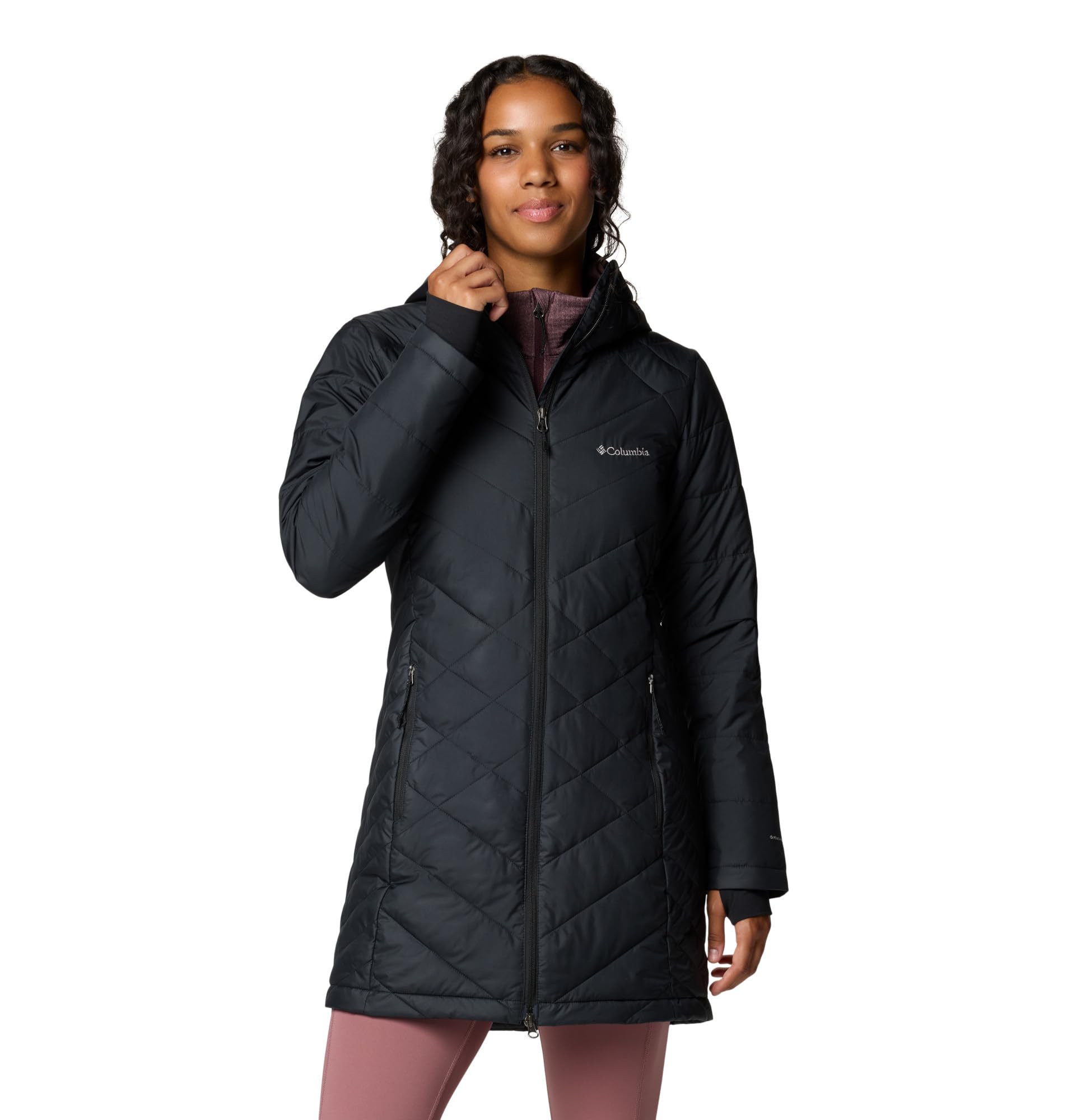
A long coat that weighs almost nothing is a strange thing to put on the first time. The Columbia Heavenly reaches mid-thigh on most people and sits just above the knee on others, and it adds so little weight that you forget you're wearing outerwear at all. It's the lightest coat in this guide by a wide margin.

We think it's the best of these for travel and for anyone who resents bulk. The trade is a thinner margin in real cold: it handles a 30-degree commute over a sweater comfortably, and it's the coat you want under a plane seat or over a blazer, but it isn't the coat for a long wait outdoors in single digits. That is the whole point of it, and we took the trade happily.

The details are what make it feel considered. The hood is lined in fleece rather than the same thin shell as the body, so wind doesn't hit your ears through it. The satin lining slides over a sweater instead of grabbing at it. And the two-way zip opens from the hem, which means you can sit down in a long coat without unzipping the whole thing.

The color range is the widest here, and the blue and dusty pink are the two that stood out when we laid them next to the plain black puffers. It reads as a coat designed for a city winter rather than borrowed from a ski lodge, which is exactly what it is.

Bottom line: For commuting and travel, this is the warm coat we hand people who hate feeling bundled up.

3

Orolay Thickened Down Jacket

Orolay Thickened Down Jacket

Style-led winter wear

Our Score 9.0/10
Check Price

Worth Noting

  • Runs small, with narrow sleeves
  • Zippers stick, and there are many of them
Fill
Down
Hood
Fixed, fleece-lined
Pockets
Multiple zip pockets
Package Weight
2.73 lb

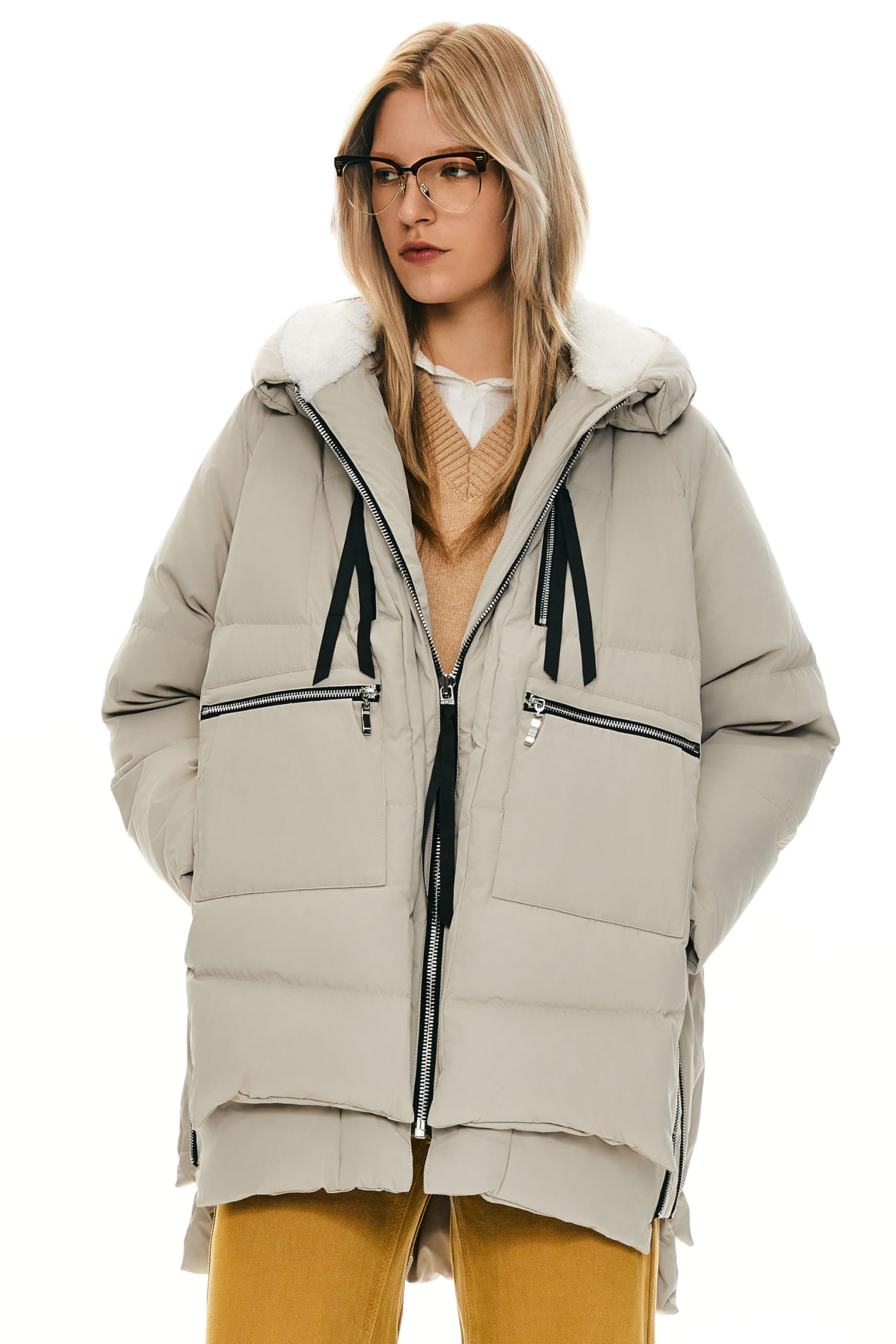
The Orolay is the coat in this group that people notice. The quilting runs in horizontal bands, the cut is deliberately boxy, and the side zips open the bottom hem, so it reads as a styled piece over jeans and works just as well over a dress. Of everything we handled, this is the one we reached for when the coat needed to be part of the outfit rather than an afterthought.

Underneath the shape it's a proper down coat: warm, with a fleece-lined hood, wrist cuffs that keep the wind out, and zip pockets in quantity. The hood is fixed rather than detachable, which we didn't mind, and the lining is soft enough that a short-sleeve top underneath isn't a mistake.

Where it gives ground to our top pick is predictability. The sizing is the least reliable in this guide, and the coat runs small enough that going up a size is the norm rather than the exception. We still chose it for the look, and we say the same to anyone who wants a coat with some presence: order by measurement, not by the size you wear in other brands.

The handwarmer pockets sit higher and further forward than on most coats here, which keeps them clear of a crossbody strap but feels odd for the first week; the zip chest pockets are the better home for a phone and keys anyway. It earns its place on looks first and warmth second, the opposite order from our top pick, and that's entirely fine if looks are what you're shopping for.

Bottom line: Buy it for the look and the warmth, but order by measurement, because the size label alone is a gamble.

4

SUOKENI Waterproof Snow Coat

SUOKENI Waterproof Snow Coat

Tight budgets

Our Score 9.0/10
Check Price

Worth Noting

  • Hood is oversized and slides forward
  • Sizing is inconsistent
Hood
Attached
Shell
Waterproof, windproof
Lining
Fleece
Pockets
Multiple zip pockets

Our budget pick turned out to be one of the more interesting coats here. The SUOKENI is a waterproof, windproof shell with a fleece lining and a zip on every pocket, and on a wet, slushy afternoon it shrugged off everything we put it through. That is not the behavior we expect from the least costly coat in a group.

Warmth is the part that caught us out. The fleece lining runs through the body, and the shell blocks wind rather than letting it cut through, so it ends up warmer than a shell has any right to be over a light layer. It's the coat you grab for a school run, a sledding afternoon, or a first season on skis.

Sizing is the part to get right. Measure your chest and compare it to the chart instead of trusting the size you wear elsewhere, and leave room for a fleece underneath, because this is a coat built for layering rather than for a close fit.

Practical details are where it punches above its weight: the chest pocket is zipped and sits high enough to reach with gloves on, and the front pockets swallow a phone and keys without gaping. It looks like a snow coat and doesn't pretend otherwise, which is fine if that's what you came for.

Bottom line: Our budget pick, and the one that surprised us most: it kept us dry in slush and warm on a sledding hill.

5

MAGCOMSEN 3-in-1 Ski Jacket

MAGCOMSEN 3-in-1 Ski Jacket

Ski trips, layering

Our Score 9.0/10
Check Price

Worth Noting

  • Runs small through the shoulders
  • Hood is oversized
Hood
Detachable
Shell
Waterproof, windproof
Design
3-in-1 with removable fleece liner
Pockets
Zip hand pockets

A week that runs from 45 and raining on Monday to 15 and snowing by Friday is the week this coat was built for. The MAGCOMSEN is three jackets in one: a waterproof, windproof shell on its own, a fleece liner on its own, and the two zipped together when the temperature really drops.

Getting there takes a little patience. The liner has to be zipped in inside out, which isn't obvious the first time and isn't much fun in a hotel room with the lights down. Once it's attached, the coat is genuinely warm and the shell keeps snow out at the cuffs and collar. The liner has no pockets of its own, so anything you carry lives in the shell.

We took this one on a cold, wet trip ahead of the single-layer coats here and it earned the space, because it's the only pick that adapts as the day changes rather than committing you to one level of warmth from morning to night. That flexibility is worth more than any single feature on the other coats.

The colors are the loudest in the guide, with camo, a bright purple, and a salmon that reads coral; the plain black is the version that passes at an office. Worn alone, the liner is warm enough for a cool fall day or a car journey, which is more use than most removable liners actually get.

Bottom line: This is the one we pack for a ski trip or a week of shifting forecasts, because it changes with the weather.

6

CHOUYATOU Wool Blend Coat

CHOUYATOU Wool Blend Coat

Dressy winter days

Our Score 8.8/10
Check Price

Worth Noting

  • Cut narrow through the shoulders and sleeves
Style
Notch lapel, single-breasted
Length
Mid-long
Lining
Fully lined
Material
Wool blend

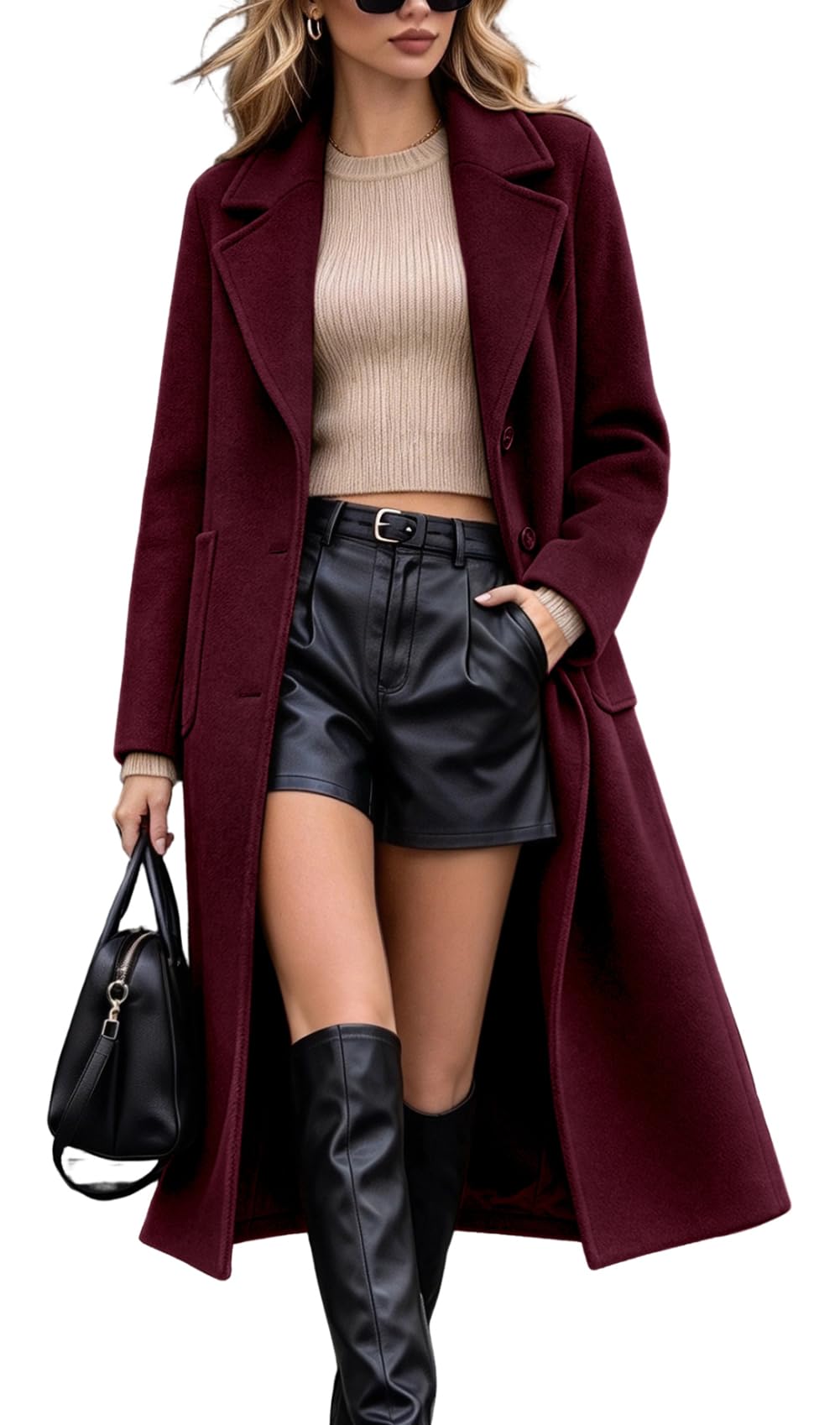
This is not a deep-winter coat, and treating it as one is how you end up cold on a February morning. What it is: a wool blend with a big notch lapel, a mid-long cut that lands around the knee, and a finish that reads far dressier than any puffer in this guide.

We think it's the best-looking coat here, and the one we choose for a 35-degree commute, a dinner, or an office where the heating does most of the work. Below freezing you'll want a proper sweater and a scarf underneath, and even then it's a coat for moving between warm places rather than standing around in the cold.

The fabric is the pleasant surprise. The wool blend feels soft and slightly felted rather than scratchy, and the full lining means it slides on over a sweater instead of dragging at it. The buttons are plastic, but they're substantial and dark rather than shiny, so they don't undercut the rest of it.

Colors run richer than the product photos suggest, particularly the green, and the black is a true black. If you plan to layer a chunky knit underneath, go up one size; over shirts and thin sweaters, take your usual. It's the coat you wear when you want to look like you made an effort, and in February that counts for something.

Bottom line: The dressiest coat here, and the one we reach for when the forecast is cold but not brutal.

What Eight Months in 12 Winter Coats Taught Us

We started by pulling every women's winter coat we could find with a real size range and a materials list specific enough to trust — no vague "polyester blend" shells, no styles that stop at a large. That left 12, and we wore them for eight months, from the first freezing morning in November through the muddy end of the season. Each went the same rounds: a 25-minute walk to the train in wind, dog walks after dark, school pickup, a wet 35-degree weekend, and a two-hour drive sitting in it. We also stood still in each one for 20 minutes on sub-freezing mornings in nothing but a base layer, since walking keeps you warm and waiting for a bus doesn't.

Testers ranged from a small to an XL, and every coat was worn by at least two of us so we could see where the sizing actually landed. We measured pit-to-pit and shoulder-to-hem, compared those numbers to the size chart, and noted whether a thick sweater fit underneath without pulling across the back. We raised our arms overhead, buckled seatbelts, and shouldered backpacks to see if the hem rode up. Down coats got checked at the seams for leakage after a wash; wool got checked for pilling at the cuffs.

Zippers were pulled with gloves on, one-handed, in the cold, and we counted the attempts it took to catch the pull. We checked whether a phone fit in a zippered pocket, whether our hands reached the bottom of a slant pocket, and whether the lining was fleece or the thin stuff that feels like a shower curtain. Length got judged from a car seat and a flight of stairs, not a mirror, and each coat went to the office and to dinner once to see whether it read as something for a nice night out or strictly for shoveling the driveway.

How to Choose a Winter Coat for Women

Start With the Cold You Actually Get

A down puffer, a synthetic parka, and a wool-blend coat are three different tools, and the right one depends on your coldest ordinary week rather than the once-a-year storm. Down gives the most warmth for the weight and suits a long, genuinely cold winter. Synthetic fill is bulkier but keeps working when it gets damp, which matters in wet snow and slush. A wool blend looks best and handles a 30-to-40-degree commute over a sweater, but it is not a stand-in for a parka in single digits. Buy for the weather you walk through most.

Length Buys More Warmth Than the Label Suggests

Coverage is half of warmth. A hip-length jacket leaves your seat and thighs exposed, and on a windy platform that's where you feel it first. A mid-thigh parka closes that gap; a knee-length coat closes more. The cost is mobility, since long coats bunch when you sit and catch on stairs, which is why a two-way zip that opens from the hem is worth seeking out on anything past mid-thigh. If you're petite, look at where the hem actually lands rather than trusting the word long, and check sleeve length too, because it's the alteration people most often end up paying for.

Get the Size Right Before You Fall for the Color

Almost every coat here draws mixed sizing notes, and the pattern is consistent: the letter on the label doesn't reliably match the letter on the coat already in your closet. Measure your chest and hips, then compare those numbers to the size chart. Decide up front whether the coat has to fit over a thick sweater, because that is often a full size. And think about the hood, not just the body: one cut to fit over a hat will feel enormous with your hair down, and that is a fit problem you can't tailor away.

Water, Wind, and the Hood Question

Wet snow soaks a porous coat, and wet insulation stops insulating, so weather protection matters more than most shoppers expect. If you'll be out in it, look for waterproof rather than water-resistant; for a walk to the car, water-resistant is enough. The hood deserves the same scrutiny. A hood with no adjustment flaps over your eyes in wind, and an oversized one on a coat you drive in is a genuine nuisance. A detachable hood is worth having if you'd rather wear a hat on the coldest days.

Test the Zipper Before Anything Else

Zippers are where this category fails most often, and they're the one part you can't work around: a coat you can't close is a coat you can't wear in the cold it was built for. Zip it fully and unzip it ten times the day it arrives, with the coat on, and watch for a pull that catches where the two halves meet. Metal teeth and two-way zips are generally the sturdier choice on a long coat. If it snags immediately, send it back before you've worn it outdoors.

Frequently Asked Questions

Final Verdict

The BINACL long parka is the coat we recommend to most people: it covers the hips and neck, stays warm without bulk, and comes in a size range wide enough to find your actual fit. Measure before you order and it will handle ordinary winters without complaint.

If your winters are milder or you're on a plane more often than a snowy sidewalk, the Columbia Heavenly gives you a long, warm layer for very little weight. And if the coat needs to look as good as it works, the Orolay or the CHOUYATOU wool blend will get you there, as long as you don't expect either to carry you through a blizzard.