Makeup

Best Skin Tints of 2026

A skin tint is a small gamble: you're asking one thin layer to even out redness and old marks without hiding the face underneath, and if the shade is off there's nowhere to hide it. I've had tints go orange by mid-morning and others vanish before I reached the office. What a good one buys you is a ninety-second morning — a sheer wash that sits over moisturizer and sunscreen, looks like skin in daylight, and doesn't turn into a mask by lunch.

Over six months we wore 14 of them through commutes, workouts, and a few long flights, and the differences showed up in unglamorous places: how they applied, whether they pilled over sunscreen, how they looked at hour six. First-time buyers rarely expect that shade match matters more in a tint than in a foundation — with so little pigment, a half-shade error reads chalky or orange instead of slightly off. Some of these are barely-there, a few sit closer to light foundation; what follows is what we kept reaching for.

1

L'Oreal True Match Nude Tinted Serum

Top Pick
L'Oreal True Match Nude Tinted Serum

Everyday sheer coverage

Our Score 8.8/10
Check Price

Worth Noting

  • Fades by afternoon on oily skin
  • Blemishes still need a separate concealer
Size
1 fl oz
Finish
Dewy satin
Coverage
Light to medium, buildable
Key Ingredient
1% hyaluronic acid

A tinted serum built on 1% hyaluronic acid sounds like a marketing line until you spread it. This is the thinnest, wettest formula of the nine we tested, and it disappears into skin faster than anything else on this list.

Coverage is light-to-medium and genuinely buildable: one thin layer evens out redness and shadow, a second goes over the cheeks and nose without turning flat or powdery. It also stays out of the places tints usually collect, the fine lines under the eyes and around the mouth, which is the first thing we check on a formula this thin.

The finish is satin-dewy, glowing without looking wet, and it sat comfortably on combination and mature skin through a full day. It's fragrance-free and paraben-free, which matters if your skin reacts to scent. A pea-sized amount covers the whole face; use more than that and you're applying foundation.

Shade is the part to be careful with. The pigment dries down darker and warmer than it looks coming out of the bottle, and the Very Light 0.5-2 shade we tried deepened noticeably in the first twenty minutes, so swatch along the jaw and wait before you commit. Fingers work better than a sponge here; the warmth of your hands melts it into skin instead of pushing it around.

What makes it the top pick is that it does the two jobs a tint has to do, even the skin and then get out of the way, without primer, powder or a blending routine. On a rushed morning it's the bottle we reach for first.

Bottom line: The tint we recommend to almost everyone: light-to-medium coverage that evens out tone and still looks like bare skin hours later.

2

wet n wild Bare Focus Tinted Hydrator

wet n wild Bare Focus Tinted Hydrator

Budget daily wear

Our Score 8.6/10
Check Price

Worth Noting

  • Shade steps are wide between tones
Finish
Semi-matte
Coverage
Sheer to medium
Key Ingredients
Hyaluronic acid and squalane

This is the cheapest tube on the list, and the one we hand to anyone who isn't convinced a tint is worth the trouble. It's a light, slippery hydrator built on hyaluronic acid and squalane that sets to a soft semi-matte, with no dew, no shine and no glow.

That finish is exactly why it earns a place. On normal and oily skin it looks like skin that happens to be even, and the coverage builds from sheer to medium without going chalky. On value, nothing else in this group comes close.

Dry skin is where it stumbles: without a rich moisturizer underneath it can catch on patches and show every bit of texture, so prep properly or choose the Hydro Boost instead. Given a hydrated base, it wears through a working day without caking, which is more than we expected from a formula at this end of the shelf.

Bottom line: If you want to try a skin tint without committing much money, we think this is the one: buildable coverage and a shine-free finish that suits oily skin.

3

Maybelline Super Stay Skin Tint

Maybelline Super Stay Skin Tint

Long days

Our Score 9.0/10
Check Price

Worth Noting

  • Transfers if you touch your face
Wear
Up to 24 hours (stated)
Shades
18
Coverage
Light to medium
Key Ingredient
Vitamin C

Twenty-four hours is not the number we care about; a full workday plus a commute is. On that test this is the tint that holds, still sitting where we put it at the end of a long day, which is more than most of the tints here manage.

So it's our choice when the day runs long. Coverage is light-to-medium and reads like skin rather than glass, the formula carries vitamin C, and it's non-comedogenic and dermatologist tested, which makes it a fair bet for sensitive skin. Eighteen shades is a wider range than most tints on this list offer.

The finish lands closer to natural than glassy, bright rather than wet, and it takes a light powder without cracking. What it isn't is a treatment: there's no hyaluronic acid or squalane under the pigment, so we treat it as makeup and put a moisturizer on first.

Bottom line: We reach for this when the day doesn't end at five: it holds its coverage through long hours and comes in enough shades to actually match.

4

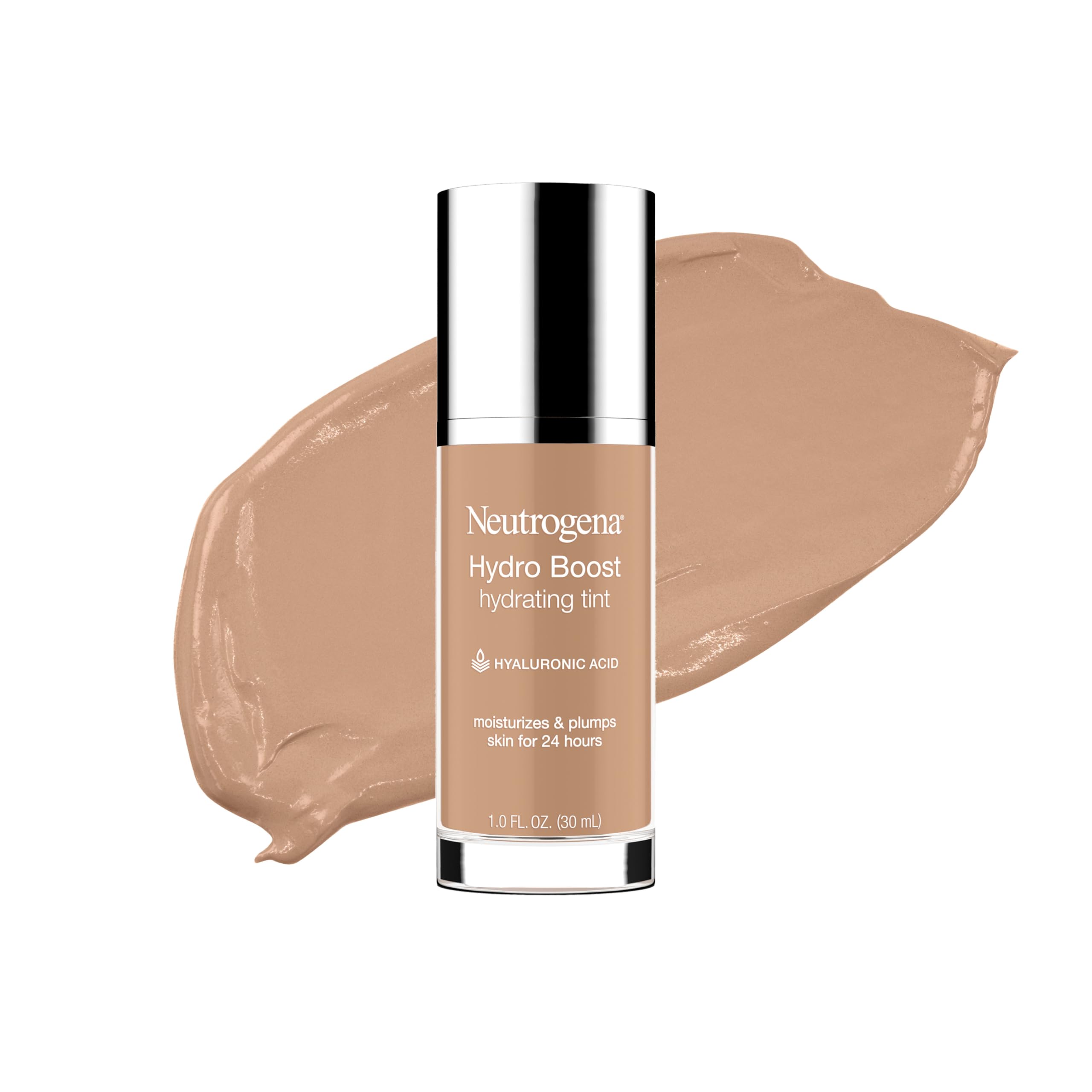
Neutrogena Hydro Boost Hydrating Tint

Neutrogena Hydro Boost Hydrating Tint

Dry skin

Our Score 8.8/10
Check Price

Worth Noting

  • Shades run dark, even the lightest
Finish
Natural, non-greasy
Shades
10
Coverage
Light to medium, buildable
Key Ingredient
Hyaluronic acid

If your skin still feels tight by noon no matter what you put on it, start here. This is a water-gel formula built on hyaluronic acid, oil-free and non-comedogenic, and it wears like a light moisturizer that happens to have colour in it.

The applicator is the odd part. It's a built-in wand rather than a pump or a dropper, and it's clumsy enough that we gave up on it after a couple of tries. Dot the product onto the back of your hand and press it in with fingers instead; the formula spreads better warm and gives a light-to-medium wash you can build over redness.

Comfort is where it wins for us. Dehydrated skin stays comfortable under it all day, the finish is natural rather than shiny, and there's no greasy film by the nose. Wear time is the trade-off: it doesn't have the staying power of the Maybelline, so a light powder through the T-zone keeps it in place past lunch.

Bottom line: We recommend it for skin that feels tight by noon: oil-free hydration that doesn't turn greasy or cake.

5

bareMinerals Complexion Rescue Tinted Moisturizer

bareMinerals Complexion Rescue Tinted Moisturizer

Mineral SPF

Our Score 9.0/10
Check Price

Worth Noting

  • Premium price for a sheer formula
  • Too sheer to cover spots
Coverage
Sheer to light
Key Ingredient
Hyaluronic acid
Sun Protection
SPF 30, mineral

Most tints here are thin enough to run off your fingers; this one is a cream. That texture is the point, because it behaves like a moisturizer with colour in it and calms redness more convincingly than a sheer-to-light label suggests. It's our pick if you want sun protection and tint in the same step.

The SPF 30 is mineral, the formula carries hyaluronic acid, and it doesn't settle into fine lines the way a creamier base often does. It's also economical in use: we needed less of this than of any serum-formula tint here to get an even wash across the cheeks.

The finish is dewy with a slight sheen, which flatters drier and more mature skin and looks rich on a very oily T-zone without a little powder. Under makeup it's a good base; on its own it's enough for a weekend.

Bottom line: Our pick when you want sun protection built in: a creamy mineral SPF 30 tint that calms redness and never looks powdery.

6

Revision Intellishade Original SPF 45

Revision Intellishade Original SPF 45

Sensitive skin

Our Score 9.2/10
Check Price

Worth Noting

  • The most expensive formula here
Formula
Fragrance-free
Coverage
Sheer universal tint
Sun Protection
SPF 45, broad spectrum

One tube, one shade, three jobs. Intellishade is built around a single universal tint meant to blur rather than match, and it's the most complete single step in this group: moisturizer, SPF 45 and a wash of colour in one application.

The formula is fragrance-free and free of alcohol, parabens and phthalates, which is why it's the one we point reactive and mature skin toward. It goes on smoothly and stays dewy without feeling greasy, and the sun protection is the highest here, so if you burn easily and hate layering, that matters more than coverage.

The single shade is also the catch. A universal tint blurs unevenness on the skin tones it was built for, but it can't correct undertone, so if you're very fair, very deep, or strongly yellow or pink, there's no second option to move to. It's the one product here where the shade decision is made for you.

We think it earns its place for a specific buyer: sensitive or mature skin, one step in the morning, every drop used. If you want coverage you can adjust, or a shade matched to your neck, the bareMinerals does more of that.

Bottom line: We think it's worth the splurge if your skin reacts to everything: fragrance-free, SPF 45, and sheer enough to blur rather than mask.

7

Neutrogena Healthy Skin Anti-Aging Perfector

Neutrogena Healthy Skin Anti-Aging Perfector

Mature skin

Our Score 8.8/10
Check Price

Worth Noting

  • Shades run dark and warm
Size
1 fl oz
Coverage
Sheer
Key Ingredient
Retinol
Sun Protection
SPF 20

Where the L'Oreal is a wet, serumy layer, this one is creamier and dewier: closer to a tinted moisturizer than a tinted serum, and aimed at skin that's losing moisture and firmness rather than skin that's oily.

It's a genuinely useful drugstore option for mature skin, with sheer, blendable coverage that evens tone, a dewy finish that doesn't sit in lines, and retinol, antioxidants and vitamins alongside titanium dioxide for SPF 20. Dry and mature skin took to it well and it didn't provoke breakouts.

The appeal for us is the one-step morning it makes possible: moisture, colour and sun protection in a single pass. Count the retinol as a bonus rather than your retinol step, since a tint goes on too thinly and unevenly to deliver a reliable dose. The pump is a small annoyance too; it stops reaching the last quarter of the tube, so stand it upside down between uses.

Bottom line: We rate it for mature skin that wants moisture, retinol and SPF 20 in one sheer, dewy step that doesn't settle into lines.

8

Origins GinZing Tinted Moisturizer

Origins GinZing Tinted Moisturizer

Glow with SPF

Our Score 9.2/10
Check Price

Worth Noting

  • Costs more per ounce than the drugstore tints
Size
1.7 fl oz
Coverage
Light, hint of tint
Sun Protection
SPF 40
Key Ingredients
Caffeine and ginseng

Three steps, meaning moisturizer, sunscreen and colour, is a lot to ask before coffee. This collapses them into one, and that's the whole case for it.

It's a light, creamy formula with caffeine from coffee beans and panax ginseng, vegan and listed as suitable for all skin types. It's also the most pleasant of these to apply: it glides, it doesn't drag, and it leaves a soft glow rather than a film.

The tint is a hint, not coverage. It warms and evens a face that's already behaving, and it works best as a base. Under foundation it adds a dewy quality, and on its own it's what we wear on days when full coverage would look like effort. The 1.7-ounce tube also holds noticeably more than the one-ounce drugstore standard, so a tube goes further than the one-ounce picks suggest.

What sold us is the glow: dry, dull skin looks lit from within rather than made up, and the SPF 40 means it earns a spot on a weekend away as well as a Tuesday morning. It won't replace a foundation, and it isn't trying to.

Bottom line: Our pick for a one-step glow: moisture, SPF 40 and a warm wash of colour that never looks like makeup.

9

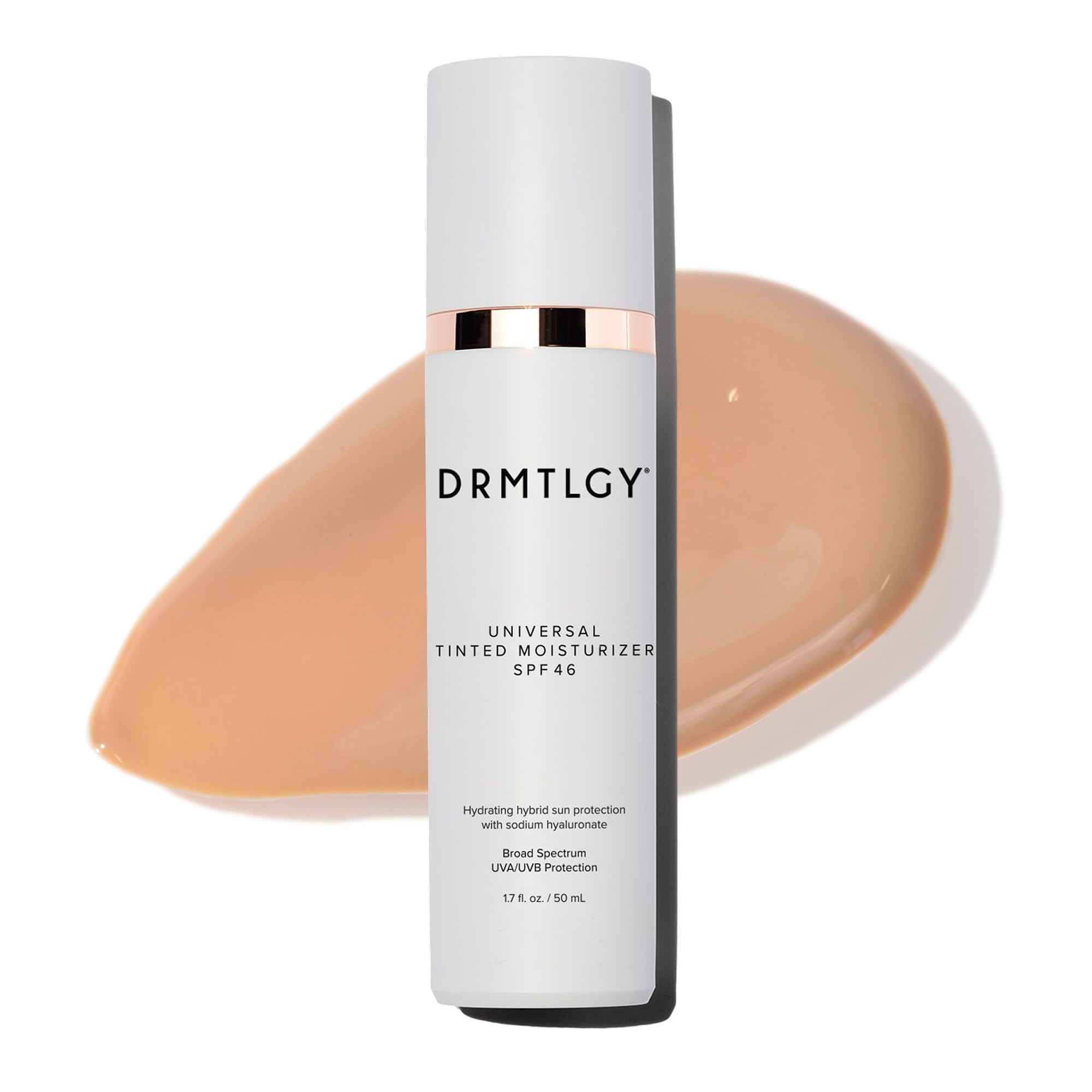
DRMTLGY Universal Tinted Moisturizer

DRMTLGY Universal Tinted Moisturizer

Sheerest finish

Our Score 8.2/10
Check Price

Worth Noting

  • Noticeable scent that lingers
Filters
Zinc oxide and octinoxate
Coverage
Sheer
Sun Protection
SPF 46
Key Ingredients
Niacinamide and hyaluronic acid

This is the sheerest product here, closer to a tinted sunscreen than to a skin tint, and that one fact decides whether it's for you. If you want glow and protection with barely any colour, it's very good; if you want your tone evened out, it will disappoint.

What it does well: the finish is genuinely dewy without grease, it goes on smoothly and quickly, and the hybrid zinc-and-octinoxate filter gives SPF 46 with niacinamide, hyaluronic acid and vitamin E underneath. It layers under makeup without pilling, and a little covers the whole face.

The risk to weigh is your own skin. Stinging and breakouts are the reason to patch-test on the jaw for a couple of days before committing to a full face, more so than with anything else on this list. That test is cheap; a tube you can't finish isn't.

Bottom line: Worth it only if you want a glow and sun protection with almost no colour, and your skin tolerates it after a patch test.

How We Tested 14 Skin Tints

We built the shortlist by pulling every tint with a published shade range, a full ingredient list, and a price we could defend per fluid ounce, then crossing off anything that leaned on heavy fragrance or put drying alcohol near the top of the ingredients. That left 14, and for six months five of us wore them — dry, oily, combination, and one genuinely reactive complexion in the mix — over sunscreen in the morning, through a commute and a workday, to the gym, and on a couple of red-eye flights.

Application came first, because it's where most tints fall apart. We recorded whether each one went on with fingers, a brush, or a damp sponge without streaking, how much product it took to cover a whole face, and whether it pilled over sunscreen before we'd even left the bathroom. Coverage we judged on redness around the nose and a few old acne marks: which tints needed a second pass and stayed natural, and which ones flattened those spots into visible patches.

At lunch and again before dinner we checked in the mirror to see where a tint broke down first — usually the nose and chin — and whether the shade had oxidized toward orange. Shade matching happened at a window in daylight rather than under bathroom bulbs, since a tint carries so little pigment that half a shade off looks like a mask. Testers with reactive skin flagged any stinging or tightness by the end of the day, everyone rated the smell on first squeeze and again at hour six, and we weighed the price against how much product a single face actually used.

How to Choose a Skin Tint

Start with coverage and finish

Every tint here sits between a moisturizer and a foundation, and the label tells you roughly where. Sheer and hint-of-tint formulas even out redness and shadow but won't hide a blemish; light-to-medium formulas build in layers and cover more without going flat. Finish is the other half of the decision: dewy and satin tints flatter dry and mature skin, while semi-matte ones stop oily skin looking polished by mid-morning. Most disappointment with a tint traces back to buying the wrong one of those two things, not to a bad formula.

Shade matching is where tints go wrong

Tints carry fewer shades than foundations, and the ones that exist often dry down deeper and warmer than the name on the tube. Pigment also oxidizes as it meets air and oil, which is how a shade that looked right at eight reads orange by lunch. Swatch along the jaw rather than the hand, and leave it twenty minutes before deciding. If you sit between two shades, a sheerer formula forgives more than a dense one, and a universal tint blurs the difference rather than matching it.

Match the formula to your skin type

Dehydrated and dry skin does best with water-gel and hyaluronic-acid formulas, which stay comfortable without a heavy cream underneath. Oily and acne-prone skin should look for a semi-matte finish plus oil-free and non-comedogenic on the label; reactive skin should start fragrance-free and take a mineral filter where it can get one. If you're buying for fine lines, a dewy formula that never fully sets is kinder than a matte one, which is exactly the finish that settles into texture.

Decide how long you need it to last

Longwear tints set firmer and feel less like skincare; hydration-first formulas stay comfortable and fade sooner. If your day runs long or you touch your face constantly, choose the longwear formula and set the T-zone lightly. If you're wearing it a few hours and can top it up, the comfortable one wins. Transfer is the practical test: a tint that comes off on a phone screen or a collar isn't doing its job, however good it looked at eight in the morning.

What the price gap actually buys

The cheapest tints here and the most expensive one do the same basic job, and the gap is about refinement and sun protection rather than coverage. More money buys a smoother texture, a higher SPF, and formulas built for reactive skin. Size counts too: a 1.7-ounce tube holds noticeably more than the one-ounce standard, so a pricier product can work out cheaper per wear. If you'll wear it five days a week, paying for a texture you enjoy is reasonable; if it's twice a month, start with a budget tube.

Frequently Asked Questions

Final Verdict

Start with the L'Oreal True Match Nude tinted serum. It evens out tone in a layer thin enough to disappear, it behaves without primer or powder, and it's the one most people will finish. If money is tight, the wet n wild gives you buildable coverage and a shine-free finish for a fraction of the cost; if your days run long, the Maybelline holds on longest. For sun protection in the same step, the bareMinerals mineral SPF 30 is the one we hand to redness-prone skin.