Bags & Accessories

Best Ski Gloves for Women of 2026

A bluebird day on the mountain can turn sour fast if your fingers go numb on the lift or your gloves soak through by the second run. A good pair of women's ski gloves is the difference between staying out until last chair and retreating to the lodge with stiff, wet hands. I've spent the last winter season logging full days on the slopes with 12 pairs, from value picks to pricier options, and the gap between a glove that works and one that just looks the part is wider than you'd think.

The right pair should feel broken-in from the first chairlift ride, not need a week to loosen up. You want warmth that doesn't come with clammy palms, a fit that leaves room for a liner without bunching at the fingers, and a cuff that seals out snow when you fall. We also paid attention to how easy they are to get on and off with cold hands, how they hold up after repeated drying, and whether the price reflects better materials—or just a logo. Below are the ones that earned a spot in my gear bag.

1

MCTi Women's Ski Gloves

Top Pick
MCTi Women's Ski Gloves

All-round skiing

Our Score 9.0/10
Check Price

Worth Noting

  • Seams and wrist straps can give out first
Fit
Women's-specific
Use
Skiing and snowboarding
Waterproofing
Waterproof shell

Most ski gloves sold to women are men's patterns scaled down, and you feel it at the knuckle and across the thumb. MCTi sells this one as a women's glove, cut on a women's pattern and sized on a women's chart, and that's the first thing we check now when a reader tells us she has spent years swimming in unisex gloves. It's why this is our top pick: fit is the one thing you can't fix later with a liner, a strap, or a hand warmer.

Warmth is the next thing we look at, and these deliver in the conditions most people actually ski in. The lining is soft enough to forget about, the palm is cushioned where you grip a pole, and the cuff rides high enough that a fall doesn't fill your sleeve with snow. Dexterity is decent for a glove this warm, enough to work a buckle or drive to the hill without taking them off.

The limits show up in wet snow and deep cold. In dry conditions they're excellent; after a long, wet afternoon the shell starts to soak through at the fingers, and in single digits the fingertips are the first thing to complain. The touchscreen tips are vague too, fine for skipping a song on the lift and not for typing anything longer.

For a first pair or a weekend skier, this is the glove we hand over without much hesitation. If you're on the hill every weekend, plan on replacing them every few seasons and you'll enjoy them more.

Bottom line: Our pick for most women: a genuine women's pattern, dependable warmth, and a comfortable fit you can count on for a full ski day.

2

Tough Outdoors Ski Gloves

Tough Outdoors Ski Gloves

Budget ski days

Our Score 9.2/10
Check Price

Worth Noting

  • Unisex cut runs snug through the thumb
  • Seams can tear with hard use
Fit
Unisex
Use
Skiing and snowboarding
Insulation
Insulated

Warmth is the first thing that fails on an inexpensive ski glove, so it's the first thing we check. This pair holds heat on the lift in serious cold, the shell keeps snow from soaking through on a normal day, and the wrist strap means you can pull one off on the chair without watching it drop into the trees.

That makes it our value pick of the group. The catch is the cut: it's a unisex glove sized for men and women both, which is why the MCTi above is the better call if your hands are narrow. If they're average to wide, this is a lot of glove for the money.

Water resistance is good for snow and not for a thaw; a long, wet spring afternoon will eventually get through. The other quirk is the lining: pull a damp glove off by the fingers and it turns inside out, which makes getting it back on a chore. Pull from the cuff instead and it stops being a problem.

For a glove you're not precious about, a few days a season plus the odd sledding afternoon with the kids, it's the easiest recommendation here.

Bottom line: Spend the least and still get warm hands: our budget pick, as long as your hands aren't narrow.

3

Pnosnesy Ski Gloves

Pnosnesy Ski Gloves

Small hands

Our Score 9.2/10
Check Price

Worth Noting

  • Thumb seam can split with use
Insulation
3M Thinsulate
Women's Size
M (women's S-M)
Waterproofing
TPU insert
Temperature Rating
-22°F to -4°F

There's exactly one size in this line built for adult women, and it's the medium: the chart measures it at 25.5 cm (10.04 in) around the palm and slots it for women's small-to-medium hands. That's a narrow range, and it's the whole point. If every unisex glove you've tried has left you with an inch of empty finger, this is the pair we hand you.

It also carries the boldest warmth claim here, rated from -22°F to -4°F with 3M Thinsulate and a doubled fleece lining, and warmth is the strongest part of how it performs. The waterproofing is built properly too, with a TPU insert behind a treated shell rather than a coating on its own, so slush doesn't wick straight into the insulation.

Dexterity is the compromise. These are thick, and thick gloves turn buckles and zippers into a two-handed job. You get touchscreen fingertips on the thumb and index, a small zippered pocket, and a wrist leash that clips the pair together, useful though the touchscreen is more reliable for a lift-line text than anything longer. The line runs down to toddler sizes, so a family can match without hunting.

For small hands on a tight budget it's the pair we point people to first, just measure before you order, because the size range leaves no room for a guess.

Bottom line: Buy these if unisex gloves have always left you with empty fingers at the tips; the women's range is narrow but it lands.

4

Hikenture 3M Ski Gloves

Hikenture 3M Ski Gloves

Lift-pass storage

Our Score 9.0/10
Check Price

Worth Noting

  • Palms and fingers run wide
  • Seams can tear with rough use
Pocket
Zippered back pocket
Weight
6.35 oz
Membrane
Waterproof TPU
Insulation
3M Thinsulate

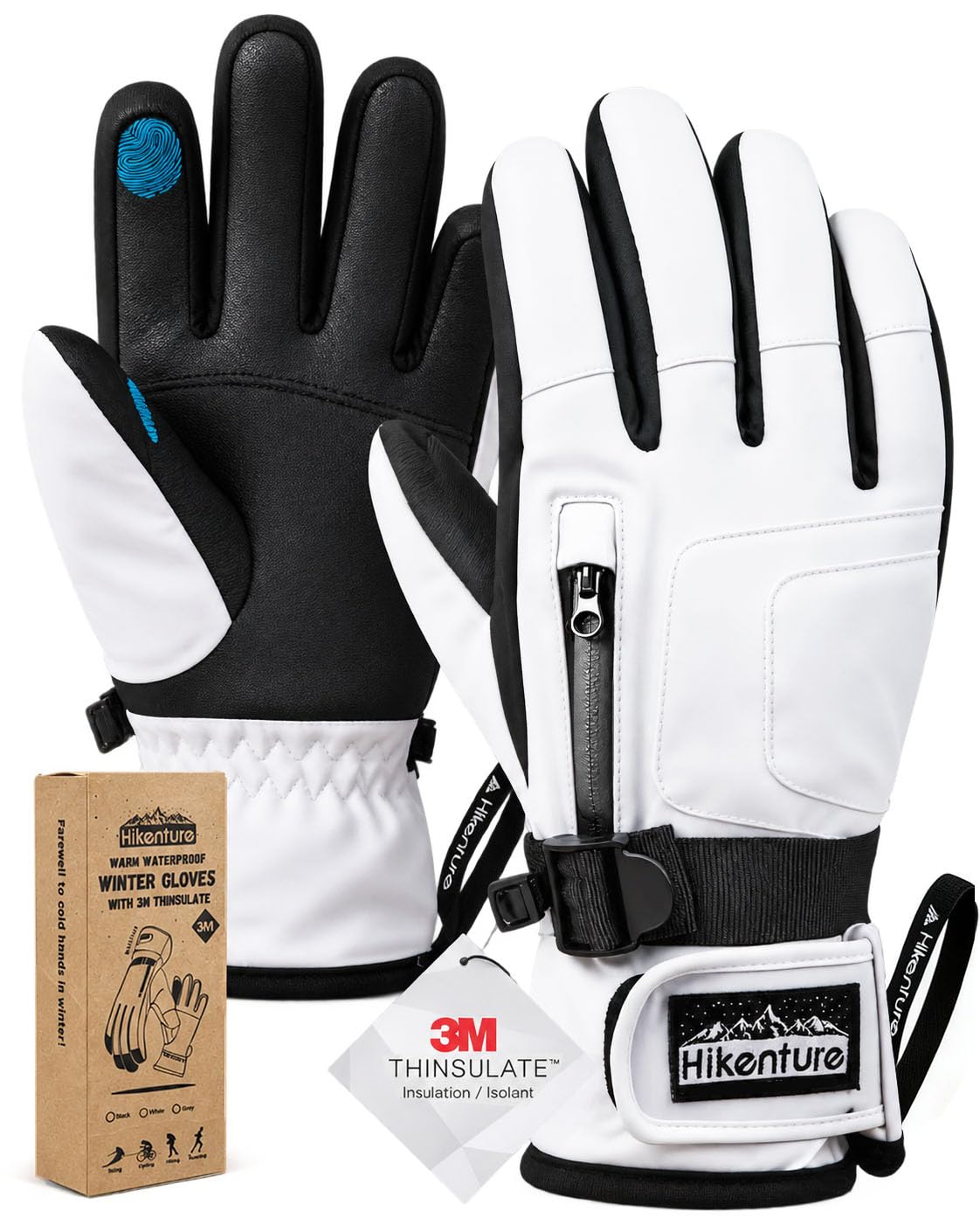
A zippered pocket on the back of the hand sounds like a gimmick until you've spent a morning with a lift pass in a jacket pocket you can't reach with gloves on. Hikenture puts it behind a sealed zip, sized for a pass, a key, or a hand warmer, and it's the one extra here that changes how a day on the hill goes.

It's a small feature on a glove that gets the basics right, and it's the one we noticed most on a cold morning. 3M Thinsulate, a waterproof TPU membrane, and a fleece lining is the same recipe the other good gloves here use, and at 0.18 kg it's the lightest of the pairs that list a weight. The touchscreen patches sit on the thumb and forefinger, where you actually tap, and Hikenture backs the glove with a one-year manufacturer warranty.

Waterproofing holds in snow but not indefinitely, and because the lining doesn't turn inside out, a soaked pair takes longer to dry than you'd like, so stand them cuff-down somewhere warm rather than on a radiator. Buy to your hand measurement rather than sizing up for a liner.

If the pocket, the light feel, and a warranty to fall back on are what you want, it's the pair we reach for.

Bottom line: Worth it for the sealed pass pocket and a light feel, provided you order to your measurement rather than sizing up.

5

Pixel Panda Winter Gloves

Pixel Panda Winter Gloves

Grip and touchscreen

Our Score 9.0/10
Check Price

Worth Noting

  • Sized on a men's chart that runs small
Palm
PU leather
Insulation
3M Thinsulate
Touchscreen
270-degree index fingertip
Waterproofing
Sealed liner plus DWR shell

What we find interesting about these is the construction: a water-repellent shell over a sealed liner with heat-welded seams, which is a more serious answer to wet snow than a single treated outer. Add a full-palm PU leather grip, a 270-degree conductive patch on the index fingertip, a wrist leash, and a snap clip that keeps the pair together in a pack, and you get a lot of glove for the money.

Warmth comes from 3M Thinsulate and a plush fleece lining, and it holds up on a cold day, while the exterior shrugs off snow and light rain without soaking through. The touchscreen patch is one of the more usable ones here, largely because the conductive fabric wraps the whole fingertip rather than sitting in a coin-sized spot.

The catch is the shape. The sizing runs on a men's chart, the current variant is a large, and the glove comes up small against that chart, so a woman who normally wears a medium is ordering a large and hoping the fingers land right. The little finger tends to run long on smaller hands, which is what a men's pattern does when it's scaled. It earns its place if your hands suit that; if you want a glove cut for your hand, the MCTi does it better.

Bottom line: A well-built, well-priced glove with a real grip and a working touchscreen, if a men's large is your size.

6

ihuan Winter Ski Gloves

ihuan Winter Ski Gloves

Everyday winter wear

Our Score 8.8/10
Check Price

Worth Noting

  • A lighter build than the mountain-specific picks
Cuff
Adjustable windproof
Palm
Anti-slip microfiber leather
Outer
Waterproof fabric
Lining
Fleece

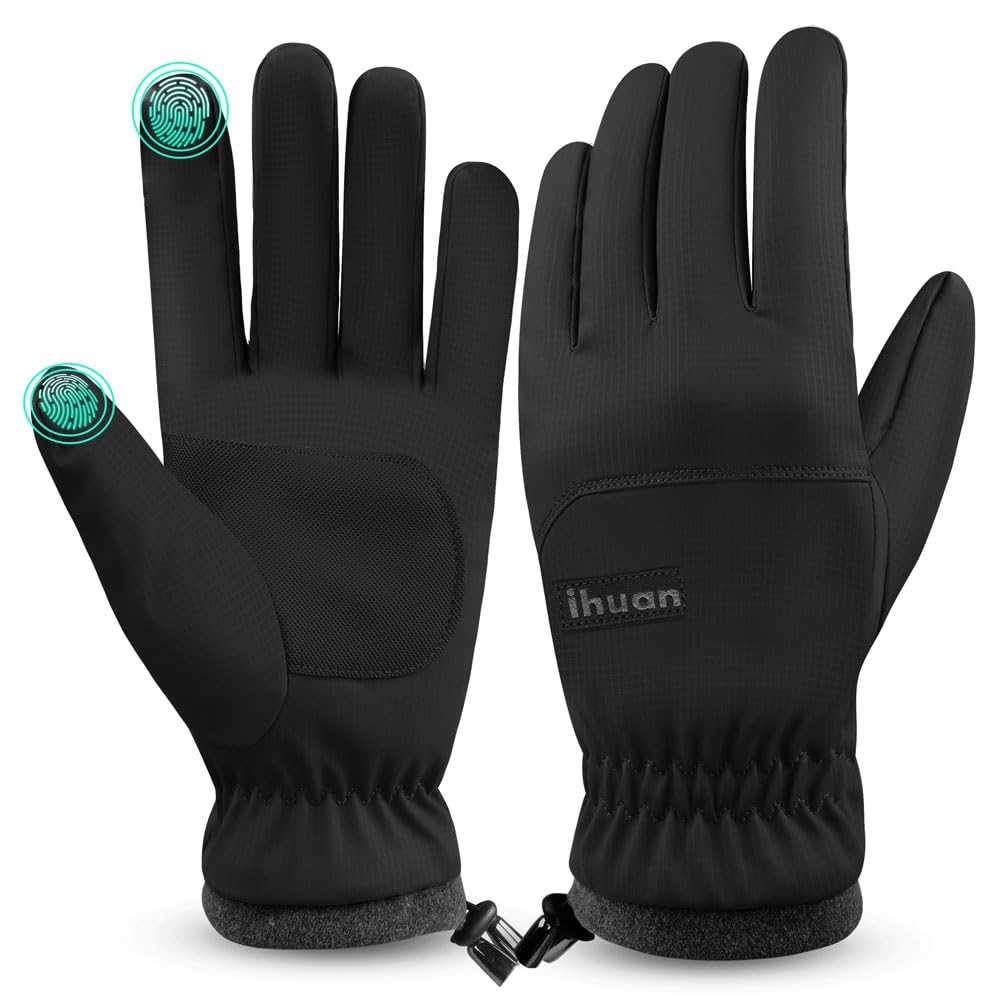
This one tells you what it's for if you read past the title: light, soft, not bulky, and pitched at daily life and work as much as at the mountain. That isn't a knock. A waterproof glove you can drive in, shovel in, and wear on a cold lift is the glove most people actually need on most days.

What you get is a fleece lining, a waterproof fabric outer, an adjustable cuff that cinches over a sleeve, and a microfiber palm with an anti-slip finish. The shape is slim, which is the point: it slides under a jacket cuff instead of over it, and it doesn't fight a steering wheel or a zipper.

Where we found it gives ground is in the cold. On a bluebird groomer day it's fine, but for a storm day or a January trip somewhere genuinely cold, the MCTi and the Pnosnesy are the gloves to take. If your season is a few groomer days and the glove then lives in the car until March, that's a trade worth making.

Bottom line: A sensible buy if your winter is mostly driving, shoveling, and a few groomer days rather than deep-cold skiing.

How We Tested Women's Ski Gloves

We started by surveying the market for women's-specific ski gloves, filtering out unisex pairs that only came in small sizes and focusing on models with sealed waterproof membranes, synthetic insulation, and a cut that accommodates a liner. From there, we narrowed to 12 pairs that spanned the price spectrum and brought them to the mountain.

Testing ran through one full winter season, from opening day in November to the last slushy weekend in April. Each pair saw at least three resort days, plus shoveling the driveway and walking the dog on cold mornings. We wore them on chairlifts, gripping poles, adjusting bindings, and building a snow fort—real use, not a lab bench.

We noted how quickly fingers warmed up after a lift ride and whether sweat turned to chill by lunch. For water resistance, we packed snow against the back of the hand for a full minute and checked for dampness inside. We also timed how long it took to pull each glove on and off with cold, stiff hands, and whether the wrist leashes stayed out of the way. After every wet day, we dried them on a rack and inspected seams, palm wear, and cuff elasticity. Sizing was judged against each brand's chart, and we sized up for liner space when needed. Finally, we compared price against performance—did the extra money buy warmer fingers, or just a fancier logo?

How to Choose Ski Gloves for Women

Start With the Pattern, Then the Size

Gloves don't break in the way boots do. One that's long in the finger stays long, and one that pinches across the palm stays cold however much insulation is stuffed inside, because a tight glove restricts the circulation that keeps fingers warm. A women's-specific pattern shortens the fingers and narrows the palm instead of shrinking a men's glove evenly, which is why the MCTi is our default here.

Measure around the widest part of your palm and the length of your middle finger, then check both against the chart. Most charts publish one or the other, and it's the pair of numbers together that predicts whether the glove will actually fit.

Match Insulation to Your Coldest Day

Temperature ratings on ski gloves are a manufacturer's claim rather than a test result, and they usually describe standing still rather than skiing. The Pnosnesy's listed -22°F to -4°F is the boldest number here; a glove with half that range is still plenty for a March afternoon or a mild January day.

The trap is buying the warmest glove you can find. Insulation adds bulk, and a bulky glove that makes you clumsy with a buckle is worse than a moderate one that fits. If you ski in single digits regularly, get the fit right before you add anything else.

Inserts Beat Coatings in Wet Snow

Waterproofing comes two ways. A treated outer shell sheds snow and then wets out, and once it's saturated the cold comes straight through. A waterproof insert, such as the TPU membrane on the Hikenture or the sealed liner on the Pixel Panda, sits behind the shell and keeps meltwater away from the insulation.

If you ski in the Pacific Northwest, in spring slush, or anywhere it rains at the base, pay for the insert. In cold, dry powder a treated shell is fine, and it's usually the lighter, more flexible glove.

Cuffs, Leashes, and the Details You'll Use Every Run

A gauntlet cuff worn over the jacket sleeve keeps snow out when you fall; a short cuff worn under the sleeve is less bulky and easier to manage with a pack. Either way, look for a wrist leash or strap, which is the difference between pulling a glove off on the chair and watching it drop.

A zippered pass pocket, as on the Hikenture, saves you digging into a jacket you can't reach with gloves on. Touchscreen patches are worth having for a lift-line text and not much more; even the good ones here are inconsistent, and a glove that fits badly is a bigger annoyance than a fingertip that won't register.

Frequently Asked Questions

Final Verdict

Buy the MCTi if you want one glove that handles a normal ski day without fuss: it's the one sold and sized specifically as a women's glove, it's warm, and it's comfortable enough to forget about. The trade is longevity at the seams, which is fine for a weekend skier and not fine for someone on the hill every week.

If your hands are small, the Pnosnesy fits where the rest don't. If budget is the deciding factor and your hands are average to wide, the Tough Outdoors is the pair we hand people.