Shoes

Best Shoes for Neuropathy of 2026

Neuropathy turns a shoe into a medical decision, whether you want it to or not. Numbness means you can't feel a seam rubbing until the damage is done, and tingling makes a stiff toe box feel like punishment by mid-afternoon. Add feet that swell half a size by evening, and the pair that fit at 8 a.m. is a different shoe by dinner. The right pair won't fix the condition, but it stops your footwear from making things worse — ideally without announcing itself as orthopedic.

That last part is where most searches stall. Over six months I've worn 14 pairs — clogs, step-in sneakers, wide-width walkers — and the ones that stayed by the door got the boring things right: a toe box wide enough to spread your toes, seams you can't feel through a sock, and arch support that holds up past the first hour. Shop in the afternoon when your feet are at their largest, and don't assume your usual size. The picks below run from hands-free step-ins to adjustable wide styles.

1

Easy Spirit Traveltime

Top Pick
Easy Spirit Traveltime

Everyday wear

Our Score 9.2/10
Check Price

Worth Noting

  • Soles wear with heavy daily use
Style
Slip-on clog
Closure
No laces
Arch Support
Built-in

The shoe we recommend first in this group isn't a sneaker. Easy Spirit's Traveltime is a low clog with a soft, open collar your foot slides into — no laces to reach for, no stiff edge pressing where a heel may already be tender, and nothing to bend down and fasten. Of everything we tested, it asked the least of us getting out the door, and with neuropathy that is not a small thing.

The comfort holds up past the first hour, which is the part that matters. The footbed is padded and the arch is molded into the shoe rather than bolted on, so the middle of your foot is held instead of left to flatten — the difference you notice on a hard floor at four in the afternoon. The toe box has genuine room in it, enough that a bunion sits inside the shoe rather than under the upper.

There's no break-in period to speak of. We wore them out of the box for a full day of errands and had nothing to report at the end of it, which is exactly the outcome you want from a shoe you may not be able to feel properly. The upper has enough give that a foot which swells by evening still goes in without a fight, and the low profile means nothing catches on a hem.

Where it stops: this is an everyday shoe, not a distance shoe. For long walks, a standing shift on concrete, or anything where you want a thick rocker under you, the Skechers Glide Step below is the better tool. But for the pair you leave by the door, this is the one we keep coming back to.

Bottom line: The pair we recommend first for most women with neuropathy: it goes on without laces, holds the arch, and leaves room for toes that hurt.
2

Skechers Max Cushioning Glide Step

Skechers Max Cushioning Glide Step

Hands-free entry

Our Score 9.0/10
Check Price

Worth Noting

  • Costs the most of any shoe here
  • Lining can tear before the outsole wears
Entry
Hands-free step-in
Style
Cushioned walking shoe
Toe Box
Roomy
Cushioning
Max cushioning

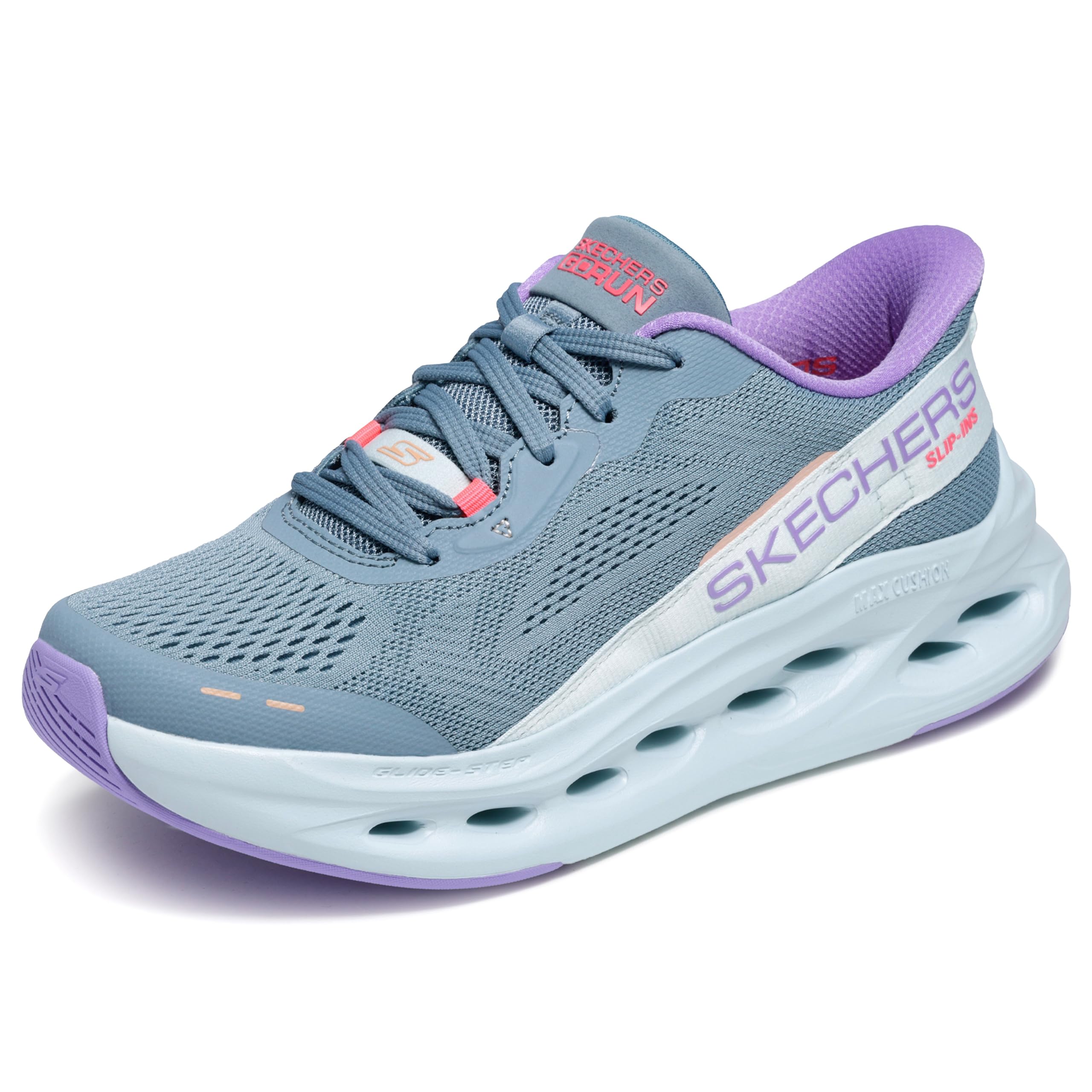
You don't put this shoe on so much as step into it. The heel is built to fold flat under your foot and snap back up behind it, so the whole job takes one downward push and no hands at all — a small thing unless reaching your feet has become the reason you stay in slippers until noon.

That mechanism is why it earns a place here, and why it's the pick we point people toward when hands-free entry matters more than anything else. Of the shoes in this group, it solves entry completely rather than partly, and it does it without looking like adaptive footwear. The upper reads as an ordinary walking sneaker, which matters if you'd rather not announce anything about your feet.

Underfoot, it's the plushest of the sneakers we tested. Max Cushioning is a marketing name, but the sole backs it up: thick, soft, and slow to bottom out, which is what you want on tile, concrete, or a long grocery run. The toe box is roomy enough for toes that don't like being touched, and the arch support is actually built in rather than implied by a pretty insole.

The collapsible heel is the trade-off as well as the feature. It gives up some structure at the back, so the shoe feels less locked-on than a laced trainer; if your balance is the bigger concern, a firmer shoe you can fasten snugly may serve you better. Everyone else gets a daily obstacle removed.

Bottom line: If bending to reach your shoes is the hard part of the morning, this is the pair to buy: one downward push and the heel closes around you.

3

Scurtain Wide Diabetic Shoe

Scurtain Wide Diabetic Shoe

Swelling feet

Our Score 8.4/10
Check Price

Worth Noting

  • Heel slips unless the straps are snug
Style
Adjustable walking shoe
Closure
Hook-and-loop straps
Toe Box
Wide
Heel Drop
Zero drop

Adjustable hook-and-loop straps across the top are the reason this one made the list. They open the shoe up wide enough to get a swollen or tender foot in, then close down to hold it — a different proposition from an elastic slip-on, which only fits the foot you had this morning.

Everything else is built for comfort rather than looks: a wide, boxy toe box that gives toes somewhere to go, a zero-drop sole that keeps you low to the ground, and a light build that doesn't drag by late afternoon. Zero drop means there's no raised heel, so your foot sits level — comfortable for a lot of people, and worth trying before you commit if you're used to a lifted heel. It's also the least expensive shoe in this group, which makes it a low-risk way to find out whether an adjustable fit is what you've been missing.

The catch is underfoot. The footbed is flat, and if you're used to a molded arch you'll feel the difference by mid-afternoon. The toe box has room to drop in your own insole, so that's the fix: put your insole in before the first wear rather than after your feet complain. Sizing is otherwise generous, and the straps take up whatever slack is left.

Bottom line: For feet that swell and change size through the week, this adjustable, wide-toe shoe is the most forgiving design in the group.

4

Skechers Go Walk Joy

Skechers Go Walk Joy

Light everyday

Our Score 9.0/10
Check Price

Worth Noting

  • Minimal arch support underfoot
Style
Slip-on walking sneaker
Closure
Elastic, no laces
Toe Box
Generous

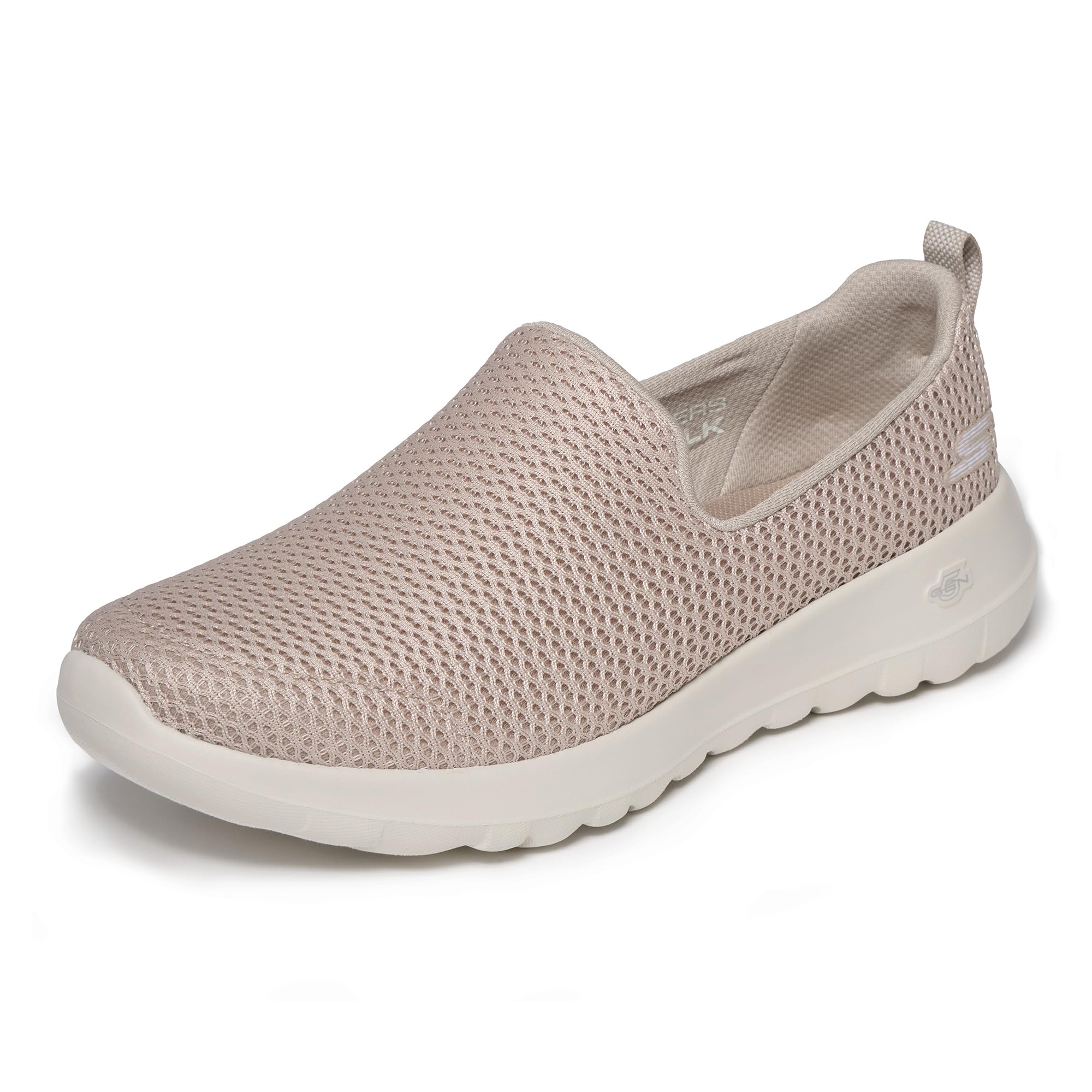
Picked up in one hand, the Go Walk Joy barely registers. That lightness is the entire appeal: a stretchy upper, no laces, and a soft, flexible sole that lets the shoe disappear on your foot — exactly what some people with neuropathy want, and exactly what others should avoid if they need a firm platform under them.

We kept reaching for it for quick trips — the mailbox, the pharmacy, the school run — because it goes on in one motion and comes off the same way, with no bending and nothing to tie. It comes in wide widths, which matters more than the low weight in our book, and it takes a machine wash without complaining. For the money, it's the least fussy shoe here.

Fit is where you have to pay attention. These run large for some feet, and the upper is narrow for a shoe that's meant to be roomy; if you're between sizes or you have a wide forefoot, order the wide and consider going a half size down. Get the size right and it's the simplest pair in this article to pull on with one hand against a wall.

Bottom line: A light, inexpensive no-lace sneaker that suits short errands and around the house rather than a full day standing.

5

STQ Slip-On Loafer

STQ Slip-On Loafer

Support, no laces

Our Score 8.8/10
Check Price

Worth Noting

  • Stitching can give way on the inner seam
Style
Slip-on loafer
Upper
Canvas
Arch Support
Built-in

Arch support is the thing this one gets right, and it isn't a claim you can usually make about a canvas slip-on. There's a shaped footbed in here with a raised arch you can feel the moment you stand up, which puts it well ahead of the flat little slip-ons most of us picture in this category.

The rest is designed for softness: a stretchy canvas upper with no laces, a flexible sole that bends with your foot, and enough cushioning to carry you through a desk day and an evening of errands. We wore them for both and stopped thinking about them, which is the nicest thing you can say about a shoe like this. It also reads as a weekend loafer rather than a medical device, and several colors go with more than a pair of sweatpants.

Sizing is the one thing to be careful about. These run roomy for some feet and tight for others, so order from a seller with easy returns and expect to try a half size either way. Treat them as a lighter, softer alternative to a sneaker rather than a replacement for one — there's no rocker or thick midsole here for long distances.

Bottom line: A soft canvas slip-on with real arch support underneath, and the pick when you want comfort without a shoe that looks clinical.

How We Tested the Best Shoes for Neuropathy

To build the shortlist, we started with more than 40 styles and filtered hard: did it come in wide or extra-wide, could the insole be pulled out to make room for a custom orthotic, were the interior seams flat or absent, and could you get it on without bending down to fight a heel. That left 14 pairs, chosen after we read the one- and two-star reviews specifically for complaints about sizing, collapsed heels, and outsoles wearing through in a season.

Before anyone wore a pair outside, I ran a bare hand around the inside of each shoe, pressing along the seams and the toe box, then had testers with narrow, wide, and high-instep feet report back on whether their toes could spread and whether the arch landed in the right spot. Each pair then got a full workday — a commute, hours at a desk or kitchen counter, grocery aisles, the walk back — because pressure points don't surface in the first ten minutes. We noted where socks left marks and who was kicking a shoe off under the desk by 3 p.m.

Two checks happened off the carpet. We walked each pair across a wet tile floor and a painted garage slab to see whether the outsole gripped or slid, and we wore them with jeans, trousers, and once or twice a dress, since a shoe that ruins the outfit doesn't get worn either. Six months in, we're still pressing heel counters and checking outsoles for wear, and weighing whether each pair still feels worth the money. The ones that survived all of it are the ones still sitting by the door.

How to Choose Shoes for Neuropathy

Start with the toe box, then the width

Neuropathy rarely travels alone: bunions, hammertoes and swelling usually come with it, and all three punish a tapered toe box, especially when you can't feel the pressure building. Slide your foot in and wiggle your toes. If they touch the end or stack on each other, the shoe is wrong whatever the size says.

Buying a wider width keeps your arch where the shoe put it; sizing up just slides the whole shoe forward. The Easy Spirit Traveltime and the Scurtain both leave visible room in front of the toes, which is the standard to hold every other pair to.

Cushioning: soft is not the same as supportive

A thick, soft midsole spreads pressure, which is what you want under a foot with reduced sensation. Too soft, though, and you give up stability and the foam packs down fast — and because you may not feel it happening, the cushioning can be gone while the upper still looks new.

Match the cushion to the job. Long days on hard floors call for the thickest sole here, the Skechers Glide Step; short errands suit something firmer and lighter, like the Go Walk Joy.

How you get them on decides how often you wear them

Laces are the quiet reason a good pair stays in the closet. Elastic slip-ons go on in one motion but only fit the foot you have that morning; adjustable straps handle a foot that swells by afternoon; a collapsible heel lets you step in without using your hands at all.

Shop for your worst morning, not your best one. If bending is the obstacle, the Skechers Glide Step is the only shoe here that solves it completely; if your size drifts day to day, the Scurtain's straps are the more forgiving answer.

Arch support and grip: read past the label

Arch support can mean a molded footbed, a foam bump, or nothing at all, and the phrase appears on almost every box. If you wear an orthotic, choose a shoe with room to add it, like the Scurtain; if you want support built in, the STQ loafer and the Traveltime both have a shaped footbed you can feel under the midfoot.

Grip matters as much, since reduced sensation makes a slide harder to catch. Look at the tread rather than the word non-slip — smooth rubber on a wet supermarket floor is where cheap soles give up.

Frequently Asked Questions

Final Verdict

For most women with neuropathy, the Easy Spirit Traveltime is where we start. It goes on without bending, holds the arch, and leaves room for toes that don't want to be touched, and it does all three at a midrange price.

If bending to get a shoe on is the real obstacle, or you need a shoe for actual walks rather than errands, the Skechers Glide Step is the better buy: it solves the part the Traveltime can't.