Hair Care

Best Scalp Concealers of 2026

The first time I caught my part under a hotel bathroom light, I understood why my friend never traveled without a little shaker of brown powder. Scalp concealers are temporary camouflage — tinted powders, fibers, sprays, and cream sticks that fill in a widening part, soften gray roots between color appointments, and make a thinning spot read as density rather than skin. None of them grows a hair. What they buy you is time, and the difference between a rushed morning and a good one.

What makes them tricky is that they fail in public — a spray that sets crunchy, a powder that migrates onto your forehead by 3 p.m., a shade that turns ashy the moment you step outside. Here's what a first-timer won't know: a shade one step lighter than your darkest hair usually looks more natural at the part than an exact match, because real scalp isn't a solid block of color. We spent five months with 14 concealers and worked them into actual mornings, video calls, and long days, and the ones that hold up all do the same few things well. What follows is sorted by how much you need covered and how fast you need it done.

1

Clairol Root Touch-Up Powder

Top Pick
Clairol Root Touch-Up Powder

Gray roots

Our Score 9.0/10
Check Price

Worth Noting

  • Only six shades
Hold
Until next shampoo
Format
Loose powder with brush
Shades
6
Applications Per Compact
40 to 60

The brush is the whole argument for this one. Where a spray covers a patch, the Clairol brush lays color on four or five strands at a time, which is exactly what you need at a part line, at a temple, and along the front hairline where overspray ends up on your forehead. Six shades is the narrowest range in this guide, and they read a step deeper in the hair than they look in the pot, so if you are between two, take the lighter one.

Applying it takes about as long as brushing your teeth. Tap the brush into the powder, press it along the part or the hairline, then soften the edge with the brush. Where more scalp shows, we pat the powder on with a small makeup sponge and blend afterward — a sponge covers an area evenly where the brush only draws lines. It holds until you shampoo, does not mark a pillowcase, and lathers straight out. The one thing that lifts it early is an oil-based serum or shine drop, so put those on first or keep them off the covered area.

A compact is rated for roughly 40 to 60 applications, so you are not rebuying it every month, and it is small enough to live in a desk drawer — which is where ours spends most of its time. It is also the most flexible product here: the same powder sharpens a sparse outer brow, covers a gray temple, and knocks back a hairline that is creeping forward. What it cannot do is rebuild density over a bald patch; that is fiber work.

Bottom line: The one we recommend first for gray roots, temple grays, and a receding hairline: a brush-on powder that lands exactly where you point it and shampoos out cleanly.

2

Boldify Hair Fibers

Boldify Hair Fibers

Thinning crowns

Our Score 8.6/10
Check Price

Worth Noting

  • Reads as a shadow on completely bare skin
Hold
Water-resistant until shampoo
Shades
14
Fiber Base
Plant-based, vegan
Fiber Weight
0.42 oz

This is for the problem a powder cannot fix: scalp showing through at the part, at the crown, or over a scar, where there is not enough hair left to put color on. Boldify's fibers are plant-based rather than keratin, charged so they cling to the hairs around the gap and build the look of density instead of painting the skin. Fourteen shades, a 12-gram jar, and a free replacement if the first color misses.

Of the fiber jars here, this is the one we hand to a friend. Coverage over a thinning area is the strongest part of the package — the fibers read as thicker hair rather than as dust, they do not throw a gray cast over brown, and they hold through a warm afternoon and a workout as long as you keep your hands out of your hair. The plant-based formula matters if you prefer to avoid animal-derived keratin, and the fiber itself is lighter and fluffier than the keratin options.

Application is a shake-and-pat job: dust it over the thin area, pat it in with a finger, then mist a light hairspray over the top to lock it. Skip the set and it will shift when you pull a sweater over your head. One shampoo takes it out. The honest limit is bare skin — on a completely smooth patch the fibers sit as a matte shadow rather than stubble, and they need a few surrounding hairs to grab. For the front hairline, our pressed powder pick from the same brand is the better tool.

Bottom line: For scalp show-through at the part or crown, these fibers build believable density and hold it through a long day — our pick for thinning rather than for grays.

3

Boldify Hairline Powder

Boldify Hairline Powder

Widening parts

Our Score 8.4/10
Check Price

Worth Noting

  • Browns read darker than their names
Size
0.14 oz
Format
Pressed compact
Shades
14
Added Ingredient
Squalane

Fourteen shades is the widest range in this guide, and on a pressed powder that matters more than it does on a spray: you are patting color onto skin at the part, so a half-shade miss shows in a way a misted root line does not. Boldify's compact holds four grams of pressed powder, and the brand replaces the shade free if the first one is off.

A pressed pan gives you a different kind of control than loose powder — you load a sponge or a brush lightly, tap off the excess, and build in thin layers along the part, the hairline, or an edge that is thinning. It has squalane in it and feels like makeup rather than grit, and a light application does not stiffen the hair or dull shine. For a part that has widened gradually, it is the best tool here: you can redraw the line and then blur it back in.

The browns are the weak spot. They read darker on the hair than they do on the pan, and a shade that flatters a cool dark brunette can go flat on warm highlights. Order a step lighter than you think you need. Get the match right and this is the strongest pressed powder in the set for gray coverage and for staying put until you wash.

Treat the pan like what it is: a pressed powder that does not enjoy riding in a bag full of keys, and does not need a damp sponge dug into it. Used a few times a week along a part line, a compact lasts a long while; if you are covering a large area every day, a fiber jar goes further for about the same money.

Bottom line: Order a shade lighter and this pressed powder beats the rest of our picks for a widening part, with gray coverage that holds until you wash.

4

Style Edit Root Touch Up Spray

Style Edit Root Touch Up Spray

Fast coverage

Our Score 8.6/10
Check Price

Worth Noting

  • Lighter shades read deeper than the name
Hold
Until next shampoo
Size
2 oz
Format
Aerosol spray
Free From
Ammonia, peroxide, parabens, silicones

This is the most expensive can in the guide, and it is the one we reach for when we have five minutes and a whole front hairline to cover. Color-adaptive pigments are the reason: the mist lands close to your shade and blends into highlighted or color-treated hair instead of sitting on it as a separate layer, so one pass over the temples and the part is usually enough. Nothing else here covers that much ground that fast.

Technique decides whether it looks like hair or like paint. Hold the can a hand's width back, use short bursts rather than one long spray, and blend the edges with a finger or a brush before it dries — about a minute. Sprayed up close it can leave a stiff patch, so the fix is distance and less product, not more. Once it is dry it behaves like hair rather than a coating, and it lasts until your next shampoo.

The trade-off is economic rather than cosmetic: a 2-ounce can will not last a daily user long. We keep this one for the mornings that matter — a meeting, a wedding, the day the roots are worse than the calendar allows — and use a compact for ordinary Tuesdays. Sweat and weather resistance are part of what the extra money buys, along with a pigment that adapts rather than a flat tint.

Bottom line: Our pick when speed matters more than anything else: one pass covers a whole hairline, and the color-adaptive pigments blend into dyed and highlighted hair.

5

Sevich Hairline Powder

Sevich Hairline Powder

Travel touch-ups

Our Score 8.8/10
Check Price

Worth Noting

  • Browns lean warm and can read red
Hold
Through sweat and humidity
Format
Pressed compact
Shades
12
Applicator
Mirror and puff

The lid is the feature. Flip it open and there is a mirror and a puff, which means you can fix a part line in a parked car, an office bathroom, or a plane seat with nothing else in your hands. The compact is under two inches across, the powder is pressed, and twelve shades cover the usual run from dark blonde to black; Medium Brown lands where the name suggests, dark blonde through medium brunette.

On the hair it is the softest of the powders here. Press the puff on and the color goes down in a sheer layer you can build, and it does not cake or leave a visible line at the edge of the part the way a heavy hand with loose powder can. It holds through a sweaty afternoon and washes out with shampoo. Two things to know: the browns lean warm, so cool-toned hair can read red in daylight, and the pan is small — this is a touch-up tool for hairlines and parts, not a way to cover a wide thin area.

Bottom line: A mirrored compact small enough to keep in a bag, with the softest finish of our powder picks and enough control to fix a part line without a brush.

6

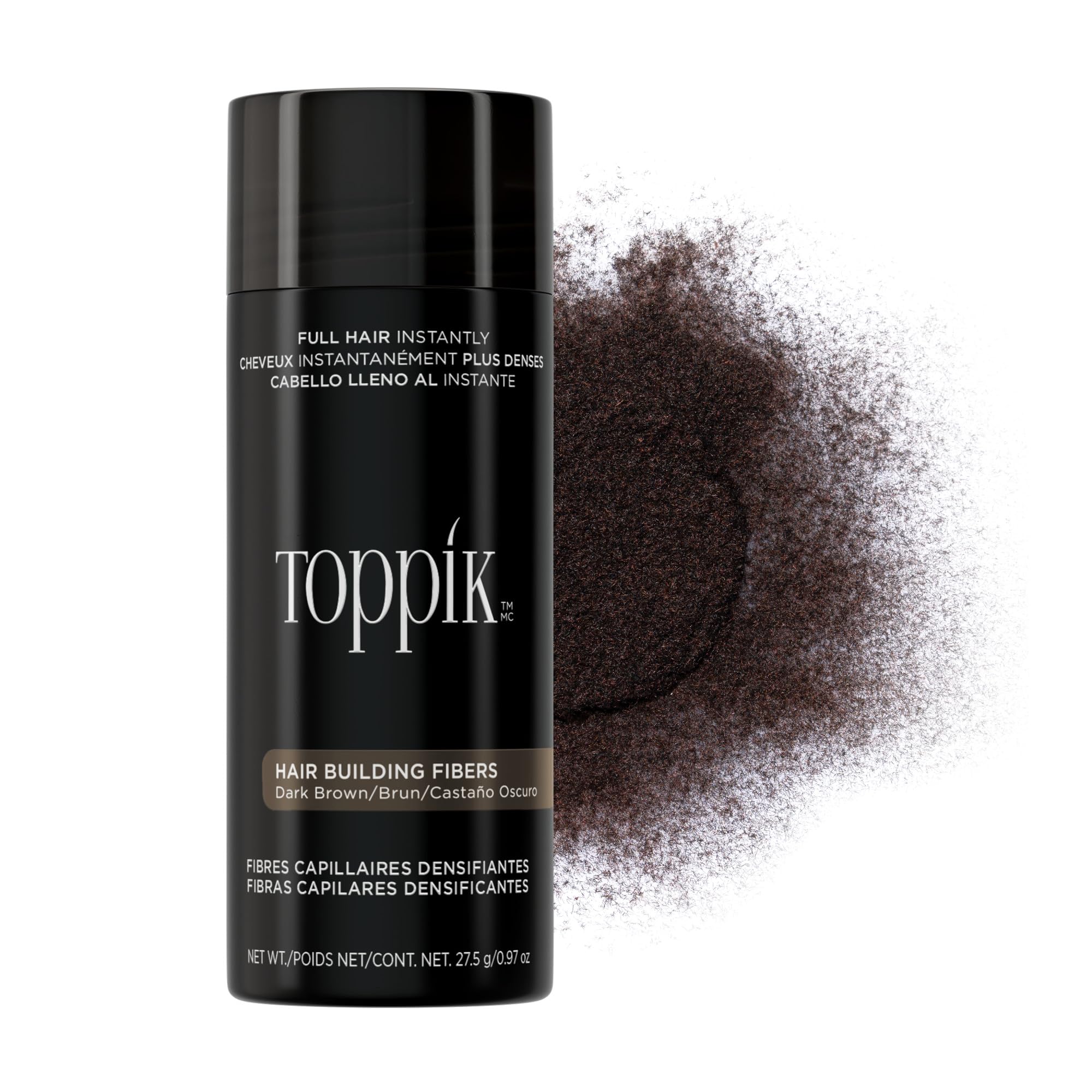
Toppik Hair Building Fibers

Toppik Hair Building Fibers

Keratin fiber users

Our Score 8.6/10
Check Price

Worth Noting

  • Small jar for the money
  • Can look patchy on a bare scalp
Hold
Wind, rain, and perspiration resistant
Shades
9
Fiber Type
Keratin
Size Options
4

The shade names are the first thing to get right here, because they run deep — the browns can read close to black once they are in the hair, and the gap between the chart and the mirror is the reason to test before you commit to a large jar. Pick a shade lighter than the chart suggests, and start with the smallest size if you are unsure.

What you get is the original keratin fiber: nine shades, four sizes, and a texture that is finer than the plant-based fibers here, so it sits close to the hair instead of fluffing above it. Shake it over the thin area, pat it down, and set it with a light spray. It is built to resist wind, rain, and perspiration, and one shampoo takes it out.

Where it earns its keep is hair that is thin but not gone — a receding temple, a crown that shows scalp under bright light, a part that is opening up. Build in two light passes rather than one heavy one and pat it in with a finger; dumping a cloud on in one go is what makes any fiber look like powder. It holds its place all day as long as you do not lean on it.

We steer anyone new to fibers toward Boldify's jar instead, mainly for the wider shade range and the free replacement when a color misses. If you already know your Toppik shade, the finer fiber and the keratin formula are a difference you can see in the mirror.

Bottom line: A fine keratin fiber that disappears into dark hair, provided you buy a shade lighter than the chart and start with the small jar.

7

TRESemmé Root Touch-Up Spray

TRESemmé Root Touch-Up Spray

Everyday gray

Our Score 8.8/10
Check Price

Worth Noting

Size
2.5 oz
Format
Aerosol spray
Free From
Ammonia, peroxide, synthetic dyes
Certification
PETA cruelty-free

The list of what is left out is the pitch: no ammonia, no peroxide, no synthetic dyes, plus PETA cruelty-free certification. For something you might spray along your hairline three mornings a week, that is a reasonable thing to weigh, and it is the main reason this can earns a place here.

It is a 2.5-ounce aerosol in Light Brown, and the mist is fine rather than wet, so it lands as a soft veil you can blend with a fingertip before it sets. Follow the brand's own instruction and give it a full minute to dry before deciding the shade is too light and adding more — two thin passes beat soaking the roots once.

Where it fits is everyday gray rather than maximum coverage: a two-week gap between color appointments, a hairline you want knocked back before a video call, the temple grays that show when you pull your hair up. It is temporary and shampoo-soluble, so it is not the answer for a thin crown or a wide part — that is fiber territory. For weekday speed, no other pick here covers as much ground for the money.

Bottom line: No ammonia, no peroxide, no synthetic dyes, and a bigger can than our premium spray — the one to buy if you spray most mornings.

8

Red by Kiss Quick Cover Stick

Red by Kiss Quick Cover Stick

Edges and beards

Our Score 9.0/10
Check Price

Worth Noting

  • Too slow for wide or thinning areas
Size
0.71 oz
Shade
Black
Finish
Water-resistant
Format
Stick with brush tip

A stick is a different tool from a powder or a spray, and this one is shaped like a fat marker with a brush tip, so you draw color along an edge instead of dusting an area. That makes it the pick here for the places a puff cannot reach neatly: the front of a hairline, the line where a part meets the forehead, a temple, and a beard or moustache that is going gray faster than the hair above it.

The formula is water-resistant, which is the point of a stick — you are drawing on skin and short hair, so it has to stay through a commute and a humid afternoon. It is the least expensive thing in this guide and small enough to live in a jacket pocket. On locs, twists, or a protective style, the brush tip is the useful part: you can retouch an edge without disturbing what is underneath.

Where it falls short is scale. A stick is for lines, not areas — working it across a wide part or a thinning crown takes a while and lays product on unevenly compared with a puff or a fiber shake. Give it a minute to set before you pull a shirt over your head or adjust a wrap, and wash your hands afterward, because the color comes off on whatever it touches until it is dry.

So it is a specialist rather than a first purchase. If your complaint is gray roots or a part that is widening, a powder will be faster and more even. If it is the edge of your hairline, a graying beard, or the line of a part you wear every day, this is the cheapest way to sharpen it — and the one we restock first.

Bottom line: The cheapest, most precise way to redraw a hairline, a part, or a graying beard edge — a line tool rather than an all-over concealer.

What Five Months and 14 Concealers Taught Us

Before anything touched a head, we built a shortlist of more than 40 concealers, then cut the ones with shade ranges too narrow to serve both cool and warm browns, the ones sold only in a jumbo size nobody would finish, and the ones whose applicator looked likely to dump product in a single spot. That left 14 products across four formats: loose fibers, pressed powder, aerosol spray, and a cream stick. Testing ran five months.

Every product got used the way concealers actually get used — in a hurry, on dry styled hair, leaning too close to a bathroom mirror with a video call starting in ten minutes. I applied each one along the part, at the temples, at the front hairline, and over gray roots, and my team did the same on their own hair so we saw each formula against more than one shade and texture. We looked at the result from arm's length and then from six inches, in daylight and under a phone flash, because a color that vanishes in the mirror can turn muddy on camera.

After that it came down to hours. We checked each part at the four-hour mark and again before bed, noting when a formula started to fade, whether it rubbed off on a collar or a pillowcase, and how it survived a windy walk and a sweaty workout. Fingers run through the hair told us about crunch and flaking, a tissue pressed to the part showed transfer, and a few experimental shakes over a black T-shirt showed how much loose powder ends up somewhere other than your head. We also counted how many applications each container gave us, since a compact that empties in three weeks isn't the bargain it looks like.

How to Choose a Scalp Concealer

Match the format to the bare patch

Look at what you are covering before you shop. For individual gray strands or a creeping front hairline, you want a brush-on powder or a stick, because both put color on hair and skin in a controlled line; the Clairol brush and the Red by Kiss stick are the two clearest examples here. For scalp showing through at the part or crown, you want fibers, which cling to the hair around the gap and build density instead of painting skin. A spray is for covering a wide area in seconds, not for precision.

Match the root, not the mid-shaft

Most concealer purchases go wrong on shade rather than formula. Color at the root sits against your scalp and against gray, so it reads darker and cooler than the same product through the length of your hair. Match your root color, in daylight, and test on a section you can cover again — under the top layer at the temple.

Then check the return policy before you commit. Both Boldify picks replace a wrong shade free, which is worth more than a marginally better color chart on a product you cannot exchange.

Plan for hold, transfer, and removal

Everything here is temporary, and the good ones come out in one shampoo — that is the trade for looking covered at work and gray at home. The hours in between are what vary. Powders, fibers, and sticks sit on the surface, so they move when you run a hand through your hair, pull a collar over your head, or lean on a pillow.

A light mist of hairspray after application buys hours, and aerosols need a full minute to set before anything touches them. Wash your hands after a stick or a spray, because the color will come off on whatever it meets while it is still wet.

Work out cost per use, not price per unit

The cheapest-looking product is not always the cheapest to own. A compact of powder is rated for 40 to 60 applications, so a small pot can carry you through months of daily touch-ups, while a 2-ounce aerosol used every morning empties in weeks. Fiber jars work the other way: 12 grams goes a long way along a part line and nowhere at all across a large crown.

Our rule is one compact for daily use and one spray for the mornings when speed is the whole point. Buying both still costs less than replacing an aerosol every month.

Frequently Asked Questions

Final Verdict

If you want one product to keep in a bag and handle gray roots, an uneven hairline, and the odd thin patch, buy the Clairol compact: the brush reaches places a spray cannot, and it shampoos out clean.

If the problem is scalp showing through at the part or crown rather than gray strands, go straight to the Boldify fibers — no powder here builds density like that. And if you are covering a whole hairline against the clock, the Style Edit spray is worth the premium.