Skincare

Best Red Light Therapy Wands of 2026

Red light therapy wands all make the same basic promise: shine specific wavelengths onto your skin and your cells respond. What separates one from another is far less glamorous — the wavelengths actually emitted, how much power reaches your skin, and whether the thing feels good enough in your hand that you'll still be reaching for it in week three. That's where most people quietly quit. These are a five-minute habit, not a one-time fix, and people lean on them for a sore knee, a stiff shoulder, a cold sore at the first tingle, or skin that looks tired in the bathroom mirror.

I've been the person who used one three times and left it in a drawer, so I understand the skepticism. Over the past seven months, my team and I tested 12 wands on shoulders after long runs, on faces at night, and on a cold sore the moment it started tingling, logging battery drain and charge times as we went. Here's what a first-time buyer should know: the wand you'll stick with is the one that's charged and within reach, not the most powerful one on paper — and that's exactly how we judged the picks below.

1

LifePro LumiCure Torch

Top Pick
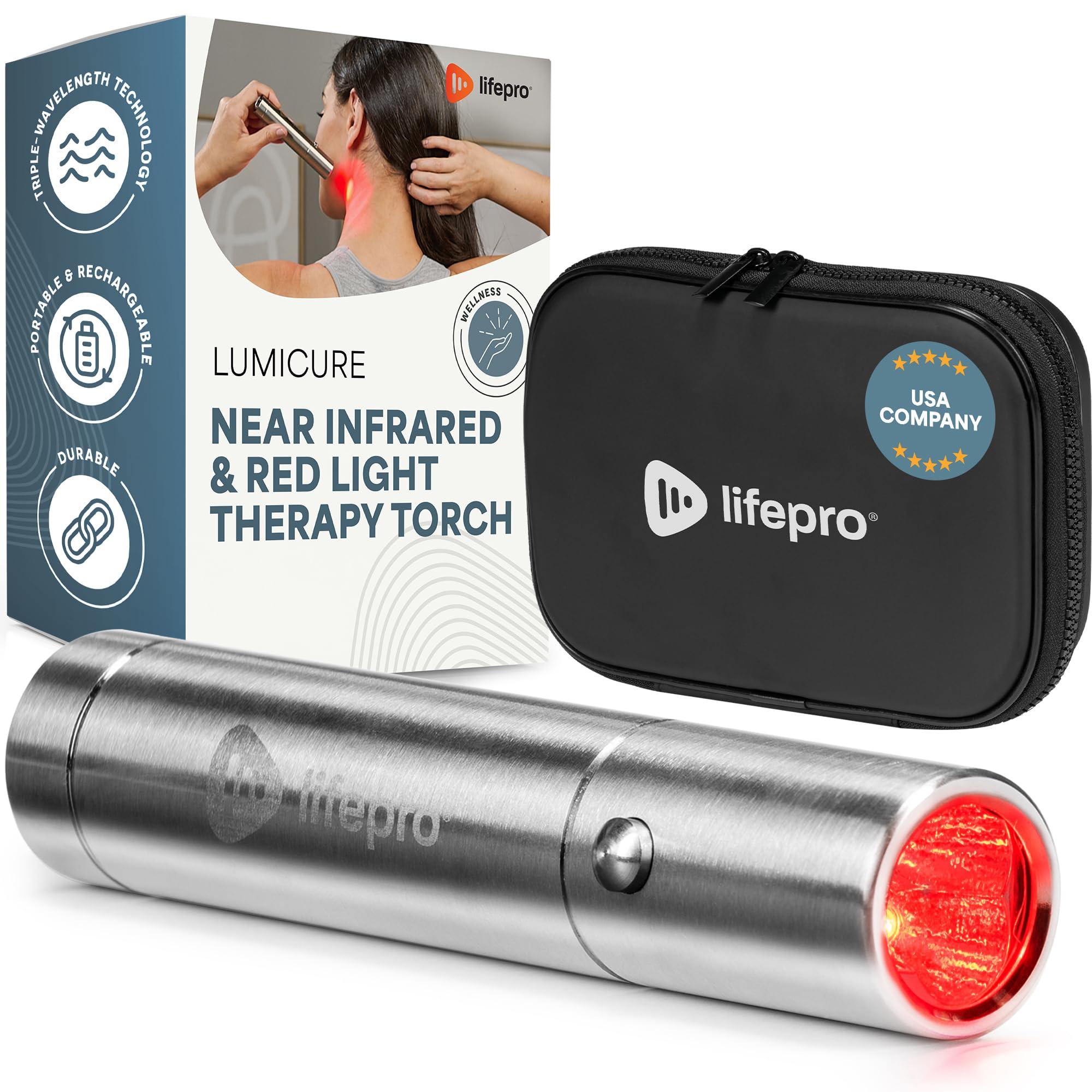
LifePro LumiCure Torch

Everyday aches and skin

Our Score 8.8/10
Check Price

Worth Noting

  • Wavelengths not published in nanometers
  • Shuts off on a timer and needs a pause to restart
Power
2 rechargeable batteries
Weight
6.35 oz
In The Box
Case, wrist strap, eye shields
Wavelengths
3

The LumiCure is the only wand here that arrives as a complete kit: zippered case, wrist strap, green-tinted eye shields, two rechargeable batteries with their own charger, and a backup cell ready to go. That last detail is what sold us. A spare means a session never waits on a wall outlet, and at 6.35 ounces the torch is light enough that holding it over a shoulder does not become the reason you quit. One touch button, no mode menu to relearn each time.

Three wavelengths put it in the same territory as most of this group, and the broad head suits the jobs a wand is genuinely good at: a knee, a foot, the base of a neck, the meat of a shoulder. It is the pick here with the most uniformly positive record on everyday stiffness and aching joints, which is exactly why it is our default. This is the one most likely to be picked up on a Tuesday night when something hurts.

The risk worth knowing about is that these do not all stay working. A unit that shuts off after a few minutes and will not stay on for a full session is the pattern to protect yourself against, so buy from a seller with a straightforward return window and use it daily for the first week. Do that and it is a small annoyance rather than an expensive one. For a spot the width of a pencil eraser, though, the head here is simply too broad.

Bottom line: Our pick if you want one wand for aching joints and general skin upkeep: a complete kit, light in the hand, and the most consistent everyday-ache record here.

2

Solawave 4-in-1 Wand

Solawave 4-in-1 Wand

Face and neck

Our Score 8.4/10
Check Price

Worth Noting

  • Charging is unreliable on some units
Red Light
630 nm
Session Time
3 minutes per area
Technologies
Red light, galvanic, warmth, massage

Three minutes per area, once a day. That is the entire protocol, and it is the reason this wand gets used rather than admired, because it fits between brushing your teeth and going to bed. Four things run at once: red light at 630 nanometers, galvanic current, warmth and a light massage. The combination is what makes it feel like a treatment instead of a chore.

For a face-only routine, this is the one we recommend. The red light does the long-term work on tone and fine lines, but the warmth and the massage are what you notice on a puffy morning, and the galvanic current gives a serum something to push against. Two weeks of daily use is the brand's own timeline, which is realistic for a habit this short.

The trade-off is scope. This is a face and neck tool in the narrowest sense, 630 nanometers with no near-infrared, so it will do nothing for the shoulder that sent you looking. The galvanic mode also needs a water-based serum under it rather than an oil, or the current has nothing to travel through. Keep a cheap hyaluronic gel beside it and the routine stays a three-minute one.

Bottom line: Buy this if your face is the whole job: three minutes a night, four technologies, and the most pleasant routine in this group.

3

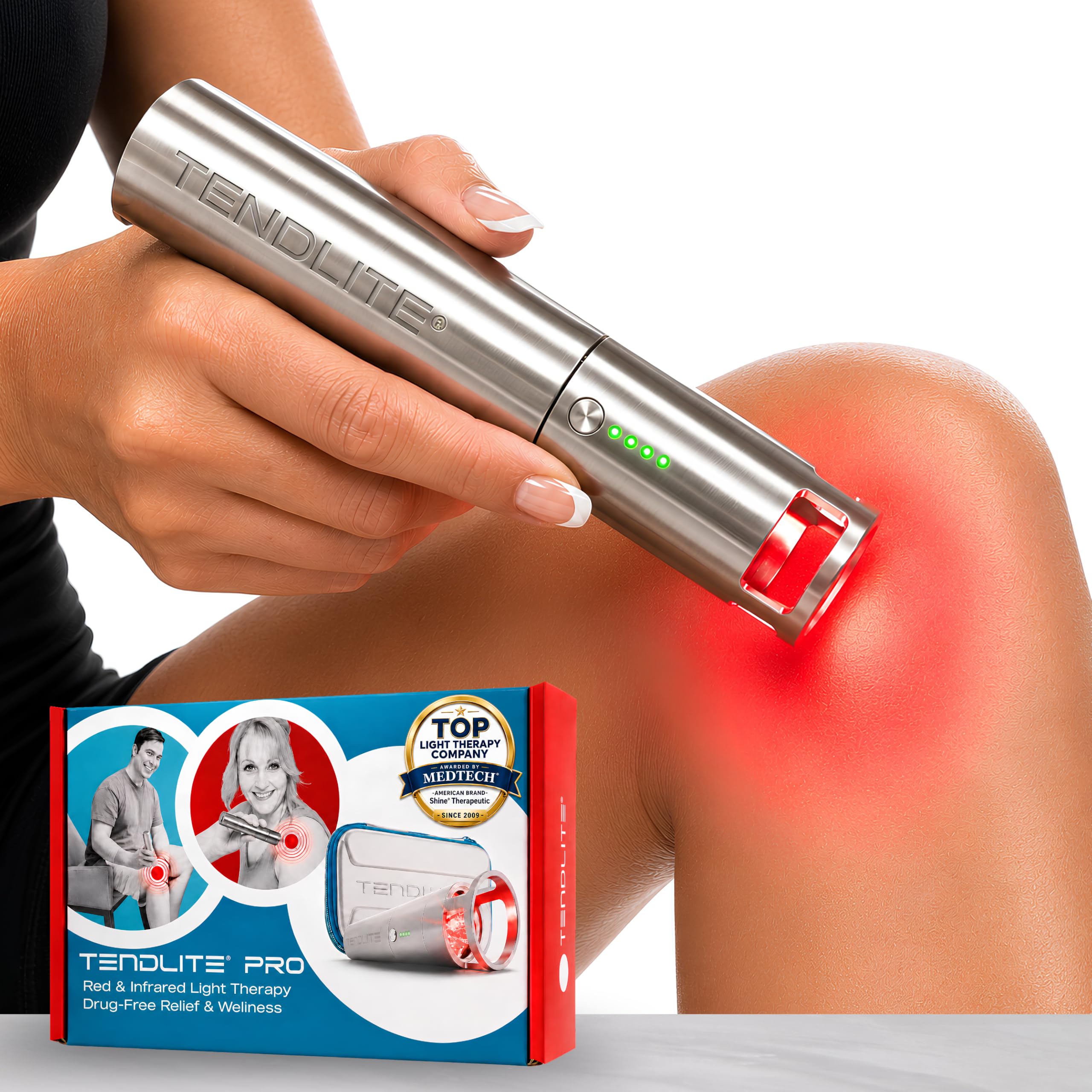
TENDLITE Pro

TENDLITE Pro

Chronic pain relief

Our Score 8.4/10
Check Price

Worth Noting

  • Highest price in this group
  • Built-in cell with no spare to swap
Light
Red and infrared
Weight
11 oz
Battery
1 lithium-ion (included)
Dimensions
7.13 x 1.25 x 1.25 in

Eleven ounces, a fraction over seven inches, and a head that covers more skin per pass than the lighter torches here. The Tendlite is roughly double the weight of the LumiCure, and the mass is doing something: it is the wand in this group that feels most like a piece of equipment rather than a fat pen. Hold it over a hip for a full session and you notice the weight. Hold it over a knee and you notice the coverage.

It is here for pain, and this is the deepest well of ache-focused feedback in the set: tendinitis, a rotator cuff, knees that do not want to bend, and a long tail of people walking further and reaching higher. No other wand here turns up so consistently in the same sentence as range of motion, and that specificity is why it earns a place despite everything below.

The catch is longevity. A unit that quits after a minute or a battery that will not hold a charge is the pattern to guard against, and with this one the guard is procedural: order from somewhere with a generous return window, register it, and work it hard in the first month while you can still send it back. Do that and the ache relief justifies the fuss. If your target is a lip or a hairline, its size works against you.

Bottom line: We recommend it when pain is the priority and you can absorb the highest price here in exchange for the largest body of ache-and-mobility feedback.

4

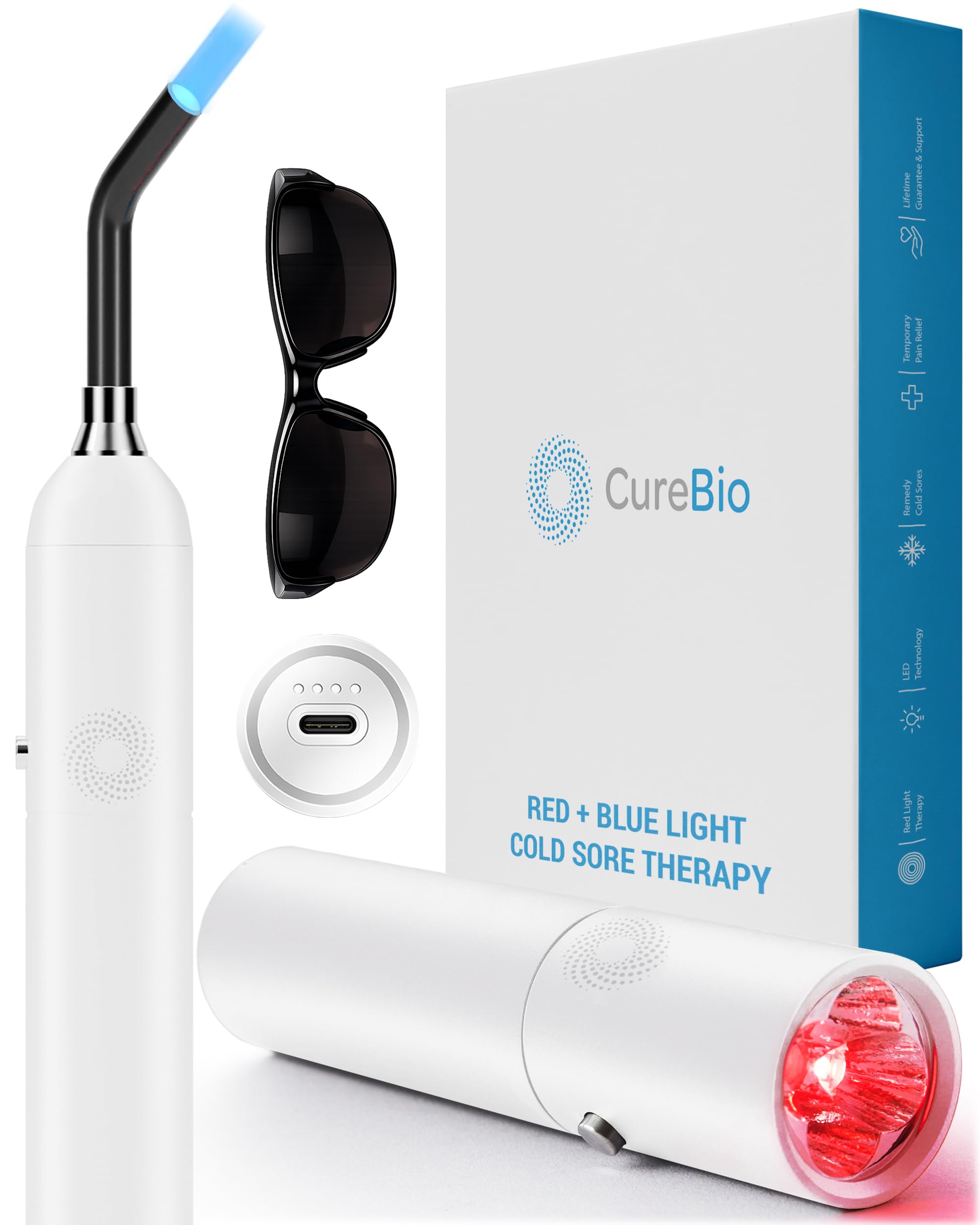
CureBio Cold Sore Wand

CureBio Cold Sore Wand

Cold sores and spots

Our Score 9.2/10
Check Price

Worth Noting

  • Narrow head is slow work on a knee or shoulder
Body
Steel
Battery
1 AA (included)
Dimensions
1.18 x 1.18 x 5.12 in
Wavelengths
Blue, red, infrared

The CureBio is built around a screw-on precision tip, and that tip is the point. Thread it on and the beam narrows enough for a lip, a nostril, the crease at the corner of the mouth, or the cartilage of an ear, which are exactly the places a head the size of a bottle cap cannot serve. Take it off and you have a steel-bodied wand with a broader face for larger patches.

That barrel is 5.12 inches long and 1.18 inches across, closer to a marker pen than the fat flashlights most of this group resembles, so it drops into a pocket and does not need a mirror to aim. Three wavelength ranges cycle through a single button, blue among them, and the whole thing runs on one AA. That is either a convenience, since you can buy a card of them anywhere, or an ongoing cost, in which case rechargeable AAs and a charger end it.

What it is not is a general-purpose body wand. The narrow head turns a shoulder into a long, fussy job, and if that is what you are treating, the LumiCure's broader face makes far more sense. For the thing this one is built for, a sore that shows up on a Tuesday and needs treating on a Wednesday, nothing here is easier to point and hold steady.

Bottom line: Keep this one for sores and spots: the screw-on tip is the most precise aiming tool in this group, and the steel body feels like a pen, not a gadget.

5

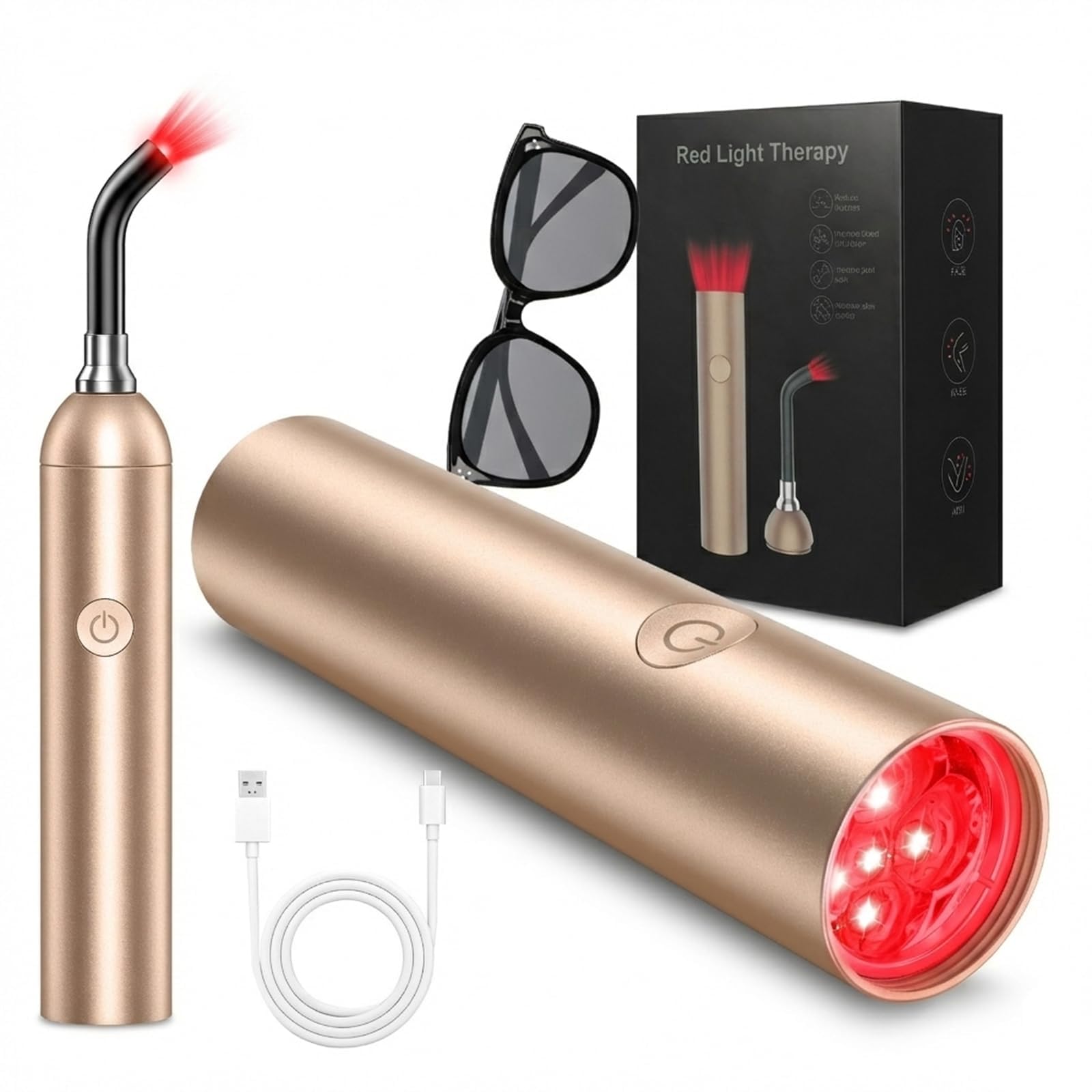
DUGSDG Light Therapy Wand

DUGSDG Light Therapy Wand

Budget spot treatment

Our Score 8.6/10
Check Price

Worth Noting

  • Five-minute shut-off cuts long sessions short
LEDs
5
Timer
5-minute auto shut-off
Wavelengths
660 nm red; 810, 850 and 940 nm near-infrared
Precision Tip
Detachable

Two devices in one body. With the precision tip attached, the DUGSDG works a lip or the side of a nose; unscrew it and a five-LED head takes over for a knee or a forearm. The LEDs split between dual 660-nanometer red and three near-infrared wavelengths at 810, 850 and 940 nanometers, which is a more specific spec sheet than several pricier wands here bother to publish.

There is also a five-minute automatic shut-off. We read that as the mark of a budget wand designed by someone paying attention: it assumes you will lose track of time and stops you. A single button runs continuous or timed modes, the lithium-ion cell is rechargeable, and the whole thing is light enough to hold at an angle without thinking about it.

Bottom of the price ladder, and it behaves like a considered tool rather than a cheap one. Spot treatment is where it earns its place: a cold sore, a breakout, a canker sore, the kind of thing you want to hit twice a day without hauling out a full-face routine. The five-minute timer is the limit, though. Covering a back means three rounds with a pause in between, so if long body sessions are the plan, spend more.

Bottom line: The cheapest way into this category without giving up precision: a detachable tip, five specific wavelengths and a sensible five-minute timer.

6

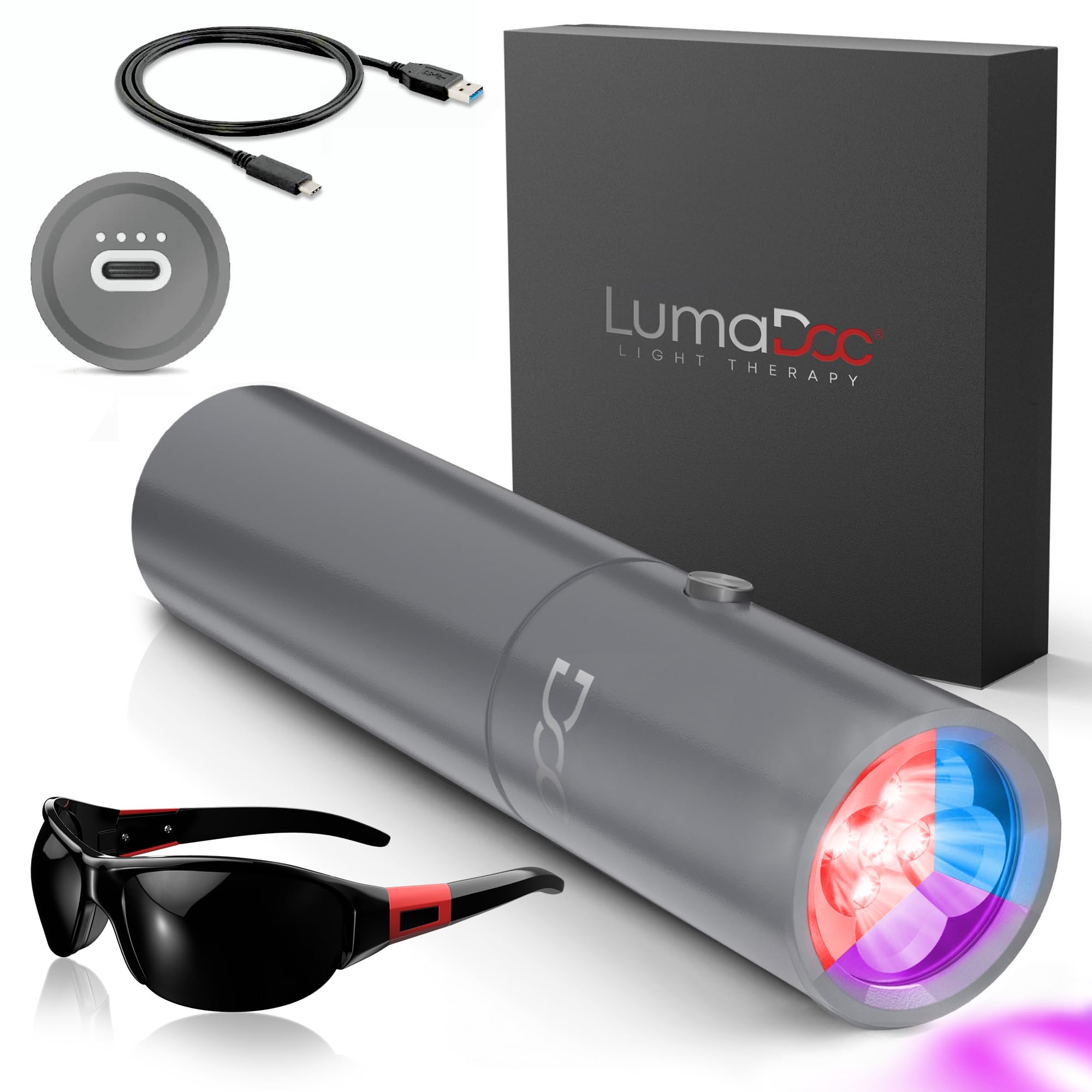
LumaDoc A5 Handheld

LumaDoc A5 Handheld

Multi-wavelength coverage

Our Score 8.8/10
Check Price

Worth Noting

  • One-inch head takes many passes on large areas
Material
Stainless steel
Warranty
Lifetime
Dimensions
1 x 1 x 4.7 in
Wavelengths
5 (red, near-infrared, blue)

Five wavelengths in a barrel 4.7 inches long and an inch across: 630 and 660 nanometers of red, 850 and 940 nanometers of near-infrared, plus blue. That is the widest spread in this group and the shortest body, closer to a fat pen than anything else here, which makes it easy to angle at a jaw or the side of a wrist and awkward to run over a whole back.

Stainless steel, three modes on a single button, three-minute sessions up to three times a day, and a kit that includes protective glasses, a USB-C cable and a power adapter. The blue mode is the one worth noting if breakouts are why you are shopping; the red and near-infrared pair is the everyday combination. Nothing here is fussy, which is more than we can say for some of the app-adjacent gadgets in this category.

The warranty is the outlier: a lifetime guarantee, and the only one attached to any device in this set. Read the terms rather than the badge, because a guarantee is only as good as the process behind it, but as an answer to the durability question that hangs over this whole group it is a real one.

Our read is that this is the one to buy if you want breadth of wavelengths and a small tool rather than a big one. You give up coverage per pass, and you get the widest spectrum here with paperwork that outlasts the battery. Treating several small things in turn, a jaw, a wrist, a spot on a cheek, is where the narrow head stops being a compromise and starts being the point.

Bottom line: We like this as the sleeper of the set: five wavelengths, a genuinely small body and the only lifetime warranty here.

7

LifeZoom NIR2 Wand

LifeZoom NIR2 Wand

Travel and reach

Our Score 8.6/10
Check Price

Worth Noting

  • Some units arrive dead or stop lighting up
Modes
3
Weight
4.8 oz
Battery
1 lithium polymer (included)
Dimensions
10.87 x 2.02 x 0.98 in

At 10.87 inches the LifeZoom is the longest wand in this group, long enough to come over a shoulder and land between the shoulder blades without recruiting a second person. It is also the slimmest at just under an inch thick, and 4.8 ounces barely registers in the hand, which matters more than it sounds when your arm is held at an angle for several minutes.

Three modes run on a metal body wrapped in a shock-resistant silicone casing, with a tapered top for small areas and USB-C charging, the quiet win of the whole package since it means one cable for the wand and your phone. Sessions on and around the mouth are what it does best; the taper covers the ground a dedicated precision tip covers on the CureBio.

Where we hesitate is longevity. Units that arrive dead or stop lighting up are the recurring problem here, and that is a poor fit for the one device you plan to keep for years. Buy it as a travel wand, light and inexpensive enough to risk in a carry-on and long enough to be useful on a hotel bed, and it earns its place. Buy it as your only wand and that reliability question sits on every session.

Bottom line: We rate it as a travel wand first: slim, light, USB-C, and long enough to reach your own back, with reliability as the open question.

How We Tested Red Light Therapy Wands at Home

To build the shortlist, I started with the specs that decide whether a wand does anything at all: red wavelengths in the 630 to 660 nanometer range, near-infrared around 850, and whether the brand published an actual dose or treatment time. Wands that only promised "clinical strength" without numbers got cut, as did proprietary wavelength claims we couldn't verify. From there we filtered by price and size — pocket-sized versus something you'd leave on a nightstand — and bought 12.

Testing happened where these things actually live. Six of us kept a wand on the bathroom counter for a five-minute session after cleansing, three kept one within arm's reach on the couch for a sore shoulder or knee during evening TV, and one rode loose in a gym bag for post-run use. We followed each wand's own recommended timer, then noted what we saw: whether skin looked calmer or brighter after four and eight weeks of steady use, whether a shoulder felt different the morning after a hard run, and whether a cold sore that started tingling ever got past the tingle.

We also handled them the way an owner would. I timed every charge from dead to full and counted the sessions it bought, then rechecked at the six-month mark to see if the battery still held a week's worth. Each wand got carried loose in a tote to catch buttons firing by accident, wiped with a damp cloth after sessions to watch for cloudy coatings, and dropped once from counter height onto tile. Weight and button layout earned a note every time, since a wand you can't work one-handed while holding your hair back tends to stay in the drawer.

Reliability was the quiet decider. A couple lost meaningful capacity by month five and one flickered at the charging port; those fell down the list no matter how good the light was. The ones still holding a charge, clicking on without fuss, and justifying their price at the end are the ones that made the cut.

How to Choose a Red Light Therapy Wand

Start with the wavelengths, not the mode count

The number that matters is not how many modes a wand offers but which wavelengths it emits. Red light around 630 to 660 nanometers works close to the surface, which is where tone, texture and fine lines live. Near-infrared from roughly 810 to 940 nanometers travels deeper into muscle and joint tissue, and blue is the wavelength people reach for on sores and breakouts. If you want one device for both a face and a knee, buy one that names both red and near-infrared by nanometer.

That is where the trap sits: a listing promising three wavelengths without naming them tells you nothing about the split. The LumiCure, our overall pick, is the clearest example, since it never publishes its nanometers, while the DUGSDG and the LumaDoc spell theirs out. Find the numbers before you pay.

Match the head to the spot, and the length to your reach

A bottle-cap head suits a knee, a thigh or a shoulder blade. A lip or a nostril needs something measured in millimeters, which is the whole reason the CureBio's screw-on tip and the DUGSDG's detachable one exist. Buying a broad torch to treat a cold sore means most of the light lands on skin that does not need it.

Length is the specification nobody checks and everybody regrets. The LifeZoom runs 10.87 inches and reaches the middle of your back; the LumaDoc is 4.7 inches, which is lovely for a jawline and useless behind a shoulder. If you cannot rest your hand comfortably between your shoulder blades, a short wand means the spot that hurts most is the one you stop treating.

Batteries and timers decide whether you stick with it

Rechargeable cells are the norm here, and a spare is worth more than it sounds: the LumiCure arrives with two cells and their own charger, so a session never waits on a wall outlet. A single AA, as on the CureBio, is easy to replace anywhere but turns into a small recurring cost. Keep a set of rechargeable AAs and a charger and it stops being one.

Timers split this group more than any other feature. A short automatic cut-off, like the five minutes on the DUGSDG, is ideal for a lip and irritating on a back, where covering the area takes several rounds. Longer sessions suit body work but tempt you to park the wand in one place. Pick the timer to match the area you treat most.

Buy for the return window, not just the warranty

These are small electronics with a battery inside, and the pattern across the group is plain: cut-outs after a few minutes, units that arrive dead, charging that fades. That is not a reason to avoid the category, it is a reason to buy carefully. Order from a seller with a straightforward return window, use the wand daily for the first week, and keep the packaging until you are sure of it.

A long warranty helps. The LumaDoc carries a lifetime one, the only lifetime guarantee in this set. Read the terms rather than the badge, though, and remember that a warranty buys you a replacement, not the session you were halfway through.

Frequently Asked Questions

Final Verdict

The LumiCure is the wand we point most people toward: a complete kit, light enough to hold through a session, and the most consistent record in this group on the everyday aches that send people shopping. Face-only routines belong with the Solawave and its three-minute habit, a cold sore belongs with the CureBio's precision tip, and a tight budget goes further with the DUGSDG than with anything else here.

If none of those is your situation, the LumaDoc is the one to weigh next: the widest wavelength spread in the set, a genuinely small body, and a warranty that outlasts the battery.