Nails

Best Nail Treatments for Damaged Nails of 2026

A gel manicure that lifts off in one satisfying sheet is fun right up until you see what's underneath: ridges, white patches, and nails that bend like wet paper. Damage from gel, acrylics, and even years of regular polish doesn't repair itself, and the shelf at the drugstore is crowded with bottles promising harder, longer nails in a week. What actually works is duller than that — a strengthener or oil you'll use consistently, rebuilding the nail plate over weeks, not overnight.

I've been growing out my own gel damage for the better part of a year, so I came into this with opinions. Over the last three months, my team and I have rotated 14 hardeners, cuticle oils, and nail creams through our actual routines — through dish duty, desk work, and weekly polish removal. Two things surprised me: scent matters more than anyone admits, because a treatment you dread the smell of gets used twice and then forgotten, and application time decides everything. What follows covers the full range, from peel-off hardeners to overnight oils, so there's a fit whether your nails need strength or moisture or both.

1

Duri Rejuvacote 1

Top Pick
Duri Rejuvacote 1

Damaged, weak nails

Our Score 9.0/10
Check Price

Worth Noting

  • Can peel before the seven-day removal
Use
Base coat, top coat, or alone
Size
0.45 fl oz
Targeted Use
Brittle, thin, damaged nails
Treatment Cycle
Daily for 7 days

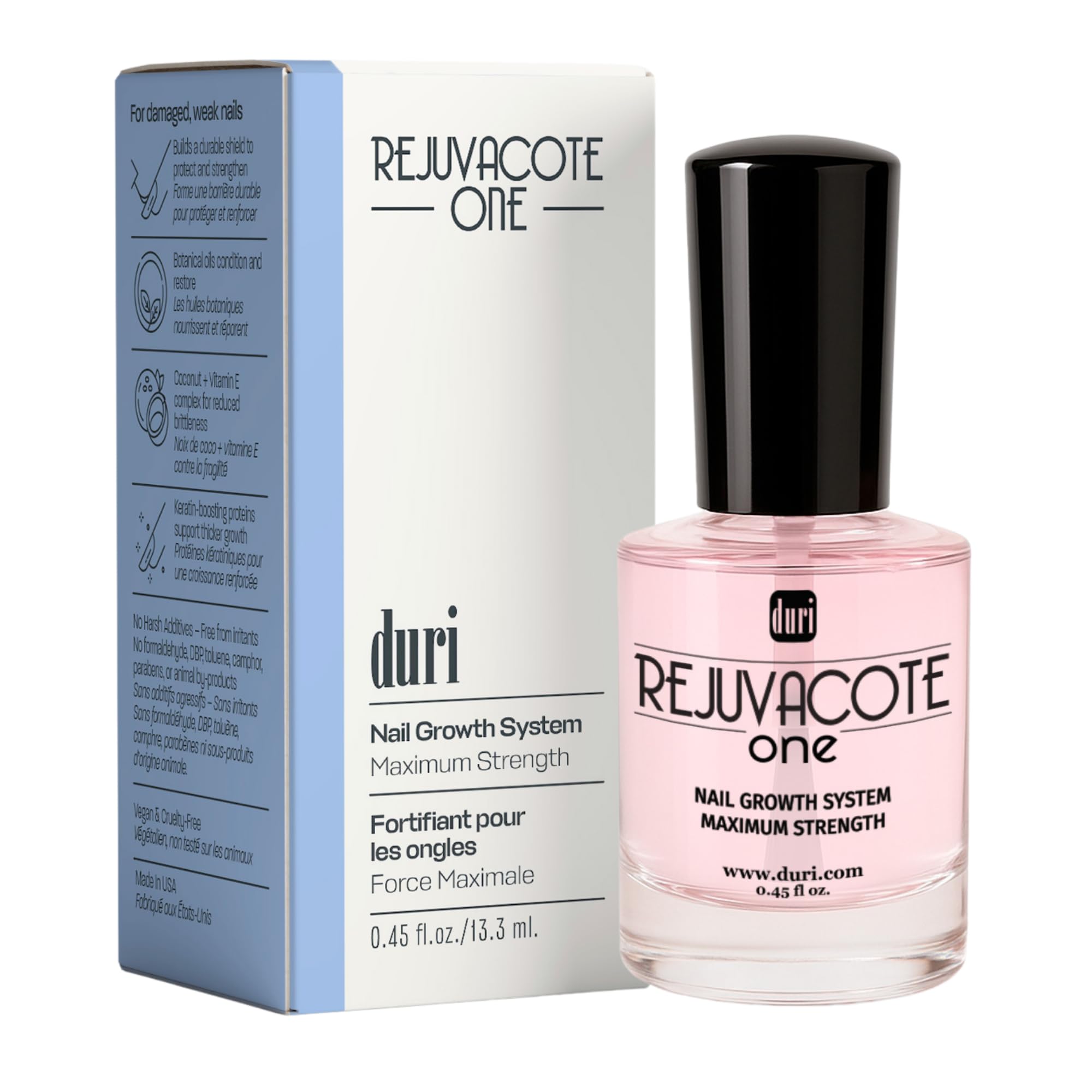
The treatment cycle is the first thing we look at with Rejuvacote 1: one clear coat a day for seven days, then remove and start again. That sounds fussy, but it's the point. The coating builds a protective layer over weak, peeling edges while new growth comes through underneath, and it's aimed at nails recovering from gels or acrylics. If a removal has left your top layer thin and rough, this is the scenario it's built for.

What earns it top pick is the dual role. It works as a standalone clear coat, a base coat, or a top coat, so you can wear it alone or keep your polish routine. We like the slight shine because it makes bare nails look intentional, and the thin formula levels without much fuss. It also gives a soft nail a little more structure immediately, which is why we reach for it before a conditioning oil.

Give it a full growth cycle before judging it. The first week is about protection, not a visible miracle; the change comes as the damaged edge grows out and gets trimmed away. The weekly removal is the part to take seriously—if you skip it, you're layering over lifted edges and asking for chips. If dry cuticles are your main complaint, Cuccio Naturale is the conditioning step alongside it, but the structural work starts here.

Bottom line: We recommend Rejuvacote 1 first for nails weakened by gels or acrylics: it gives soft, peeling edges a protective clear coat while new growth comes through.

2

Cuccio Naturale Milk & Honey

Cuccio Naturale Milk & Honey

Dry cuticles

Our Score 9.4/10
Check Price

Worth Noting

  • Won't harden splitting nails on its own
Size
2.5 oz
Scent
Milk and honey
Formula
Paraben-free, cruelty-free
Key Ingredients
Milk and honey

The 2.5-ounce bottle is the first clue: this is an oil for daily, all-over use, not a tiny spot treatment. We keep it by the sink and press a drop into each cuticle after washing hands, because that's when dry edges show. The size makes that habit easy to sustain, and the oil is light enough to rub in while you're waiting for coffee.

The formula is a milk-and-honey blend of rich oils, with milk to soothe and honey to hold moisture; it's paraben-free and cruelty-free. The scent is sweet without turning perfumey. It softens cuticles and conditions the nail edge, which is what you want when the skin around the nail is cracked or the free edge is dry. We treat Cuccio as the comfort step in a routine.

A little goes a long way, and the big bottle lasts through months of daily use, which is why we don't mind keeping it in two rooms. The fragrance is pleasant but present, so it's worth a sniff if you're sensitive. If your nails are actually splitting, pair it with Duri Rejuvacote and let this one handle the skin and edges.

Bottom line: We keep this one by the sink for dry, brittle nail edges: the big bottle makes daily conditioning easy, though it doesn't replace a hardener.

3

CND SolarOil

CND SolarOil

Gel and acrylics

Our Score 9.0/10
Check Price

Worth Noting

  • Sweet, fruity scent is noticeable
Use
Natural nails, polish, and enhancements
Size
0.25 oz
Scent
Fruity and floral
Key Ingredients
Jojoba, vitamin E, rice bran and sweet almond oils

The tiny 0.25-ounce bottle tells you what SolarOil is for: a nail kit, not the bathroom counter. We keep it with a glass file and a buffer, and a drop is enough for one hand. That makes the size less of a problem than it looks, but it's still the smallest oil in this group.

The blend of jojoba, vitamin E, rice bran, and sweet almond oils is light and absorbs quickly. It softens dry cuticles and leaves the nail edge conditioned without a heavy film, which is why we reach for it before bed rather than during a manicure.

It's also the oil we trust around enhancements. The formula is designed to keep natural nails, polish, and nail enhancements tough and flexible, and it's compatible with CND's Shellac, Vinylux, Plexigel, Brisa, and L&P systems. If you wear gels or acrylics, that compatibility is the reason to pick it over a generic oil.

The trade-off is value. A small bottle at a similar price to the larger oils means a higher cost per use, so it earns its place for someone maintaining a salon manicure, not someone oiling every hand at the sink. We still like it for its light texture and the way it sits beside polish. If you need a bottle for daily all-over use, Cuccio is the better value.

Bottom line: We reach for SolarOil when we're maintaining gels or acrylics: it's light, compatible with salon systems, and keeps the nail edge conditioned between appointments.

4

ONSEN Nail & Cuticle Cream

ONSEN Nail & Cuticle Cream

Daytime cuticle care

Our Score 8.8/10
Check Price

Worth Noting

  • 15 ml tube empties quickly with daily use
Size
15 ml
Finish
Non-greasy
Format
Cream
Key Ingredients
Japanese tsubaki, jojoba, rice bran, shea, cocoa butter, lavender

The cream texture is the reason to try ONSEN if cuticle oil feels like too much. It comes in a 15 ml tube, absorbs quickly, and leaves no greasy fingerprints, so you can go back to typing or handling your phone. We keep it in a desk drawer, where a bottle of oil would be a nuisance.

What we like is the balance: it softens dry cuticles and conditions the nail edge with Japanese tsubaki, jojoba, rice bran, shea, and cocoa butter, but it doesn't sit on top of the skin. The lavender scent is soft, and the cream is easy to control—a small dab covers several nails. It works best alongside a strengthening treatment rather than instead of one.

If your nails are actively peeling, use Duri for structure and ONSEN for the skin around the nail. We reach for it when we want care without a coating, especially after a gel removal when the skin is dry but you don't want a slick film. It's the one we hand to someone who wants a treatment they can use in public without wiping their hands afterward.

Bottom line: We recommend ONSEN for anyone who wants cuticle care without oily fingers: the cream absorbs fast and leaves dry edges comfortable.

5

Sally Hansen Vitamin E Oil

Sally Hansen Vitamin E Oil

Budget cuticle care

Our Score 9.2/10
Check Price

Worth Noting

Formula
Natural essential oil complex
Targeted Use
Dry nails and cuticles
Key Ingredients
Vitamin E, apricot kernel, aloe

Sally Hansen's vitamin E oil is the least expensive treatment here, and that's not the only reason we keep it around. The formula pairs vitamin E with apricot kernel oil and aloe, and it's a straightforward conditioner for dry nails and cuticles. We use it generously after washing dishes, when the skin around the nail is at its driest, and a little spreads further than we expect.

It softens cuticles and gives the nail edge a healthier look, and the effect is immediate enough to make a dry hand feel better. The oil has a light, familiar scent and a thin texture that doesn't feel sticky. The upside is that it's easy to layer into any routine and doesn't ask for a big commitment. We keep a bottle in the bathroom and another in a gym bag.

The formula is simple, which is also its limit: it won't harden a nail that is splitting in layers, and the softness is temporary, like any oil. That's fine by us for the price. It's the bottle to reach for when you want a little care without opening a treatment plan.

Bottom line: We recommend Sally Hansen as the budget oil to keep beside the sink: it conditions dry cuticles simply and stretches further than its price suggests.

6

ella+mila First Aid Kiss

ella+mila First Aid Kiss

Vegan nail repair

Our Score 8.8/10
Check Price

Worth Noting

  • May leave nails feeling brittle with repeated cycles
Formula
17-free and vegan
Removal
Non-acetone remover
Application
One coat for 7 days
Certification
PETA cruelty-free

The 17-free, PETA-certified formula is the reason to choose ella+mila over the other strengtheners here. If you're building a vegan nail routine, this clear coat avoids the solvent-heavy feeling of a traditional hardener while still giving the nail a protective layer. It's the one we hand to someone who reads the back of the bottle.

The routine is simple: one coat on bare nails, leave it for seven days, then remove with non-acetone remover. It dries to a glossy clear finish that looks deliberate on its own, and it works as a base under polish. We like that it doesn't need a lamp or a separate primer, and the shine is good enough to skip color.

The weak point is wear. The clear coat can peel before the week is up, especially at the tips, so you may need to touch up or start the cycle again sooner than the label says. We still recommend it for the ingredient-conscious buyer who wants a polish-like strengthener, not the hardest film in the group. It's a thoughtful formula, not a heavy-duty hardener.

Bottom line: We recommend ella+mila for anyone building a vegan nail routine: the clear 17-free coat adds strength and shine without salon solvents.

7

Nail Magic Hardener & Conditioner

Nail Magic Hardener & Conditioner

Two-bottle routine

Our Score 9.0/10
Check Price

Worth Noting

  • Strong solvent smell
Use
Standalone or base/top coat
Size
0.5 fl oz, 2-pack
Finish
Clear, fast-drying
Application
1–2 thin coats, several times weekly

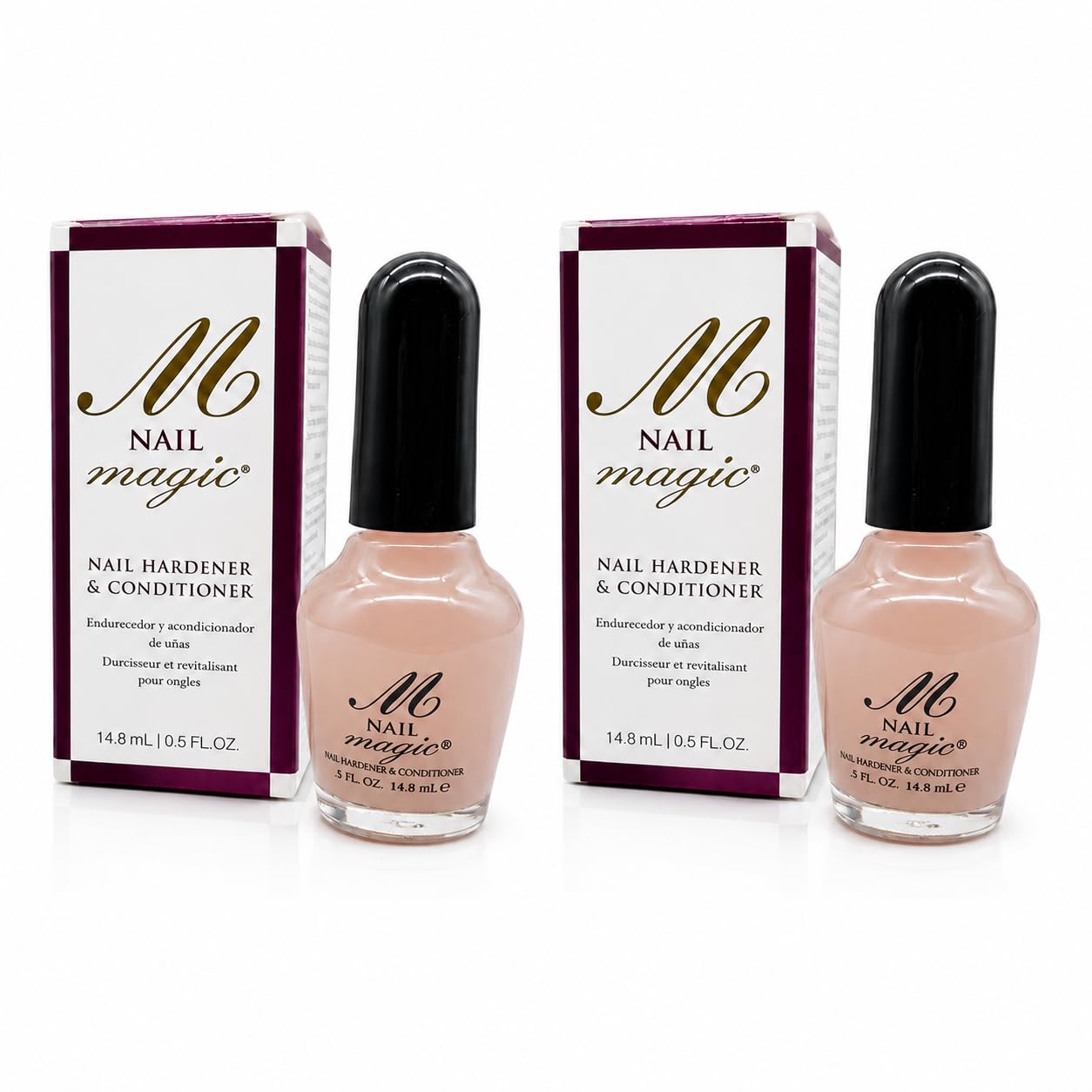
Two 0.5-ounce bottles are the reason Nail Magic earns a spot: one stays at home, one goes in a bag, and the routine doesn't stall when you're away. The formula is a clear hardener and conditioner that can be worn alone or as a base and top coat, so it fits into a polish routine without much thought.

The application is simple: clean nails with an acetone-based remover, then apply one to two thin coats several times a week. It dries fast, which matters when you're doing several coats, and the clear finish looks glossy enough to wear on its own. We like it best in thin layers; a thick coat takes longer to dry and is more likely to chip.

The formula is designed to harden weak, brittle nails while conditioning them, and that combination is why it suits nails recovering from breaks or frequent polish removal. The durability is not perfect: the coating can chip at the tips between applications, so cap the edge and keep the second bottle nearby for touch-ups.

The two-bottle format is the real advantage. A hardener only works if it's within reach, and this one removes the excuse of leaving the bottle at home. We recommend it for someone who already knows they'll stick with a strengthening routine; if you want a one-and-done treatment, look at Duri's weekly cycle instead.

Bottom line: We recommend Nail Magic for a disciplined strengthening routine: the two bottles keep the clear hardener close at hand, and the thin coats dry fast.

8

Steel Nails Hardener

Steel Nails Hardener

Budget strengthening

Our Score 9.2/10
Check Price

Worth Noting

  • Can peel when hands are often wet
Use
Base coat
Application
Twice weekly
Key Ingredients
Calcium, keratin, garlic

The garlic in Steel Nails is the odd detail, but it's not why we kept testing it. What matters is the calcium and keratin in a clear base coat you apply twice a week. That's a lower-maintenance schedule than the daily seven-day systems, and it's the reason this one earns a place for a low-fuss routine.

It dries fast and leaves a clear shine, so bare nails look a little more finished, and the clear coat can sit under polish or alone. The formula is straightforward—calcium, keratin, and garlic—and it's easy to work into a twice-weekly habit. We like it as a first hardener for someone who has never stuck with a nail treatment.

If your nails are badly damaged, Duri is the more complete treatment; if you want a simple twice-weekly clear coat, this is a reasonable place to start. The lower-maintenance schedule is the appeal—less to remember, less to remove. It's not the most refined formula in the group, but it does the basic job without asking for a daily ritual.

Bottom line: We recommend Steel Nails for a low-fuss strengthening routine: the twice-weekly clear coat adds hardness without a daily polish schedule.

How We Tested Nail Treatments at Home

We started by rounding up every strengthener, cuticle oil, and nail cream we could find with a real ingredient list behind it — keratin, jojoba, vitamin E, sweet almond oil — and filtered out anything that required a UV lamp, a salon application, or a price that made daily use feel wasteful. Fourteen products made the cut, and we tested them for three months, staggering start dates so each bottle got at least six weeks on a real pair of hands rather than a single afternoon.

Testers lived with them the way anyone would: through hot dishwater and dish soap, hours at a keyboard, cold weather, and the polish removal that starts the damage cycle all over again. Peel-off formulas got their own routine — applied Sunday night, peeled on schedule, and noted whether the film lifted in one clean piece or flaked at the edges and left residue sitting in the cuticle line.

For hardeners, we watched whether free edges chipped within a week of a fresh coat and whether ridges looked any less obvious in daylight by week four. With oils and creams, we timed how long they took to sink in before we could type again, and whether hands still felt slick five minutes later, since a greasy oil gets abandoned fast. We also judged scent at the desk hours after application, not just at the bottle, and tracked how many weeks a container actually lasted to get a sense of what you're paying per use.

How to Choose a Treatment for Damaged Nails

Start With the Job, Not the Ingredient List

A strengthener is a coating: it adds a protective film to the nail plate while the damaged edge grows out. An oil or cream is a conditioner: it softens cuticles, improves flexibility, and makes the nail edge less likely to catch. If your nails split and peel, start with a strengthener such as Duri Rejuvacote 1. If the skin around the nail is dry and rough, add Cuccio Naturale or ONSEN. Most damaged nails benefit from both, but the coating is the one doing the structural work.

Pick a Routine You Can Actually Keep

The application schedule matters as much as the formula. A seven-day system asks for a daily coat and a weekly removal; a twice-weekly hardener asks for less. We match the product to the person: if you already keep a weekly nail night, Duri's cycle is easy to absorb. If you know you'll forget, Steel Nails' twice-weekly base coat is more realistic. The wrong routine makes a good treatment look ineffective, because the coating is only protecting the nail on the days it's actually on.

Check the Bottle, Scent, and Finish

A small bottle is not automatically a bad value, but it changes how you use the product. A 0.25-ounce oil belongs in a nail kit; a 2.5-ounce oil belongs by the sink. Check the scent too, especially with clear hardeners: a strong solvent smell is hard to ignore, while a scented oil or cream is a matter of taste. Finish matters if you wear the treatment alone: a clear gloss looks deliberate, while a duller coat may push you back to polish.

Judge It After the Damaged Edge Grows Out

Nail treatments protect the new growth; they don't erase the damaged part. That means a week is too soon to judge a strengthener by the old peeling edge. Keep the routine through a full growth cycle, trim the damaged tip as it moves forward, and watch whether the new nail comes through smoother and stronger. Take a photo at the start; it's easier to see progress against the old edge than against memory.

Frequently Asked Questions

Final Verdict

We recommend Duri Rejuvacote 1 first for damaged nails, especially after gels or acrylics. The seven-day coating cycle gives weak, peeling edges a protective layer while new growth comes through, and it doubles as a base or top coat. Pair it with Cuccio Naturale if the cuticles are dry; the oil softens and conditions while the strengthener does the structural work. If you want a vegan formula, choose ella+mila instead.