Skincare

Best Microcurrent Facial Devices of 2026

Microcurrent devices send a faint trickle of electricity through your skin, and the theory is that facial muscles answer to being worked the way any other muscle does. What separates a device you'll keep using from one that ends up in a drawer rarely has much to do with the current itself — it's how it feels against your face, how long it runs between charges, and whether the ritual is calm enough that you look forward to it. When those things line up, ten minutes before bed becomes the part of the evening that loosens a clenched jaw and puts a little life back into tired skin.

We put 12 devices through seven months of real evenings — serum-slick fingers, half-watched TV, the occasional yelp when one bit back — and the same pattern kept surfacing: the ones we reached for were gentle, quiet, and boring to charge. Here's what nobody tells a first-time buyer: the intensity you can tolerate nightly beats the one that stings, every time. The picks below are the ones still holding a charge and still in the rotation.

1

Medicube Booster Pro X2

Top Pick
Medicube Booster Pro X2

Full-face routines

Our Score 9.0/10
Check Price

Worth Noting

  • Heavier than the travel picks
Modes
7
Power
Rechargeable lithium-ion
Weight
1.19 lb
Intensity Levels
6

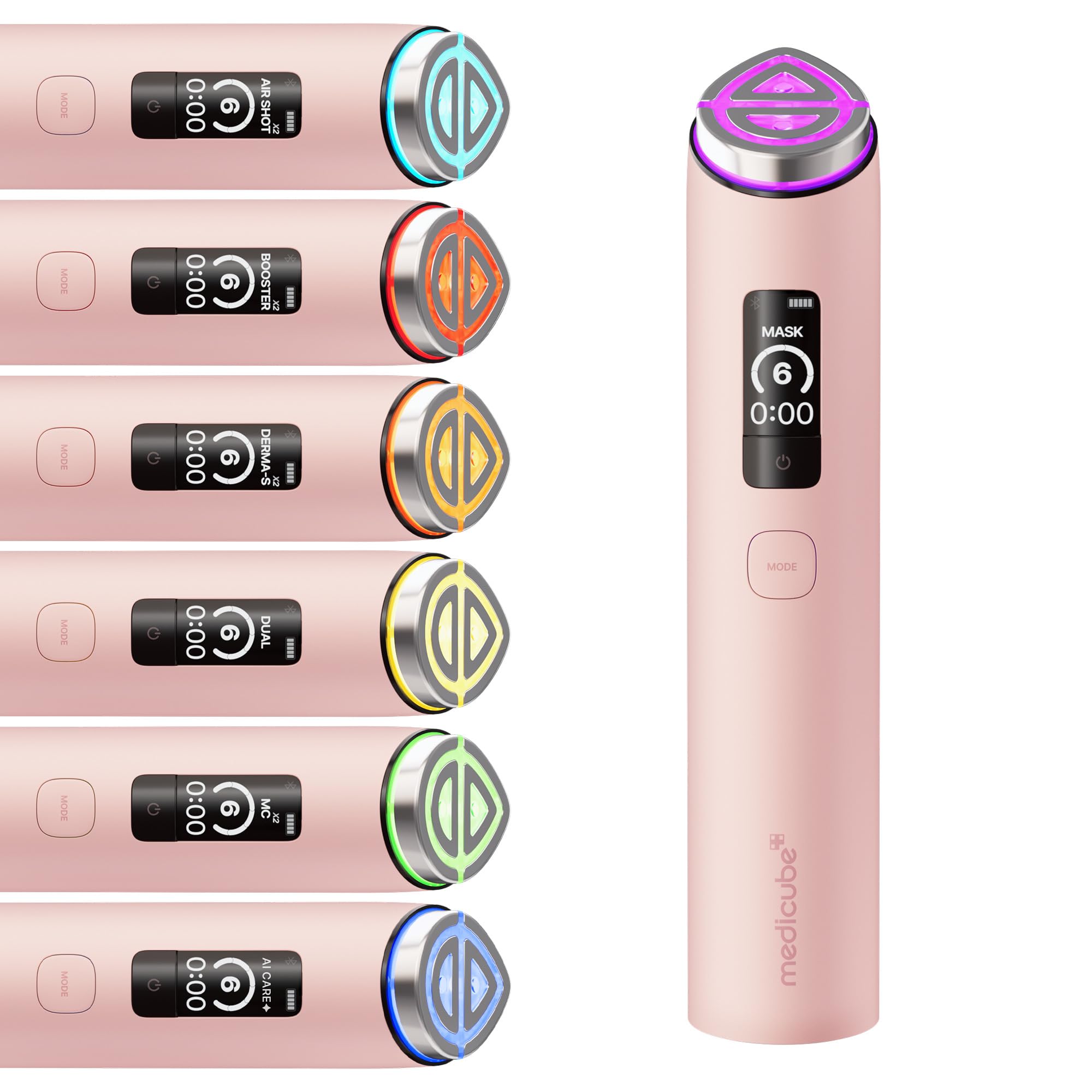
Seven modes and six intensity levels is more than most people need, but the Medicube Booster Pro X2 is the device we reach for when we want a complete routine without swapping tools. The useful part is not the mode count by itself. It is the dual-mode pairing: two treatments at once, one pass, less time. That is the difference between a routine we keep and one we skip.

The dual head is efficient across cheeks and jaw, and the six levels let you start low and build. Around the nose and eyes it feels less precise than the small BEAR mini; this is a full-face tool first. The sheet-mask boost is a genuinely nice extra if you already mask. The AI mode recommends a routine, but we did not need it once we knew which two modes we liked together.

The current is potent at the top end. Start low, especially around the temples, and move up only when the tingling stays comfortable. The six levels make that easy to manage, and the dual head keeps the pass efficient. None of that changes the recommendation for someone who wants one device to do the most.

The seven modes are the headline, but the six levels are what make it livable: you can stay in the gentle range and still cover the full face.

Bottom line: The Medicube Booster Pro X2 is our top pick because its dual-mode pairing makes a full-face routine faster, and the seven modes cover more ground than any other device here.

2

Medicube Mini Booster Pro Plus

Medicube Mini Booster Pro Plus

Travel and spot care

Our Score 9.0/10
Check Price

Worth Noting

  • Only three modes
Modes
3
Power
1 AAA battery
Weight
4.59 oz
Intensity Levels
5

A weekend bag is where this one earns its keep. At 4.59 ounces the Mini Booster Pro Plus is light enough to hold through a jaw and cheek pass, and the three modes cover the basics: red for a quick glow pass, blue for texture, purple for a tired-looking complexion. Five intensity levels give you room to start low.

The small head is the trade-off. It is precise around the brow and lip line, but covering the forehead takes more passes than with the X2. We liked it as a spot-treatment tool, not as the only device in a full-face routine. The AAA battery is the practical detail we appreciated: no charging cable to forget, and a spare is easy to pack.

The 625% absorption claim is a manufacturer figure, not something we can verify in a mirror. What we can say is that the modes are easy to cycle and the device fits into a routine without a learning curve. If you want the full seven-mode experience, the X2 is the better buy. If you want a compact tool for travel and targeted passes, this is the one we pack.

Bottom line: For travel and targeted passes, the Mini Booster Pro Plus is the one we pack: light enough to carry, simple enough to use anywhere, and powered by an AAA battery.

3

Hunvva EP-300

Hunvva EP-300

Budget first device

Our Score 8.8/10
Check Price

Worth Noting

  • Simpler feature set than multi-mode picks
Size
1.57 x 2.76 x 4.33 in
Weight
4.8 oz
Technology
Microcurrent + red light
Intensity Levels
5

Five levels, red light, and microcurrent: the Hunvva EP-300 covers the basics for a first device. At 4.8 ounces it is light enough to hold through a full pass, and the controls are simple enough to learn without a menu. We liked that it gets to the treatment quickly.

The V-shaped head is best along the jaw and cheek. It does not articulate like the INIA FLARE, so you do more of the steering yourself, especially on the neck. The red light gives a warm cue to keep moving, and the device is small enough to leave on the counter without taking over the shelf. Apply a gel or a water-based serum first; without a slip layer the current feels sharper and the head drags.

For someone who wants to try microcurrent without a big commitment, the appeal is the straightforward routine: five levels, a warm red-light pass, and a body that does not tire your hand. It is the one we hand to a first-timer who wants to see whether the habit sticks. The five levels are enough to find a gentle starting point, and the red light gives the pass a clear beginning and end.

Bottom line: The Hunvva EP-300 earns its place as our budget first device: it combines microcurrent and red light, keeps the controls simple, and is light enough to hold through a full pass.

4

FOREO BEAR mini

FOREO BEAR mini

Targeted contouring

Our Score 8.4/10
Check Price

Worth Noting

  • Charging connection can be finicky
Size
1.25 x 2.2 x 2.24 in
Weight
2.08 oz
Warranty
2 years
Microcurrent Levels
3

Brow bones, lip lines, and the jaw hinge are where the BEAR mini makes sense. At 2.08 ounces it is the lightest device here, and the two microcurrent spheres are small enough to trace a brow bone without feeling like you are ironing your forehead.

Three intensities is fewer than the X2's six, but the automatic resistance scan does the thinking for you: it measures skin resistance and adjusts the current. We still started on the lowest level and moved up only where the tingling stayed comfortable. The T-sonic pulsations add a busy, buzzy sensation; it is part of the treatment, not a defect, but it takes a minute to get used to.

The limitation is coverage. This is a detail tool, not a full-face workhorse. We liked it most for a quick brow-and-jaw pass before an event, when a full routine is not happening. The two-year warranty is the best backstop here.

Bottom line: We reach for the BEAR mini for brow, lip, and jawline work because its small head, automatic resistance scanning, and two-year warranty make detail work easier.

5

INIA SPHERA

INIA SPHERA

Face and neck

Our Score 8.6/10
Check Price

Worth Noting

  • Premium price
  • Strong current at upper levels
Modes
5
Technology
8-in-1
Package Weight
1.81 lb
Package Dimensions
8.58 x 5.79 x 3.82 in

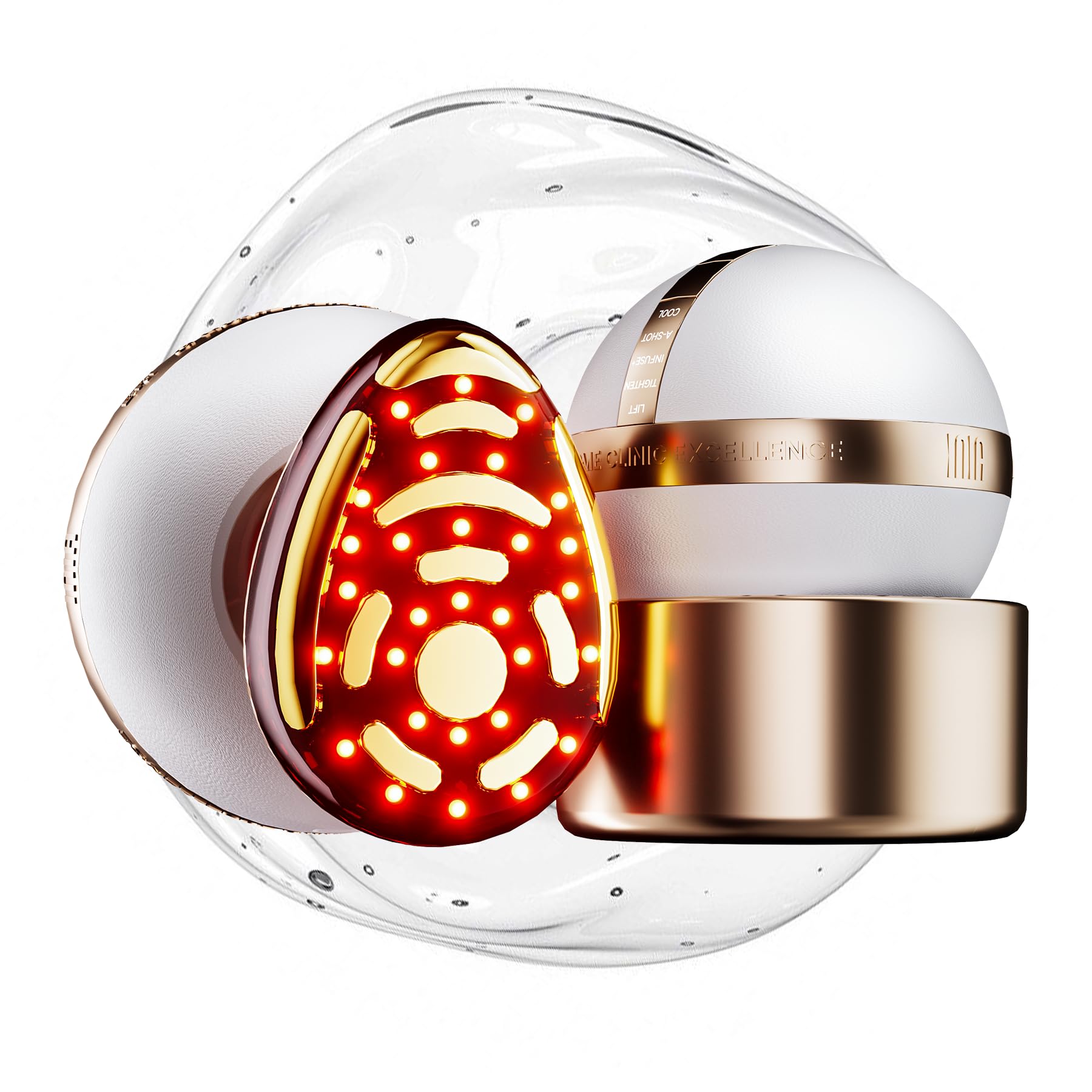
A face-and-neck routine is the SPHERA's pitch, and it is the most spa-like device here. Five modes and eight technologies in one handset, with a warming mode that makes a serum feel like it is working harder and a cooling mode that is a genuinely pleasant finish.

We liked the face-and-neck focus. The head is comfortable to move along the jaw, and the five modes give you more to tailor than the X2's dual-mode pairing. Start low and stay there until your skin tells you otherwise.

The package weight is 1.81 pounds, which makes it a stay-at-home tool rather than a travel pick. The warm and cool modes are the reason to choose it over the X2; if you will not use them, the simpler device is the better buy.

Bottom line: The INIA SPHERA is our premium pick for a face-and-neck routine with warming and cooling, though its strong current and price make it a deliberate choice rather than the default.

6

INIA FLARE

INIA FLARE

Massage-led routines

Our Score 8.6/10
Check Price

Worth Noting

  • Can stop working early
  • Current can feel sharp
Size
2.05 x 1.89 x 7.4 in
Modes
3
Weight
1.22 lb
Head Design
3D articulating

Massage is the point of the FLARE, not just microcurrent. A long handle, a 3D articulating head, and red light make a pass feel like a mini spa treatment. We liked the articulating head for the jaw and neck; it follows the curve instead of skating over it.

Three modes keep it simple: lift, tighten, infuse. The red light and vibration are the main event, and the negative-ion infuse mode is the one to use with a serum. It is a more relaxed routine than the X2's dual-mode pairing, and the 1.22-pound body feels substantial without being clumsy.

This is the one we reach for when we want a treatment to feel like a massage rather than a protocol. The articulating head makes the neck pass easier, and the long handle keeps your wrist relaxed. If that is the routine you will keep, it earns its place; if you want the most adjustable current, the X2 is the steadier choice.

Bottom line: The INIA FLARE suits a massage-led routine, and we like its 3D articulating head for jaw and neck passes; it is a simpler device than the multi-mode picks.

How We Chose and Tested 12 Microcurrent Devices

We started by gathering every microcurrent device with a genuine following — reading spec sheets, counting attachment heads, checking app support, and looking for makers who state their current output plainly rather than hiding behind a glow-up video. From that pool we narrowed to 12 units spanning budget to splurge, bought them at retail, and handed them out to testers who used them on their own faces for seven months.

Each device got used three to four nights a week, right after cleansing, with the conductive serum that came in the box. A few traveled in a crammed toiletry bag on weekend trips to see how they handled being jostled and whether they held a charge in a suitcase. We timed a full routine one-handed from pump to switch-off, logged sessions per charge and how long a top-up took, and noted whether the cable was a standard one we could replace at a drugstore or a proprietary thing destined to vanish. We also marked the exact moment a setting crossed from pleasant tingle into sting — that line sits in a different place on the forehead than it does under the eye — and ran each device quietly enough to tell whether we could hear it over a podcast at arm's length.

The longer arc was about skin feel and follow-through. We photographed bare skin at week one, four, and twelve in the same bathroom light at the same time of day, and checked whether the serum left a tacky film or absorbed cleanly before bed. Versatility got judged by whether the heads and settings genuinely suited jaw, cheek, and neck rather than just existing. And reliability showed up in small ways: plates that dulled, batteries that faded by month five, an app that lost its pairing twice in a week. The devices that made the list are the ones still working, still charged, and still pleasant enough that we didn't have to talk ourselves into using them.

How to Choose a Microcurrent Facial Device

Match the modes to your routine

A seven-mode device is only useful if you will use three of them. For a full-face pass, dual-mode pairing on the X2 saves time; for a first device, the Hunvva's simpler microcurrent-and-red-light routine is easier to keep. Count the modes you will use weekly, not the ones on the box.

Check the head against the areas you want to treat

A small, rounded head like the BEAR mini's gets around the brow and lip line; a larger dual head covers cheeks and jaw faster. An articulating head, like the FLARE's, follows the neck with less steering. If your main concern is the jawline, prioritize contact and control over size.

Adjustable current is the comfort feature

Tingling is normal; a sharp pinch is not. Five or six levels give you room to start low, and automatic resistance scanning on the BEAR mini takes some guesswork out. Sensitive areas like the temples and jaw respond better to a lower setting than the cheeks.

Plan for power, gel, and upkeep

Rechargeable devices suit a bathroom counter; an AAA-powered mini is easier to travel with. Every microcurrent device needs a conductive gel or water-based serum, so factor in the cost of replacing it. Wipe the head after each use and keep the contacts clean.

Treat warranty as part of the price

Microcurrent devices are small electronics, and reliability is the weak spot in this group. A two-year warranty, like the BEAR mini's, is worth more than an extra mode you will never touch. Buy from a seller with a return window and test the charge and controls in the first week.

Frequently Asked Questions

Final Verdict

The Medicube Booster Pro X2 is the device we recommend first because it does the most in one pass: seven modes, six intensity levels, and dual-mode pairing that shortens a full-face routine. It is the best default for someone who wants one device on the counter. If you travel or want targeted work around the brow and jaw, the Mini Booster Pro Plus or BEAR mini makes more sense. Choose the SPHERA only if warming and cooling are the features you will actually use.