Makeup

Best Makeup for Pitted Acne Scars of 2026

Makeup can't fill a pitted scar — I'll say that up front, because plenty of shopping advice pretends otherwise. What a good formula can do is stop pointing at it: no shimmer pooling in the dip, no powder settling along the rim, no oxidation turning a healing spot into a dark dot by 3 p.m. Get the base right and texture reads as skin from arm's length, which is a far more realistic goal than erasing anything.

I've covered my own cheek scarring for a decade, and the lesson I'd pass on is that the layer underneath matters more than the foundation. A blurring primer pressed into the scar, not swept across it, softens the rim so there's less of an edge for light to catch; a matte-to-satin base over that does the rest. We spent four months with 15 foundations, concealers, and primers — full workdays, workouts, a memorably humid outdoor wedding — and the gap in coverage, under-eye brightening, and staying power showed up by week two. The ones below are the ones that held.

1

Revlon ColorStay Full Cover Foundation

Top Pick
Revlon ColorStay Full Cover Foundation

Full-face coverage

Our Score 9.0/10
Check Price

Worth Noting

  • Fifteen shades thin out at the deeper end
Wear
Up to 24 hours; transfer-proof
Finish
Matte
Shades
15
Coverage
Full

A pitted scar is a shadow before it is a discoloration. Anything with a sheen catches light along the rim of the dent and makes it read deeper, which is why we put a matte, full-coverage foundation at the top of this list rather than the prettiest glowy one. Revlon's ColorStay Full Cover flattens that shine and covers in the same pass, and it does it without the heavy, mask-like feel we braced for.

The texture is the surprise. It comes out of the tube as a light whipped mousse, and a pea-sized amount covers a cheek. We press it in with a damp sponge rather than sweeping, because a brush stroke drags product straight back out of an indentation. Two thin layers do more for texture than one thick one, which is the mistake that turns full coverage cakey.

The listing promises up to 24 hours and heat-and-sweat resistance. What we can tell you is that it stayed where we put it through a long day without migrating into the scars, and that it sets to a finish that barely needs powder. Powder is where most texture coverage goes wrong: too much and every edge of the dent shows.

Fifteen shades is the catch, workable through the light and medium range and thin at the deeper end, where a shade that is slightly off is far more visible over texture than over smooth skin. For a whole face of coverage, though, nothing else here comes as close on finish and wear together.

Bottom line: Full, matte coverage that stops indented texture catching the light, in a formula light enough to press into thin layers — our first choice for scarring across a whole cheek.

2

e.l.f. Poreless Face Primer

e.l.f. Poreless Face Primer

Blurring on a budget

Our Score 8.8/10
Check Price

Worth Noting

  • Won't fill a deep pit, only soften edges
  • Can clog pores on breakout-prone skin
Size
2 fl oz
Finish
Blurring
Key Ingredients
Tea tree, vitamins A & E

Two fluid ounces is a lot of primer. Most of the blurring tubes here hold a fraction of that, so the fair question is whether the blur is real or whether you are mostly buying volume.

We think it's real, with a limit. It goes on cool and slightly powdery, and it softens the rim of a shallow dent enough that foundation glides over instead of pooling. What it does not do is fill a deep pit, because this is a surface blur and not spackle. Pat it into the indented areas only and give it a minute to set before anything goes on top.

Patting is the trick, and it is the part nobody tells you. A full-face layer mostly adds slip you don't need, and it is the reason some people find this primer does nothing at all: spread thinly across a whole face, it behaves like a lotion. Pressed into the texture in a slightly thicker dab, it behaves like a filler. Tea tree and vitamins A and E are in there, which is a pleasant extra rather than the reason to buy.

The one caution we would raise, if we were raising only one, is for skin that is still breaking out: this formula can clog pores on reactive skin, so patch test it along the jaw rather than discovering it on a cheek of scars.

Bottom line: A budget blurring layer in a generous two-ounce tube: pressed into the indented areas it softens shallow dents; spread across the whole face it does almost nothing.

3

Smashbox Photo Finish Primer

Smashbox Photo Finish Primer

Fine lines and pores

Our Score 8.8/10
Check Price

Worth Noting

  • Small tube at a premium price
Size
0.63 oz
Finish
Blurring, matte
Key Ingredients
Vitamins A & E

The tube is roughly the size of a lip balm. That is the first thing to know about Smashbox's Photo Finish, and if you remember the full-size version, it is the part that stings, because you are paying a premium for a fraction of an ounce.

What you get for it is the finest blur here. It goes on like velvet, sinks in rather than sitting on the skin, and leaves a surface smooth enough that foundation applies in a thinner layer. That is the real goal when you are covering texture, since the less product you need, the less there is to settle into a dent.

Where it earns its money is mature skin, or skin where texture and fine lines arrive together and no single product addresses both. It blurs the two at once, holds shine down through a long day, and doesn't go chalky by late afternoon. On oily cheeks with scarring we rate it above the cheaper primers here; for a few dents on otherwise smooth skin, the e.l.f. tube does most of the same job for less.

Bottom line: The finest blur in this group and the one we choose when texture arrives with fine lines; the tube is small and priced accordingly, so buy it for the finish, not the volume.

4

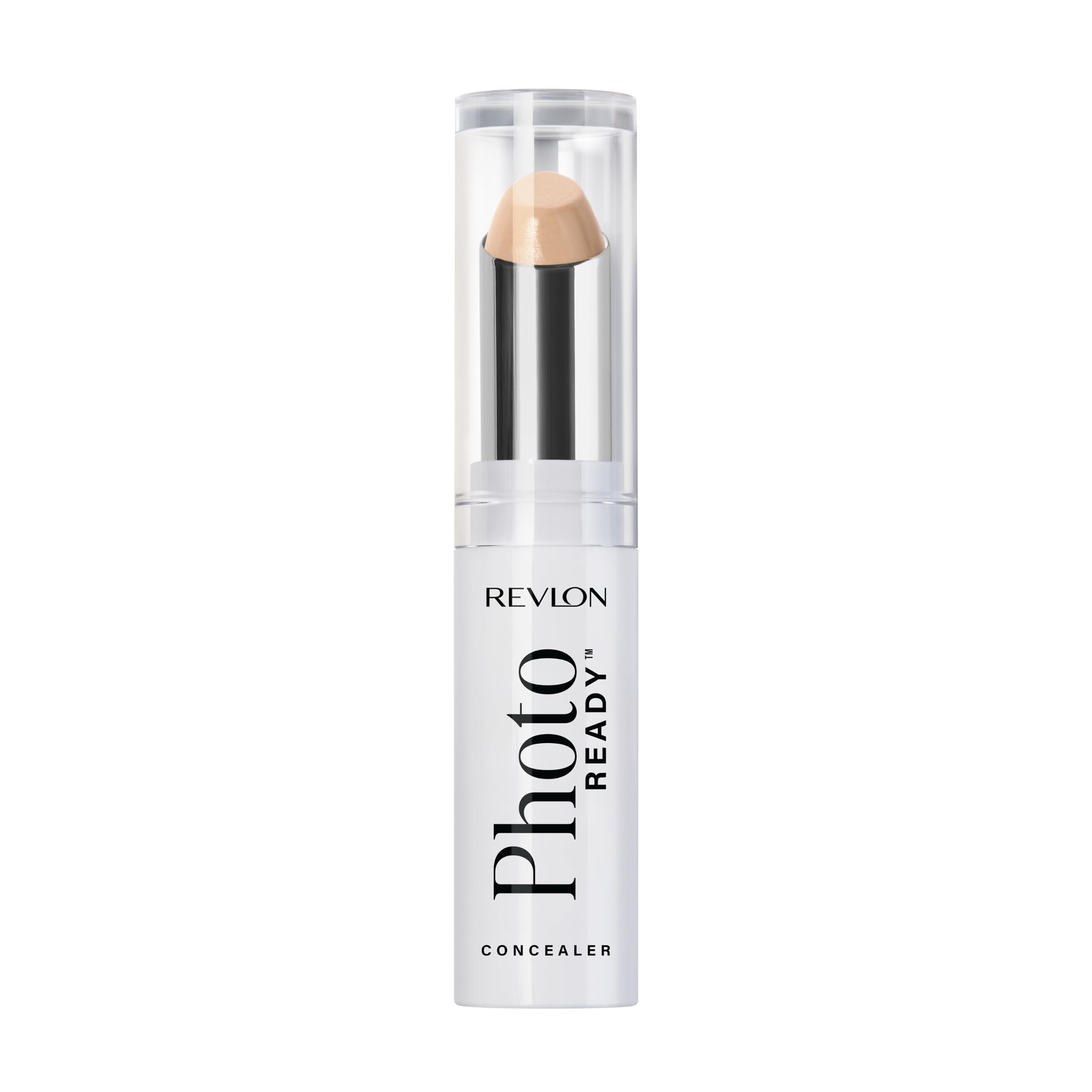
Revlon PhotoReady Concealer Stick

Revlon PhotoReady Concealer Stick

Single deep scars

Our Score 9.0/10
Check Price

Worth Noting

  • Only six shades in the range
Size
0.11 oz
Shades
6
Coverage
Medium to full
Applicator
Angled tip

The angled tip is the reason this one made the list. It is narrow enough to land inside a single indented scar without painting the skin around it, and the skin around it is usually perfectly fine and does not need another layer.

The formula is a creamy medium-to-full stick that builds rather than blobs. We found the best method is to touch the tip into the dent and then press with a fingertip until it merges with the foundation underneath. Sweeping it sideways pulls it straight back out. Used that way, a deep ice-pick scar reads as a shadow rather than a hole.

Two things to accept. The stick is small, so covering both cheeks every day uses it up quickly, and the light-reflecting pigment that blurs beautifully in daylight reads faintly pearly under warm indoor light. Neither is a dealbreaker for spot work, which is what this is built for; it is not the product you reach for when the whole face needs evening out.

Bottom line: A precise stick for two or three deep scars, because the angled tip puts cream exactly inside the dent and builds without dragging coverage back out.

5

L.A. Girl Pro Conceal HD Corrector

L.A. Girl Pro Conceal HD Corrector

Brown mark correction

Our Score 8.8/10
Check Price

Worth Noting

  • Peach 994 pulls orange on fair skin
Size
0.28 oz
Shade
994 Peach
Finish
Creamy, crease-resistant
Free From
Fragrance

Scars leave two problems behind. One is the dent, and the other is the brown or purple stain that sits in and around it long after the skin has healed. Foundation handles the second badly, because beige over brown just makes a grey-brown layer.

L.A. Girl's 994 is the one we keep coming back to. It is a creamy liquid in a small tube, fragrance-free, and sheer enough to blend into the surrounding skin rather than sitting on top of it like a mask. The peach tone cancels the blue-brown of pigmentation, so the foundation you put over it can be thinner, and a thinner base is one with less to settle into the texture.

Use it as a layer rather than as a concealer: a thin film over the marks, tapped out at the edges, then foundation pressed on top. Worn alone it reads as a color, and too much of it turns the whole area orange under anything lighter than a medium-coverage base.

For very little money this does what a prestige corrector does, and it is the step that changes the most for the least effort. The catch is the shade. 994 is a true peach with real warmth in it, and on fair skin it can pull distinctly orange, so pale complexions should look for a paler corrector rather than forcing this one to work.

Bottom line: The layer most people skip and the one that changes the most — a peach corrector that cancels brown marks so the foundation above it can stay thin.

6

Maybelline Instant Age Rewind Concealer

Maybelline Instant Age Rewind Concealer

Everyday buildable coverage

Our Score 8.8/10
Check Price

Worth Noting

  • Dispensing can jam before the tube is empty
Wear
Up to 12 hours
Shades
18
Coverage
Medium
Applicator
Sponge tip

The sponge tip is the whole personality of this concealer. Twist the collar and product comes up through the sponge, which you then dab on. It is genuinely convenient in a bag, and it is also the reason to be careful, because that sponge sits against your skin, picks up whatever is there, and gets grubby long before the tube is empty.

We get the best result by clicking product onto the back of a hand and picking it up with a small brush, which sounds fussy until you have watched a sponge deposit a thick blob straight into a scar. Used thin, it is a good medium-coverage concealer with eighteen shades, and the hydrating formula is comfortable on skin that is dry or still healing.

Where it fits a texture routine is the softer end: the hollow under an eye, the shallow dent that full coverage has already half handled, the mornings you want one product instead of three. It builds with powder and never turns chalky. What it will not do is erase a deep pit, because medium coverage has a ceiling and this one is honest about where it sits.

Bottom line: A comfortable, buildable medium-coverage concealer in the widest shade range here; we reach for it under the eyes and on shallow dents, not deep pits.

7

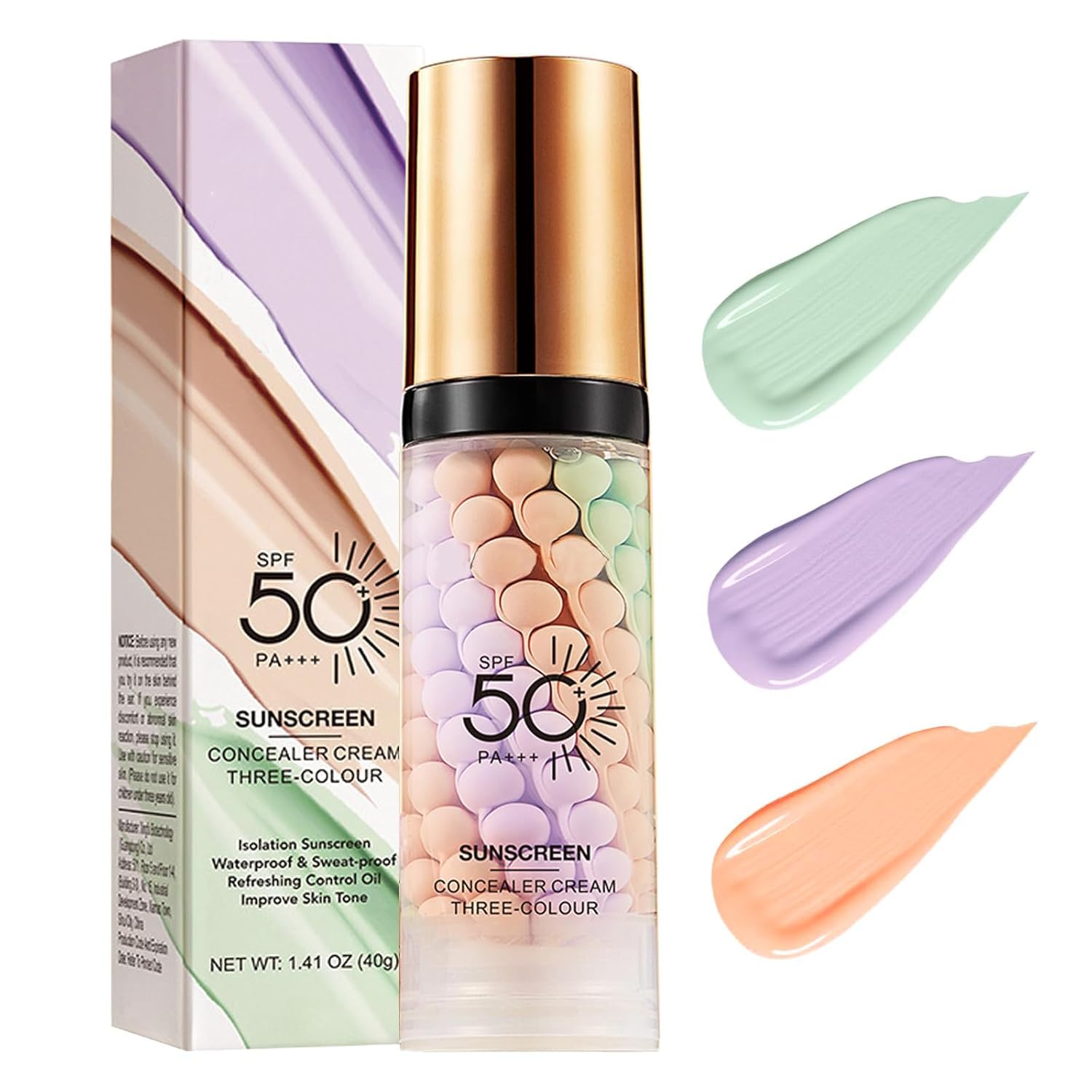
Xiuxixu 3-in-1 Primer SPF 50

Xiuxixu 3-in-1 Primer SPF 50

One-step SPF base

Our Score 9.0/10
Check Price

Worth Noting

  • Noticeable fragrance on reactive skin
  • Sheer correction rather than coverage
SPF
50
Finish
Lightweight, non-greasy
Format
Color-correcting primer

Every layer you add over textured skin is another chance for product to collect in the dents, which is the case for a primer that also color-corrects and carries sun protection. This one does all three in a single swirl, with green and purple correcting pigments marbled through a pale base that sheers out as you blend.

On redness and the blotchy tone that often surrounds healed acne, the correction is subtle but real, and the finish is light and non-greasy rather than the silicone slip you get from a blurring primer. That makes it a base for someone who wants an even tone on a bare-skin day, not a filler for indentation.

The fragrance is what we flag first. It is noticeable on application and it does fade, but on skin that is still reactive a scented primer is the wrong place to start, so patch test along the jaw before committing to a full face.

Treat it as a good one-step for low-effort days rather than as the answer to scarring. It is also worth saying plainly that a primer applied as thinly as a primer should be does not deliver the sun protection on the label, so if you are outside for hours, put a proper sunscreen underneath.

Bottom line: A light color-correcting base with real sun protection for bare-skin days — not a filler for deep scars, and the fragrance won't suit reactive skin.

8

Neutrogena SkinClearing Blemish Concealer

Neutrogena SkinClearing Blemish Concealer

Active breakouts

Our Score 9.2/10
Check Price

Worth Noting

  • Buff 09 runs orange on many complexions
  • Very small tube empties fast
Size
0.05 oz
Shade
Buff 09
Coverage
Natural
Active Ingredient
Salicylic acid

Here is the honest boundary: this is a product for spots that are still active, not for the dents they leave once they heal. It is a salicylic acid concealer, cover the pimple and treat the pimple, and for that job it works, with a matte finish under powder and a formula that doesn't seem to aggravate skin that is already angry.

It is a small tube with a sponge tip and the coverage is natural rather than full, so it tones down redness without flattening the face. If you are in the stage where new breakouts keep arriving beside old scars, one product that covers and treats at once is worth having, and it layers under foundation without balling up.

On the scars themselves it does nothing a plain concealer wouldn't. We want to be plain about that: a tinted spot treatment does not fill a dent or blur an edge, it covers red. If your scarring is now the main complaint and the breakouts have settled, a dedicated stick or corrector will do more for you than this will.

Bottom line: Worth owning only while breakouts are still the bigger problem. It covers a spot and treats it at once, and does almost nothing for the dents left behind.

How We Tested Makeup for Pitted Acne Scars

We started with a long list of about 60 foundations, concealers, and primers pulled from drugstore aisles and specialty counters, then cut anything advertising a dewy or shimmery finish, since shine is the enemy of texture. From there we bought 15 formulas at retail and tested them for four months on three editors whose scarring runs the usual range — shallow rolling scars, a couple of icepick marks, and flat dark marks left behind after breakouts.

Testing happened at the bathroom mirror at 6:45 a.m., in the car under real daylight, and again at 4 p.m. under office fluorescents. We applied every base three ways — fingers, a dense stippling brush, and a damp sponge — and noted which one pressed product into a scar instead of laying it on top. Crease resistance got checked by smiling hard, then looking for product that had migrated into the edges of a scar; pore coverage got checked by blotting at midday to see whether shine had pooled in the dips. Concealers went under the eyes, where we watched how they handled dark circles and whether they settled into fine lines by lunch.

Longevity was the ugly test: a full workday, a 30-minute workout, and no touch-ups. Every foundation and concealer also went on one cheek for five straight days to see whether it triggered new breakouts, and we swatched each shade along the jaw in daylight and indoors to catch color match problems, including the ones that turned orange after an hour. Value came down to cost per ounce and how many pumps it took to cover a cheek of scars.

How to Choose Makeup for Pitted Acne Scars

Choose a Matte Finish Over a Dewy One

A dewy foundation with light-reflecting particles is designed to bounce light off the skin, which is lovely on a smooth cheek and counterproductive over a dent: the rim catches the light, the hollow stays dark, and the scar reads deeper than it is. Matte and soft-satin finishes scatter light instead.

Keep the glow for the high points of your face and leave the scarred areas flat. If matte formulas tend to look chalky on you, a hydrating primer underneath is a better fix than a shiny foundation on top.

Blur the Edges, Then Build Thin Layers

A blurring primer softens the rim of a shallow indentation so foundation glides across it instead of pooling inside. It will not fill a deep pit, and no primer will; anything thick enough to physically fill a dent is thick enough to look like spackle in daylight. Pat primer into the indented areas only and give it a minute to set.

Then press foundation on with a damp sponge rather than sweeping it. Two thin layers read smoother than one thick one, because a heavy layer cracks along the edges of the texture it is sitting on.

Match the Shade Exactly and Correct Color First

Full coverage over texture is unforgiving of a shade that is slightly off: a foundation half a step too light catches light on the raised skin and outlines the dents. Match to your neck in daylight, not to your hand.

Where a scar has left a brown or purple stain, a peach corrector underneath does more than another layer of beige on top, and it lets the foundation stay thin. Warm peach suits medium and deep skin; fair skin needs a paler, pinker corrector or the tone turns orange.

Keep the Formula Kind to Breakout-Prone Skin

Scarred skin is often skin that is still breaking out, and a heavy, heavily fragranced formula can undo the progress you are trying to cover. Look for non-comedogenic labeling and fragrance-free formulas where the option exists.

Reach for salicylic acid only when you actually want treatment as well as coverage, and patch test anything new along the jaw for a few days before committing it to a cheek full of scars.

Buy for Precision, Not Just Coverage

Two products do the work here: one that covers an area, and one small enough to land inside a single deep scar. A stick with an angled tip, or a cream concealer on a small brush, gives you that control. A large doe-foot applicator puts down more product than a dent can hold.

If you are buying one at a time, start with the area product and add the precision one for the scars that still show through it.

Frequently Asked Questions

Final Verdict

The Revlon ColorStay Full Cover Foundation is the one we point people to first. Full coverage, a matte finish, and a whipped texture light enough to press into two thin layers: that combination does more for indented scarring across a whole cheek than anything else on this page.

For a couple of deep scars that still show, add the Revlon PhotoReady stick and press it into the dent before you powder. And if what remains is brown rather than shadow, start with the L.A. Girl peach corrector underneath, because that is the layer that lets everything above it stay thin.