Skincare

Best LED Mask for Face of 2026

An LED face mask is essentially a very expensive flashlight you strap to your head, and that's the whole problem. The good ones bathe your skin in red and near-infrared light at wavelengths with real research behind them; the bad ones are a heavy plastic shell with a charging port. What you're actually buying is a habit — ten minutes a night, done consistently enough that your skin looks a little calmer and brighter — which only works if the mask is comfortable, light, and easy enough to reach for that you stop negotiating with yourself.

Over eight months, my team and I wore 12 of them through real evenings and rushed mornings rather than lab sessions: folding laundry, answering email, walking the dog. The diode counts turned out to matter less than I expected. The masks we kept reaching for were the light ones that fit without sliding down the nose, held a charge, and still looked new after eight months. A 300-diode mask you wear four nights a week beats an 800-diode one that lives in a drawer, and the picks below survived exactly that kind of use.

1

iRestore Red Light Face Mask

Top Pick
iRestore Red Light Face Mask

Overall results

Our Score 9.0/10
Check Price

Worth Noting

  • Battery life can be inconsistent between charges
LEDs
360
Weight
1.87 lb
Wavelengths
3
Session Time
10 minutes

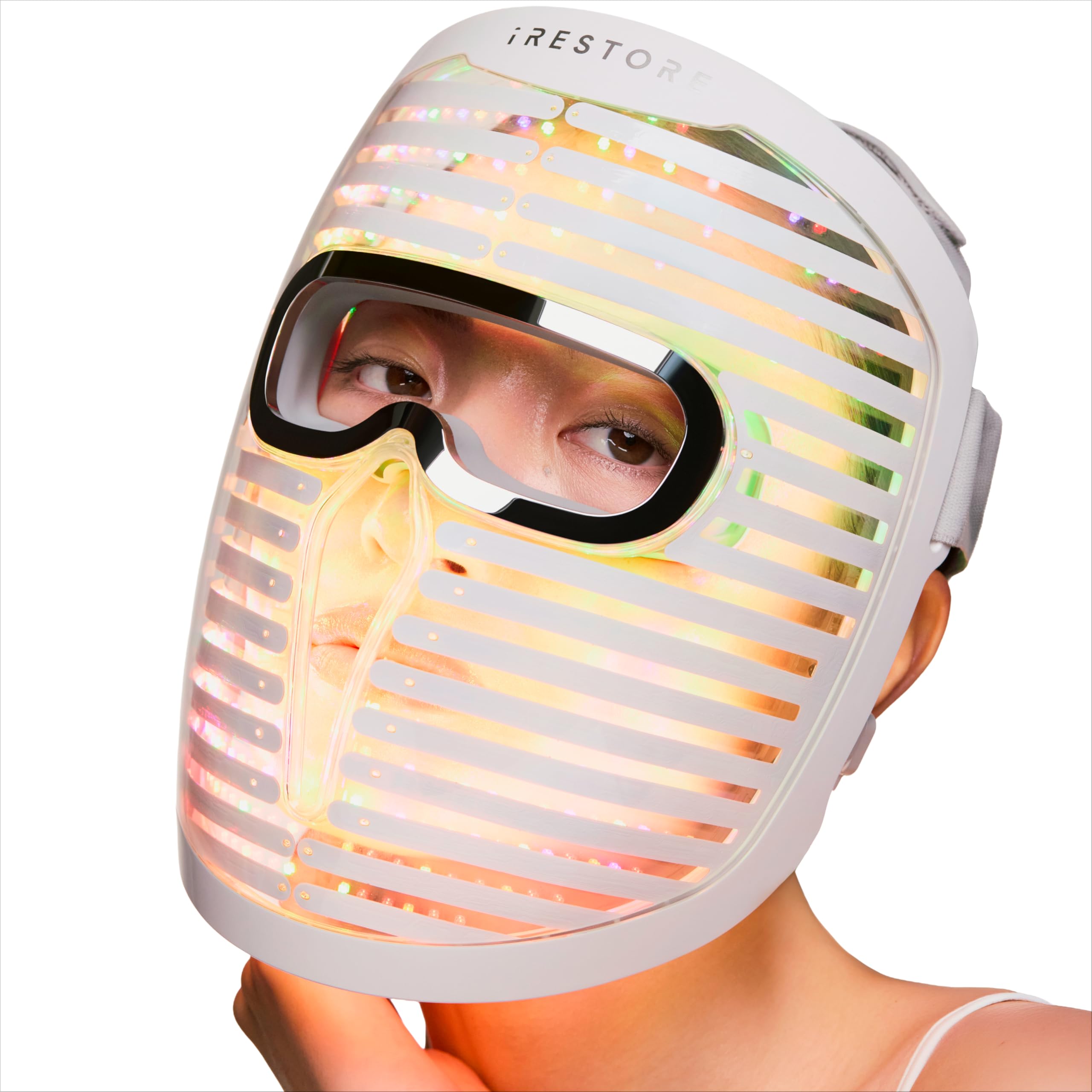
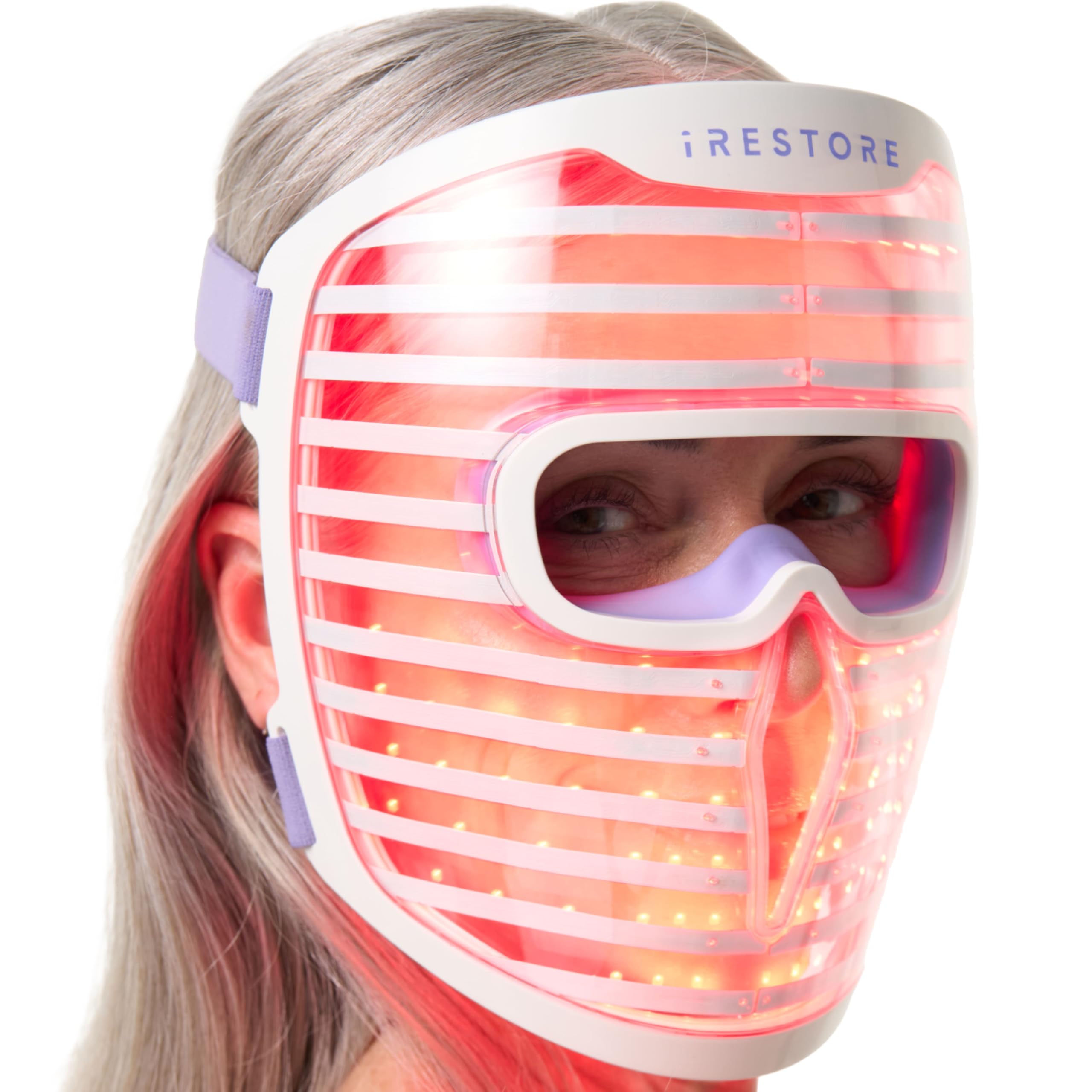
The 360-LED array and three wavelengths are what make this the mask we recommend first. Red 635nm and infrared 830nm do the firmness and fine-line work, while blue 415nm gives you a mode for breakout-prone weeks. In our sessions, the 10-minute timer was the right length: long enough to feel like a treatment, short enough that we did not start negotiating with ourselves about skipping it. The dual strap holds the shell steady, and the built-in eye protection means there is no separate pair of goggles to keep track of.

We liked having one device that can shift from a blue-light session after a sweaty day to red and infrared on a quieter skin day. The 1.87-pound shell is light enough to wear while reading, and the coverage reaches from forehead to jaw without the hot spots we have felt on flatter masks. The 360 LEDs are not just a bigger number on the box; they spread the light more evenly across the cheeks and perimeter, which is where a mask can otherwise leave you guessing.

The battery is the one thing we plan around. It is cordless and convenient, but it does not always hold a charge as predictably as we want, so we keep the charger where we can see it and top it up before a run of sessions. That is a manageable habit rather than a dealbreaker, especially because the rest of the routine is so simple.

The blue mode is the one we reach for after a workout, and the red and infrared combo is the default on Sunday nights. That flexibility is why it stays near the top of the set for us.

Bottom line: The iRestore 360 is the mask we recommend first: three wavelengths, 360 LEDs, and a comfortable 10-minute routine make it the easiest full-featured starting point.

2

INTEO Face & Neck Mask

INTEO Face & Neck Mask

Face and neck

Our Score 9.2/10
Check Price

Worth Noting

  • Runs large on smaller faces
Modes
4
Battery
2000mAh
Coverage
Face and neck
Light Beads
680

The face-and-neck coverage is the first thing that stands out here. You get a face mask plus a neck panel, and the 680 light beads are spread across both, which is a lot of coverage for the budget tier. The silicone shell is soft and flexible, and the wireless controller means you can move around instead of being tethered to an outlet.

We think it earns its place as the value pick because the four modes cover the useful basics: 630nm red, 460nm blue, 605nm amber, and 850nm near-infrared. The timer is simple, the Type-C charging is convenient, and the 2000mAh battery is enough for a week of short sessions if you stay on top of it. Daily use means charging more often, but it is manageable.

The neck coverage is the reason we kept using it. Most masks here stop at the jaw, and the extra panel makes a difference if your neck is part of your routine. It is not the most refined mask in the group, but it is the one that makes face-and-neck treatment feel practical rather than like a two-step project.

The neck panel is the part we noticed most in the mirror; it is the difference between treating your face and treating the whole frame.

Bottom line: Face-and-neck coverage usually costs more, which is why the INTEO is the value pick we point to.

3

Shark CryoGlow

Shark CryoGlow

Under-eye cooling

Our Score 8.8/10
Check Price

Worth Noting

  • Battery drains quickly with daily use
Weight
1.49 lb
LED Colors
Red, blue, deep infrared
Treatments
4
Session Time
6 minutes

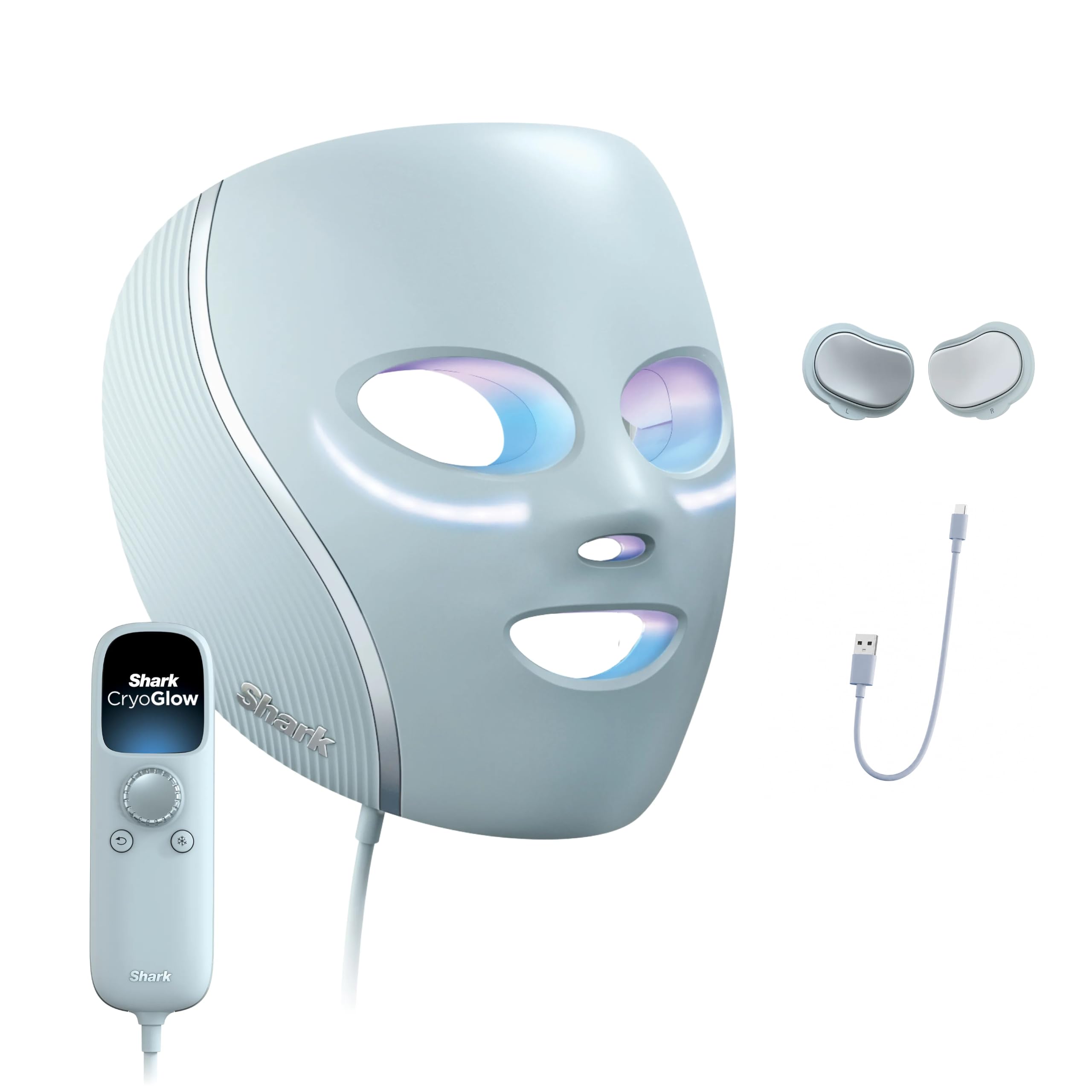
The under-eye cooling pads are the reason to pick the CryoGlow. They sit against the skin below the eyes and turn a red-light session into something that feels closer to a spa treatment, especially on a puffy morning. The six-minute Better Aging cycle is the shortest here, and that matters more than it sounds: it is easy to fit in before a meeting or after washing your face at night.

We appreciated the four treatments, especially Under-Eye Revive, and the combination of red, blue, and deep infrared light gives you a mode for firmness, breakouts, and tired-looking skin. At 1.49 pounds, the mask is lighter than it looks, and the dual strap keeps it stable.

The rigid shell takes some adjusting: it does not mold to the face like silicone masks, so you need to position the eye pads carefully and keep the strap loose enough to avoid pressure. Once it is set, the cooling is the feature we noticed most, and the six-minute timer makes the routine feel almost effortless.

The cooling pads are the detail that makes it feel less like a chore and more like a ritual.

Bottom line: The CryoGlow earns its place with six-minute sessions and cooling eye pads that make under-eye care feel like a ritual.

4

Ulike Reglow

Ulike Reglow

Full-face coverage

Our Score 9.0/10
Check Price

Worth Noting

  • Heavy shell can press on the nose and cheekbones
Modes
4
Weight
3.04 lb
Coverage
360° full face
Session Time
8 minutes

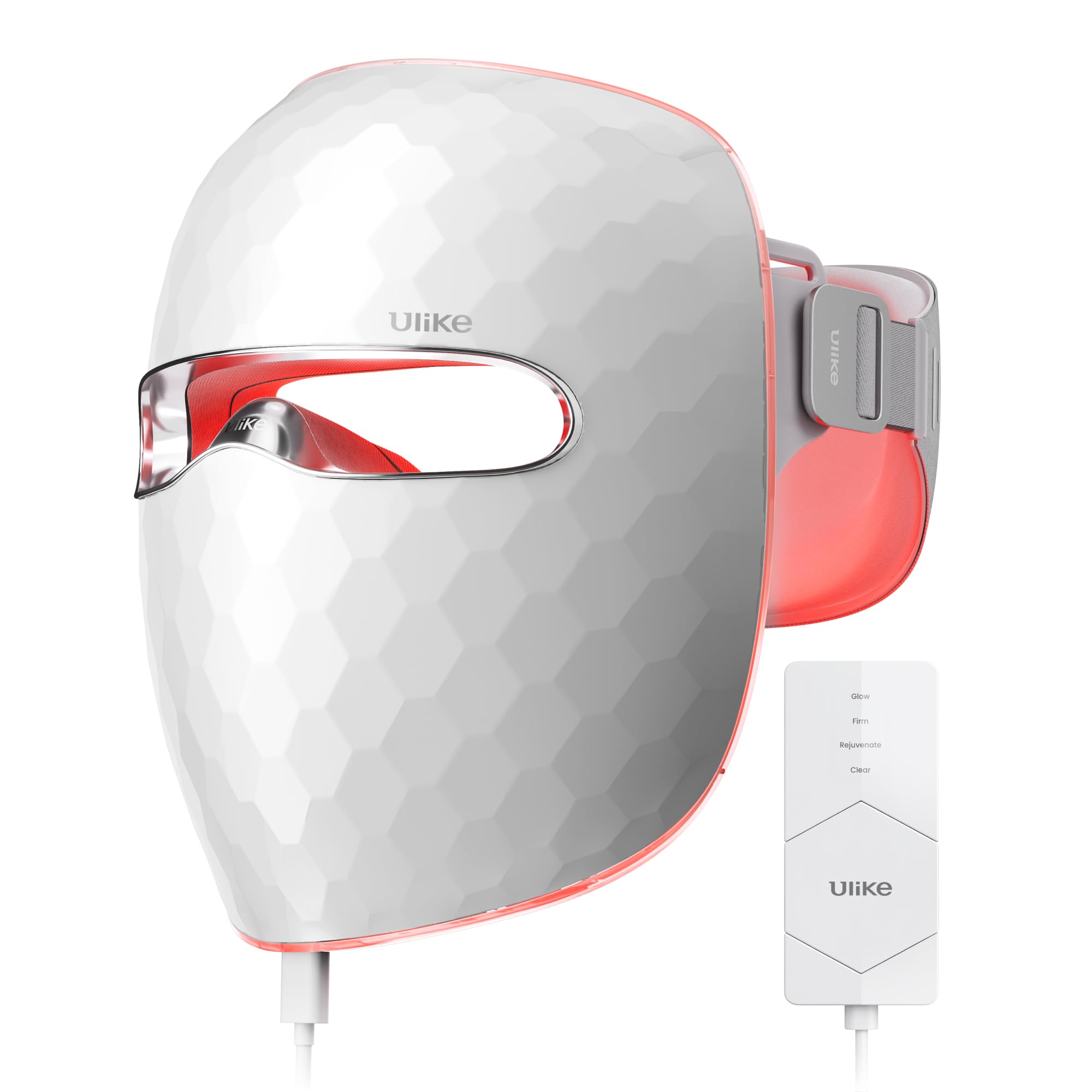
The 360-degree coverage is the first thing that stands out. The Reglow wraps around the face instead of sitting flat, so the light reaches the temples and jawline more evenly. The eight-minute routine is quick, and the four modes give you a reason to switch things up: Glow for brightness, Firm for firmness, Rejuvenate for overall tone, and Clear for breakout-prone weeks.

We liked the 1 cm gap between the mask and the skin. It keeps the LEDs from pressing against your face and helps the light spread more evenly, which is a small design choice that makes a real difference in comfort. The silicone eye mask is soft, and the adjustable strap keeps the shell secure during a session.

We think it earns a runner-up spot for full-face coverage because it treats more of the perimeter than a standard face mask, and the eight-minute timer makes it easy to stay consistent. The Clear mode is the one we reach for when breakouts are the main concern, and the Glow mode is a good default for a quick morning session.

It is the one we choose when the jawline and temples need the same treatment as the cheeks.

Bottom line: Full-face coverage and an eight-minute routine make the Reglow our pick for anyone treating the perimeter as carefully as the cheeks.

5

HIME SAMA Miracle ACE

HIME SAMA Miracle ACE

Custom routines

Our Score 9.4/10
Check Price

Worth Noting

  • Some units stop charging or fail within months
Colors
8
Battery
2000mAh
Warranty
2 years
Lamp Beads
240

Eight colors is more than most people need, but the adjustable chin pad is the detail that makes the Miracle ACE interesting. It lets you bring the mask closer to a smaller face, and the silicone eye holder keeps the light out of your eyes without a separate pair of goggles. The one-touch control is simple, and the 10-minute session is short enough to repeat.

The 240 lamp beads are spread evenly, and the eight colors include near-infrared, red, blue, and green, so you can build a routine around brightness, breakouts, or tone. We liked the side button for switching modes mid-session, and the 2000mAh battery is enough for several short treatments before you need to charge.

The fit is the part that surprised us. The adjustable chin pad makes a real difference on a smaller face, and the ultralight shell stays comfortable for a full session. The silicone eye holder is also a nice touch: it blocks direct light without feeling like a separate piece of equipment.

We think it is the best choice for someone who wants to experiment with color and fine-tune the fit, and the two-year quality assurance is a meaningful cushion for a device with this many modes.

Bottom line: Eight light colors and an adjustable chin pad make the Miracle ACE the most customizable mask here.

6

iRestore Face Mask Pro

iRestore Face Mask Pro

Maximum coverage

Our Score 9.0/10
Check Price

Worth Noting

  • Heavier than the standard iRestore at 2.49 pounds
Modes
5
Diodes
800
Weight
2.49 lb
Wavelengths
8

The 800-diode array and eight wavelengths are the reason the Face Mask Pro sits at the top of the iRestore range. You get 650 LEDs plus 150 VIXO light points, and the wavelengths run from 415 to 1072nm, so the mask can cover blue, green, amber, red, and deep near-infrared in one device. The five smart modes take the guesswork out of pairing them.

We liked the built-in silicone eye guards. They block direct light without a separate pair of goggles, and the secure fit lets you read or relax through a session. The 800 diodes are not just a spec-sheet flex: the light distribution is denser across the forehead and jawline, which is where a lower-density mask can leave gaps.

We think it earns its place as the premium pick for someone who wants maximum wavelength coverage and does not want to juggle multiple devices. The five modes make it more approachable than the diode count suggests, and the 10-minute sessions are easy to fit in. The battery is the piece we watch: keep the charger handy and register the warranty.

The 800-diode array is the closest thing here to a full-face light panel you can wear, and the extra wavelengths are the reason to consider it over the standard model.

Bottom line: The Face Mask Pro is the premium pick for someone who wants the most wavelengths and diodes in one mask.

7

INIA GLOW 4D

INIA GLOW 4D

Cooling and glow

Our Score 8.8/10
Check Price

Worth Noting

  • Fit can be tight or unstable on smaller faces
LEDs
320
Modes
4
Weight
1.9 lb
Cooling
Magnetic gel pad

The magnetic cooling gel pad is the feature that sets the GLOW 4D apart. It soothes puffy eyes before or after the light session, and the flexible 4D silicone conforms to the face instead of sitting like a rigid shell. The wireless design makes it easy to wear around the house, and the 320 LEDs give you decent coverage for the midrange tier.

We think it is a smart midrange choice because you get dual NIR, four modes, and a cooling pad without moving into the premium tier. The red, blue, amber, and combo modes cover the main skin goals, and the magnetic controller is easy to click into place. The 320 LEDs are not as dense as the premium masks, but the coverage is even enough for a home routine.

The cooling pad is the detail we noticed most. It makes the mask feel less like a chore on a hot, puffy morning, and the flexible shell is comfortable for a full session.

It is the pick for someone who wants a little cooling with their light therapy without jumping to the most expensive masks.

Bottom line: A magnetic cooling pad and flexible 4D silicone make the GLOW 4D the midrange mask we suggest trying.

How We Put 12 LED Face Masks Through Eight Months of Real Evenings

We started by pulling every red light mask we could find that published its wavelengths, then cut anything that pushed color-light modes ahead of red and near-infrared, or that was vague about how long a session should run. That left 12 masks, corded and cordless, rotated among five testers with different face shapes and skin types.

Each one got used the way people actually use them: ten minutes in the morning while the coffee brewed, again at a desk mid-afternoon, and lying on the couch before bed. We weighed every mask on a kitchen scale and noted which ones slid down the nose the moment we stood up. We ran unplugged sessions until the battery died and counted how many sessions a charge covered, and we checked fit along jawlines and hairlines by watching where light leaked around the edges.

For skin appearance, testers took photos in the same spot by the same window, same time of morning, no makeup, before the first session and every two weeks after. We wiped each mask down after every use per its instructions, flexed the straps, and watched for cracked shells, stiff hinges, and diodes that dimmed. Value came down to what was in the box — a neck panel, a case, a cordless battery — against what it cost, and whether we'd still reach for it on a tired Tuesday.

How to Choose an Led Face Mask

Match the Wavelengths to Your Skin Goal

Red and near-infrared light are the core of a good anti-aging routine: they sit in the wavelengths associated with firmness and fine lines. Blue light is the one to add if breakouts are your main concern. Amber and green are nice extras for tone, but we do not think you need eight colors to get a useful routine.

Choose at least red plus near-infrared, and add blue if you are acne-prone. The iRestore 360 covers those three in one mask, while the HIME SAMA's eight colors suit someone who likes to experiment. More wavelengths can mean more modes to learn, so pick a set you will actually use.

Put Fit and Eye Protection First

A mask can have excellent LEDs and still end up in a drawer if it slides, presses on your nose, or leaves you squinting. Weight matters here: the masks in this set run from about 1.5 to 3 pounds, and the heavier shells need a secure strap to stay comfortable.

Look for adjustable straps, a chin pad or flexible silicone, and built-in eye protection. If you have a small face, check the return policy before you commit; the Ulike's 3.04-pound shell is the heaviest here, while the Shark's 1.49-pound frame is easier to balance.

Plan Around Battery and Session Time

Most sessions here run six to ten minutes, which is short enough to repeat several times a week. Cordless masks are more pleasant to wear, but the battery is the most common weak point in this category: some units need charging after a few sessions, and a few stop holding a charge altogether.

Check the battery capacity and decide how often you want to charge. A 2000mAh pack, like the one in the INTEO, is a reasonable baseline for short daily sessions. If you choose a mask with a smaller or less consistent battery, keep the charger where you use it and top up after every few sessions. Buy from a seller with a clear return window.

Decide Whether You Need Neck Coverage

Face-only masks are lighter and simpler. Face-and-neck designs add a panel below the jaw, which is useful if your neck is part of your routine, but the extra piece can fit loosely and takes more time to position.

Choose face-and-neck coverage if you have visible neck concerns or want one device for both zones. The INTEO is the budget route to that coverage. If you mainly want a lighter, faster session, a face-only mask like the iRestore 360 is easier to live with.

Check Durability and Warranty Before You Buy

An LED mask is electronics wrapped in a flexible shell, so the battery, controller, and wiring are the parts that tend to fail first. A generous warranty is not a substitute for good construction, but it changes how risky the purchase feels.

Look for at least a clear warranty and a replacement process. The HIME SAMA offers two years, which is the strongest coverage in this set. Register the mask when it arrives and keep the receipt so a warranty claim is straightforward.

Frequently Asked Questions

Final Verdict

For most people, the iRestore 360 is the mask we recommend: it covers red, blue, and near-infrared light with 360 LEDs, and the 10-minute routine is easy to keep up. It is the best all-around balance of coverage, comfort, and daily usability here.

If you want face-and-neck coverage without moving into the premium tier, choose the INTEO. If under-eye puffiness is the main concern, the Shark CryoGlow's cooling pads and six-minute session are worth the battery trade-off.