Skincare

Best Hydrating Serums for Sensitive Skin of 2026

A hydrating serum is supposed to be the calm step in your routine, and on sensitive skin it's often the one that stings. The hyaluronic acid usually isn't the problem — it's the fragrance, the alcohol, or the essential oils riding along with it, or a formula with so little barrier support that your face feels tight again by mid-morning. The right one pulls water into skin that's dehydrated and reactive and does it without the burn, so you can layer it morning and night without bracing for it.

I've spent years doing the three-day jawline patch test before letting anything near my cheeks, so I know how quickly a promising bottle becomes a bathroom-cabinet regret. Over the past two and a half months, my team and I worked through 14 formulas, from drugstore staples to K-beauty imports, judging them on how hydrated skin actually felt at 4 p.m. rather than how dewy it looked at 8 a.m. One thing worth knowing before you shop: a humectant serum needs something on top to seal it in, so apply it to slightly damp skin and follow with moisturizer, or you'll blame the serum for dryness it didn't cause. The picks below are the ones that hydrated without any sting, and the ones that did it for a reasonable cost per ounce.

1

Vichy Minéral 89 Booster

Top Pick
Vichy Minéral 89 Booster

Sensitive, reactive skin

Our Score 9.2/10
Check Price

Worth Noting

  • Premium price for a short ingredient list
Texture
Silky fast-absorbing gel
Fragrance-free
Yes
Key Ingredients
Hyaluronic acid, polyglutamic acid, volcanic water
Dermatologist-tested
Yes

Sensitive skin rarely objects to hyaluronic acid itself; it objects to whatever the brand put in the bottle alongside it. Minéral 89 keeps the list short, with hyaluronic acid, polyglutamic acid, glycerin, and Vichy's mineral water, and leaves fragrance out entirely. That combination is why it is the best default here for a reactive face. We came to appreciate the polyglutamic acid most: it is a larger molecule that stays closer to the surface and holds water there, so hydration does not evaporate the moment you step into air conditioning.

The texture is what keeps it in a morning routine. It is a silky gel that sinks in fast, and it never left the tacky film that makes the thicker serums here a gamble under foundation. One thing we noticed: press it in and give it a beat before a mineral sunscreen goes on top, or the two can pill against each other. On a humid day it is cushioned enough to stand in for a light moisturizer.

What it is not is a treatment. No niacinamide, no acids, no retinol, nothing promising to resurface or brighten, and on reactive skin that is the point rather than a gap. It is also one of the pricier bottles in this guide for a fairly short ingredient list, which is the honest trade: you are paying for a formula a fussy face is less likely to argue with.

Bottom line: For skin that reacts to everything, this is the one we name first: fragrance-free, fast-absorbing, and built around barrier support rather than a long list of actives.

2

Good Molecules Hyaluronic Acid Serum

Good Molecules Hyaluronic Acid Serum

Everyday hydration

Our Score 9.4/10
Check Price

Worth Noting

  • No ceramides or barrier lipids
Size
2.5 fl oz
Texture
Lightweight water-based
Fragrance-free
Yes
Key Ingredient
Hyaluronic acid

Two and a half ounces is the largest bottle in this guide, roughly two and a half times a standard one-ounce serum, and it comes at a budget price. That matters more than it sounds. A hydrating serum is a twice-daily habit rather than a treatment you ration, so the bottle you can afford to be generous with is the one that actually gets finished.

The formula is deliberately plain: hyaluronic acid in water, fragrance-free, vegan, with no essential oils or alcohol. We found a single drop spreads across a whole damp face, which is how the bottle stretches as long as it does. It dries down clean with no tack and no shine, and it layers under sunscreen without the pilling that richer serums here can cause, which is why we rate it the best daytime option for the money.

What it does not do is repair. There are no ceramides or barrier lipids in the bottle, so this is a layer of water you have to seal with a moisturizer, and in dry winter air that step is not optional. Used that way, it is the most straightforward hydrating serum in this group.

Bottom line: The biggest bottle here at a budget price, and the one we reach for when we want hydration that disappears under sunscreen and makeup.

3

CeraVe Hyaluronic Acid Serum

CeraVe Hyaluronic Acid Serum

Dry, barrier-damaged skin

Our Score 9.2/10
Check Price

Worth Noting

  • Bottles can arrive separated or watery
Size
1 oz
Texture
Smooth gel
Fragrance-free
Yes
Key Ingredients
3 ceramides, vitamin B5, hyaluronic acid

Ceramides are what separate this from the water-thin serums on this list. They make up roughly half the lipids in the skin barrier, and pairing them with hyaluronic acid and panthenol means the water you add has something holding it in place. For skin that flakes, stings, or reacts to everything, that combination does more than a higher percentage of hyaluronic acid would, and it is the reason this sits near the top of the set for genuinely dry faces.

The gel is thicker than a typical serum, closer to a light cream, and we found that comforting pressed over dry patches rather than rubbed in. Apply it to damp skin and follow with moisturizer and it behaves. It is also the most sensible starting point if you plan to build a routine around barrier repair, since the rest of the CeraVe line runs on the same three ceramides.

What we could not ignore is bottle-to-bottle variation in the gel itself. A formula that looks separated or runs watery is not what it should be, and it is worth exchanging rather than shaking up and hoping. Buy it where returns are easy and the rest of the experience is quietly excellent.

Bottom line: With three ceramides and panthenol in the bottle, this is the pick for skin that is dry and easily annoyed rather than simply dehydrated.

4

Torriden DIVE IN Serum

Torriden DIVE IN Serum

Very reactive skin

Our Score 9.2/10
Check Price

Worth Noting

  • No ceramides or barrier lipids
Size
50 ml (1.69 fl oz)
Texture
Watery, fast-absorbing
Fragrance-free
Yes
Hyaluronic Acid Types
5

It pours out like water, properly thin and slightly startling the first time, then vanishes into skin within seconds. That is the entire appeal. On a hot day, or underneath a heavy winter cream, it adds a real layer of hydration without adding a layer you can feel sitting on your face.

The formula is built around reactive skin rather than around marketing: five molecular weights of hyaluronic acid, panthenol for redness-prone patches, no fragrance, no alcohol, and a clinical non-irritation test behind the claim. Because it is so fluid, let it settle a moment before foundation; applied and followed straight away, makeup can drag across it.

Where it earns its place is layering. It slipped under both a moisturizer and a sunscreen in our testing without pilling, which makes it the easiest serum here to fit into a routine that already has four steps. What it does not have is ceramides or oils, so treat it as the water layer and put the barrier work in the cream on top.

Bottom line: For skin that objects to almost everything, this is the lightest, least eventful layer in the guide: water-thin, fragrance-free, and gone in seconds.

5

COSRX Snail Mucin 96 Essence

COSRX Snail Mucin 96 Essence

Irritated, dehydrated skin

Our Score 9.2/10
Check Price

Worth Noting

  • Tacky until it dries
  • Can clog pores on breakout-prone skin
Size
3.38 oz
Texture
Lightweight essence
Patch Test
Recommended
Key Ingredient
96.3% snail secretion filtrate

At 96.3% snail secretion filtrate there is barely room in the bottle for anything that might sting, which is exactly what makes it useful on skin that is raw from over-exfoliating or from a reaction to something else. Snail mucin behaves less like a humectant and more like a light, faintly film-forming moisturizer: it holds water in and leaves a cushion behind.

It is thicker than the hyaluronic serums here and we found it tacky for the first minute or so; press it in rather than rubbing, then follow with moisturizer once it has settled. Three and a third ounces means a bottle lasts through a whole season of twice-daily use, and that size is much of why we rate it so highly for the money.

It does not suit every face. Clogged pores and small bumps are the reaction to watch for, particularly on breakout-prone skin, and the brand itself recommends a patch test before a full application. Two nights on the jawline first tells you what you need to know.

Bottom line: For skin that is dehydrated and irritated at once, this is the soothing layer we reach for first: 96.3% snail filtrate and very little else.

6

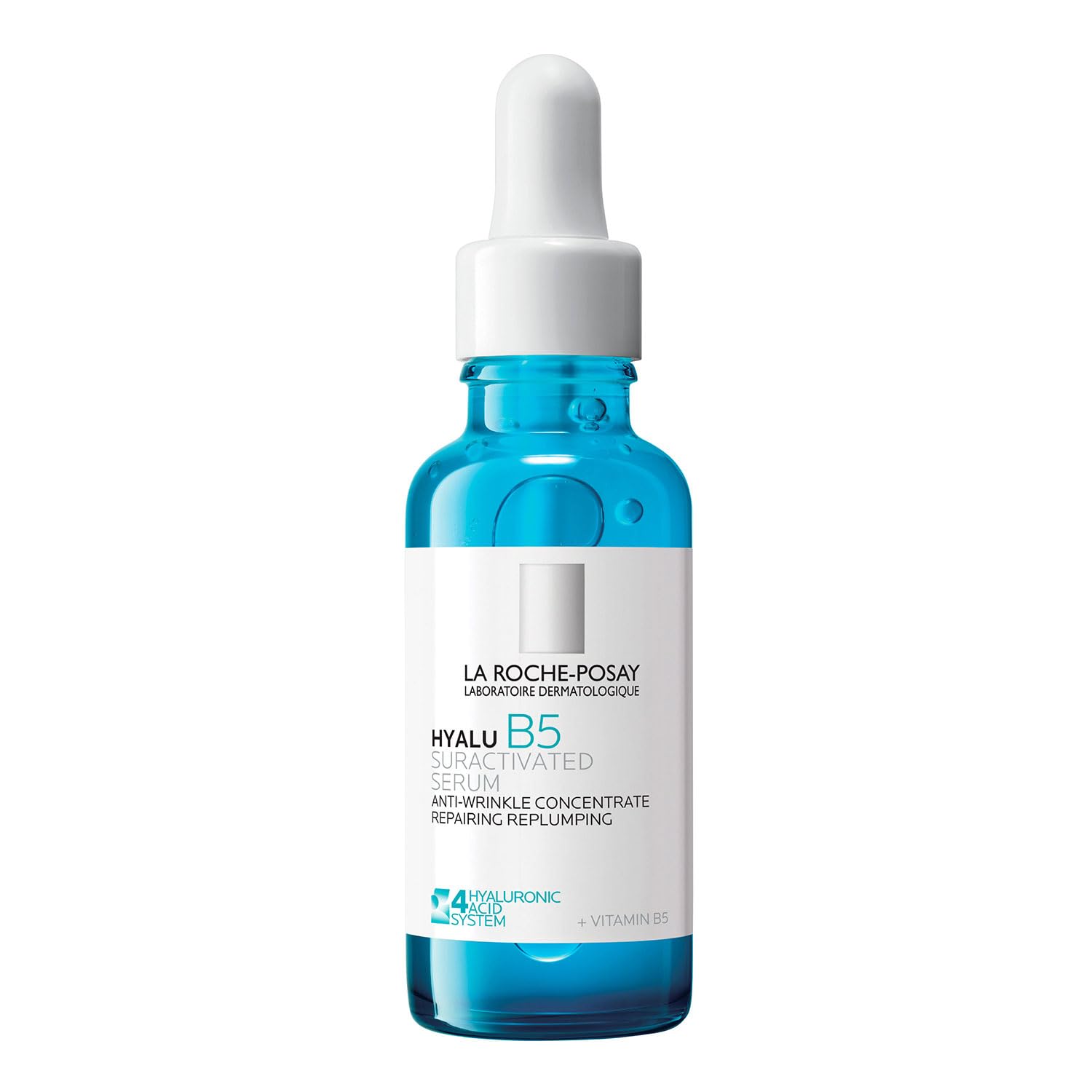
La Roche-Posay Hyalu B5

La Roche-Posay Hyalu B5

Dry, lined skin

Our Score 9.2/10
Check Price

Worth Noting

  • Strong perfume that reactive skin may not tolerate
  • Premium price for the bottle size
Scent
Noticeably fragranced
Texture
Rich, silky serum
Allergy-tested
Yes
Key Ingredients
Hyaluronic acid, vitamin B5, glycerin

There is a real perfume in Hyalu B5, and it decides who should buy this. On dry skin that is not reactive, the scent is pleasant and the formula is genuinely lovely. On skin that stings at everything, it is the most likely trigger in this guide, and it is the reason this one sits below the fragrance-free picks despite a rich, cushioned texture we liked more than most.

Because the formula itself is good. Hyaluronic acid, glycerin, and vitamin B5 in a serum thick enough to feel like a light lotion: it plumps dehydrated fine lines on contact, stays comfortable all day, and wears beautifully under makeup. Two or three drops is plenty for the whole face.

Where that leaves it: the pick for dry, lined, non-reactive skin that wants a cushioned finish and a bit of glow, and a pass for anyone whose face flares at scent. If your skin tolerates fragrance, the cushioning is worth it; if it does not, the fragrance-free picks above do the same job without the gamble.

Bottom line: The richest, most plumping serum in this guide, and the one to leave on the shelf if your skin objects to fragrance.

7

The Ordinary Hyaluronic Acid 2% + B5

The Ordinary Hyaluronic Acid 2% + B5

Tolerant, dehydrated skin

Our Score 9.4/10
Check Price

Worth Noting

  • Tacky until it is fully dry
  • Can sting already-irritated skin
Texture
Thick, viscous
Key Ingredients
Ceramides, pro-vitamin B5
Hyaluronic Acid Types
5

The first thing you meet is the texture: thick, gooey, and slow to leave the dropper. It is a long way from the watery serums that dominate this list, and it is the reason people either love this bottle or quietly stop reaching for it.

Underneath that, the formula is serious. Five molecular weights of hyaluronic acid, ceramides, and pro-vitamin B5 is the most complete ingredient list among the no-frills hydrating serums here, covering hydration and barrier support in a single step. Use less than you think you need; a heavy layer is what flakes later in the day, and two or three drops pressed into damp skin is the right dose.

Comfort is the other open question. Plenty of reactive faces get along with it, but it can sting going on, particularly on skin that is already irritated, and that is not a risk the fragrance-free picks here carry. Patch test on the jawline before you commit your whole face.

Where it earns its place is the person who already knows hyaluronic acid suits them and wants ceramides in the same step. If your skin is in a reactive phase right now, start with the Vichy or the CeraVe and come back to this one when things have settled.

Bottom line: Five weights of hyaluronic acid plus ceramides in one bottle, the most complete ingredient list of the plain hydrating serums here, in the thickest texture.

8

e.l.f. Triple Bounce Serum

e.l.f. Triple Bounce Serum

First serums

Our Score 9.4/10
Check Price

Worth Noting

  • Tacky if you use more than a few drops
Texture
Lightweight gel
Fragrance-free
Yes
Hyaluronic Acid
1.7%

The dropper is glass, which surprised us in a budget serum and is the first hint that e.l.f. did not cut every corner here. The formula is straightforward: 1.7% hyaluronic acid in a gel, fragrance-free, with a dropper that makes it easy to dose three to five drops for the whole face.

It is a gel rather than a liquid, so it goes on with a bit of grip. Pat it in rather than rubbing and it settles to a soft, faintly dewy finish that sits well under moisturizer or makeup. We found three drops enough for face and neck; more than that and it stays tacky for a while.

What it will not do is anything beyond hydration. There is nothing soothing or barrier-repairing in the formula, so if your skin is currently reactive, the CeraVe or the Vichy will do more for it than this will.

As a first serum, a second bottle for the bathroom shelf, or a cheap layer under makeup, it earns its spot, and it is the sort of bottle you finish and replace without thinking much about it. That is exactly what a daily hydrator should be.

Bottom line: A simple, fragrance-free 1.7% hyaluronic gel that does the basic job well at a budget price, provided your skin needs water and nothing more.

How We Tested Hydrating Serums on Reactive Skin

We built the shortlist from ingredient decks rather than product descriptions. Anything listing added fragrance, denatured alcohol, or a cluster of essential oils high in the formula was set aside, as were serums that leaned entirely on one molecular weight of hyaluronic acid with no ceramides, panthenol, or glycerin alongside it. From there we filtered by price per ounce and availability, which left 14 formulas to test.

Testing ran ten weeks with two testers who both have reactive skin — one who flushes from fragrance, one whose cheeks sting after retinoids — plus three people with normal-to-dry skin for a baseline. Before a serum went anywhere near a full face, it spent two nights behind an ear and along the jaw. Then it moved into the real routine: two pumps onto damp skin after cleansing in the morning, followed by moisturizer and sunscreen, and again at night. We noted whether skin stung or tingled in the first two minutes, how long the finish stayed tacky before we could layer without pilling, and whether foundation sat smoothly over it.

Most of what separated the winners showed up hours later, not minutes. We checked in around 1 p.m. and again at 4 p.m. to see whether cheeks felt tight, and whether skin looked plump or just shiny. We also compared cost per ounce against how many pumps a single use actually took, since a cheap serum you go through in three weeks isn't the better value.

Two things surprised us. A faint scent doesn't necessarily mean added fragrance — some of the gentlest formulas smell like something because of the ingredients themselves — so we checked labels rather than noses. And several serums that felt lovely on calm skin stung on a night after a hot shower or a retinoid, which is exactly when sensitive skin needs the most forgiving formula. Those got marked down, no matter how good the morning-after glow was.

How to Choose a Hydrating Serum for Sensitive Skin

Rule out fragrance first

Fragrance is the most common trigger in skin care and the single variable that reshuffles this category. The La Roche-Posay Hyalu B5 is the clearest example: a genuinely lovely, cushioned formula that a scent-sensitive face may not tolerate, while the Vichy, CeraVe, Torriden, and Good Molecules bottles skip it entirely.

Watch the wording, too. Unscented is not the same as fragrance-free; a product labeled unscented can still carry a masking fragrance. Look for fragrance-free on the label, and treat essential oils as scent even when the bottle calls them botanical.

Hyaluronic acid needs water beneath it and something on top

Hyaluronic acid is a humectant: it pulls water toward the surface rather than making it. Pressed onto dry skin in dry air, it can leave your face feeling tighter than before. The fix costs nothing — dampen your skin, apply the serum while it is still wet, then seal it with moisturizer before it dries.

Serums with ceramides or panthenol do part of that sealing themselves, which is why the CeraVe and the Vichy behave better on a cold, dry morning than a plain hyaluronic acid formula will.

Choose a texture you will actually use twice a day

Watery formulas like the Torriden and the Good Molecules slide under anything and suit oily or multi-step routines. Gels like the e.l.f. and the CeraVe have more grip and sit closer to a light moisturizer. Rich serums such as the Hyalu B5 earn their place on dry, lined skin and in the evening.

If you wear makeup daily, test how the serum behaves under your sunscreen. Pilling is a layering problem rather than a broken formula, and giving each layer a moment usually settles it.

More actives is not better on a reactive face

Brightening and multi-benefit serums built around 5% niacinamide or a few percent of an exfoliating acid are formulated for a different job, and they can sting skin that is already inflamed. Hydration is the boring half of the routine that makes the interesting half tolerable.

If you want both, keep the hydrating serum plain and add the active as a separate step, once or twice a week, rather than buying one bottle that does both badly.

Compare cost per use, not cost per bottle

A one-ounce bottle used twice a day lasts around two months; the 2.5-ounce Good Molecules and the 3.38-ounce COSRX stretch that considerably further. On that basis the budget picks here are not the compromise they look like.

The other half of the calculation is how generously you can afford to use it. A serum you ration to make it last is a serum that never delivers the layer you bought it for.

Frequently Asked Questions

Final Verdict

The Vichy Minéral 89 is the one we point a sensitive face to first: fragrance-free, light enough to disappear under sunscreen, and built around holding water at the surface rather than adding actives your skin has to tolerate.

If budget decides it, the Good Molecules serum delivers most of the same hydration in a bottle two and a half times the size, as long as you seal it with moisturizer. And if your barrier is the problem rather than dehydration alone, the ceramides in the CeraVe make it the better buy.