Fashion

Best Hiking Shirts for Women of 2026

Ask anyone who has spent a full day above tree line and they'll tell you the same thing: the sun on your arms feels fine right up until it doesn't, and by the time you notice, you're already burned. A long-sleeve hiking shirt solves that — but only if it's a shirt you'll willingly keep on for eight hours. Too heavy and you're stewing by the first climb; too thin and it plasters to your back the moment you sweat; cut badly and it rides up under a pack's hipbelt or binds across the shoulders on a scramble. The right one disappears on you, which is exactly the point.

I've hiked in everything from cheap rash guards to button-down fishing shirts, and my team has now spent six months in 14 of them — on local trails, through a genuinely brutal stretch of heat, and across enough laundry cycles to separate real fabric from a printed-on UPF claim. The surprises were fit details: cuff width and sleeve length matter as much as the material, and the same labeled size can run three inches different from one shirt to the next. Color and looks counted for more than I expected, too — a shirt you don't want to be seen in doesn't get worn. Below are the ones still comfortable past mile eight.

1

MAGCOMSEN Long Sleeve UPF 50+

Top Pick
MAGCOMSEN Long Sleeve UPF 50+

Everyday trail coverage

Our Score 9.0/10
Check Price

Worth Noting

  • Sizing runs both large and small
Style
Rash guard
Sleeve Length
Long sleeve
Sun Protection
UPF 50+

This is the least expensive shirt in the guide, which isn't the reason to buy it but is a pleasant side effect. What you get is a plain long-sleeve pullover in thin polyester, with a neckline high enough to sit under a pack strap instead of bunching into the gap between your shoulders.

In heat it does what a sun shirt is supposed to do. The fabric is light, it dries quickly after a climb, and it comes out of the wash without shrinking or fading. Arms and shoulders stay covered through a long day, and the fabric doesn't go heavy or clammy once you're sweating — which is the failure that makes people give up on sun shirts entirely.

What we appreciate most is how little it asks of you. There's no placket to fiddle with, no hood to tuck away, nothing to adjust mid-climb. It's the shirt we hand someone buying her first sun shirt, because at this price trying one is a decision rather than a commitment.

One detail we didn't expect to care about: in the pale colorways a tick shows up immediately against the fabric, which matters more every season. Ours is the coral pink, and if you spend your summers in tall grass, the light shades are the practical pick.

Bottom line: We point anyone building a hiking wardrobe here first: UPF 50+ coverage, long sleeves that stay put, and a price that makes a second color an easy call.
2

TBMPOY UPF 50+ Hoodie

TBMPOY UPF 50+ Hoodie

Sun-exposed ridgelines

Our Score 9.0/10
Check Price

Worth Noting

  • Sleeves and thumbholes run short on long arms
  • Sizing runs large
Design
Hooded pullover
Sleeve Length
Long sleeve
Sun Protection
UPF 50+

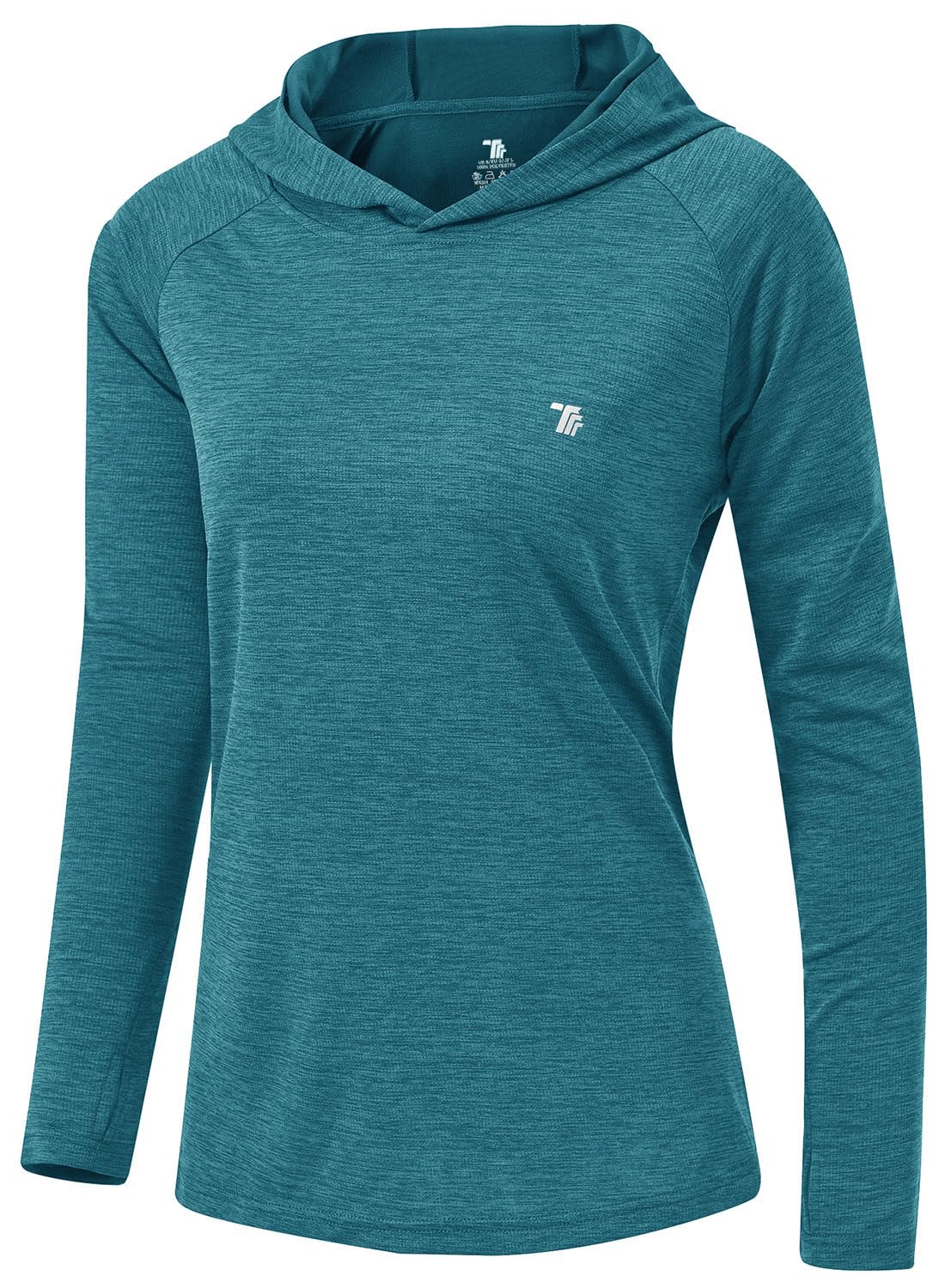
The hood is why this one earns its place. On a shadeless ridge a cap leaves the back of your neck and the tops of your ears exposed, and a hood doesn't. This one is generous enough to actually stay up rather than perch on the back of your head, which is the difference between a hood you use and one you ignore.

Underneath, it's a light stretchy knit with a relaxed cut — roomy through the body without going boxy. We wore it on its own in hot weather and over a tee when the wind picked up, and it handled both without feeling like a compromise in either direction.

Worth knowing before you choose a color: the white shows everything — trail dust, sunscreen, sweat — so a darker shade is the better bet if the shirt is going to do real work. The thumbholes at the cuff are a small, welcome detail for pulling the sleeve down over the back of your hand.

It also has the widest temperature range of anything here. The knit blocks wind better than the silky picks and doesn't overheat when the sun comes out, so it works as a light layer on a cold morning and alone by the afternoon.

Bottom line: We pick this one when the route has no shade: the hood covers the neck and ears a cap leaves bare, and the knit stays cool once the sun is up.

3

Columbia PFG Tamiami II

Columbia PFG Tamiami II

Hot-weather travel

Our Score 9.2/10
Check Price

Worth Noting

  • Thin fabric for a premium price
  • Fit is unpredictable between sizes
Style
Button-down
Closure
Snap front
Sleeve Length
Long sleeve

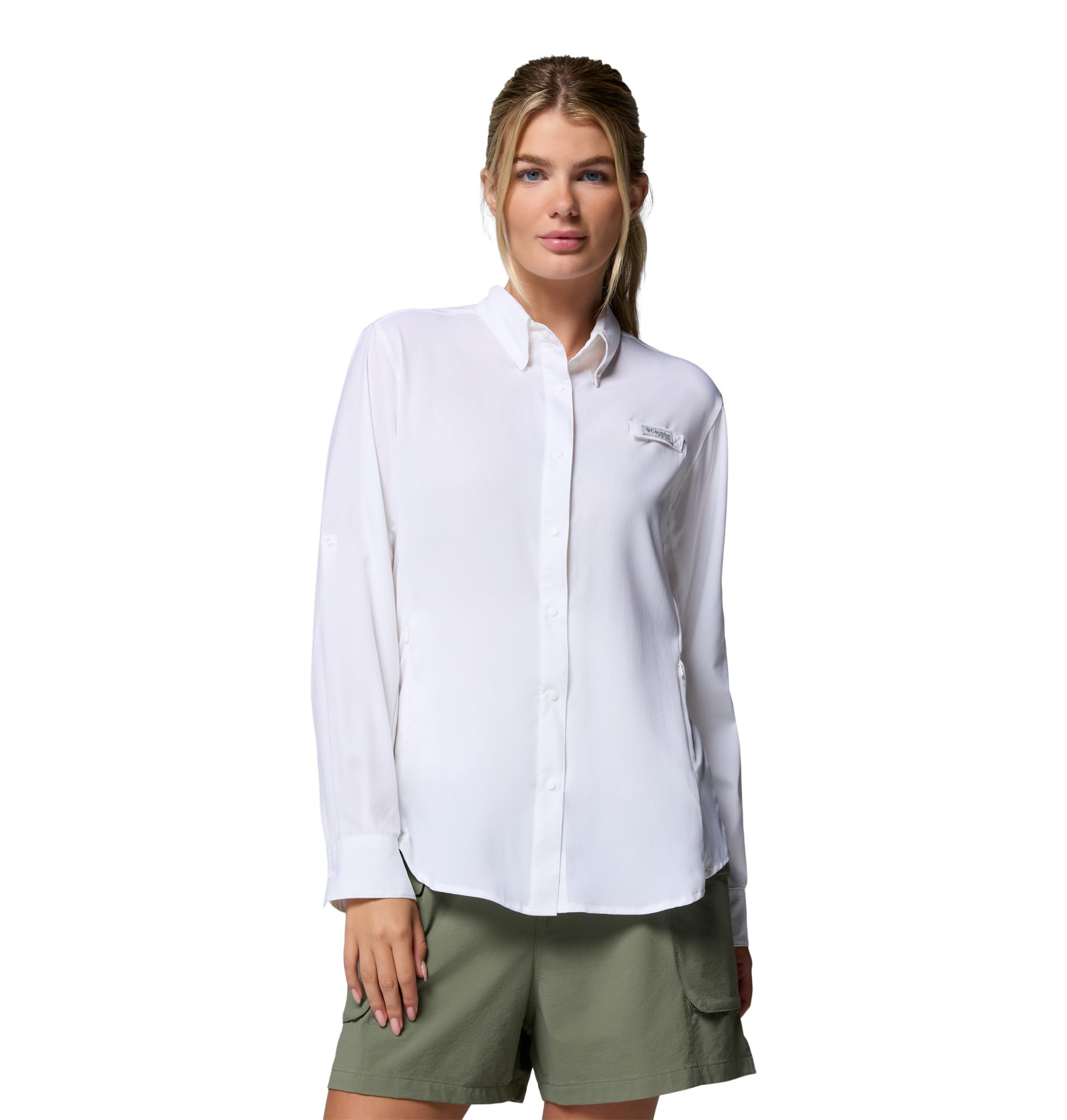
Run a thumb down the front of this shirt and you'll notice the placket isn't buttons at all — they're small plastic snaps. It's a better fastening for hot weather than it sounds: the front opens one-handed, and the closure stays put where a buttonhole in a thin fabric would strain.

This is the most presentable shirt in the guide, and the only one that goes from trailhead to a casual dinner without a change of clothes. The cut is feminine without being tight, the fabric shakes off wrinkles, and it dries fast enough to wash in a sink and wear the next morning.

Details we came back to: the mesh hand pockets, which make more sense on a boat than a trail but cost you nothing, and the fact that this is a long-standing Columbia design rather than a seasonal experiment — the finish shows it. It reads as clothing, not gear, which is the entire appeal.

What you're paying for is that finish: the snaps, the wrinkle resistance, the cut. For a shirt that spends as much time in a suitcase as on a trail, that's the right trade to make.

Bottom line: We recommend it for travel: the snap front, the no-iron finish and the cut make it the one shirt here that still looks right at dinner.

4

G Gradual UPF 50+ Sun Shirt

G Gradual UPF 50+ Sun Shirt

Hot, humid hikes

Our Score 8.8/10
Check Price

Worth Noting

  • Sizing is unpredictable
Fabric Feel
Silky-soft
Sleeve Length
Long sleeve
Sun Protection
UPF 50+

The fabric is the story. It's the softest and lightest of the shirts in this guide, with a hand-feel closer to a silk scarf than a technical tee, and on a humid climb that translates into the one you notice least.

We rate it the best of these in muggy weather and second overall for a general hiker, because the comfort is real rather than marketing copy: it doesn't cling when you sweat, and it comes out of a stuff sack without creases. The colorways do more than solid-or-heathered, too — the deep blue fades to white across the body in a way that looks deliberate.

Where it gives ground is substance. There's very little of it. The fabric drapes rather than holding a shape, so it reads as a workout top rather than a travel shirt, and if you want something that looks tidy in a restaurant the Columbia does that job better.

Drying and sun coverage are both solid: shoulders stay covered through a long day, and it comes off the line dry by morning. Buy it for the heat and pick the ombré, which does the work a plain white in a fabric this light cannot.

Bottom line: For sticky, humid hikes this is the shirt we reach for: the softest, lightest fabric here, and the one that feels least like it's on.

5

MAGCOMSEN 1/4 Zip Sun Shirt

MAGCOMSEN 1/4 Zip Sun Shirt

Layering and venting

Our Score 9.0/10
Check Price

Worth Noting

  • Sizing runs large
Closure
1/4 zip
Sleeve Length
Long sleeve
Sun Protection
UPF 50+

Of the two MAGCOMSEN shirts here, this is the one to take when the weather is undecided. The quarter zip is the entire argument: you can dump heat on a climb without stopping to strip a layer, and close it again when the wind hits the summit.

The cut is better than a plain tee's, too. Princess seams run down the front, which gives the shirt some shape without pulling anywhere, and it sits smooth over a stomach instead of clinging to it — a detail that matters more the longer a pack belt sits across your middle.

Small pleasures: the inside of the cuff is a contrasting neon, so a rolled sleeve looks intentional rather than sloppy. The knit is soft and stretchy and stays comfortable through a sweaty hour, though it's fine enough to catch, so keep the scratchy side of a pack strap off your shoulder.

It costs more than the plain MAGCOMSEN pullover, and the zip plus the seaming is what the extra buys. If you never fiddle with layers, the cheaper shirt does the same job. The ginger colorway reads as a heathered yellow and looks less like technical gear than anything else on this page.

Bottom line: Our pick for an undecided forecast: the zip dumps heat on the climb and closes at the summit without a layer change.

6

Toumett UPF 50 Hiking Shirt

Toumett UPF 50 Hiking Shirt

Trail-to-town wear

Our Score 8.6/10
Check Price

Worth Noting

  • Generous cut with sleeves that run long
Style
Button-down
Sleeve Length
Long sleeve
Sun Protection
UPF 50

This is the shirt here that looks most like clothing and least like gear: a collared button-down with a straight hem, the kind of thing you can walk into a restaurant in after a day outside without feeling like you're still in your workout clothes.

It's genuinely light — feather-light, to the point that it has almost no structure of its own. That's the trade. It packs to nothing and hangs dry overnight, but it drapes instead of holding a line, so it looks better on than on the hanger.

We put it below the Columbia, and the reason is fabric rather than design. Both shirts solve the same problem — a collared, quick-dry layer that works off the trail — and the Columbia's finish feels more considered. The Toumett is the less expensive way into that idea, which counts if you're buying for one trip rather than ten years.

Colors are the last thing to think about. They don't always land the way they look on screen, so choose a shade that still works for you if it arrives a little muted — the soft pink and the dark green are the safest of the bunch.

Bottom line: We like it as the cheaper collared option for a trip — packable and quick-drying, provided you check the fit before you go.

7

XIEERDUO Short Sleeve Workout Top

XIEERDUO Short Sleeve Workout Top

Gym and trail

Our Score 8.8/10
Check Price

Worth Noting

  • Fabric has a synthetic, plasticky hand-feel
Sizes
S-3XL
Sleeve Length
Short sleeve
Sun Protection
UPF 50+

The cut is what this one is built around: long through the body, close through the shoulder, and shaped to cover your waistband and your seat. On the right frame it delivers — the shirt skims your hips without clinging to them, which is rarer than it sounds.

The length is the dividing line. On a longer torso it covers everything you want covered; on a shorter one it can read as a tunic. It's the one place where the size chart and the length measurement matter more than the description.

It handles sweat well and dries fast, and the colors read as streetwear rather than technical gear — which is why it gets worn for the drive home as often as for a workout.

Where it lands: it's a workout top that happens to work outdoors, not a sun shirt that happens to work in a gym. The UPF 50+ covers what the fabric covers, and with short sleeves that stops around your elbow, so sunscreen on the forearms stays part of the plan for anything longer than an hour.

Bottom line: We recommend it for the gym and short, hot hikes: the cut flatters over the hips and the fabric dries fast enough to wear home.

How We Tested the Best Hiking Shirts for Women

We started by rounding up every women's hiking shirt we could find with a stated UPF rating and a quick-dry fabric, then narrowed the field by size range, sleeve construction, fabric weight, and price. Reviews did a lot of the early filtering: if the same complaint kept surfacing — shirts running small, fabric with a slick plastic hand-feel, hems that hit too high — we noted it and watched for it. That left 14 shirts, which we wore over six months.

Each one went on actual hikes: a shadeless ridge loop during a heat wave, a humid wooded climb, and a string of short after-work walks, followed by the drive home and a normal wash cycle. Before the first wear we measured every shirt flat — body length, sleeve length, and cuff opening — since a sleeve that ends above your watch and a hem that stops short of a hipbelt are the two fit problems hikers run into most. We also passed the same labeled size between testers of different heights to see how the grading actually landed on a body.

On the trail we watched for the small stuff: whether fabric clung once we started sweating, whether the hem crept up under a loaded pack, whether pushed-up sleeves stayed put, and how the shirt felt against a shoulder strap after a few hours. We checked fabric density against a light source rather than trusting the UPF tag alone, ran a sleeve cuff over a watch to see how much it stretched, and inspected seams, pilling, and color fading after each wash. Lightweight meant different things from shirt to shirt — some fabrics feel like nothing and dry in minutes, others are thin but hold water like a sponge.

The ones that earned a spot are the shirts that stayed comfortable through a full day and still looked presentable at the trailhead diner afterward, and we'll keep wearing and washing them as the seasons turn.

How to Choose a Hiking Shirt for Women

Coverage is the protection

A UPF 50+ rating describes the fabric, not the shirt. It tells you how much UV gets through the cloth where the cloth is; it says nothing about the back of your neck, your ears or your hands, which is where sunburn actually lands on a long day above the trees. That's why sleeve length and a collar or hood matter more than the number on the tag.

Our rule for exposed routes: long sleeves plus something at the neck — a hood, a stand collar, a high neckline. Save the short-sleeve option, like the XIEERDUO here, for hot, short outings where the trade is worth it, and keep sunscreen on your face, ears and the backs of your hands either way.

Fit is the least predictable part

Fit is the one thing you can't judge from a photo, and it's where this category gives people the most trouble: a medium in one shirt is a large in another, and the same pullover gets described as roomy and snug by different wearers. Shop by chest and body length measurements rather than by the letter on the label.

Decide what job the shirt has before you size it. A base layer should sit close enough to move with you under a pack; an overshirt should clear a tee and still let you swing your arms. A shirt tight across the back restricts reach, and one that flaps at the waist chafes under a hip belt.

Knit or woven

There are two families in this guide. The thin polyester knits — the two MAGCOMSEN shirts and the G Gradual — stretch, pack to nothing and feel coolest in humidity. The wovens — the Columbia and the Toumett — hold a shape, look tidier and let air move through a looser cut, though they can feel papery and synthetic against bare skin.

If you sweat hard and mostly care about comfort on the move, take a knit. If the shirt needs to work at dinner or through a week of travel, take a woven. The G Gradual is the softest thing here; the Columbia is the crispest.

Vents, zips and hoods

Heat builds on the climb and dumps fast when you stop, which is why venting is worth thinking about. A quarter zip, like the MAGCOMSEN pullover, lets you open the front without taking anything off. A snap front opens all the way but flaps in wind. A hood shades the neck and ears a cap can't reach, at the cost of extra fabric sitting under your pack.

Match the vent to how you hike. If you run hot and climb steadily, a zip earns its keep. If your routes are exposed and shadeless, a hood does more for you than any zip. If you always wear a wide-brim hat with a neck flap, you can skip both.

Washing, packing and what shows

Quick-dry polyester is why a two-shirt rotation works for a week away: rinse one in a sink, hang it, and it's ready by morning. Skip fabric softener, which coats the fibers that move moisture off your skin. Fine knits snag on hook-and-loop straps and pack hardware, so keep the scratchy side of a strap away from your shoulder.

Color is a practical choice here, not just a pretty one. Pale shades make a tick easy to spot and show every smear of sunscreen; dark shades hide the dirt but show salt lines after a hot day. If you spend summer in tall grass, lean pale.

Frequently Asked Questions

Final Verdict

If you're buying one shirt, buy the MAGCOMSEN long-sleeve. It covers your arms with UPF 50+, dries fast, washes without complaint and sits at the bottom of the price range here — which is why it's the shirt we point new hikers toward and the one that ends up in repeat rotation.

Change the requirement and the answer changes. For shadeless, all-day routes, the hooded TBMPOY adds coverage nothing else here offers. If the shirt has to pack flat and look presentable at dinner, the Columbia PFG Tamiami II is the one — the snaps, the wrinkle resistance and the cut do more for travel than any technical feature on this page.