Fashion

Best Hiking Pants for Women of 2026

Hiking pants get asked to do an awkward double duty: move like leggings on a steep climb, dry fast when the clouds roll in, and pass as regular trousers when you stop for lunch in town afterward. Most pairs manage one of those and quietly give up on the rest, usually the fit, which runs boxy through the hips or so long it drags under a boot heel. Get the cut and the length right and everything else falls into place: no hitching at the waist mid-scramble, no fabric bunching behind the knee, no tugging at a seam on the descent.

Over six months, my team and I logged real miles in 14 pairs, from plain cargos to fleece-lined joggers and zip-off convertibles. What separated them had less to do with technical fabric claims than with the things you notice at mile eight: whether a waistband stays put when you crouch over a pack, whether a pocket is deep enough to trust with a phone, whether the hem was cut for your height. Size and length range turned out to matter as much as anything on the spec sheet, which is why the picks below run from petite through tall.

1

baleaf Quick Dry Hiking Pants

Top Pick
baleaf Quick Dry Hiking Pants

Everyday trail default

Our Score 8.8/10
Check Price

Worth Noting

  • Water-resistant finish handles drizzle, not steady rain
Waist
Elastic
Fabric
Quick-dry, lightweight
Pockets
Zippered cargo
Water Resistance
Water-resistant

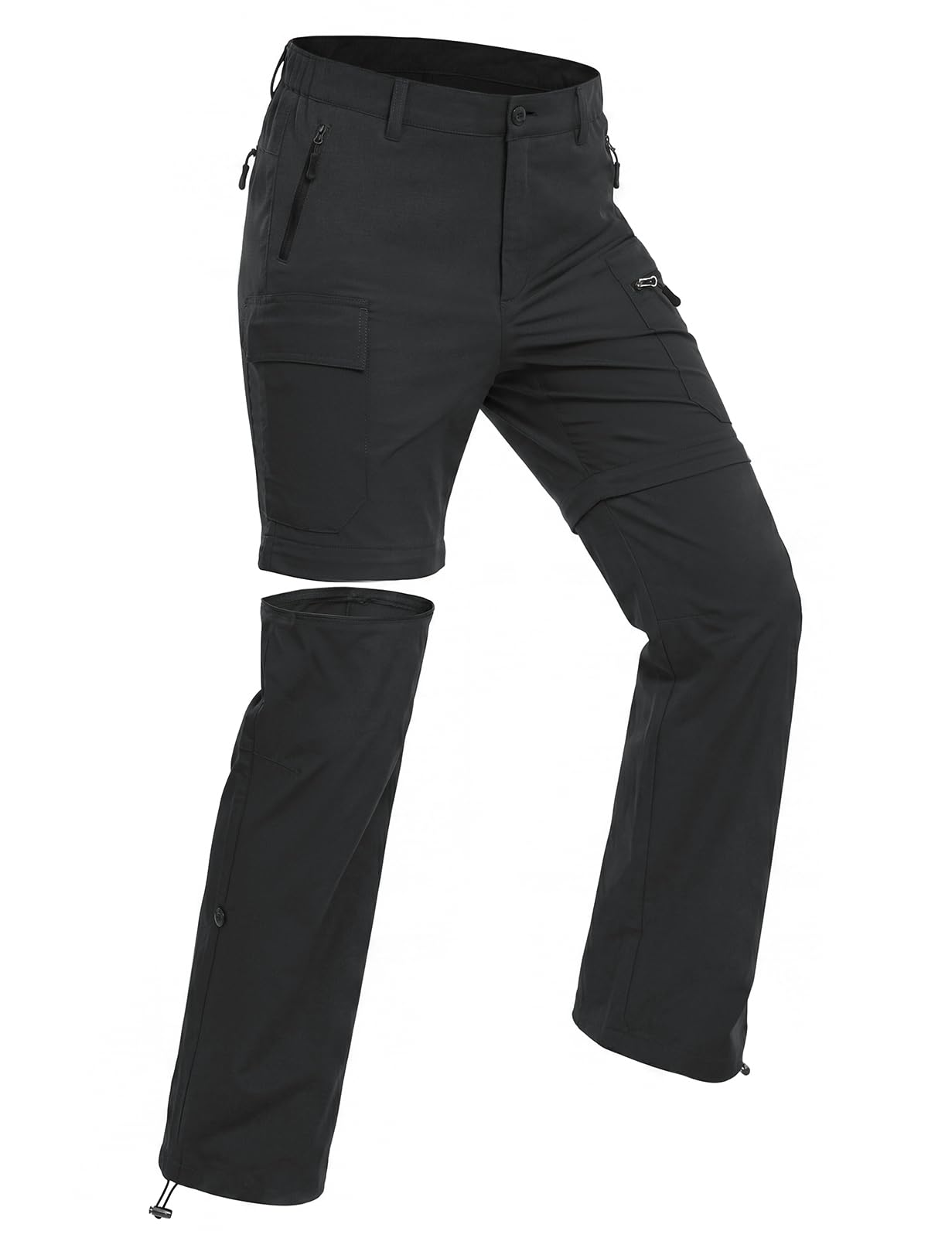
Waistbands are where hiking pants usually go wrong. A fixed waist with a button either digs in when you're climbing or gaps at the back when you crouch over a pack, and if your measurements fall between two sizes, neither version is comfortable. This baleaf pair sidesteps the argument with a wide elastic waist that sits flat and gives as you move. We wore it on a damp, cool morning and then through an afternoon in town, and it never needed hitching up once.

That's why it's the pair we recommend first. Nothing here is exotic — a lightweight quick-dry weave, zippered cargo pockets, a toggle at each ankle — but every piece earns its place, and the whole thing costs less than most of this list. The fabric is thin enough to stay cool in sun and to dry quickly after a rinse, which is the combination most day hikers actually need. The ankle toggles are a small thing we came to appreciate: cinch them over boots on a muddy stretch, loosen them over sneakers afterward.

Sizing is the one thing to sort out before you order. The same letter can land roomy on one frame and close on another, so measure your hip rather than your waist and let the elastic take up the difference; if you're solidly between sizes, the waistband will carry you. For a few hikes a month, a week of travel and the occasional dinner afterward, there's very little else to negotiate.

Bottom line: The pair we recommend to almost everyone: a forgiving elastic waist, fast-drying fabric and zippered pockets for less than most of the list.

2

Libin Hiking Joggers

Libin Hiking Joggers

Petite to tall

Our Score 8.8/10
Check Price

Worth Noting

  • Sizing runs small; chart reads optimistic
Leg
Jogger cuff
Fabric
Quick-dry
Lengths
Petite, regular, tall
Pockets
Zippered

Almost every hiking pant in this guide is cut for one body: somewhere around 5-foot-4 to 5-foot-7, average inseam, straight through the leg. If you're shorter or taller than that, you already know the result — cuffs that pool over your boots or hems that hover above your socks. Libin sells this jogger in petite, regular and tall, which is the most useful thing about it and the reason it made the list at all. Order the length you actually are and the cuff lands where it should.

The rest of the package is solid rather than spectacular. The fabric is light, dries fast and doesn't rustle; the zippered pockets are full-size rather than decorative, with room for a phone; and the tapered jogger leg keeps the hem clear of your laces on a descent. The waistband is the least forgiving part — a wide elastic with a drawstring that grips rather than floats — comfortable over a full day, but not the pick if you want something loose through the middle.

Sizing runs small and the chart is optimistic, so go up if you're between sizes or broad through the hip. That's the only real friction. For anyone who has spent years rolling cuffs or ignoring cold ankles, this is the pair to try first, and the jogger shape makes it the easiest of the group to wear off the trail without looking like you're still on it.

Bottom line: The only pick here cut in petite, regular and tall, so it's the one we reach for when standard inseams leave you with pooled cuffs or cold ankles.

3

Rrosseyz Cargo Hiking Pants

Rrosseyz Cargo Hiking Pants

Tight budgets

Our Score 8.8/10
Check Price

Worth Noting

  • Cut long through the leg on shorter frames
Fabric
Lightweight
Pockets
4
Water Resistance
Water-resistant

Budget hiking pants usually announce themselves — a stiff hand, a rustle when you walk, pockets that stop short of the seam. This Rrosseyz pair doesn't. The fabric is soft and light, the leg is roomy through the thigh without ballooning at the knee, and the four pockets are big enough for a phone, keys and a snack. It's the least expensive pair in this group, and nothing about wearing it feels like a compromise.

It's also the pair that handled mixed weather most gracefully: warm on a cool morning, not stifling when the sun came out, and quick to dry after a humid afternoon. The gathered ankle keeps the hem out of mud and, usefully, off the ankles on an overgrown path. The colors run well beyond the usual black and khaki, which is a small pleasure but a real one if you're packing one pair for a trip.

We treat this as the first-pair or second-pair purchase: cheap enough to throw in a carry-on, comfortable enough for a long transit day, and quick enough to wash in a sink and wear the next morning. What it isn't is a technical pant — the closures are the giveaway, with hook-and-loop flaps on the deep side pockets instead of zippers, which is exactly where the money went. On a maintained trail, that's a trade we're happy to make.

Bottom line: Our budget pick: soft, light, quick to dry and the least expensive pair here, which is enough for a first pair or a travel spare.

4

Wespornow Convertible Hiking Pants

Wespornow Convertible Hiking Pants

Trail to shorts

Our Score 8.8/10
Check Price

Worth Noting

  • Runs small; order a size up
  • Zip-off shorts run long on short frames
Fabric
85% nylon, 15% spandex
Inseam
30.5 inches
Pockets
5
UPF Rating
UPF 50+

The spec panel on these tells you most of what matters: 85% nylon with 15% spandex, a 30.5-inch inseam, five pockets and UPF 50+. The number we kept coming back to was the inseam. It's long enough to break over a boot without dragging, short enough that it doesn't bunch behind the knee on a climb — and it's stated outright, which is more than most pants here manage.

Convertible pants have a reputation for feeling like a costume, and these mostly dodge it. The leg zippers sit clear of the knee and don't bite into the thigh when you scramble, the leg sections go back on without a wrestling match, and the woven fabric has enough stretch that squatting, stepping and sitting on a rock all feel normal. We think that's the difference between a pair you actually unzip on a hot climb and one you leave as trousers forever.

The payoff is range: a cold start, a hot afternoon and a flight home, all covered by one pair. Five pockets, a mix of zippers and flaps, give you somewhere to stow the leg sections once they're off, which sounds trivial until you're standing on a ridge holding them. It's the most versatile single garment here, and the one we pack when the forecast is a guess.

Bottom line: Best convertible here: a stated 30.5-inch inseam, real four-way stretch and leg zips that don't bite, so one pair covers a hot climb and a cold summit.

5

G Gradual Fleece-Lined Joggers

G Gradual Fleece-Lined Joggers

Cold-weather hikes

Our Score 9.0/10
Check Price

Worth Noting

  • Sizing runs large; size down between sizes
Leg
Jogger cuff
Lining
Fleece
Pockets
Zippered
Water Resistance
Water-resistant

Every other pair in this guide is built for warm weather; this one is built for the morning when you can see your breath. The G Gradual jogger has a thin fleece back that holds warmth without adding bulk under the seat, plus a water-resistant shell that deals with frost, wet grass and a passing flurry. It's the pair we reach for from November through March, and the one we hand to anyone whose hiking season doesn't stop when the thermometer drops.

The lining is the smart part. It's thin — noticeably thinner than a winter legging — so you can push uphill without overheating, and the tapered ankle stays clear of mud and slush. Zip pockets sit deep enough for a phone, the fabric has real stretch through the hip, and the cut reads more like a casual jogger than technical gear, which makes it useful for errands and cold-weather school runs as well as trails.

Sizing skews large, so drop a size if you're between — the waist has plenty of give and there's no need to leave room for layers underneath. Beyond that, this does one job and does it well. It's the warm layer for a cold-weather hiker, not the pant you take to Arizona in June, and it's honest about that.

Bottom line: The cold-weather pick: a thin fleece back and water-resistant shell for frosty starts, with a jogger cut that works off the trail too.

6

baleaf 5-Pocket Hiking Joggers

baleaf 5-Pocket Hiking Joggers

Securing valuables

Our Score 9.2/10
Check Price

Worth Noting

  • Thin fabric offers little abrasion protection
Waist
High-rise
Fabric
Lightweight, quick-dry
Weight
9.17 oz
Pockets
5 zippered

Most hiking pants have two zippered pockets and a couple of decorative ones that can't hold a granola bar. This baleaf jogger has five that zip — two at the hip, two on the thigh, and one tucked inside the front pocket for a key or a card. Split a phone, a lip balm and a car key across them on a humid climb and nothing bounces out, which is the entire point of paying for secure storage.

At 9.17 ounces, it's among the lightest pants here and the one that disappears into a daypack. Creases fall out on their own, so it comes out of a carry-on looking presentable, and the wide high-rise waistband stays where you put it under a pack belt instead of rolling down.

The trade-off for that weight is fabric with very little body. It's soft and smooth rather than rustly, and it dries in about the time it takes to eat lunch, but it won't do much against scrub oak or a rock you slide down. For maintained trails, travel and warm-weather walks, that's a fair trade; for bushwhacking, it isn't.

Where this one wins is the trip where you're carrying everything and wearing the same pair twice: five secure pockets, no wrinkles, no weight, and a waistband that stays put. The fit is generous through the hip and true through the leg, and it washes up well enough to wear three days running. It's the most packable pant here, and the one we pack when space is the constraint.

Bottom line: The travel pick: five zippered pockets, a 9.17-ounce build and a high waist that stays put under a pack, so long as your trails are maintained.

7

CRZ YOGA Hiking Joggers

CRZ YOGA Hiking Joggers

Town and trail

Our Score 8.8/10
Check Price

Worth Noting

  • 27.5-inch inseam crops above the ankle when tall
  • Thicker knit runs warm on hot climbs
Rise
High
Fabric
Lightweight knit
Inseam
27.5 inches

These are the pair that doesn't look like hiking gear. The matte knit and tapered jogger leg read closer to a weekend pant than a trail one, and the high, wide waistband holds its shape through a day of sitting, standing and walking. If you want one pant for a short hike, a coffee and a drive home without changing, this is the one that won't announce where you've been.

The knit is thicker than the lightweight weaves elsewhere in this guide, which makes it forgiving rather than revealing and keeps it from going see-through in daylight. Where it earns its keep is comfort: nothing constricts, the fabric moves with you, and the fit runs true to size across the range. The waistband is the detail we noticed most, a wide band with a drawstring that doesn't rotate inside its casing.

We keep reaching for these on trips where the walking is incidental — a city break, a few miles of coastal path, a long travel day. The waistband does the work a drawstring usually does, holding everything in place without a knot digging into your stomach, and the fabric doesn't shine or bag at the knee after a few hours in a seat. They're not the most technical pair here; they're the most livable one.

Bottom line: The most livable pair here: a flattering high waist and matte knit that go from trail to town, if you're built for a 27.5-inch inseam.

8

Rdruko Hiking Cargo Pants

Rdruko Hiking Cargo Pants

Sun-exposed trails

Our Score 8.8/10
Check Price

Worth Noting

  • Crotch seams can pull apart under hard use
  • Inseam runs short over taller boots
Fabric
Quick-dry, water-resistant
Pockets
Zippered
UPF Rating
UPF 50+

UPF 50+ is the headline here, and it's worth knowing what that actually buys: a fabric that blocks the large majority of the sun's ultraviolet, which matters on exposed trails where sunscreen wears off by noon. That's the reason to look at this pair before the others, and the rating is stated rather than implied by a vague promise of protection.

The rest is competent rather than exciting. The weave is light and quick to dry, the water-resistant finish deals with wet grass and a brief shower, and the zippered pockets are big enough to be useful. The stretchy waist is comfortable over a long day, and the leg has enough room through the thigh that a big step up doesn't pull across the seat.

Day to day it's easy to live with: a rinse at night means a dry pant in the morning, it doesn't wrinkle badly after a day folded in a bag, and dirt brushes off once it's dry rather than grinding into the weave. That's the unglamorous half of a hiking pant, and it's the half that decides whether you keep wearing it after the trip.

For sun-exposed, well-trodden trails — desert, alpine, a long coastal walk — this is a lot of pant for the money, and the quick-dry, water-resistant combination covers three seasons comfortably. It's a sensible buy for the hiker whose trips are day-length and whose trails are open, and one to think twice about before a long backcountry route.

Bottom line: A sun-ready cargo with UPF 50+, quick-dry fabric and zippered pockets; the seams are the one thing to inspect before a long trip.

How We Tested Women's Hiking Pants

We started with a long list of more than 60 pairs and cut it down by reading fabric specs (quick-dry nylon blends, UPF ratings, water-resistant finishes) next to the unglamorous details that decide whether a pant works on a trail: the full size range, whether petite and tall lengths actually exist, and whether the cargo pockets zip or merely look like they do. That left 14 pairs to test over six months, spanning lightweight summer shells, insulated joggers, and convertible zip-offs.

Each pair went on at least three outings: a rocky day hike with a couple of scrambles, an overnighter with a loaded pack, a drizzly morning, and the drive home. We also wore them through ordinary Saturdays of errands, since most of us keep these on well past the trailhead.

Fit got judged in motion rather than in a mirror. We crouched over packs, stepped over downed logs, and sat on the ground to see whether a waistband gaped at the back or fabric bunched behind the knee. Every pocket was loaded with a phone and keys, then hiked downhill to check whether anything bounced or slid out, and we compared inseams against testers ranging from 5'2" to 5'10" to note whether hems cleared boot collars or dragged. After each trip the pants went through the wash, five cycles apiece, and we inspected thigh seams, hems, and zippers for pilling, fraying, and snags from brush.

Comfort we judged honestly at the end of a ten-mile day, mostly by whether anyone wanted to change out of them immediately. Appearance came down to whether a pair looked strange enough that we'd swap them before grabbing coffee afterward.

How to Choose Women's Hiking Pants

Get the Inseam Right Before Anything Else

A hiking pant lives or dies by where the hem lands. Too long and it drags through mud and wears at the heel; too short and it rides above your boot socks on a cold morning. The stated inseams here run from 27.5 to 30.5 inches, and that spread is the difference between a cropped jogger and a full-length trail pant.

If you fall outside the roughly 5-foot-4 to 5-foot-7 band most of these are cut for, buy the length rather than the color: the Libin joggers come in petite, regular and tall for exactly that reason. And treat a hem toggle or elastic cuff as a patch rather than a fix, since it gathers the extra fabric at your ankle instead of removing it.

Match Fabric Weight to the Season You Actually Hike In

Unlined quick-dry weaves are the right default for three-season hiking: cool in sun, fast to dry after a rinse, and small in a pack. A fleece-lined jogger solves a different problem, trapping warmth on a frosty start and adding a layer under a rain shell without much bulk.

The trap is buying one pair for both jobs. A lined pant is genuinely unpleasant on a hot climb, and a lightweight weave is cold at a windy summit. If you hike year-round, two pairs is the honest answer, and the lined half should be the thinner fleece, not the thickest one you can find.

Look for Zippers, and Check Where the Pockets Sit

Every pair here claims pockets; what matters is whether they close and where they land. Zippers beat hook-and-loop flaps on a trail where you push through brush, since flaps catch and pop open. Placement counts just as much: a pocket directly under a hip belt gets crushed and becomes unreachable, so the useful ones sit on the thigh, slightly forward.

Five secure pockets, as on the baleaf jogger, is more than most hikers need. Two that zip and actually swallow a phone are not optional.

Decide Whether Zip-Off Legs Are Worth It

Convertible pants trade a little comfort for a lot of range. The zip band sits above the knee and can chafe on a long climb, and the shorts tend to run long on shorter frames. What you get back is one pair for a cold start and a hot afternoon, which is the whole point on a multi-day trip or a flight with tight luggage.

Buy convertibles in the leg length you need, because you can't shorten a zip-off without moving the seam, and crouch in the fitting room to check that the zipper sits clear of your knee.

Treat the Size Chart as a Starting Point

Sizing is the least reliable number on any of these listings, and the rise varies as much as the letter does. Order by your hip measurement rather than your waist, and expect an elastic or drawstring waist to absorb half a size in either direction, which is why our top pick suits a wider range of bodies than its single-letter sizing suggests.

A fixed waistband with a button has no such slack. If you're between sizes there, go up and wear a belt rather than sizing down and hoping.

Frequently Asked Questions

Final Verdict

Start with the baleaf quick-dry cargo. It's the pair we recommend to the reader who hikes a couple of times a month, wants pockets that close, and doesn't want to spend much to find out whether a dedicated hiking pant earns its place: a wide elastic waist that forgives a borderline size, fabric that dries fast, and a hem you can cinch over boots. Nothing about it is specialized, and that's the point.

Change the requirement and the answer changes. If standard inseams have never fit you, go to the Libin joggers and order your length. If your season runs cold, the G Gradual fleece-lined pair is the one. And if you want to unzip at noon, the Wespornow convertible, with its stated 30.5-inch inseam and real four-way stretch, is the pair to buy.