Hair Care

Best Hair Growth Oils of 2026

Hair growth oils have a credibility problem. For every bottle that genuinely helps a thinning hairline or a cranky scalp, there's another that's mostly fragrance and wishful thinking, and what separates them is unglamorous: a real carrier oil that conditions and seals the strand, plus enough rosemary, mint, or castor to support circulation at the root. The catch is that a formula strong enough to matter is often thick enough to leave roots looking wet by the next morning. The right one lands in between, spreading through a tight scalp without tugging and leaving hair soft instead of slick.

I've oiled my scalp on and off for years, usually with whatever was already in the cabinet, but over the past five months my team and I worked through 16 formulas on a real wash-day routine. The surprise: more is never better. A teaspoon worked in section by section beats a palmful poured at the crown, and it's the difference between a treatment and an emergency wash. Cheap bottles are tempting to forgive, so I got strict about value, and the picks below are the ones I'd buy again.

1

Mielle Rosemary Mint Oil

Top Pick
Mielle Rosemary Mint Oil

First growth oil

Our Score 9.0/10
Check Price

Worth Noting

  • Rich enough to weigh down fine hair
Size
2 oz
Hair Types
All hair types and textures
Application
Scalp and ends
Key Ingredients
Rosemary, biotin, castor

A two-ounce bottle is easy to underestimate, but Mielle's rosemary-mint oil has become the bottle we reach for first when we want a focused scalp treatment. The formula pairs rosemary and biotin with castor, tea tree, and jojoba, so it feels like a complete oil rather than a plain carrier. The first thing that hits you is the mint; it is fresh and clean, not medicinal, and it makes a weekly scalp massage feel less like a chore.

Application is straightforward: part the hair, massage a small amount into the scalp, and either leave it in or cover it for about 10 minutes and rinse. We preferred it as a pre-wash treatment on fine hair; it rinses out cleanly with shampoo. On dry, tight scalps, the conditioning is the point—it softens and comforts instead of disappearing.

The 2-ounce bottle is easy to keep in a shower caddy or travel bag, and the price sits at the budget end of this group. That matters because consistency is the whole game with scalp oils: a bottle you can afford to repurchase and reach for weekly is more useful than a precious one you save for special occasions.

We also appreciate the flexibility. It works as a scalp oil, a pre-wash treatment, or a small amount on dry ends, so one bottle covers more of a routine than a single-purpose serum. The mint scent lingers lightly, which is pleasant if you like that tingle and noticeable if you do not.

What keeps Mielle at the top is the combination of a genuinely useful scalp formula, a price that supports repeat use, and the fact that it performs like a treatment rather than a perfumed finishing oil. We cannot promise it will regrow a hairline, but it is the bottle we recommend first for a consistent rosemary routine.

Bottom line: We recommend Mielle as the first growth oil for most people: the rosemary-biotin blend is easy to work into the scalp, leaves dry roots feeling conditioned, and stays affordable enough to use every week.
2

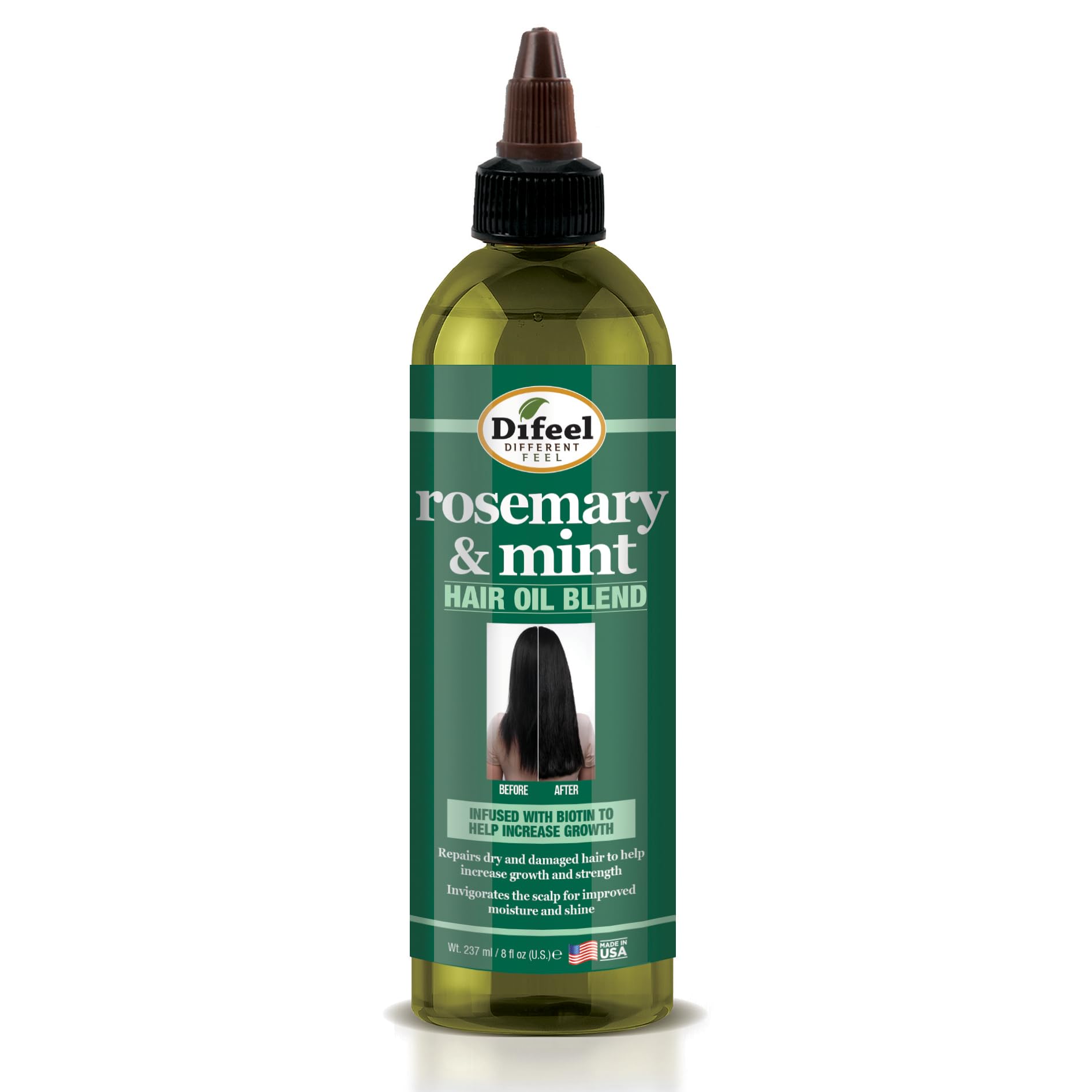
Difeel Rosemary Mint Oil

Difeel Rosemary Mint Oil

Daily scalp care

Our Score 9.0/10
Check Price

Worth Noting

  • Can look greasy if over-applied
Size
8 oz
Formula
Lightweight, non-greasy
Hair Types
All hair types and textures
Key Ingredients
Rosemary, mint, biotin

Difeel's rosemary-mint oil is the lightweight option we kept in the shower: an 8-ounce bottle with a fresh mint scent and a formula that is positioned for daily scalp care rather than a heavy overnight mask. The blend brings rosemary, mint, and biotin together, and it is thin enough to move through hair without tugging.

We used it for weekly scalp massages and as a pre-wash treatment when our roots felt dry. The formula is easy to distribute, and the mint gives it a clean, almost shampoo-like lift. It also works as a hot-oil treatment, which makes the large bottle more useful than its simple label suggests. The finish is lighter than castor-heavy oils, but it is still an oil.

The size is the real advantage. Eight ounces means you can oil your whole scalp without rationing, and the price stays at the budget end of this group. If you want a simple rosemary-mint bottle for weekly wash-day rituals, this is the one we pass along most often.

Bottom line: Difeel's rosemary-mint oil is the budget bottle we reach for when we want to oil the whole scalp without rationing; it is light enough for weekly use, provided you shampoo it out.

3

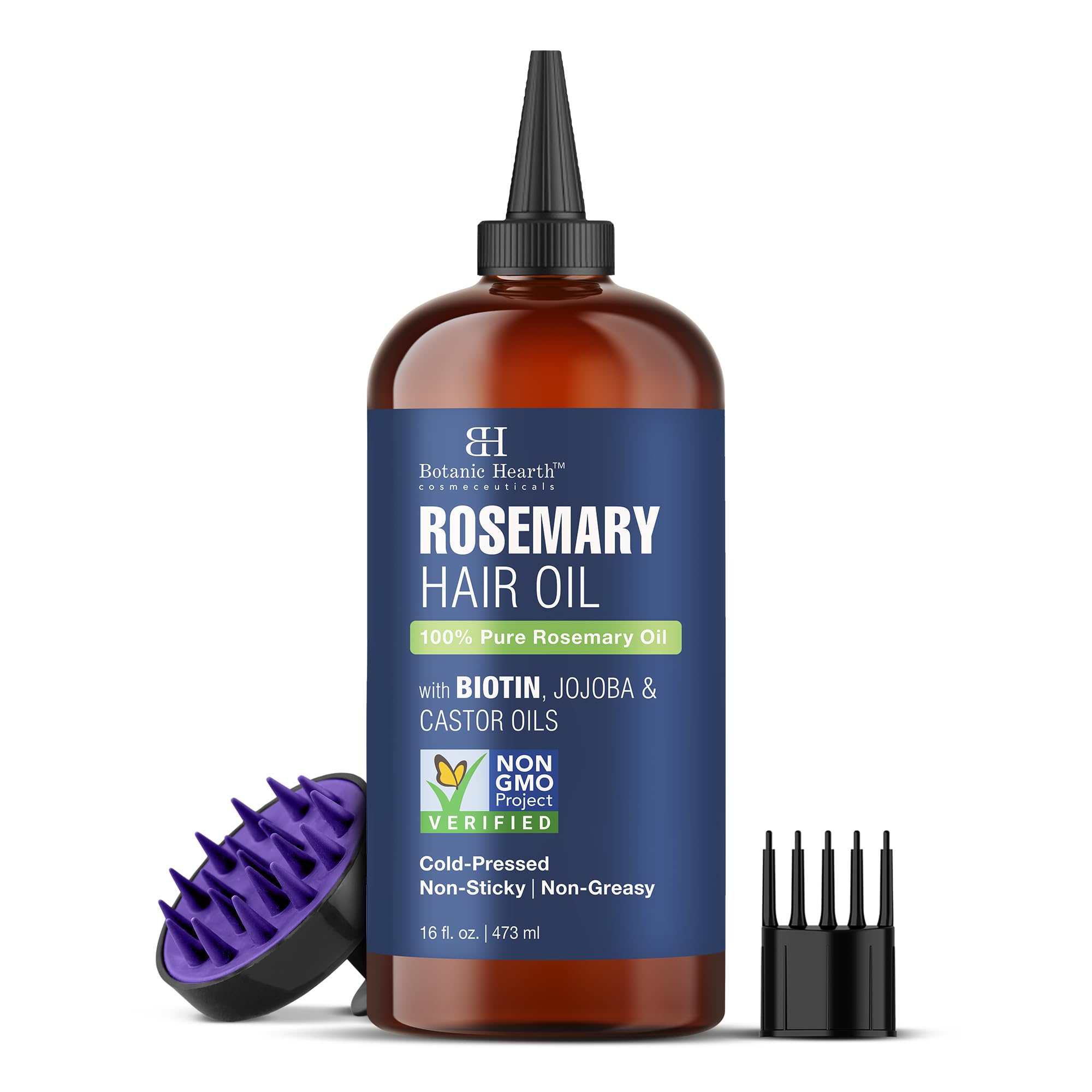
Botanic Hearth Rosemary Oil

Botanic Hearth Rosemary Oil

Large-bottle routine

Our Score 8.8/10
Check Price

Worth Noting

  • Can feel sticky on fine hair
Size
16 fl oz
Application
Scalp and hair
Hair Concerns
Thinning, dandruff
Key Ingredients
Rosemary, biotin, jojoba, castor

A 16-ounce bottle is a commitment, and Botanic Hearth's rosemary oil is built for someone who already knows they will oil their scalp often. The formula pairs rosemary with biotin, jojoba, and castor, and it has the kind of slip that makes a scalp massage feel easy rather than drippy.

We liked it most on dry, flaky scalps. The oil is rich enough to soften tightness, and it leaves hair soft and shiny after washing, with a rosemary scent that stays in the bathroom rather than following you around. It also works on the lengths, so one bottle can cover a pre-wash scalp treatment and an ends treatment.

The size is the point: this is not a trial bottle, and it is priced at the premium end of the group. If you want a big rosemary-biotin blend for a committed weekly routine, it earns its shelf space. If you have fine hair or like a barely-there finish, start with a smaller, lighter bottle instead.

Bottom line: Botanic Hearth is the bottle for a committed weekly scalp routine, especially if you want a big rosemary-biotin blend; just use it before washing if your hair is fine.

4

Carol's Daughter Goddess Strength Oil

Carol's Daughter Goddess Strength Oil

Curly, coily hair

Our Score 9.2/10
Check Price

Worth Noting

  • Can irritate very sensitive scalps
Size
4.2 fl oz
Applicator
Pointed tip
Hair Types
Waves, coils, curls
Key Ingredients
Castor, jojoba, coconut

The pointed tip is the detail that makes Carol's Daughter's Goddess Strength oil useful. Instead of pouring oil into your palm and hoping for the best, you can part a braid or a twist and send a thin line straight to the scalp, which is exactly where a growth-oriented oil belongs.

The multi-oil blend includes castor, jojoba, and coconut, and it has enough weight to make curls feel moisturized without the greasy film some rich oils leave. We applied it to a damp scalp after washing and smoothed the leftovers through the ends; hair stayed soft, and the sweet scent lasted without taking over the room. It is also one of the better oils here for dry scalps that need comfort more than a tingle.

The 4.2-ounce bottle is smaller than the value sizes in this group, but the applicator means less waste at the roots. For waves, coils, and protective styles, this is the one we reach for when the goal is a comfortable scalp and soft, defined curls rather than a lightweight finishing oil.

Bottom line: Carol's Daughter is our pick for curls, coils, and protective styles: the pointed tip gets oil to the scalp, and the blend leaves hair soft without a heavy film.

5

Forest & Shore Thrive Oil

Forest & Shore Thrive Oil

Damaged hair

Our Score 8.8/10
Check Price

Worth Noting

  • Can leave roots greasy if over-applied
Use
Overnight mask
Formula
100% natural
Key Ingredients
Caffeine, biotin, castor, argan, rosemary

Forest & Shore's Thrive oil is the bottle that makes a scalp treatment feel like a small ritual: dark packaging, a rosemary-coconut scent, and a formula that is light enough to leave on overnight. It is the premium option in this group, and it looks and feels like it.

The blend includes rosemary, castor, argan, and caffeine, plus biotin, and it spreads easily through the scalp without the drag of a pure castor oil. We used it as an overnight mask and washed it out in the morning; hair felt softer and looked shinier, and the scent was the most pleasant here—herbal but not sharp. It is also a good choice for damaged ends that need a little smoothing without a heavy coating.

Used sparingly, it is the premium pick for someone who wants the process to feel as good as the result. A small amount goes a long way, and the lighter texture makes it easier to wear than the castor-heavy bottles in this group.

Bottom line: Forest & Shore is the premium pick for a nicer wash-day ritual: a light botanical oil with a lovely scent that leaves hair soft, as long as you use it sparingly at the roots.

6

Kate Blanc Castor Oil

Kate Blanc Castor Oil

Lashes and brows

Our Score 9.0/10
Check Price

Worth Noting

  • Thick and sticky on long hair
Use
Hair, brows, lashes, skin
Size
2 oz
Includes
Dropper
Ingredients
USDA organic castor oil

The dropper is the reason Kate Blanc's castor oil earns a place here. This is a precise, single-ingredient oil for brows, lashes, and the hairline, not a bottle to pour over your whole head. The thick texture stays where you put it, and the included dropper makes a tiny amount easy to control.

It is USDA certified organic, cold-pressed, and third-party tested for purity, with no added fragrance. We used it along the brows and lash line and on a few sparse edges; a small drop was enough, and it did not migrate into the eyes the way a thinner oil can.

The 2-ounce bottle is a budget-friendly way to try pure castor oil, and the lack of scent makes it easy to use around the face. If you want one bottle for lashes, brows, and edges, this is the one we hand over; if you want a full-scalp growth oil, choose a lighter blend.

Bottom line: Kate Blanc is the castor oil we keep for brows, lashes, and edges: the dropper and thick, unscented oil make precise application easy, but it is not a whole-head oil.

7

Wild Growth Hair Oil

Wild Growth Hair Oil

Thinning edges

Our Score 9.0/10
Check Price

Worth Noting

  • Strong earthy scent
  • Heavy, greasy finish
Size
4 oz, 2-pack
Blend
Nine plant oils plus extracts
Targeted Use
Edges and parts

Wild Growth is the old-school bottle in this group: a dark, pungent oil with a formula that does not pretend to be a lightweight finishing serum. It is the one to choose when you want a heavy, purposeful treatment for edges, parts, and any spot where you can let oil sit.

The blend brings together coconut, olive, jojoba, rice bran, cocoa butter, and several fruit and seed oils, so it feels substantial on the scalp. We used it on edges and parts, where the oil can stay put without making the whole head look wet. It softened tight spots and left hair looking fuller at the hairline; a little goes a long way, so the two bottles last.

The two 4-ounce bottles make it a long-term staple, and the oil is thick enough to stay on the scalp during a treatment. For targeted edges and parts, it is the one we keep coming back to, especially when we want a deliberate weekly ritual rather than a quick swipe.

Bottom line: Wild Growth is the pick if you want a heavy, old-school oil for edges and parts and do not mind a strong herbal scent; it is not the bottle for a light daily finish.

8

Handcraft Blends Rosemary Oil

Handcraft Blends Rosemary Oil

Simple rosemary blend

Our Score 9.2/10
Check Price

Worth Noting

Size
8 fl oz
Application
Scalp and lengths
Also Includes
Biotin
Key Ingredients
Rosemary, castor, jojoba, grapeseed

An 8-ounce rosemary blend with biotin and several carrier oils is a sensible middle ground, and that is exactly where Handcraft Blends lands. It does not chase a fancy scent or a single hero ingredient; it puts rosemary alongside castor, jojoba, grapeseed, and sunflower oils and lets the blend do the work.

The texture is lighter than pure castor oil but still substantial enough to massage into the scalp. We used it as a pre-wash treatment, parting the hair and working it in at the roots, then shampooing; it rinsed clean and left the scalp feeling soft rather than coated. The oil also has enough slip to draw through the ends without tugging.

The 8-ounce bottle is generous for weekly use, and the price sits in the middle of this group. That makes it a practical choice if you already know you like rosemary oil and want a bottle you will not feel precious about using.

What we appreciate most is the straightforwardness. There is no gimmick here, just a rosemary-forward carrier blend that is easy to add to a wash-day routine. If you want a simple, generous bottle for weekly scalp care, this is the quiet overachiever of the group.

Bottom line: Handcraft Blends is the straightforward rosemary option for a weekly scalp routine: a generous bottle, a slippy carrier-oil blend, and no unnecessary extras.

9

Vital Affair Castor & Rosemary Oil

Vital Affair Castor & Rosemary Oil

Glass-bottle blend

Our Score 9.4/10
Check Price

Worth Noting

  • Pump can be stiff or fail
  • Scent can be strong or inconsistent
Size
8 oz
Formula
Cold-pressed, hexane-free
Packaging
Glass bottle
Ingredients
Organic castor, rosemary

Vital Affair's castor-and-rosemary oil comes in a dark glass bottle with a pump, which makes it feel more considered than the plastic jugs in this group. The formula is cold-pressed, hexane-free, and organic, and the glass keeps the oil away from plastic.

The oil is thick, as castor oil should be, and the pump makes dosing easy: a short press is enough for a parting, and the oil stays where you put it. We used it on the scalp and along the hairline, then washed it out; it left the scalp conditioned without a lingering perfume.

The thickness is a plus for a targeted treatment; it stays where you put it instead of running down the neck. The 8-ounce bottle is a reasonable size for a weekly spot treatment, and the glass packaging feels sturdier than a basic plastic bottle.

If you want an organic castor-and-rosemary blend in glass and do not mind a thick oil, this is a good middle option. For a deliberate scalp treatment, the pump and glass make it feel like a small upgrade over a plain jug.

Bottom line: Vital Affair is the glass-bottle pick for a castor-and-rosemary routine: the oil is thick and certified organic, but check the pump before you commit.

What Five Months and 16 Oils Actually Looked Like

We built the shortlist from ingredient panels, dermatology write-ups on rosemary and peppermint, and the oils that kept resurfacing in customer reviews. Then we cut hard: anything listing its headline botanical below the fragrance, anything leading with mineral oil, anything so pricey per ounce that you'd ration it rather than use it. The 16 that stayed all opened with a named carrier oil and carried a believable dose of actives. Cost per use got its own column, since we counted applications per bottle at a teaspoon a go.

Each oil was used at least twice a week on my hair and on three teammates' — one fine and oily, one thick and dry, one with a sensitive scalp that reacts to nearly everything. Sunday nights were scalp nights: we parted hair into rows, worked the oil in with fingertips for a full minute, and noted whether it spread easily or pooled at the crown. Midweek we tapped the same oils onto dry ends, where watery formulas vanished and heavy ones turned ends into a sticky clump. Every bottle slept overnight under a white pillowcase, and we checked the fabric in the morning before judging greasiness.

Consistency got measured, sort of: a quarter-size puddle on a white tile, tilted and timed to see how fast it ran — thin oils needed a dropper, syrupy ones needed warming between the palms first. We rated scent twice, at application and again after a wash, because a rosemary-mint blast that lingers into the next day is a different product from one that rinses clean. Hair condition showed up in small things: how ends felt wet versus dry, whether a wide-tooth comb glided through, how much breakage came out in the brush, and whether the fine hairs along the hairline looked any denser in the monthly photos. Hair grows about half an inch a month, so no oil was going to prove itself by tape measure in five months; a calmer scalp and less snapping was the realistic goal.

How to Choose a Hair Growth Oil

Start With the Application Point

Where the oil goes should decide the bottle. A scalp oil needs a nozzle, dropper, or pointed tip that can part hair and reach the roots; a bottle for lashes and brows needs a dropper you can control. If you mainly target edges, a heavy oil that stays put is useful; if you want to cover the whole scalp weekly, a larger bottle with a pump or narrow spout saves mess. We keep a separate dropper bottle for lashes and a bigger bottle for scalp nights because one format rarely does both well.

Read the Carrier Oils, Not Just the Rosemary

Rosemary, castor, and biotin get the front-label billing, but the carrier oils decide how the product feels. Sunflower, grapeseed, and jojoba make a lighter oil that spreads easily; castor and coconut bring weight and a longer-lasting coating. If your hair is fine, a grapeseed- or jojoba-forward blend is easier to live with; if your scalp is dry or your hair is coily, a richer castor blend can be the better fit. Check the ingredient list for the oil that leads, not just the one in the product name.

Decide Whether It Is a Pre-Wash or a Leave-In

Most growth oils work best as a pre-wash treatment: apply to the scalp, massage, leave for a short while, and shampoo. That routine lets a rich oil do its job without leaving your hair coated for days. If you want to leave oil in, choose a lighter formula and use a small amount at the roots. Fine hair usually looks better with a wash-out treatment; thick or curly hair can carry more oil without it reading greasy.

Patch Test Before You Commit

Essential oils can tingle, and a tingle is not proof that a product is working. Patch test behind an ear or on a small patch of scalp, then wait a day before a full application. If you feel burning, see redness, or develop flakes, stop. Anyone with a sensitive scalp, eczema, or a recent reaction to a hair product should be especially cautious with mint, tea tree, and rosemary blends.

Size and Dispenser Affect How Often You Use It

A small dropper bottle is right for lashes, brows, and edges; a larger bottle makes more sense for weekly scalp treatments. But do not buy a 16-ounce bottle just because the unit price looks better. If the formula is too heavy or the scent is too strong, it will sit unused. Match the size to the routine you will actually keep, and check that the pump or dropper works before you rely on it.

Frequently Asked Questions

Final Verdict

Start with Mielle if you want the most balanced rosemary-mint package in this group: a concentrated scalp oil that is easy to work in, budget-friendly, and pleasant enough to use weekly. If fine hair makes you wary of residue, Difeel's larger bottle is the lighter daily option; for a premium ritual, Forest & Shore is the better-smelling, lighter blend. Kate Blanc stays our pick for lashes, brows, and edges rather than the whole head.