Hair Care

Best Hair Crimpers of 2026

A crimper presses hair between zigzag plates, and the volume you see is really just a stack of tiny ridges catching the light. Do it with uneven heat or plates that snag, and those ridges turn into frizz that flattens by lunch. I've been chasing the 80s texture revival in my own bathroom for a while now, and the gap between a crimp that holds and one that wilts is almost entirely the tool. What a good crimper actually fixes is volume with staying power, lift at the root that survives a commute, a workout, and a humid afternoon.

We've spent the last four months running 15 crimpers through real mornings: damp second-day hair, thick hair that needs careful sectioning, fine hair that scorches the second the heat runs high. The pattern held across all of them, with the irons that heated fast and evenly keeping their crimp and the ones that dragged or ran hot giving up before I got out the door. One thing worth knowing before you shop: crimp dry, product-free hair in small sections, and let the iron finish heating before the first pass. The picks below are the ones I'd hand to a friend.

1

Gold N Hot 2-Inch Ceramic Crimper

Top Pick
Gold N Hot 2-Inch Ceramic Crimper

Bold 80s crimps

Our Score 9.0/10
Check Price

Worth Noting

  • Too broad for tight root detail
Heat Range
Up to 450°F
Plate Width
2 inches
Heat-up Time
60 seconds
Plate Material
Ceramic

A two-inch plate settles the look before you plug the iron in. It covers a wide section in one clamp, so the crimp reads as a broad, soft bend rather than a tight zigzag, and a full head of long hair moves faster than it does with a narrow plate. That scale is the reason we keep coming back to it for thick hair: fewer passes mean less chance of the top layers cooling before you finish.

The heat ceiling is 450°F, and the ceramic plates are meant to spread that heat evenly across the surface. We found the adjustable control simple to set and the 60-second heat-up quick enough that we did not need to plan around it. On fine hair, start low and keep the iron moving; this is enough heat to press a hard crease into delicate strands.

The broad plate is also our favorite shape for hidden volume. Crimp the underlayer at the crown, brush the top smooth, and the lift stays without visible texture. It is the crimper we hand to someone who wants the texture to look deliberate, not like a hot tool got away from them.

That balance is why the Gold N Hot is our default: it does the broad, visible work most people picture when they decide to crimp, and it does not make a project of it. The two-inch plate is the whole argument, and the simple controls let the tool get out of the way.

Bottom line: We recommend the Gold N Hot as the default crimper: its two-inch plates and 450°F ceiling handle thick hair and make bold, visible crimps without a steep learning curve.
2

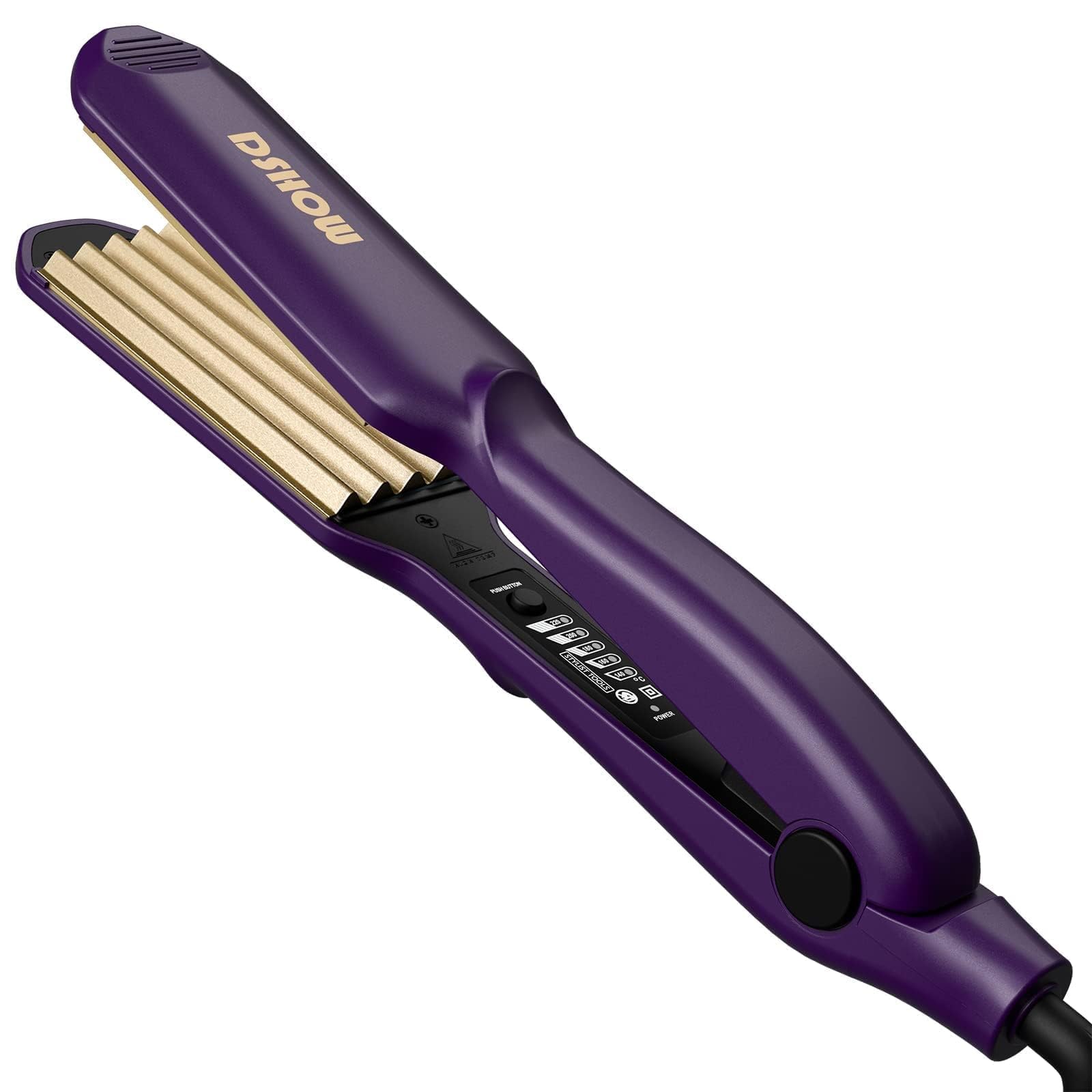
DSHOW Titanium Ceramic Crimper

DSHOW Titanium Ceramic Crimper

Wigs and cosplay

Our Score 8.8/10
Check Price

Worth Noting

  • Can stop heating after repeated use
Voltage
Dual voltage
Heat-up Time
30 seconds
Heat Settings
5 (140°C–220°C)
Plate Material
Titanium ceramic

Synthetic wigs are the reason the DSHOW earns a place. Its five settings start at 140°C, low enough to give you room to shape a wig without cooking the fiber, and the small zigzag plates leave a tight crimp that adds volume without a broad 80s wave. The useful part is that the low end is a real setting, not a token one.

The rest of the package suits quick sessions: 30-second heat-up, a 60-minute auto shut-off, dual voltage, and a heat-resistant glove. The glove is not a substitute for careful handling, but it helps when you are holding a wig at an awkward angle or working close to the root. We also like that the controls are simple enough to reset by feel after a pause.

On long, thick hair, the narrow plates turn a full head into a project; this is a detail tool, not a bulk-texture tool. We treat the low settings as the main event, because the top end can overheat a synthetic fiber if you hold it too long. For a first wig or a fine-haired touch-up, that narrow focus is a feature.

Bottom line: For wigs, fine hair, and anyone who wants a low heat setting that actually goes low, the DSHOW is the crimper we reach for first.

3

Hot Tools 24K Gold 1-Inch Crimper

Hot Tools 24K Gold 1-Inch Crimper

Root volume

Our Score 8.8/10
Check Price

Worth Noting

  • Too narrow for broad, visible 80s crimps
Heat Range
Up to 430°F
Cord Length
8 feet
Plate Width
1 inch
Plate Material
24K gold

One inch is the number that matters here. The narrow gold plates press a fine, shallow ridge into the hair, so you can crimp the underlayer at the crown and brush the surface smooth without leaving a visible zigzag. The result is texture you can hide under a smooth top layer.

The 24K gold plates heat to 430°F, and the eight-foot swivel cord gives you room to reach the back of your head without dragging the plug across the counter. We appreciated the long cord more than we expected; in a small bathroom, it changes how easily you can turn the iron.

This is a tool for fine hair that collapses under a heavy plate, or for anyone building a textured base under an updo. The shallow ridge adds grip and lift without making the hair look like it came from a different decade. It is also the crimper we reach for when we want the volume to be the secret, not the style.

Bottom line: If your goal is lift at the root rather than a full head of 80s crimps, the Hot Tools 1-inch iron is the most precise tool here.

4

Pulla 4-in-1 Ceramic Crimper

Pulla 4-in-1 Ceramic Crimper

Multiple crimp sizes

Our Score 8.8/10
Check Price

Worth Noting

  • At 1.2 pounds, heavier than basic crimpers
Weight
1.2 lb
Voltage
Dual voltage
Heat Settings
4 (up to 430°F)
Plates Included
4 ceramic plates

The eight-tooth plate is the sleeper here. It makes a small, tight crimp that sits close to the root, so you can lift the hair at the crown and cover it with the top layer for volume that does not look crimped at all. That is the plate we used most, even though the wider plates make the more obvious 80s texture.

Four ceramic plates cover fine, medium, and wide crimps plus a flat option, and the heat goes to 430°F with four settings. Negative-ion technology is meant to cut static, and the plates glide easily enough that we did not feel like we were dragging hair through the tool. The storage bag is a nice extra if the plates live in a drawer.

Swapping plates takes a moment to line up, but the flat plate earns its place: we used it to smooth the top layer after crimping underneath, which is faster than reaching for a second iron. If you only ever want one crimp size, a single-plate tool is simpler.

Bottom line: The Pulla is the one to choose if you want several crimp sizes in one tool and do not mind a little plate-swapping.

5

MBHAIR Ceramic Crimper

MBHAIR Ceramic Crimper

Budget styling

Our Score 8.8/10
Check Price

Worth Noting

  • Heat output can vary between settings
  • Can fail after a few months of use
Cord
Tangle-free swivel
Heat Range
Up to 430°F
Heat-up Time
30 seconds
Heat Settings
5

Budget crimpers usually ask you to give something up, and here it is mostly refinement rather than function. The MBHAIR has five heat settings and reaches 430°F, and the ceramic-glazed plates are shaped to leave a clear, slightly rounded crimp. A full head on medium heat took us a few passes per section, but the result held its shape.

The 30-second heat-up and swivel cord are the practical wins. We could plug it in, set the temperature, and start on the first section without waiting around, and the cord did not fight us when we turned the iron. The included heat glove is a useful extra at this price, especially for anyone working close to the scalp.

It is a good first crimper or a spare for a teenager, and the simple controls mean there is not much to learn. The swivel cord is the detail that makes it feel less like a starter tool than the price suggests. What it does not give you is the precise root control of a one-inch plate.

Bottom line: The MBHAIR is the budget crimper we recommend when you want five heat settings and a quick heat-up without spending much.

6

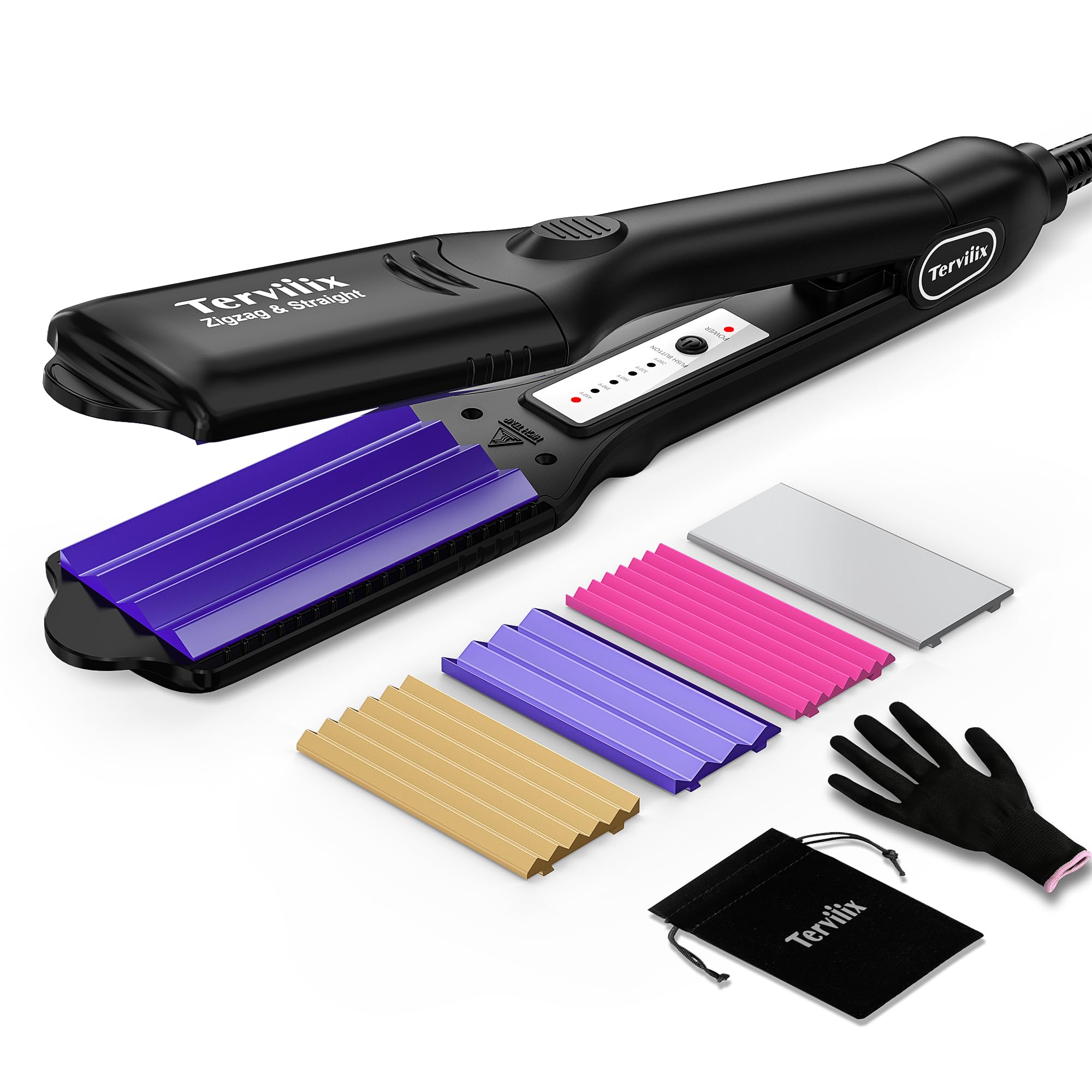
Terviiix 4-Plate Crimper

Terviiix 4-Plate Crimper

Crimp and straighten

Our Score 8.8/10
Check Price

Worth Noting

  • At 1.6 pounds, heavier than a single-plate crimper
Voltage
100–240V
Heat Range
280°F–430°F
Auto Shut-Off
60 minutes
Plates Included
4 interchangeable

The four-plate idea is more appealing than the four-plate reality. The plates and their protective covers are stiff to release, and the instructions do not make the swap obvious, so the first change can feel like you are going to break something. We wish the release were easier, because the whole point of this tool is moving between crimp sizes and a flat finish.

Once the plate is on, the Terviiix crimps well. It heats in about 30 seconds, has five settings from 280°F to 430°F, and the keratin and argan oil infusion is meant to help the plates glide. The 60-minute auto shut-off and dual voltage make it a sensible travel tool, and the included glove is welcome when you are working around a plug adapter in a hotel bathroom.

The practical move is to fit the plate you want before you plug it in and leave it there for the session. If you like to change crimp sizes mid-style, the Pulla is easier to live with; if you want one texture and a straight option for trips, the Terviiix earns its space. That makes it a travel tool first and a plate-swapping kit second.

Bottom line: The Terviiix is worth it if you want a crimper that can also straighten and travel, as long as you pick your plate before you start styling.

7

SAOSA Ceramic Crimper

SAOSA Ceramic Crimper

Travel and touch-ups

Our Score 8.6/10
Check Price

Worth Noting

  • Small plate is not for broad 80s crimps
Voltage
100–240V
Heat Range
300°F–440°F
Plate Width
1.57 inches
Heat-up Time
30 seconds

Travel is where the SAOSA makes sense. It is about 10.4 inches long and 12 ounces, has dual voltage, and comes with a heat-resistant glove, so it fits in a toiletry bag without becoming the heaviest thing you packed. The 1.57-inch plates are narrow enough to crimp close to the root without the tool feeling bulky.

The 30-second heat-up and 60-minute auto shut-off are the right features for a hotel-room touch-up, and the five settings run from 300°F to 440°F. The plates leave a tight, defined crimp, and the narrow head lets you work around the hairline without wrestling with a wide barrel. We found the crimp held through a long day when we used a light hairspray.

The high end is hot for fine hair, so start low and keep the iron moving. For a weekend bag or a first crimper for a teenager, the compact size and dual voltage make more sense than a full-size iron. It is the one we pack when space matters more than speed.

Bottom line: The SAOSA is a compact travel crimper for small, tight texture, but it is not the one to choose for big, soft 80s waves.

How We Tested Hair Crimpers (and What Made the Cut)

We started with close to 40 crimpers, pulling from brands we already trusted and models that kept surfacing in customer reviews, then filtered by plate material, adjustable heat, cord length, auto shut-off, dual voltage, and whether the plates came out for cleaning or swapping. Fifteen made it through to testing, and each one lived with us for at least two weeks across four months, on my own hair, a colleague's fine hair, and a friend with thick, coarse hair who donated her Saturday mornings.

Every iron got the same first test: a stopwatch from cold to its highest setting, then a pass over the section at the back of the head where heat is hardest to judge. We counted how many slow passes it took to set a clean zigzag and noted whether the pattern came out sharp or smeared, whether the plates pinched or glided, and how much steam lifted off hair that wasn't quite dry. Then we checked the crimp at the four-hour mark, after a commute, and after a nap on it. Some patterns were still crisp; others had gone fuzzy or relaxed into a loose wave.

Root volume got its own look, since that's what most people buy these for. We crimped close to the scalp on the top layer and watched whether the lift held or collapsed under a hat. On the models with removable plates, I swapped them one-handed mid-style to see whether they clicked back in securely or wobbled on the next pass. Durability came down to small things over weeks of use: a swivel cord that started catching, a hinge that loosened, plate coating that scratched after a wipe-down. We also kept a running note on what the extra money bought, because an iron that heats evenly and holds a pattern is worth more than one with a longer feature list that scorches on the second pass.

How to Choose a Hair Crimper

Start with plate width, not heat

Plate width decides the look. A one-inch plate, like the Hot Tools, presses a fine, shallow crimp that disappears under a smooth top layer, which is why it works so well for root volume and fine hair. A two-inch plate, like the Gold N Hot, makes a broader, more obvious bend and covers more hair per pass, so it suits long, thick hair and a full 80s finish. The middle sizes, around 1.5 inches, sit between the two and are the easiest all-round choice if you want visible texture without a huge crimp.

Match the plate to the job rather than to the trend. If you mainly want lift at the crown, narrow is better; if you want the crimp to be the style, go wider. A very small plate on long hair is not wrong, but it turns a full head into a series of small sections and takes longer.

Look for control at the low end

Maximum heat matters for thick or coarse hair, but the low end is what keeps fine hair and synthetic wigs from turning stiff. A range that starts around 280°F to 300°F gives you room to work; a five-setting dial is easier to repeat than a single on/off switch. The DSHOW's 140°C starting point is the clearest example here, and it is the reason we like it for wigs.

Heat-up time is a convenience, not a performance guarantee. A 30-second claim is useful on a busy morning, but the plates still need a moment to recover between passes. If you are crimping a whole head, give the iron a few seconds to come back to temperature rather than clamping down harder.

Plate material affects glide and frizz

Ceramic, titanium, and gold are all used to spread heat and help the plates glide; none of them makes heat damage disappear. What matters more is keeping the tool moving, using small sections, and starting lower than you think you need. Ceramic is the common choice in this group, while the Hot Tools' gold plates and the Terviiix's keratin-and-argan coating are aimed at a smoother pass.

Ions and anti-static claims are worth treating as a bonus, not a reason to buy. If your hair already turns frizzy around heat tools, a lower setting and a heat protectant will do more than a label. We also look for plates that meet cleanly at the edges; a gap or a rough seam catches hair and makes the crimp look uneven.

Handling, cord, and travel

A crimper is held for longer than a flat iron because you work in small sections, so weight and balance matter. A tool around a pound is easy to manage; the Terviiix at 1.6 pounds is noticeably heavier, and the difference shows when you are working above shoulder height. An eight-foot swivel cord, as on the Hot Tools, is a real convenience in a small bathroom.

For travel, check dual voltage and the plug type, not just the voltage label. Dual voltage means the iron can run on 100–240V with the right plug adapter; it does not make the plug fit a foreign outlet. Auto shut-off is another useful feature, especially if you style in a hurry, but it is not a substitute for unplugging the tool.

Expect to replace it eventually

Crimpers are compact heating tools with hinges, cords, and plates that take a lot of heat cycles. Durability is the least consistent part of this category: some units last, and others stop heating or break at the hinge. That makes a simple design with easy returns more valuable than a long feature list you will not use.

Keep the cord loose rather than wrapping it tightly around the barrel, let the tool cool before storage, and keep the receipt. If you crimp only occasionally, a basic model like the MBHAIR or SAOSA makes more sense than paying for plates you will rarely swap.

Frequently Asked Questions

Final Verdict

The Gold N Hot is the crimper we recommend first. Its two-inch plates make a broad, visible crimp quickly, the 450°F ceiling gives thick hair room to set, and the simple controls keep the learning curve short. It is the best default for a full 80s texture or hidden underlayer volume.

Choose the DSHOW if you style wigs or fine hair and need a genuinely low setting; the Hot Tools 1-inch is the better root-lift tool for fine hair. If you want several crimp sizes, the Pulla is easier to live with than the Terviiix. Those are the switches worth making; otherwise, the Gold N Hot covers the most ground.