Makeup

The Best Foundation Sticks for Mature Skin

A foundation stick can feel like a gamble once skin starts thinning and shifting. The fear is reasonable: a waxy bullet dragged across dry cheeks catches on texture, settles into lines around the mouth, and looks heavier by noon than it did at 8 a.m. The right stick does the opposite — it glides, blurs, and leaves skin looking like skin.

I wore liquid foundation for decades before switching to sticks, mostly because a good one is faster than any brush-and-bottle routine. Over the past six months, my team and I put 12 sticks through real mornings: rushed weekday application, ten-hour days, a few humid afternoons. What separated them wasn't the coverage claim on the label — it was texture, shade accuracy, and how they held up by 4 p.m. One tip before you shop: warm the stick on the back of your hand first, because a cold bullet drags no matter how good the formula is. Everything below earned its place on how it wears on mature skin, not how it swatches.

1

Revlon PhotoReady Insta-Fix Foundation Stick

Top Pick
Revlon PhotoReady Insta-Fix Foundation Stick

Everyday coverage

Our Score 9.0/10
Check Price

Worth Noting

  • Nine shades is a short lineup
  • Coverage stops short of full
Finish
Natural
Shades
9
Coverage
Light to medium
Sun Protection
SPF 20

The short list for a stick foundation on mature skin is consistent: cover the redness and the dark spots, stay out of the fine lines, and don't look like a mask by mid-afternoon. Revlon's PhotoReady Insta-Fix is the one here that gets closest to all three at once. The coverage is light to medium rather than full, and the finish is natural rather than matte or dewy, so what you see is skin with the color evened out.

What we appreciate most is what it doesn't do. It blends down to a soft, skin-like finish instead of collecting in pores and fine lines, and it behaves the same whether you use a brush, a damp sponge, or your fingers — no learning curve, no special tool. We spent most of our time with 160 Medium Beige, a neutral mid-tone that doesn't swing orange in daylight.

The SPF 20 is the detail that keeps it in a daytime routine. Treat it as a top-up over the sunscreen you already wear rather than a replacement, but it is one less layer to think about on a morning when you are doing your face in a hurry. A full ounce of product also goes further than the smaller sticks here, which is part of why it lasts.

Wear is the rest of the argument. It holds through a workday without going patchy, and touching up is a matter of swiping more over what is already there rather than redoing your base — the reason it lives in a bag rather than a drawer.

Bottom line: The stick we recommend first for mature skin: light-to-medium coverage that hides redness and dark spots without settling into lines, plus SPF 20 and a full ounce of product.

2

Lancôme Teint Idole Ultra Wear Foundation Stick

Lancôme Teint Idole Ultra Wear Foundation Stick

Full-coverage days

Our Score 9.2/10
Check Price

Worth Noting

  • The stick can snap or crumble before it is used up
Wear
Up to 24 hours
Finish
Cream-to-powder matte
Coverage
Full
Applicator
Built-in kabuki brush

The built-in kabuki brush is the first thing anyone notices about the Lancôme stick, and it earns its place: twist the base, the brush loads with product, and you buff it on in circles without reaching for a separate tool. Add a compact and there is nothing else to carry.

It is also the fullest coverage here, and the one that reads as though it was designed with older skin in mind. The cream-to-powder formula goes on creamy, dries to a natural matte, and blurs the look of pores and pigmentation rather than sitting on top of them. The shine control is what we noticed most: it is oil-free and stays matte through an afternoon, which is exactly where cream sticks usually give up.

Lancôme bills it as up to 24 hours of wear. We didn't sit up all night in it, but it held from morning through evening without a touch-up, and it covered hyperpigmentation on dry and combination skin without catching on rough patches.

The trade-off is cost. This is the priciest stick in the group, and it makes sense if full coverage is the point of your base rather than a sheer wash. If you would rather build coverage only where you need it, the Revlon gets you there for less.

Bottom line: Worth the splurge if you want real full coverage: it blurs pores and pigmentation, stays matte for hours, and the kabuki brush in the cap means you can apply it anywhere.

3

Maybelline Fit Me Shine-Free + Balance Stick

Maybelline Fit Me Shine-Free + Balance Stick

Oily, shine-prone skin

Our Score 8.8/10
Check Price

Worth Noting

  • Natural coverage leaves deeper pigmentation showing
Use
Foundation and contour stick
Finish
Shine-free matte
Coverage
Natural

Not every mature face is a dry one, and the Fit Me stick is built for the combination-to-oily end of the spectrum. Its pitch is shine control from a translucent base and lightweight pigments, so the natural high points of your face still show through instead of being flattened out.

That translucent base is the part we like. It goes on smoothly, blends out with a brush or a sponge, and leaves a soft matte finish that reads closer to bare skin than makeup — a welcome change from the heavier sticks here that can look like a mask by mid-afternoon. It is also the easiest of these to carry: swipe, blend, done, with no wet sponge or bottle in your bag.

Where it divides is wear and shade. On combination skin it holds well and keeps shine down for most of a day; on genuinely oily skin it can slide toward greasy by late afternoon, and the fix is a primer underneath and a light powder over the T-zone rather than more product. The shades run warm, too, and a couple of the lighter ones read darker and more orange on the skin than they do in the stick, so swatch in daylight if you can.

Bottom line: The one for combination or oily mature skin: a weightless, shine-free stick that looks like bare skin, as long as you prime first and powder the T-zone by afternoon.

4

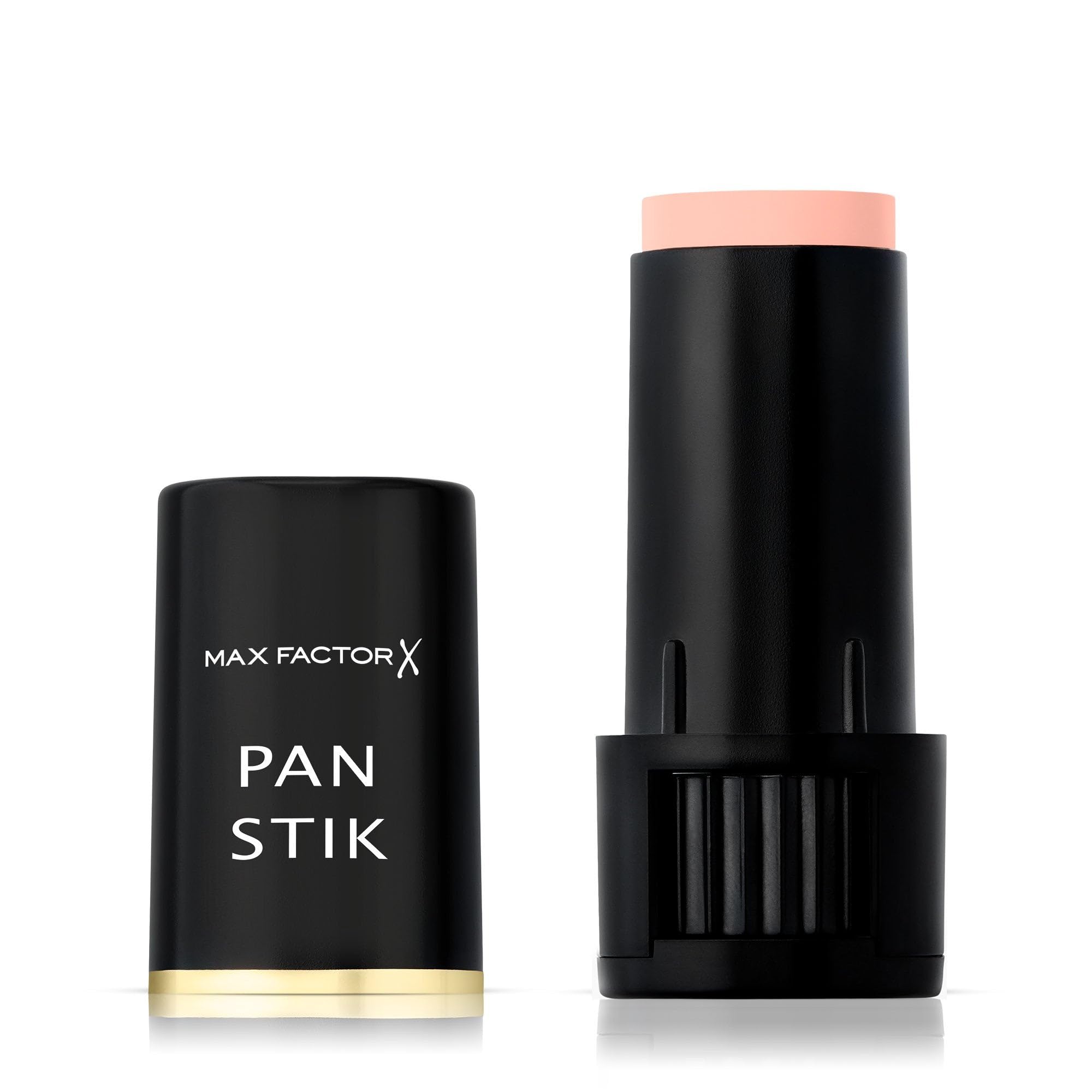
Max Factor Pan Stik Foundation

Max Factor Pan Stik Foundation

Dry, tight skin

Our Score 8.8/10
Check Price

Worth Noting

  • 0.64 ounces runs out quickly with daily use
  • Shades can read too dark or too pink
Size
0.64 oz
Finish
Soft, dewy
Format
Twist-up stick
Coverage
Full

Full coverage usually means matte, and matte is often the wrong answer for dry, tight mature skin — it catches on every flake. The Pan Stik takes the other route: a creamy formula with a soft, dewy finish that blends out, especially with a slightly damp sponge, into something closer to moisturized skin than makeup.

It is a genuine full-coverage stick. Pigmentation, redness, and uneven tone go under a thin layer, and the twist-up format means you can top up in a bathroom without a brush or a bottle. The creamy texture is the reason it suits dry skin: it stays flexible through the day instead of setting into a chalky film.

Applying it is quick and forgiving — swipe, blend, and build only where you need it. Because the finish is dewy rather than matte, it also layers well over a richer moisturizer, which is where a lot of matte sticks start to pill.

For dry mature skin the finish is the whole argument, and this is the stick to start with if you are not sure a stick will work for you. It is the lowest-risk way to find out: creamy, genuinely full-coverage, and it holds its own against sticks with far fancier packaging, which is why it stays in the rotation rather than being a one-off experiment.

Bottom line: Our pick for dry mature skin: full coverage with a creamy, dewy finish that doesn't go chalky, in a twist-up stick you can top up anywhere.

5

Well People Supernatural Complexion Stick

Well People Supernatural Complexion Stick

No-makeup makeup

Our Score 8.4/10
Check Price

Worth Noting

  • Buildable coverage stops at medium
Size
1.13 oz
Format
Foundation and concealer hybrid
Coverage
Buildable light to medium
Key Ingredients
Bamboo stem powder, black cumin seed oil

Some mornings you want a face in two minutes, and this is the stick for that. Well People's Supernatural is a foundation and concealer hybrid — swipe it over the cheeks and forehead, dab a little more under the eyes, blend with your fingers, and you are done. It is the pick for the no-makeup-makeup end of mature skin, where the goal is even tone rather than a blank canvas.

The creamy texture does the work. It blends into skin that already has moisturizer and sunscreen on it, covers sun spots and dark circles, and doesn't feel heavy or cakey — which is more than most sticks claiming both jobs can say. The plant-powered formula, with bamboo stem powder for oil and black cumin seed oil for brightness, is a bonus if you are keeping an eye on ingredients.

Don't buy it for moisture, though. It is built to balance oil as much as anything, and on genuinely dry mature skin it can feel tight by the end of the day; layer it over a richer moisturizer, or look at the Max Factor if dryness is your main concern. What it does better than either is look like nothing at all.

Bottom line: For quick, skin-like coverage on mature skin: a creamy foundation-and-concealer stick that blends with fingers in about a minute, provided your skin isn't very dry.

6

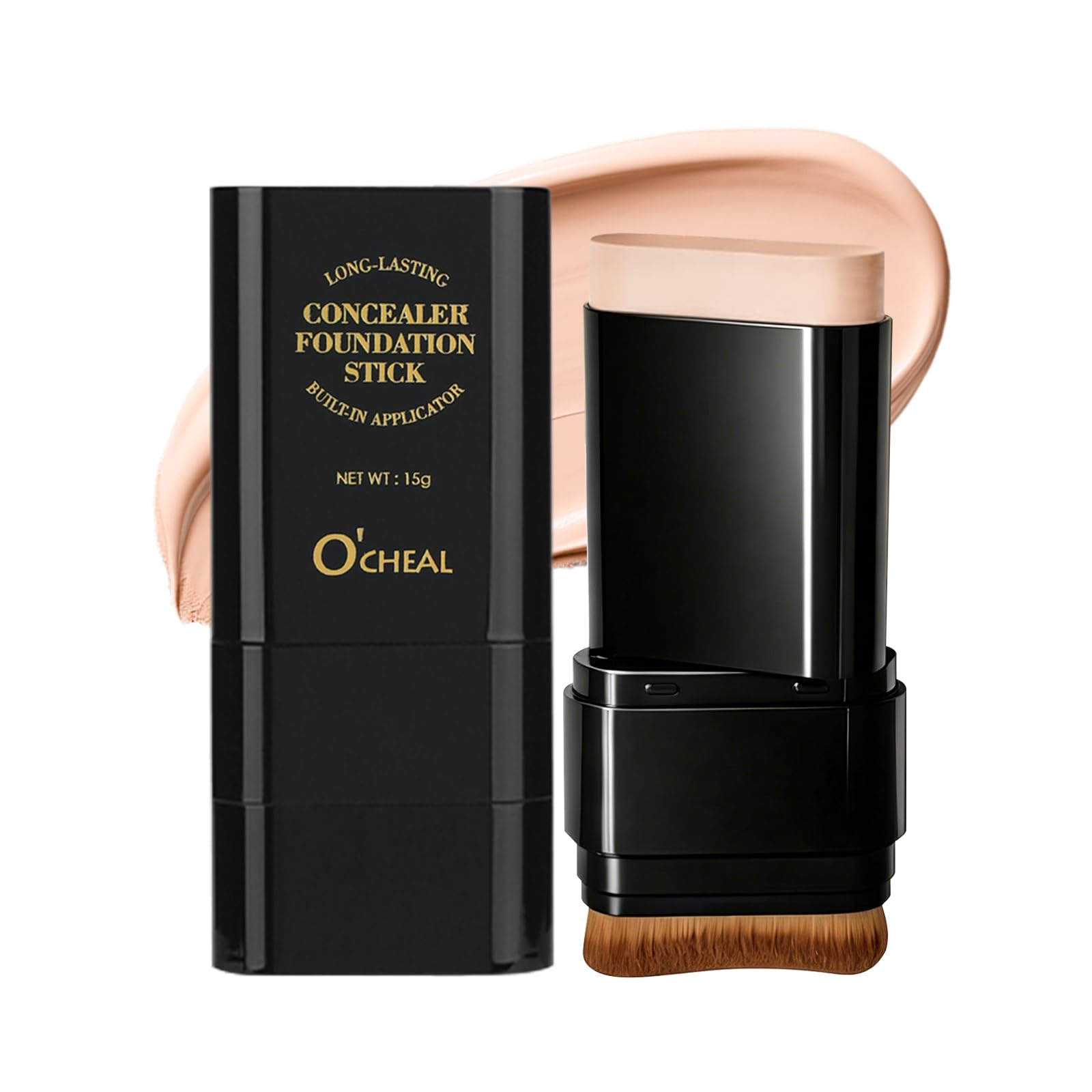
O'CHEAL Concealer Foundation Stick with Brush

O'CHEAL Concealer Foundation Stick with Brush

Spare bag stick

Our Score 8.6/10
Check Price

Worth Noting

  • Turns greasy and cakey after a few hours
  • Shades run lighter than they look
Formula
Moisturizing, buildable
Coverage
Full
Applicator
Built-in M-shaped brush

Of the two brush-ended sticks here, the O'CHEAL is the more straightforward one: foundation at one end, a soft M-shaped brush at the other, and nothing else to buy. The brush is shaped to follow a cheek or the side of the nose, and it does the job of a separate tool without one.

What we like is how little fuss it takes. It glides on, blends out with the built-in brush, and doesn't demand a primer or a perfect base underneath — the coverage is full and buildable, and dark spots and redness go under a thin layer. It is the one to try if you want to find out whether a brush-ended stick suits the way you do your face.

Think of it as a spare rather than a signature: one for the desk drawer, one for the car, the kind of stick you don't mind losing. That is the role it fills best, and at that it is genuinely useful.

Bottom line: A full-coverage stick with a built-in brush that's worth keeping as a spare, provided you set it before the shine comes through.

7

Lingyun 2-in-1 Dual-Ended Foundation Stick

Lingyun 2-in-1 Dual-Ended Foundation Stick

Travel and heat

Our Score 8.4/10
Check Price

Worth Noting

  • Brush is too soft for even blending
  • Can feel tight on dry mature skin
Wear
Waterproof and sweat-proof
Format
Dual-ended stick and brush
Coverage
Full

This is the stick to throw in a weekend bag. It is dual-ended — full-coverage foundation at one end, a curved brush at the other — and the matte formula is billed as waterproof and sweat-proof, which is the sort of claim that matters in August and not much in February.

The coverage is genuinely full and buildable, and it handles dark spots without going heavy. It also sets down matte and stays there, which makes it the better of the brush-ended sticks for humidity; a creamier formula would be sliding off by lunch.

For travel and hot weather it is a sensible buy: it takes up almost nothing, the brush means one less thing to pack, and the finish holds up when a creamier stick would not. Think of it as a summer and travel stick rather than the one you reach for every morning.

Bottom line: The travel pick: a full-coverage, matte stick that holds up in heat and carries its own brush, as long as your skin isn't on the dry side.

How We Tested Foundation Sticks on Mature Skin

We started by pulling every stick currently sold in the U.S. — drugstore, department store, and clean-beauty lines — then narrowed the field by shade range (a stick is useless if the closest match is two tones off), tube size, and cost per ounce. Price mattered, but only as a tiebreaker: a drugstore stick and a luxury one went through the same routine. Twelve made the cut, and we tested them for six months, from late fall into spring, so the same faces saw both dry indoor heat and warmer weather.

Each stick got worn the way people actually wear foundation — applied at 7 a.m. in a bathroom mirror with five minutes to spare, then checked again at lunch and before dinner. Some went on over bare, moisturized skin, others over sunscreen and primer, and we noted which ones dragged across the cheeks, which went patchy around the nose, and which settled into the lines above the lip and at the outer corners of the eyes. Every shade was swatched along the jawline in daylight and compared against the neck, since indoor lighting flatters almost everything.

Coverage was judged on what it covered, not what the box promised: we noted whether redness and dark spots disappeared in one pass or needed a second, and whether that second pass turned cakey. Texture was a feel test — how the stick warmed against skin, whether it stayed emollient or dried to matte — and we checked each finish in daylight to see whether it read as skin or as makeup. For longevity, we blotted at the four- and eight-hour marks and looked for transfer on collars and phone screens. At the end of the day we paid attention to how skin felt after removal, which is where the moisturizing ingredients show themselves. Value came down to arithmetic: uses per tube against price, and whether the cheaper sticks needed more product to do the same job.

How to Choose a Foundation Stick for Mature Skin

Match the finish to your skin type, not your age

Matte is the default setting for foundation sticks, and on dry, tight mature skin it is usually the wrong one — matte formulas catch on flakes and make every line read sharper. If your skin runs dry, look for a creamy, dewy stick like the Max Factor Pan Stik and apply it over a moisturizer that has had a minute to sink in. If you are combination or oily, the opposite holds: a shine-free formula such as the Maybelline Fit Me or the Lancôme cream-to-powder keeps shine down and holds its finish longer. Plenty of people are dry on the cheeks and oily down the middle, which is exactly where a light dusting of setting powder earns its keep.

Decide how much coverage you actually need

Full coverage sounds like the safe choice, and it is often the reason a stick looks heavy: the more opaque the formula, the more it shows where it has been pushed into a line. If what bothers you is redness, uneven tone, and some shadow under the eyes, a light-to-medium stick such as the Revlon covers all three and keeps looking like skin. Save the full-coverage formulas — the Lancôme, the Max Factor — for days when pigmentation has to disappear, and apply them in thin layers, building only where the problem actually is.

Get the shade right before anything else

Shade is where most stick purchases go wrong, and mature skin is less forgiving of a near miss because a wrong undertone reads as a flush or a shadow. Swatch on your jaw in daylight, not on your hand, and wait a few minutes — cream formulas often dry a shade darker or pinker than they look in the tube. Buy from a retailer with easy returns and sample both shades if you are stuck between two. A short lineup, like the nine shades Revlon offers, is fine as long as one of them is genuinely yours.

Apply it thin, over settled skincare

Most stick foundation problems are application problems. Moisturizer and sunscreen need a minute to settle before you swipe, or the stick drags and pills on top of them. Warm the tip on the back of your hand, apply in thin stripes, and blend with a damp sponge anywhere that creases — around the nose, between the brows, the outer corners of the eyes. Build a second layer only where you need it; going back over a whole cheek with more product is how a good stick starts looking like a mask.

Weigh the format and the amount of product

A built-in brush sounds like a convenience and is one, up to a point: you are carrying the applicator you will then want to wash, and a soft brush will not blend a firm cream as well as a sponge does. Twist-up sticks are the most portable, but they soften in a hot car and snap if you wind out too much. The amount of product matters more than the packaging suggests — the sticks here run from 0.64 ounces to well over an ounce — so a small stick that genuinely suits your skin is still the better buy if it is the one you will finish.

Frequently Asked Questions

Final Verdict

The Revlon PhotoReady Insta-Fix is the stick we recommend to most people with mature skin, because it does the three things that matter — covers redness and dark spots, stays out of the fine lines, and carries SPF 20 — without making you buy a heavy formula to get them.

If full coverage is the whole point, the Lancôme is worth the money: it blurs pigmentation, holds a matte finish for hours, and the built-in kabuki brush makes it the easiest of these to apply anywhere. And if your skin runs dry on a tighter budget, start with the Max Factor, whose dewy finish is the kindest thing here to a flaky cheek.