Body Care

Best Foot Creams of 2026

Dry, cracked heels are one of those problems that sneak up quietly and then announce themselves at the worst possible moment — sandals in June, a pedicure, a barefoot walk across a hotel room floor. What most people don't realize is that the fix isn't a one-and-done lotion but a commitment to the right formula: something with urea or lactic acid to actually thin the rough stuff, plus enough emollient to keep the new skin from splitting again. A good foot cream doesn't just feel nice for an hour; it fixes the problem you started with.

I've spent the past six months working through 14 foot creams, from thick heel balms to lightweight daily lotions, and the range in results is wider than you'd expect. Some sink in within a minute and leave no residue; others leave a film on the sheets. Some smell like a spa; others like a chemistry set. The fragrance question matters more than shoppers think, because a cream you don't enjoy applying is a cream you stop using — and consistency is really the whole game here. Below are the ones that earned a permanent spot on my nightstand, sorted by what they're actually best at.

1

O'Keeffe's Healthy Feet

Top Pick
O'Keeffe's Healthy Feet

Extreme dryness

Our Score 9.2/10
Check Price

Worth Noting

  • Jar format means dipping fingers
Size
3.2 oz
Scent
Unscented
Format
Jar
Formula
Concentrated moisture barrier

A plain 3.2-ounce jar is not the most exciting thing to put on a bathroom shelf, but O'Keeffe's Healthy Feet is the cream we recommend first for genuinely rough, cracked heels. It is concentrated, unscented, and thick enough that it feels closer to a salve than a lotion. We like that it does not ask for a complicated routine: clean feet, a layer of cream, and a little time.

The texture is the trade-off. It goes on waxy and stays noticeable for a few minutes, so we use it at bedtime rather than before walking out the door. Pull on a pair of socks and it has time to settle; leave it bare and you may feel the film on the sheets. For a cream aimed at extreme dryness, that richness is the point, not a flaw.

What it does well is soften the hard, thick skin that builds up around the heel. The brand's protective-layer claim matches the way the cream behaves: it sits on the surface and holds moisture in rather than disappearing immediately. A little goes further than we expected, which matters because the jar is small enough to travel but large enough to last through a rough winter.

We keep it for the weeks when our heels need a serious overnight treatment, not for a quick morning moisturizer. If your feet are only mildly dry, this will feel like overkill; if they are cracked and tender, it is the first one we reach for. The unscented formula also means it will not compete with a scented body lotion or perfume.

Bottom line: We recommend O'Keeffe's Healthy Feet first for genuinely rough, cracked heels: the thick, unscented cream stays put, and the jar lets you use every bit.

2

Kerasal Intensive Foot Repair

Kerasal Intensive Foot Repair

Deep cracks

Our Score 9.0/10
Check Price

Worth Noting

  • Small 1 oz tube runs out quickly
Base
Soft white petrolatum
Size
1 oz
APMA Seal
Yes
Key Actives
5% salicylic acid, 10% urea

Kerasal comes in a 1-ounce tube that looks more like a pharmacy staple than a beauty product, and that is the right frame. The formula pairs 5% salicylic acid with 10% urea and a soft white petrolatum base, so it exfoliates rough skin while sealing in moisture. We reach for it when a heel has moved past dry and into split territory.

The petrolatum is what makes Kerasal the most convincing rescue here, and also the least pleasant to use. It is greasy and sticky enough that we plan on socks and old sheets; this is not a cream to apply five minutes before leaving the house. Used overnight, though, it stays where it is put and gives the crack a chance to close instead of drying out again.

The brand says visible results in one day, which we treat as a best case rather than a promise. What we like is the combination: salicylic acid loosens the hard edge around a crack, urea pulls in moisture, and petrolatum holds the whole thing in place. It is the only pick here that combines salicylic acid with urea, which is why it earns a separate spot rather than duplicating the high-urea creams.

Bottom line: We keep Kerasal for heels that have moved from dry to split: the salicylic-acid-and-urea ointment is slow, greasy, and the most convincing rescue here.

3

Flexitol Heel Balm

Flexitol Heel Balm

Rough heels

Our Score 9.2/10
Check Price

Worth Noting

  • Noticeable scent may not suit sensitive noses
Size
4 oz
Urea
25%
Texture
Non-greasy
APMA Seal
Yes

Flexitol puts 25% urea on the label, and that number is the reason to consider it. It sits between the 10% daily creams and the 40% callus treatments here, which makes it a sensible middle step for heels that are thick and rough but not yet split. The 4-ounce tube has an APMA seal and a balm-like texture that stays put under socks.

We used it as a nightly heel treatment and appreciated that it does not require a huge amount. The cream is rich without being as waxy as O'Keeffe's, and it spreads more easily than the 40% urea formulas. It is still a product for rough skin, not a light lotion you forget you are wearing.

The APMA seal is a useful signal if you want a foot-care product reviewed by a podiatric organization. That does not change the fact that this is a heavy-duty balm, so we treat it as a night product and let it work while we sleep. For a heel balm, it is relatively easy to live with, and we keep it for the weeks when sandal season is close.

Bottom line: Flexitol is our pick for thick, rough heel skin that needs a stronger urea dose, with a balm texture that stays put under socks.

4

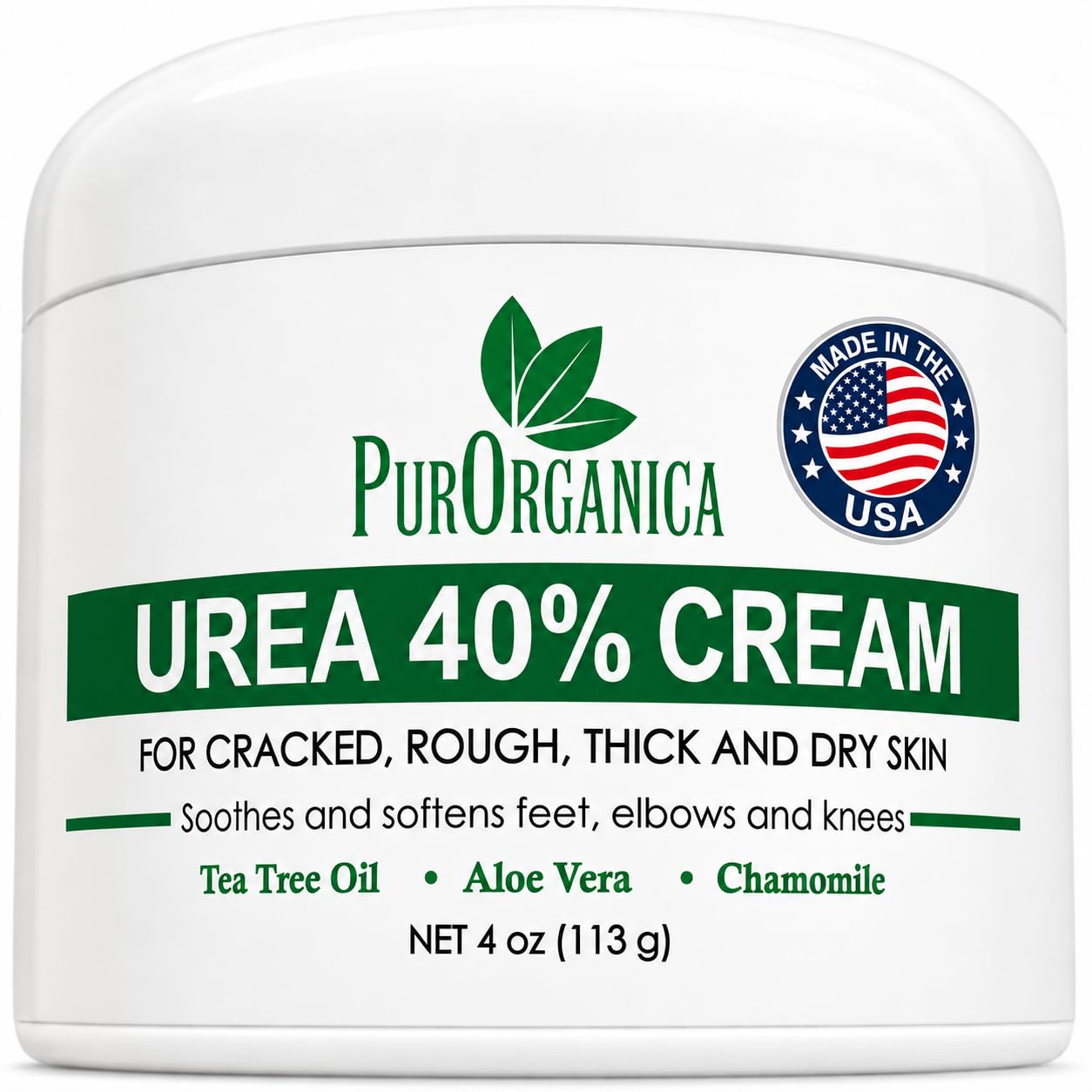
PurOrganica Urea 40%

PurOrganica Urea 40%

Calluses

Our Score 9.0/10
Check Price

Worth Noting

  • Tacky finish can require socks
Size
4 oz
Urea
40%
Origin
Made in USA
Skin Types
All skin types

PurOrganica's 40% urea cream is the most exfoliating formula in this group, and it makes no apology for it. The 4-ounce cream is aimed at calluses, thickened heels, and the kind of hard skin that laughs at a standard lotion. It is made in the USA and marketed for all skin types, though the percentage tells you this is not a gentle daily moisturizer.

On hard calluses, the higher urea dose is the point. Urea at this strength softens the keratin that makes a heel feel like sandpaper, and the cream is thick enough to stay on the spot instead of running down the foot. It is a dense cream, and a little goes a long way.

This is the one we choose when the problem is built-up callus rather than surface dryness. It is not the cream we hand to someone with a few rough spots and no patience for a routine; the 40% urea is a commitment, and the results are aimed at the hard skin that needs the most help.

What we appreciate is that it does not pretend to be a luxury product. The cream is dense, the tub is simple, and the formula is built for the task. If your heels are sensitive, start with a lower percentage and give it a few nights before deciding.

Bottom line: PurOrganica earns its place for calluses and hard heel skin: the 40% urea cream is the most aggressive exfoliating pick here, provided you can live with a tacky finish.

5

Gold Bond Softening Foot Cream

Gold Bond Softening Foot Cream

Everyday moisture

Our Score 9.4/10
Check Price

Worth Noting

  • Scented formula won't suit fragrance-free routines
Size
4 oz
Scent
Fresh scent
Format
Tube
Key Ingredients
Shea butter and jojoba

Gold Bond Softening is the foot cream that feels most like a regular body lotion, which is exactly why it earns a place. The 4-ounce tube uses shea butter, jojoba, and a silk peptide matrix with three vitamins, and it has a fresh scent that makes the routine feel less clinical. It is not the cream for a deep crack, but it is an easy one to use every day.

We reach for this on ordinary dry days, when the goal is softness and a cream that absorbs before we put on shoes. It leaves less of a film than the heavy balms here, and the scent fades rather than hanging around. That makes it the best everyday option in this set for anyone who wants foot care to feel like part of a normal morning.

The tube is a practical size for a gym bag or a desk drawer, and the cream spreads without a lot of rubbing. It stays pleasant rather than overpowering, and it does not leave the sticky residue that makes some foot creams a chore. For a daily cream, that is most of the battle.

Bottom line: Gold Bond Softening is the foot cream we keep for daily upkeep: a quick-absorbing, shea-butter formula that makes rough skin feel soft without a bedtime production.

6

Eucerin Advanced Repair Foot Cream

Eucerin Advanced Repair Foot Cream

Sensitive skin

Our Score 9.4/10
Check Price

Worth Noting

  • Can feel tacky if over-applied
Pack
3 tubes, 3 oz each
Urea
10%
Scent
Fragrance-free
Key Ingredients
Urea, ceramide, natural moisturizing factors

Eucerin Advanced Repair comes as three 3-ounce tubes, which is a different kind of commitment from a single jar. The formula uses 10% urea, ceramides, and natural moisturizing factors, and it is fragrance-free, dye-free, and paraben-free. It is the one we hand to someone who wants foot care without a scent trail or a complicated label.

The cream is lighter than the 25% and 40% balms here, and it absorbs quickly enough for daytime use. That does not mean it disappears: a thin layer is better than a generous one, and the tube format is easy to keep by a desk or in a bag. For a product you are meant to use daily, that convenience matters.

Fragrance-free is not the same as unscented in every formula, but Eucerin is genuinely quiet on the nose. That makes it a good choice for anyone who shares a bathroom with someone sensitive to perfume, or who simply does not want a foot cream announcing itself. The 10% urea is a maintenance strength, not a rescue dose for thick calluses.

This is the one we recommend when the priority is a cream you can use every day without thinking about scent, texture, or a separate foot-care ritual. It won't transform a deeply split heel the way Kerasal can, and it won't soften a callus like the 40% urea options. What it does is make daily moisture easy, which is the job most people actually need done.

Bottom line: Eucerin is our fragrance-free default: a 10% urea cream that absorbs quickly, travels well, and suits anyone who wants foot care without a scent trail.

7

Miracle Foot Repair

Miracle Foot Repair

Shared bathrooms

Our Score 9.4/10
Check Price

Worth Noting

  • Bottle is too large for small shelves
Size
32 oz
Format
Pump bottle
Aloe Content
60% pure ultra aloe
Diabetic Use
Brand says diabetic safe

Miracle Foot Repair is a 32-ounce pump bottle, which puts it in a different category from the tubes and jars here. The formula is 60% pure ultra aloe, and the brand labels it diabetic safe. It is the one we reach for when the whole household needs a pump by the shower, not when we need a tube for a purse.

The cream is thick enough to feel substantial but spreads easily over a full foot, and it does not leave the heavy film of a petrolatum balm. It has a light scent that fades quickly, and the pump makes it easy to use with one hand when you are sitting on the edge of the tub. For everyday moisture, that convenience matters more than a fancy texture.

This is the bulk buy we recommend for shared bathrooms, gym bags that live on a shelf, and anyone who wants to moisturize feet without rationing product. It is not the most intensive crack treatment here, and it is best kept in one place. But as a daily aloe cream for the whole family, it is hard to beat on convenience.

Bottom line: Miracle Foot Repair is the bulk buy we recommend for shared bathrooms and daily all-over use, thanks to its 60% aloe formula and pump bottle.

8

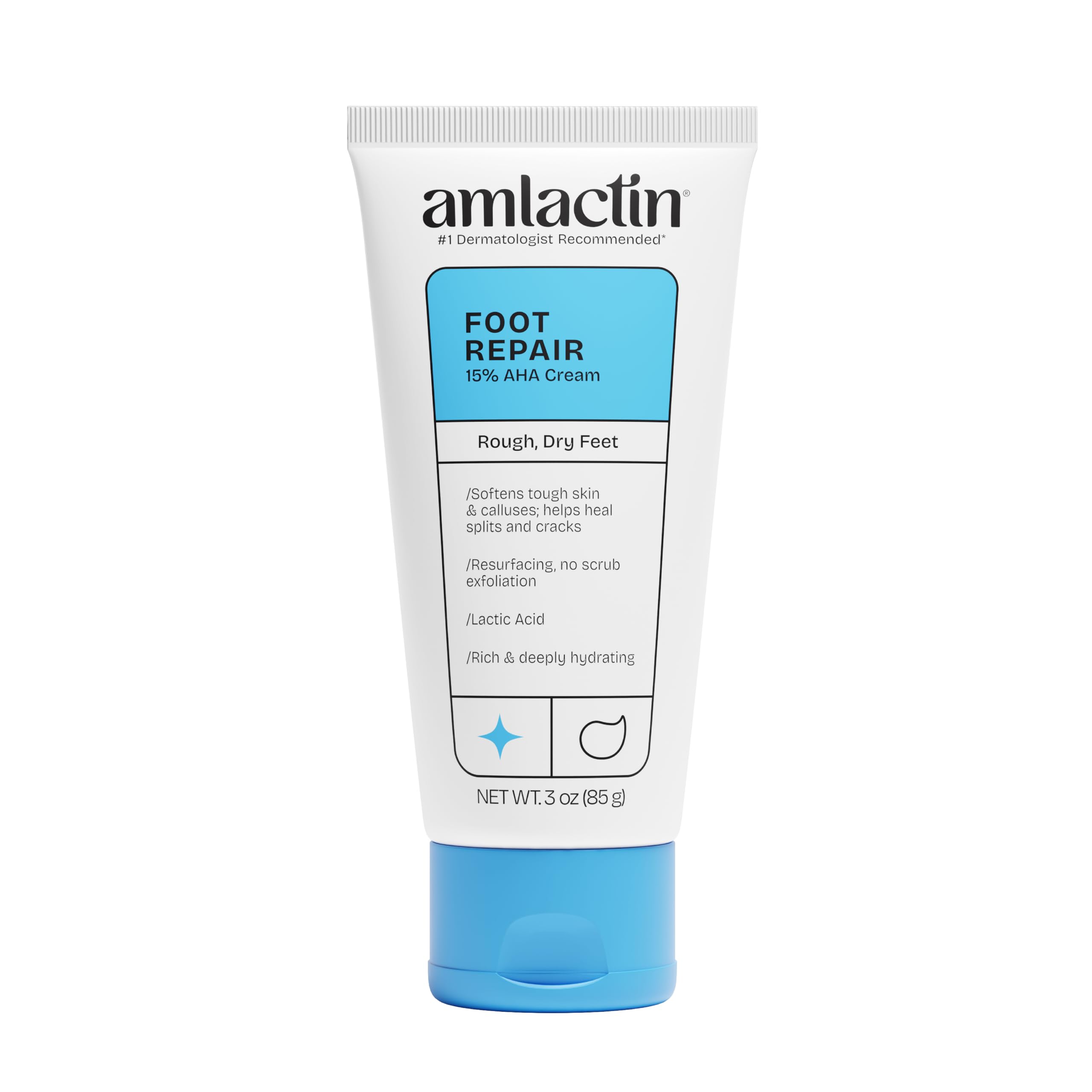
AmLactin Foot Repair

AmLactin Foot Repair

Rough texture

Our Score 9.2/10
Check Price

Worth Noting

  • Small 3 oz tube runs out quickly
Size
3 oz
Scent
Fragrance-free
Free From
Dyes, parabens, phthalates
Lactic Acid
15%

AmLactin approaches foot care from a different direction: 15% lactic acid, an AHA, does the exfoliating while the cream hydrates. The 3-ounce tube is fragrance-free and free of dyes, parabens, and phthalates. It is not a urea balm, and that is the point: this is for rough, thickened skin that needs surface renewal as much as moisture.

The texture is thinner than the balms here, and some tubes can feel almost watery. We prefer to apply it at night and let it sink in rather than trying to walk around immediately. Once it dries, it leaves less of a film than the petrolatum-based options, which makes it easier to use during the day.

Lactic acid is a good fit for the rough, dull skin that builds up on the sides of the heel and the ball of the foot. It is less occlusive than Kerasal, so it won't seal a crack the same way, but it is more elegant for everyday exfoliation. If your skin stings easily, start slowly; AHAs can be more active than a plain moisturizer.

This is the pick we reach for when the goal is smoother, softer skin rather than an overnight crack repair. It earns its place as the exfoliating alternative in this group, especially for anyone who dislikes the heavy feel of urea balms. It is a focused treatment, not a family-size staple.

Bottom line: AmLactin is the exfoliating alternative we recommend for rough, thickened skin, with 15% lactic acid doing the smoothing while the cream hydrates.

How We Tested the Best Foot Creams

We started with a shortlist of roughly 40 formulas, narrowing by ingredient — urea concentration, lactic acid, occlusives like petrolatum and lanolin — along with price per ounce and whether the packaging could be used without contaminating the jar. That cut the field to 14 creams spanning thick ointments and lightweight daily lotions, which we then used for six months.

Each cream was assigned to a pair of feet for at least two weeks, applied morning and night. We photographed heels at the start and end of every week, kept notes on how quickly each one absorbed, and checked how long skin stayed soft after a shower. To judge cracked heel relief, we tracked the deeper fissures on two testers with genuinely rough heels and noted when flaking stopped versus when the cracks actually closed.

For texture and wear, we applied each cream and then walked around in socks for 30 minutes to see what transferred, and separately tested barefoot on tile to catch any slick feel. We sniffed every formula twice — once out of the tube, once on skin — because several smell dramatically different after they warm up, and recorded how long the scent lingered. We also weighed jars and tubes before and after a month to estimate real cost per use, and noted which ones needed only a pea-sized amount versus a generous scoop.

What separated the top picks was rarely the ingredient list alone. The creams that worked were the ones testers kept reaching for because the texture was pleasant and the results showed up within a week — moisturizing enough to soften calluses without the greasy film that makes you avoid putting on shoes. We'll keep using these through the winter, when heels tend to worsen, and update if anything changes.

How to Choose a Foot Cream

Start With the Condition, Not the Percentage

A 10% urea cream is a sensible daily moisturizer for mild dryness; 25% to 40% urea is for thick, callused skin that needs help shedding hard cells. Salicylic acid, as in Kerasal, is the crack-focused choice, while lactic acid, as in AmLactin, is better for rough surface texture. If your heels are split, choose the treatment strength first and the scent second.

Choose a Texture You Will Actually Wear

Foot creams sit on a spectrum from lotion-like to ointment-heavy, and the right one is the texture you will tolerate. A quick-absorbing cream suits a morning routine and shoes; a rich balm or petrolatum ointment is a bedtime product that wants socks. We prefer to use a lighter cream twice a day than a heavy one once and resent it.

Decide How Much Scent You Want

Scent is a practical filter, not a detail. Fragrance-free formulas such as Eucerin and AmLactin suit sensitive noses and shared bathrooms; scented creams such as Gold Bond Softening and Flexitol make the routine more pleasant if you like them. If you are layering a foot cream under socks all day, choose the quieter option.

Match the Package to Where It Lives

A 1-ounce tube belongs in a bag or a desk drawer, a 3- to 4-ounce tube is the bathroom-cabinet standard, and a 32-ounce pump is for a shared shower or a household that uses cream daily. Jars let you scrape out the last bit but require fingers; pumps are easier to use one-handed.

Build a Routine You Can Keep

Consistency beats intensity. Apply after bathing or at bedtime, when the skin is damp and the cream has time to work, and give a new formula a week or two before judging it. A pumice stone or file used gently before application can help, but skip it on split or sore skin. The best foot cream is the one you keep using after the novelty wears off.

Frequently Asked Questions

Final Verdict

Start with O'Keeffe's Healthy Feet if your heels are genuinely rough and you want one unscented cream to reach for at night. For heels that have crossed into split skin, Kerasal's salicylic-acid-and-urea ointment is the stronger rescue, even though it is greasy and comes in a tiny tube.

If you want something you can use every morning without thinking, Gold Bond Softening is the easier habit; if scent is the obstacle, Eucerin Advanced Repair is the fragrance-free default.