Skincare

Best Face Tanners for Acne-Prone Skin of 2026

Anyone who has tanned over a breakout knows the specific disappointment: the color goes warm and even everywhere except the three or four spots that actually needed covering, where dry, healing skin grabs the DHA and turns patchier and darker than the rest. Face tanners built for acne-prone skin dodge that with lower concentrations of DHA, no pore-clogging oils, and enough moisture to stop flaking skin from drinking up extra color. Get it right and you get a wash of warmth that reads as a week away, not a spray tan.

I wore these on my own chin breakouts and my testers did the same with theirs, working through 12 formulas over nine months — drops, mists, and tinted lotions. What separated them had less to do with how dark they went than what they did to skin by morning: tight or comfortable, the smell fading or lingering, color still sitting evenly on day five, and how far a bottle stretches at three drops a night. The picks below are the ones I'd trust on a face with active breakouts.

1

L'Oreal Sublime Bronze Facial Drops

Top Pick
L'Oreal Sublime Bronze Facial Drops

Fragrance-free daily glow

Our Score 8.6/10
Check Price

Worth Noting

  • Takes several nights to build visible color
Dosage
5-7 drops light, 8-10 deeper
Format
Facial drops, 1 fl oz
Fragrance
Fragrance-free
Key Ingredient
Hyaluronic acid

The moisturizer is yours, and that is the whole idea: five to seven drops for a light glow, eight to ten for something deeper, stirred into a dime-size blob of whatever cream your skin already tolerates. Nothing about the formula is scented, which is rarer on a self-tanner than it should be, and it is the reason these drops sit at the top of this list. You are not gambling on a new base to get a bit of color.

The instruction sheet carries one line worth reading twice: do not mix the drops into AHA or retinol serums. That rules out most of an acne routine, but it is a sequencing problem rather than a dead end. We apply the acid or the retinoid first, wait, then follow with a plain moisturizer carrying the drops, or simply use the drops on the nights the active stays in the drawer. Building on a plain, calm base is also where the color lands most evenly for us.

Color arrives slowly. Two nights at five drops reads as a weekend outdoors rather than a tan, and the hyaluronic acid keeps skin from feeling tight while it develops. Get impatient and jump to ten drops a night and you can push it orange, at which point the fix is a night off rather than more product. Photograph your face in the same window light each morning for the first week; it is the only way we have found to judge a gradual tan honestly.

Bottom line: The one we recommend for most acne-prone faces: fragrance-free, dosed by the drop, and mixed into a moisturizer your skin already tolerates.

2

Tanologist Self-Tan Drops

Tanologist Self-Tan Drops

Reactive, breakout-prone skin

Our Score 8.6/10
Check Price

Worth Noting

  • Feels tacky while it dries
  • Color can go orange if you overdo it
Format
Facial drops, 1.01 fl oz
Shades
Light, Medium, Dark, Extra Dark
Formula Claim
Dermatologist-tested, non-comedogenic
Development Time
About 4 hours

Non-comedogenic and dermatologist-tested turn up in plenty of marketing copy and on exactly one listing in this group. That is the brand's claim rather than a lab result we can hand you, but on a page about acne-prone skin it is the most relevant sentence on any of these bottles.

The practical case is just as good, and it is why this sits second only to our top pick. Three or four drops go into your own lotion, color develops in about four hours, and there are four shades to choose from, light through extra dark, the widest range here. Four hours means you can judge the result the same day instead of waking up to a surprise, which for a first-timer is worth a lot. The formula leans on pink grapefruit, goji berry and juniper, and it stays thin enough to disappear into whatever lotion you use.

A little goes further than the bottle suggests, and at three or four drops a night the ounce lasts through a season of top-ups. Start at three drops in a light lotion rather than a rich cream, and wash your hands straight after; the drops are concentrated enough that fingers pick up color fast.

Bottom line: The pick for skin that reacts to everything: the only bottle here described as non-comedogenic and dermatologist-tested, with four shades and four-hour development.

3

Jergens Natural Glow Face SPF 20

Jergens Natural Glow Face SPF 20

SPF in one step

Our Score 8.8/10
Check Price

Worth Noting

  • Only one shade, fair to medium
Format
Facial lotion, 2 oz
Result
Gradual color within a week
Shade Range
Fair to medium
Sun Protection
Broad-spectrum SPF 20

Sunscreen and self-tanner in one bottle is the reason this one is on the list at all. Broad-spectrum SPF 20, built into a daily moisturizer that gradually adds color: for anyone whose morning routine is already three steps too long, that is a real trade of nothing for something. Use it in place of your lotion; the tan arrives over about a week.

Application is the least fussy here. The cream spreads like a normal moisturizer, the color is slow enough that a missed patch on Monday is invisible by Wednesday, and it leaves a dewy finish that sits well under makeup. The limit is the shade: fair to medium, one option, nothing deeper. If your skin is olive or dark, this is not the bottle for you.

Here is the part we weigh hardest. It is scented, and a formula that combines fragrance with sunscreen actives asks a lot of skin that is already reactive. Patch test on the jaw for two nights before you commit, and if you are mid-flare, wait a week. For everyone whose skin shrugs that off, and plenty of acne-prone faces will, it buys you sun protection and a tan in a single step, which nothing else here does.

Bottom line: Worth it if you want sun protection and a gradual tan in one morning step, though the scented formula is the one here most likely to sting.

4

St.Tropez Purity Bronzing Water Face Mist

St.Tropez Purity Bronzing Water Face Mist

No-touch application

Our Score 8.6/10
Check Price

Worth Noting

  • Less precise placement than drops
Finish
No rinse, light to medium glow
Format
Facial mist
Application
3-5 vertical pumps
Key Ingredients
Hyaluronic acid and antioxidants

Nothing touches your face but the mist. Three to five long vertical pumps over face, neck and chest, no rubbing, no fingers, no mitt, and for skin that is still healing, skipping the friction matters more than any serum in the bottle. Of everything here, this is the one we reach for when a breakout has left the surface sore to the touch.

The formula is hydrating rather than creamy: hyaluronic acid and antioxidants, quick to dry, no rinse, and light enough to spray over makeup on the way out the door. The color is a light-to-medium wash, a lift rather than a tan, which is about right for a face you will see in daylight.

Control is the trade. A mist spreads wider than a drop and there is no guide color to show where it landed, so keep the passes vertical and identical each time, and cover the hairline until it settles. The listing also stops short of a fragrance-free claim, which is the one place this gives up ground to our top pick, so read the ingredients if your skin reacts to scent.

Bottom line: The pick for sore, reactive skin: a fine mist you never have to rub in, with hyaluronic acid and a light wash of color that works over makeup.

5

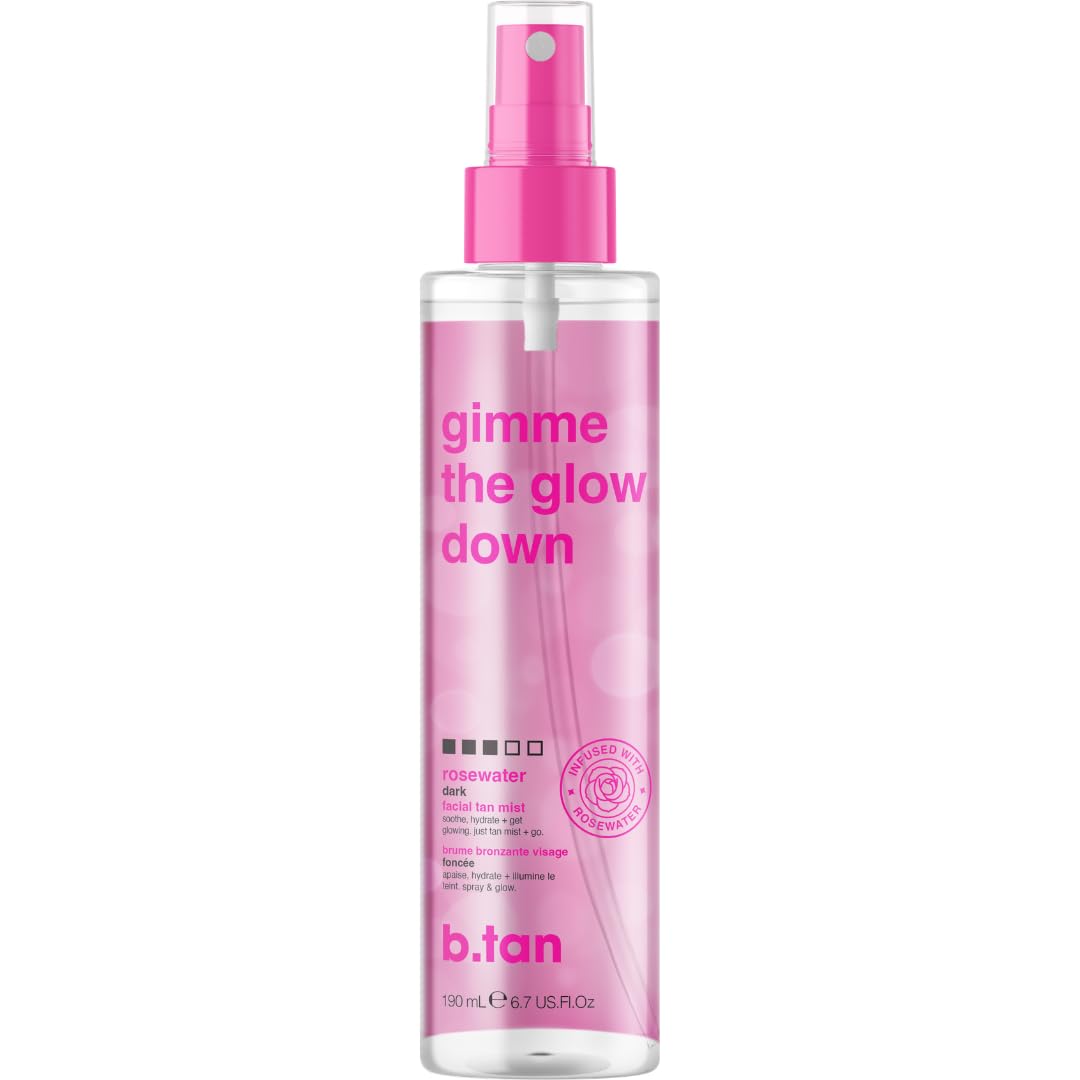
b.tan Gradual Self Tanner Face Mist

b.tan Gradual Self Tanner Face Mist

First-time tanners

Our Score 8.6/10
Check Price

Worth Noting

  • Develops lighter than expected
  • Scent is hit or miss
Format
Face and body mist, 7.83 oz
Result
Buildable gradual color
Application
Spray 6 inches from skin
Key Ingredient
Rosewater

At the bottom of this list's price range sits the biggest bottle on it: 7.83 ounces of clear mist against the one-ounce droppers most of these picks come in. You spray rather than count drops, so the cost of finding out whether facial tanner suits you is very small. That is the whole argument for b.tan, and it is a good one.

The formula is a water-light mist cut with rosewater, sold for face and body alike, and it builds: more sprays, more color, no orange if you are patient. We like it as a first bottle for exactly that reason. You can put a week into a light glow, decide the whole idea is not for you, and you have risked almost nothing. Build slowly and the color stays where you put it.

Consistency is where it wobbles. Sprayed too close, or over dry patches, it can land unevenly, so hold the nozzle six inches from your skin as the label says, work in the same pattern each time, and give it a full week before you decide it is not working. Layering three light passes beats one heavy one every time.

Bottom line: The least expensive way to find out whether facial tanner works for you: a big bottle, a light mist, and color you build spray by spray.

6

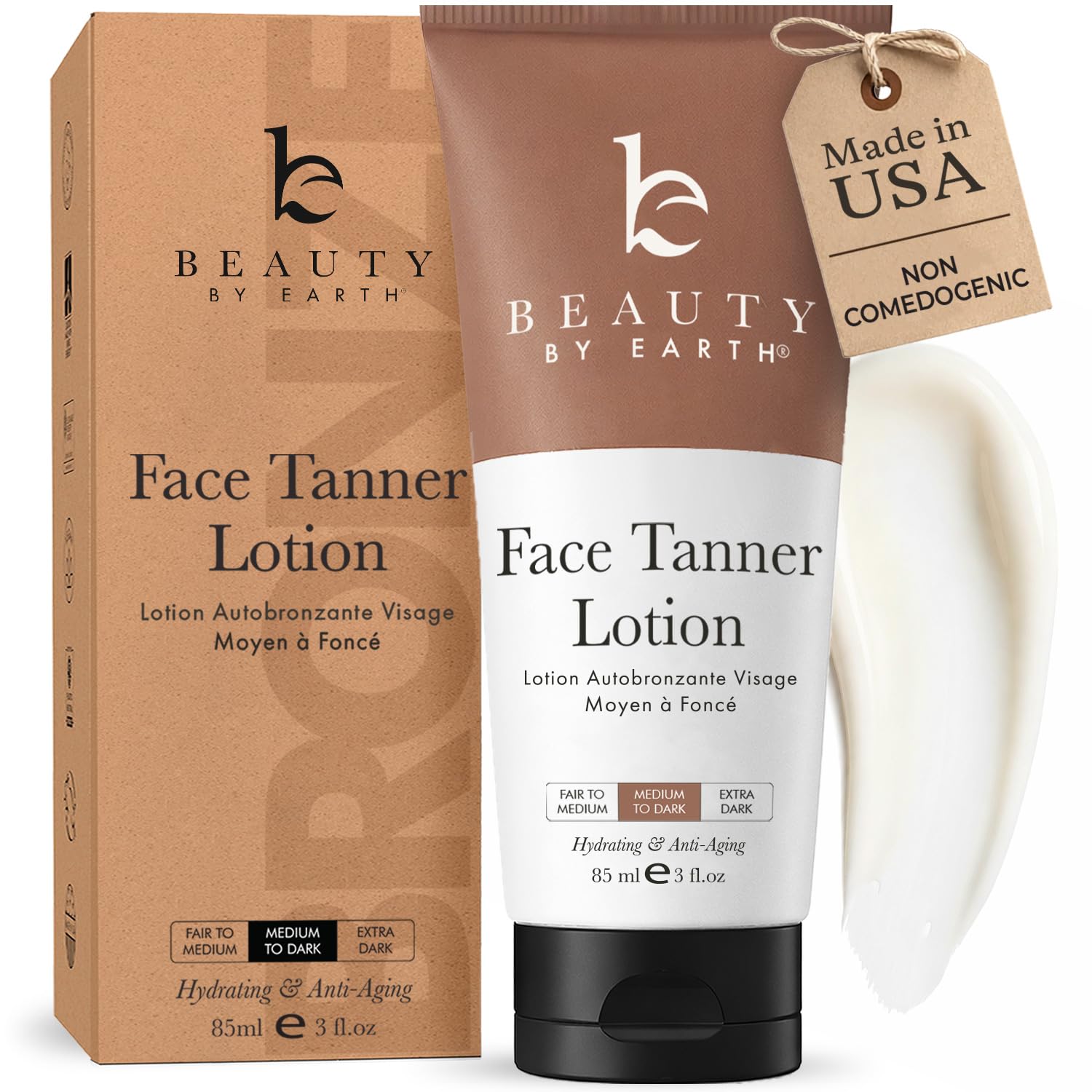
Beauty by Earth Face Tanner

Beauty by Earth Face Tanner

Dry, breakout-prone skin

Our Score 8.6/10
Check Price

Worth Noting

  • Richest formula here, too heavy for oily skin
Format
Facial lotion, 3.4 oz
Shades
Fair to Medium, Medium to Dark
Color Guide
None — dye-free formula
Key Ingredients
Aloe vera, shea butter, jojoba oil

Aloe vera, vegetable glycerin, shea butter, jojoba oil: the ingredient list reads like a body lotion rather than a tanning product, and that is the point. If your acne-prone skin is also dry, the sort that flakes around the nose in winter or after a retinoid, a cream spreads far more evenly than drops and feels nothing like a watery mist.

The dye-free formula is what we appreciate most. No bronzing pigment means no color rubbing off on a pillowcase or a collar, and no grey-brown wash to alarm you in the mirror before the tan has developed. The cost is that you cannot see where you have put it. Apply in daylight, in front of a mirror, and blend properly down the jaw and into the hairline, or you will meet the edges two days later.

Two shade ranges cover more ground than most here, and the scent is the most pleasant in this group by a distance, with no self-tanner smell to wait out. Our reservation is weight. Shea and jojoba make this the richest formula on the page, and on oily skin in July it can feel like one layer too many. Dry and combination skin, though, will find it the kindest thing here.

Bottom line: The pick for skin that is dry as well as breakout-prone: a dye-free cream with aloe and jojoba that never leaves color on your pillowcase.

7

TAN-LUXE The Face Self-Tan Drops

TAN-LUXE The Face Self-Tan Drops

Custom depth control

Our Score 8.4/10
Check Price

Worth Noting

  • Pricier per bottle than our other drops
Dosage
1 to 12 drops per use
Format
Facial drops
Key Ingredients
Raspberry seed oil, vitamin E, aloe vera

One to twelve drops is the range on the box, the widest dial here, and it is the reason to consider these over the cheaper droppers. One drop in a night cream is a whisper of color you would struggle to trace; twelve is a tan people will ask about. If a tanner has ever gone too far on the first night, that kind of control is worth paying for.

The base earns its keep too: raspberry seed oil, vitamin E and aloe vera, so the drops read as a serum addition rather than something you tolerate for the result. Mixed into a night cream they develop while you sleep and leave skin soft in the morning, which is more than most tanners manage.

Two practical notes. The drops are concentrated, so wash your hands the moment you have mixed; fingers pick up color fast and hold it. And the bottle rewards restraint, because at two or three drops a night it lasts far longer than its size suggests.

So why an also-consider rather than a runner-up? Because fragrance is the thing we most want gone from a product going on acne-prone skin, and there is no unscented version to point you toward. If your skin has never minded a scented product, the range and the oil base make this the nicest formula here to use. If it has, start with our top pick instead.

Bottom line: A lovely formula with the widest dose range here, held back from a higher spot only because fragrance is the last thing reactive skin needs.

8

Loving Tan Deluxe Face Self Tanner

Loving Tan Deluxe Face Self Tanner

Guided application

Our Score 8.8/10
Check Price

Worth Noting

  • Most expensive bottle here
  • Dark shade only in this listing
Shade
Dark
Yield
10+ applications per bottle
Format
Facial cream, 1.6 fl oz
Color Guide
Built-in instant bronzer

A built-in colour guide is the thing no other cream here offers. The formula carries an instant bronzer, so you can see exactly where it went before the tan develops, and on a face with texture, a couple of old marks and an awkward hairline, that visibility buys more confidence than any active ingredient could.

It is a cream for face and neck in a dark shade, and the brand reckons on 10-plus applications from the bottle. Spread a small amount with fingertips, blend into the hairline, and wash hands and nails immediately, because the guide color is not subtle on fingers.

Application rewards a light hand. A thin layer blended at the edges gives a golden, even tan; piled on around the nose and jaw it can go patchy, and this is a top-up-every-few-days tan rather than a week-long one. Dark is genuinely dark, so if you usually wear light-to-medium, treat it as a step up rather than a starting point.

We keep it as an also-consider for that reason: it is a specialist's product for someone who already knows they want depth. If you want to see your own handiwork and you like a strong tan, it is the most confidence-inspiring cream on this page. If you are pale and nervous about the whole enterprise, start with the drops.

Bottom line: The pick if you want to see where the color is going: a cream with a built-in bronzing guide and a genuinely deep result, at the top of the price range.

How We Tested Face Tanners for Acne-Prone Skin

We started with every face tanner sold as suitable for blemish-prone or sensitive skin, then cut the list by reading ingredient panels — flagging formulas that skip heavy oils and added fragrance, and noting which ones build color gradually rather than delivering a full dose of DHA in one application. That left 12 products, which we tested over nine months.

Each tester applied their assigned formula at night to a clean, bare face, then again on a morning when they were layering moisturizer and sunscreen on top, keeping track of how many drops or sprays it took to cover the face and jaw and how evenly it spread over texture and healing spots. We checked color four hours in, again the next morning, and on day five; we also noted how the product smelled at application and whether that smell was still there an hour later.

The most useful observations came from the two-week continuous runs, when testers used the same formula every other night and reported whether they broke out, whether skin felt tight or comfortable, and whether color faded evenly or clung to dry patches around the nose and mouth. We also counted applications per bottle to work out the real cost per use, since a formula that needs ten drops a night at a mid-range price is a different proposition than one that needs three.

How to Choose a Face Tanner for Acne-Prone Skin

Pick the format before the shade

Three formats do the same job very differently. Drops go into your own moisturizer, which means you control the base, and that is the advantage that matters most if you have spent months finding a cream that does not break you out. A lotion is the simplest to use and the hardest to customize, because you get the brand's base whether or not it suits you. A mist needs no touching at all, which is the one to choose when skin is sore or healing.

Our order of preference for reactive skin runs drops first, mist second, lotion third, with the exception of a cream so rich it doubles as your night moisturizer.

Read the label for fragrance and clogging claims

Fragrance is the most common reason a face product stings, and it is the first line to check on a tanner. One product here states fragrance-free outright; another states non-comedogenic and dermatologist-tested. Treat both as label claims rather than proof, but they are still useful filters, because a formula that says neither is the bigger gamble on acne-prone skin.

Then patch test on the jawline for two nights before you go anywhere near the whole face. A reaction confined to a patch you can cover is a boring inconvenience; the same reaction across both cheeks is a fortnight.

Build depth over nights, not in one go

Gradual color is safer on uneven skin than one big application, because you can stop when you like what you see. The dosing instructions on the drops make this concrete: five to seven drops gives a light glow, eight to ten a deeper one. Start low, photograph your face in the same window light each morning, and add from there.

If you overshoot, the fix is time rather than scrubbing. Exfoliating hard to strip a too-dark tan usually leaves you patchy and sore as well.

Work around your actives

Most acne routines run an acid, a retinoid, or both, and at least one tanner here cannot be mixed into AHA or retinol serums, so the two steps have to be sequenced rather than combined. Apply the active, wait, then follow with a plain moisturizer carrying the drops, or use the tanner on the nights the active stays in the drawer.

Read the mixing instructions before you buy rather than after. It is the one line on these labels that changes how you use the bottle every night.

Decide whether you want SPF in the same step

Only one pick here has sunscreen built in, and for plenty of people that convenience decides it: one morning step instead of two, with the tan arriving gradually alongside. It is also the pick with the most irritation caveats, which is worth weighing rather than waving away.

If you choose a tanner without SPF, nothing about your sunscreen routine changes. A tan is not protection, however healthy the color looks.

Frequently Asked Questions

Final Verdict

Our recommendation is L'Oreal's fragrance-free drops. They let you keep the moisturizer you already trust, they build slowly enough to correct, and the label tells you exactly how much to use. If a non-comedogenic claim is what settles it for you, Tanologist's drops are the alternative, and Jergens is the one to pick when a single morning step with SPF 20 is worth a patch test first.

Whichever you choose, start at the low dose for a week. A facial tan is easy to add to and thoroughly annoying to take off.