Skincare

Best Eye Cream for Dry Eyelids of 2026

There's a particular sting to dry eyelids — the moment you blink and feel that papery tug, or go to blend concealer and watch it catch on a flake you didn't know was there. Eyelid skin is the thinnest on your body, so it flakes first in dry indoor heat and reacts first to a cream that's too rich or too fragranced. The right eye cream for dry eyelids calms the itch, cushions the lid through the night, and disappears under makeup instead of pilling.

I've opened enough jars to be picky about texture, and a cream that never quite absorbs is worse than none at all. Over the past six months, my team and I have run 12 eye creams through real morning and bedtime routines, and the ones that genuinely relieve tight, flaky lids are rarely the priciest. Something first-time buyers rarely hear: a formula built for dark circles isn't automatically gentle enough for a compromised eyelid. The picks below are the ones we'd hand to a friend mid-flare-up.

1

BlinkBetter BetterLids Eyelid Ointment

Top Pick
BlinkBetter BetterLids Eyelid Ointment

Flaking, itchy lids

Our Score 9.0/10
Check Price

Worth Noting

  • Contains lanolin, a common allergen
Size
0.34 oz
Format
Eyelid ointment
Key Ingredients
Petrolatum, lanolin, squalane, colloidal oatmeal
Preservative-free
Yes

Flaking along the crease, an itch that gets worse when the heat comes on, that tight feeling when you blink — if that's the problem you searched for, this is the only product here built for it. BetterLids is an ointment for external eyelid skin rather than an under-eye cream: petrolatum, lanolin and squalane form a seal that slows water loss, while panthenol, allantoin and colloidal oatmeal go after the tightness and the itch. We put it first because it treats the lid as the lid, and lid skin is thinner and far less forgiving than the skin under your eye.

The texture takes some adjusting to. It's a proper ointment — glossy, faintly tacky and slow to sink in — so a rice-grain amount per lid is plenty, and it belongs in your night routine more than your morning one. What we appreciate about that heaviness is where it stays: it sits on the lid instead of creeping toward the lash line the way a thin cream can.

Two things to know before you buy. Lanolin is one of the main ingredients and it's a common allergen, so if a lip balm or a heavy hand cream has ever left you itchy, this isn't the one. The brand also asks for a 24-hour patch test before you go near your eye, which is advice worth taking with any new lid product; if you react, the La Roche-Posay below is the safer bet.

What keeps it at the top is how rarely anyone designs for the lid at all. Most eye creams are made for the under-eye area and meant to be patted along the orbital bone, and you're on your own if you smear one across the lid itself. Here that thin, cranky skin is the entire brief — and the 0.34 oz tube goes further than it looks, because the dose is so small.

Bottom line: If your lids flake and itch rather than simply feel tight, start here: an eyelid-specific ointment that seals in moisture and calms irritation with no fragrance and no preservatives.

2

CeraVe Eye Repair Cream

CeraVe Eye Repair Cream

Daily lid hydration

Our Score 8.6/10
Check Price

Worth Noting

  • Won't shift dark circles or puffiness
  • Can sting lids that are already irritated
Size
0.5 oz
Finish
Non-greasy
Testing
Ophthalmologist tested, NEA accepted
Key Ingredients
Ceramides, hyaluronic acid, niacinamide

Ceramides make up about half the lipids in your skin barrier, and CeraVe puts three of them in this tube alongside hyaluronic acid and niacinamide. It's ophthalmologist tested and accepted by the National Eczema Association, which counts for more than usual when the skin in question is the thinnest on your body. The 0.5 oz tube is also one of the least expensive full-size creams in this guide.

Where it earns its place is as the cream you don't have to think about: a pea-sized blob patted along the orbital bone and up over the lid, morning and night, under makeup or without. On moisture it's steady — the tight feeling goes and stays gone through a workday — and it's rich enough to feel like it's doing something without leaving a shine. Buy it for that, not for the mirror: dark circles and puffiness are not what this formula fixes.

A little goes a long way, which is part of why the value holds up. During a flaking spell we pair it with the BetterLids — this one in the morning, the ointment at night — and between them you get both the water and the seal that keeps it there.

Bottom line: Our pick for one modest cream that covers lids and under-eyes both: ceramides and niacinamide for the barrier, ophthalmologist testing and eczema-association acceptance behind it.

3

La Roche-Posay Toleriane Dermallergo Eye Cream

La Roche-Posay Toleriane Dermallergo Eye Cream

Reactive, allergy-prone lids

Our Score 9.0/10
Check Price

Worth Noting

  • Air-tight pump can fail to dispense
Size
0.68 oz
Packaging
Air-tight pump
Formulated Without
Preservatives, parabens, fragrance, drying alcohol

The interesting part of this formula is what isn't in it: no preservatives, no parabens, no fragrance, no drying alcohol. That isn't shorthand for gentle — fragrance and preservatives are two of the usual reasons a lid stings — and leaving them out is why the cream lives in an air-tight pump instead of a tube. Inside there's La Roche-Posay's thermal spring water and Neurosensine, a dipeptide the brand uses to calm the feel of reactive skin.

It's thinner than you probably expect. One pump spreads across both lids and the under-eye and disappears in seconds, with no shine and nothing for concealer to pill over. On a reactive lid that lightness is the point: you can put it on twice a day without building up a layer you can feel.

This is the one we reach for after a reaction, or for skin that flares at random and can't tell you why. Start here rather than with a richer cream if your lids run red and easily annoyed; if they're actively flaking, it's on the light side, so use it in the morning and let the ointment do the sealing at night. The 0.68 oz bottle is generous by eye-cream standards.

Bottom line: For lids that have reacted to everything else, this is the one we try next: no fragrance, no preservatives, no drying alcohol, in packaging that keeps air and contaminants out.

4

Clinique All About Eyes Eye Cream

Clinique All About Eyes Eye Cream

Under makeup

Our Score 9.2/10
Check Price

Worth Noting

  • Most expensive per ounce here
Size
0.5 oz
Format
Lightweight cream-gel
Testing
Allergy, dermatologist and ophthalmologist tested

Concealer is where eye creams go to fail — they pill, they crease, or they slide into the lines you were trying to blur. All About Eyes is the pick here we wear under makeup without a second thought: a cream-gel, silky rather than rich, that sinks in fast enough for concealer to sit on top rather than skate around.

It's gentler than its department-store reputation suggests, too. The formula is 100% fragrance free and allergy tested, with both dermatologist and ophthalmologist testing behind it, and the texture stays light enough to use on the lid itself, not just along the bone. There's vitamin C in it for brightness; don't expect much for pigmentation.

The catch is the price. This is the most expensive product per ounce in the guide and the size is a standard half-ounce, so the value question is fair. What you're paying for is the finish and the testing — and if a cream that layers cleanly under makeup is the difference between wearing it and leaving it in a drawer, that's money well spent.

Bottom line: The one we wear under concealer without a second thought: silky, fast-absorbing, allergy and ophthalmologist tested, and the priciest per ounce in this guide.

5

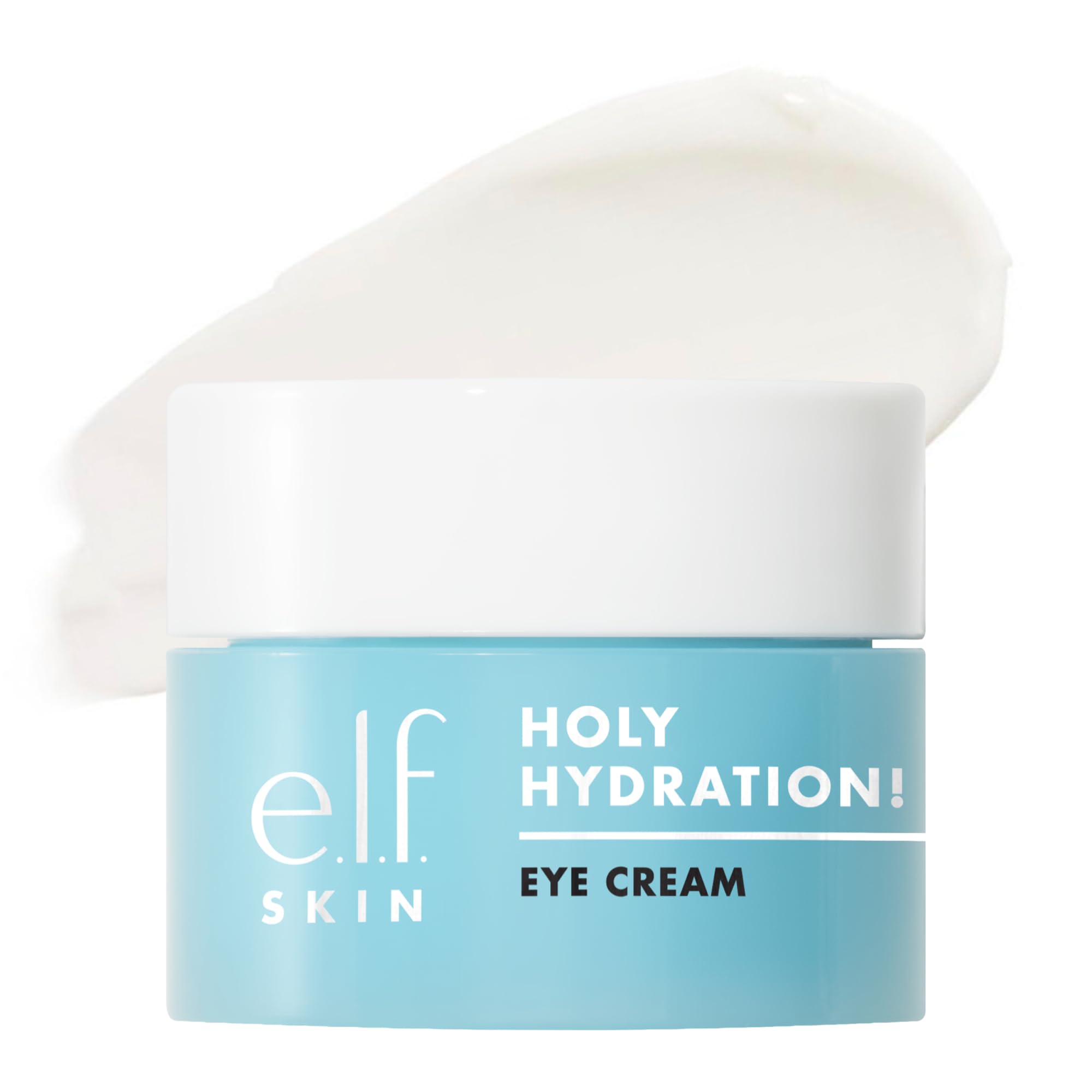
e.l.f. Skin Holy Hydration! Eye Cream

e.l.f. Skin Holy Hydration! Eye Cream

Testing a rich cream

Our Score 9.0/10
Check Price

Worth Noting

  • Only 0.23 oz per pot
Size
0.23 oz
Format
Rich cream
Key Ingredients
Hyaluronic acid, peptides

The pot is small — 0.23 oz, the least you get in this guide — and it's the first thing you notice. The second is that the cream inside is properly rich, noticeably thicker than the Cetaphil and the Neutrogena, and it still finishes matte rather than greasy.

For the money that's a useful combination: hyaluronic acid to hold water in the skin, peptides for a firmer look over time, and a formula that absorbs fast enough to wear during the day. It's the one we point to when someone wants to find out whether their lids tolerate a cream at all before spending more, and it holds up under makeup better than the price suggests.

The format is the trade-off. A pot means a finger in the product every time, which isn't ideal on skin that's already irritated — use a clean fingertip or a small spatula, and don't share it. And it's hydration rather than a seal: there's nothing occlusive in here, so on a genuinely flaking lid it's a layer, not a fix.

Bottom line: A rich, non-greasy cream with hyaluronic acid and peptides for very little money — the easiest way to find out whether a heavier texture suits your lids.

6

Cetaphil Hydrating Eye Gel-Cream

Cetaphil Hydrating Eye Gel-Cream

Light daytime layer

Our Score 8.8/10
Check Price

Worth Noting

  • Can sting lids that are already irritated
Size
0.5 oz
Format
Gel-cream
Key Ingredients
Hyaluronic acid
Claimed Hydration
24 hours

Gel-cream is a texture more than a promise: it goes on cool and wet, absorbs in seconds and leaves nothing you can feel afterwards. Cetaphil's version pairs that with hyaluronic acid and a 24-hour hydration claim, and it's one of the few here the brand calls out as suitable for sensitive eyes and contact lens wearers.

It's the one to reach for if every cream you've tried feels like a mask, or if your lids are oily and clog easily. It layers under makeup without pilling and doesn't disturb concealer, and a half-ounce tube is the standard size for this category.

What it isn't is a repair product. There's no ceramide and nothing occlusive, so if your lids are flaking it's the wrong first step and the CeraVe or the BetterLids will do more for you. For skin that's mostly fine and just feels tight by evening, though, it's pleasant and easy to keep using — which is more than you can say for a lot of richer creams.

Bottom line: A gel-cream for lids that can't stand the feel of anything on them: instant hydration, no residue, and a light finish that suits daytime better than rescue.

7

Neutrogena Hydro Boost Eye Gel-Cream

Neutrogena Hydro Boost Eye Gel-Cream

Congestion-prone lids

Our Score 9.0/10
Check Price

Worth Noting

  • Light finish fades on very dry lids
Size
0.5 fl oz
Format
Gel-cream
Key Ingredients
Hyaluronic acid
Formulated Without
Fragrance, dyes, oil

On paper there's nothing here for a sensitive eyelid to object to: no fragrance, no dyes, no oil, non-comedogenic, with hyaluronic acid as the headliner. Which is exactly why we suggest a patch test rather than assuming it will be fine — a formula can be clean on paper and still sting a lid that's already compromised. Put a little behind your ear or on your jaw for a day first.

Hyaluronic acid works by holding water, so it does its best on skin that's slightly damp. Pat your face dry, apply while there's still some moisture, and follow with something creamier if your lids run dry. The gel itself absorbs like water and leaves no shine, which makes it the easiest of these to wear under makeup in humid weather.

The thing to understand about a gel is what it can't do: no ceramides, no occlusive, nothing to hold the water in place. On a genuinely flaking lid it feels lovely for an hour and then leaves you where you started. As a first layer under a richer cream, though, it's a good way to get water into the skin before you seal it.

So this is the one for lids that break out, clog, or get milia from heavy creams, and for anyone who wants hydration they can't feel. If dryness rather than congestion is your problem, go to the CeraVe instead.

Bottom line: Our pick for lids that clog rather than flake: an oil-free, fragrance-free gel-cream that quenches fast and leaves no film behind.

8

COSRX Snail Peptide Eye Cream

COSRX Snail Peptide Eye Cream

Layering over cream

Our Score 9.0/10
Check Price

Worth Noting

  • Too thin to seal moisture on flaking lids
  • Can cause itching on reactive lids
Size
0.84 oz
Format
Lightweight lotion
Key Ingredients
73.7% snail mucin, 2% niacinamide, 5 peptides

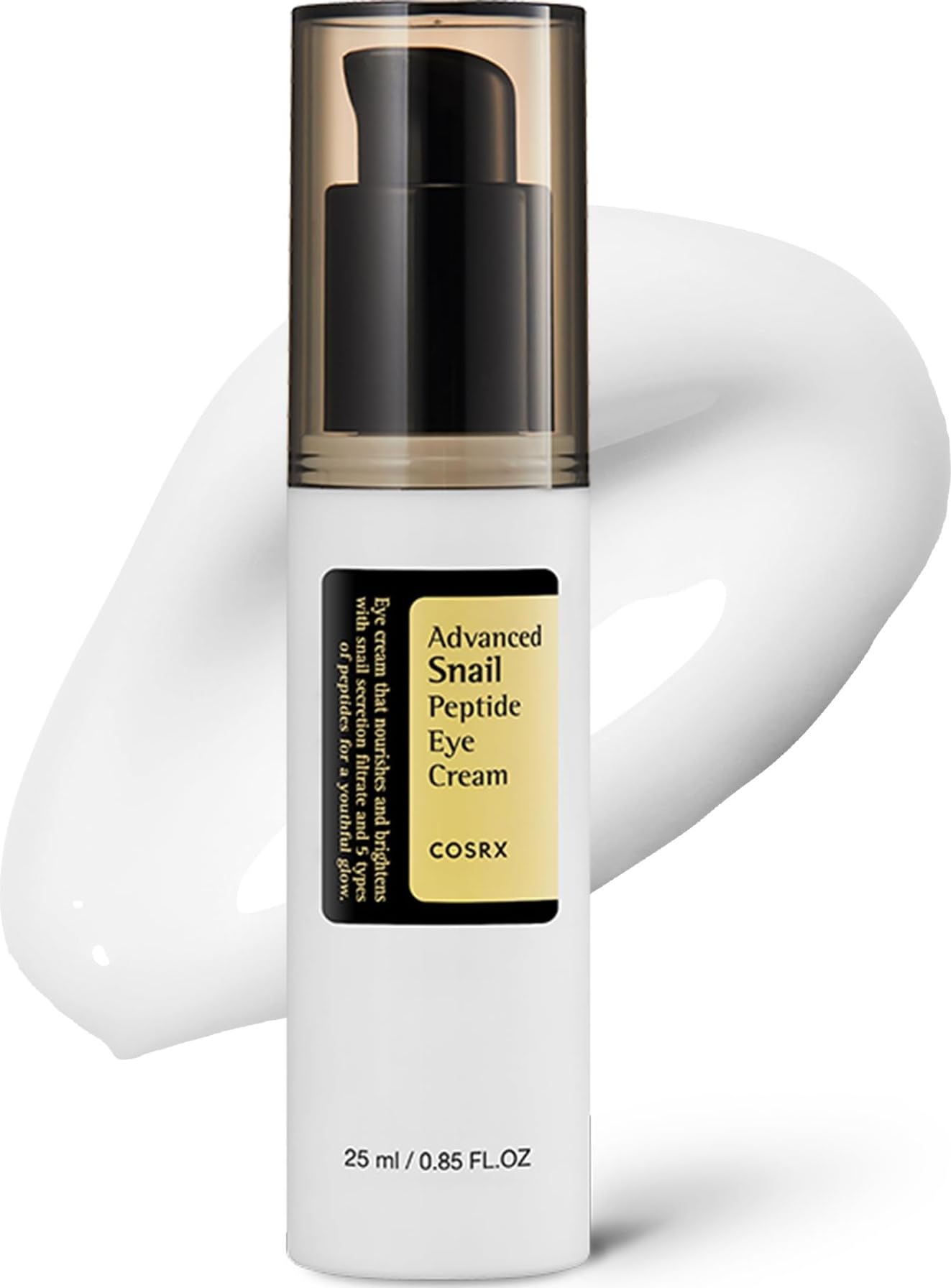
Seventy-three percent snail secretion filtrate is the number on the front, and it explains the texture: this is a lotion, thin and slippery, not a cream. The rest of the formula is more conventional — 2% niacinamide for tone, a five-peptide blend and adenosine — which is why COSRX pitches it against fine lines as well as dryness.

Application is a little different from everything else here. COSRX says to use it as the last step, after moisturizer, which sounds backwards until you feel how thin it is: it goes over a heavier cream without disturbing it, and on its own it's the least occlusive product in this guide.

The brand also asks for a 24-hour patch test on the body before you use it near the eye, and that's the request we take most seriously here. This isn't the shortest ingredient list in the guide, snail mucin included, and reactive lids are the ones to be careful with.

Where it earns its place is quantity and lightness: at 0.84 oz it's the most product you get in any single pick, and the texture suits lids that feel tight but can't take an occlusive layer during the day. It's a maintenance cream, though. For a lid that's actively flaking, there's nothing here to hold the moisture in.

Bottom line: The largest tube here and the lightest thing in it: a lotion-textured cream for lids that feel tight but hate being smothered.

How We Tested Eye Creams for Dry, Flaky Eyelids

We built the shortlist from ingredient panels rather than marketing claims, starting with roughly 30 formulas and favoring fragrance-free options, humectants paired with occlusives, and ingredients like oats, panthenol, ceramides, and peptides that support a stressed barrier. From there we narrowed to 12, deliberately keeping a spread of price points and formats — gel-creams, balms, ointments — so a lightweight gel wasn't being judged against a heavy night balm.

Testing ran six months, which carried us through the dry stretch of indoor heating and into spring. Each cream went on clean skin twice a day: a thin layer in the morning under sunscreen and concealer, a fuller one at night. Testers wrote down anything they felt on application — sting, warmth, a slight tingle along the lash line — and flagged it if a flaking patch reacted. At midday we checked whether concealer had pilled or settled into creases and whether that tight, papery feeling had crept back; on waking we noted whether lids still felt cushioned or had gone back to feeling thin and raw. Two testers with reactive skin patch-tested behind the ear for two nights before anything went near an eyelid.

We took bare-lid photos each morning for the first four weeks to compare puffiness and shadowing side by side, which is the only way to judge dark circles honestly. We also tracked how long each tube actually lasted, dividing cost by weeks of use rather than trusting the size on the box, and noted which ones we reached for without thinking — a cream has to be pleasant enough to use twice a day for half a year. By the end, the gap between a formula that hydrates for an hour and one that holds all night was obvious, and so was which ones we'd recommend to someone whose lids sting at the first sign of a heavy texture.

How to Choose an Eye Cream for Dry Eyelids

Start With What Your Lids Are Doing

Two different problems get called dry eyelids. One is plain dehydration: tight, faintly rough, worse in winter and after a long hot shower. The other is a reaction — redness, itching, or flaking that shows up a day or two after a new product. The first responds to an occlusive cream or ointment. The second needs you to stop everything and go minimal for a week.

If a lid is cracked, weeping or swollen, that is a clinician's call rather than a shopping decision. Otherwise, match the texture below to how angry the skin actually is.

Ointment, Cream, or Gel

Three textures, three jobs. An ointment such as the BetterLids is the heaviest and the best at stopping water loss — night use, flaking spells, cold weather. A cream such as the CeraVe or the Clinique hydrates and supports the barrier without a film, which is what most people want twice a day. A gel-cream such as the Cetaphil or the Neutrogena is lightest, absorbs fastest and suits oily or congestion-prone lids.

The trap: hydrating gels feel wonderful on dry skin and do almost nothing to keep the moisture there. If your lid flakes, a gel is a first layer, not the answer.

Read the Label for What's Left Out

On eyelid skin the exclusions matter more than the star ingredient. Fragrance, drying alcohol, essential oils and some preservatives are the usual suspects when a cream stings on contact. La Roche-Posay builds the Toleriane around that idea — no preservatives, fragrance or drying alcohol, in air-tight packaging so it doesn't need them.

You don't have to go that far, but fragrance-free is the floor. Treat hypoallergenic as a claim rather than a test, and patch test anything new for 24 hours behind the ear.

Where Retinol and Acids Fit

Retinol eye creams are built for fine lines, not for a barrier that is already struggling, and several of the tubes we looked at pair their retinol with stinging on application. If you use one, keep it on the orbital bone rather than the lid, apply it to dry skin and put a plain moisturizer over the top.

While lids are flaking, leave the actives out entirely. Reintroduce them once the skin has been calm for a couple of weeks, and start at twice a week.

How Much to Use, and How Long It Lasts

A rice grain per lid, or a pea for both lids and the under-eye; more than that simply migrates. Pat rather than rub, keep it a millimetre or two off the lash line, and apply hyaluronic acid formulas to slightly damp skin so there's water for them to hold.

Sizes in this guide run from 0.23 oz to 0.84 oz, which is a wide spread. Compare cost per ounce rather than the number on the sticker before deciding which one is the bargain.

Frequently Asked Questions

Final Verdict

Dry eyelids don't need a more expensive eye cream; they need one that seals. Our pick is the BlinkBetter BetterLids ointment, because it's the only product here formulated for the eyelid itself and the only one whose whole job is stopping moisture loss instead of adding another serum step.

If you want a single cream for lids and under-eyes, the CeraVe Eye Repair is the sensible buy at a modest price. If your lids react to everything you put on them, go straight to the La Roche-Posay Toleriane — and if you're only wearing it under concealer, the Clinique is the one that disappears.