Body Care

Best Exfoliating Scrubs for Feet of 2026

Sandal season has a way of exposing how much neglect your heels absorbed over the winter. I know the feeling: the first warm weekend, a pair of slides, and a heel that snags on the strap, the sock, the bedsheet. A good foot exfoliating scrub — a pumice bar, a textured sponge, a scrub you keep in the shower — files that thickened layer of dead skin back down so lotion sinks in instead of sitting on the surface. The catch is finding one that cuts fast enough to be worth the effort without leaving your skin raw.

Here's what surprised me: grit isn't everything. A coarse stone on wet skin removes plenty, but the ones that kept earning a spot on my tub ledge were still working after weeks of soaking, didn't crumble into powder on the shelf, and felt gentle enough for twice a week. We spent four months working through 14 of them, and the picks below are the ones we're still reaching for.

1

Mr. Pumice Pumi Bar 4-Pack

Top Pick
Mr. Pumice Pumi Bar 4-Pack

Everyday callus care

Our Score 9.2/10
Check Price

Worth Noting

  • Ridged face is too rough for thin skin
Grit
Medium-coarse, ridged and flat sides
Material
Synthetic polyurethane pumice
Pack Size
4 bars

Four bars in one pack sounds like three more than anyone needs until you work out where they go: one in the shower, one in the travel kit, one for the person in your house who keeps borrowing yours. That arithmetic is a real part of why this is the one we recommend first. The bar itself is a frothed synthetic pumice rather than stone, medium-coarse on both a ridged face and a flat one, and it is the flat face that does most of the work across the heel and the ball of the foot.

Medium-coarse is the right calibration for a general-purpose scrub, and we noticed the difference against the milder stones here: it moves dead skin after a ten-minute soak without leaving the heel feeling sanded. Because the material is synthetic, the texture is consistent from bar to bar, so you are not gambling on how porous a particular piece of rock turned out. It self-chips as it works, shedding fine particles down the drain. That is the design, and it is also why a bar has a finite life, which the four-pack neatly absorbs.

One caution worth stating plainly: medium-coarse is still coarse. On the thin skin around the toes and across the top of the foot we kept to a light pass or skipped it entirely, and if your skin is sensitive or unused to scrubbing, start with the flat face and short strokes. Rinse the bar under hot water when you are finished and stand it on the shelf to dry rather than leaving it in a soap dish.

Bottom line: Our pick for most people: medium-coarse grit on a ridged and a flat face, four bars to a pack, and a texture that bites into a heel without scraping it raw.
2

Gilden Tree Terracotta Pumice

Gilden Tree Terracotta Pumice

Hard, thick calluses

Our Score 8.8/10
Check Price

Worth Noting

  • Too heavy to pack for travel
Weight
7.04 oz
Material
Natural terracotta
Surfaces
Rough scrub and smooth polish
Dimensions
5.5 x 2.25 x 1.25 in

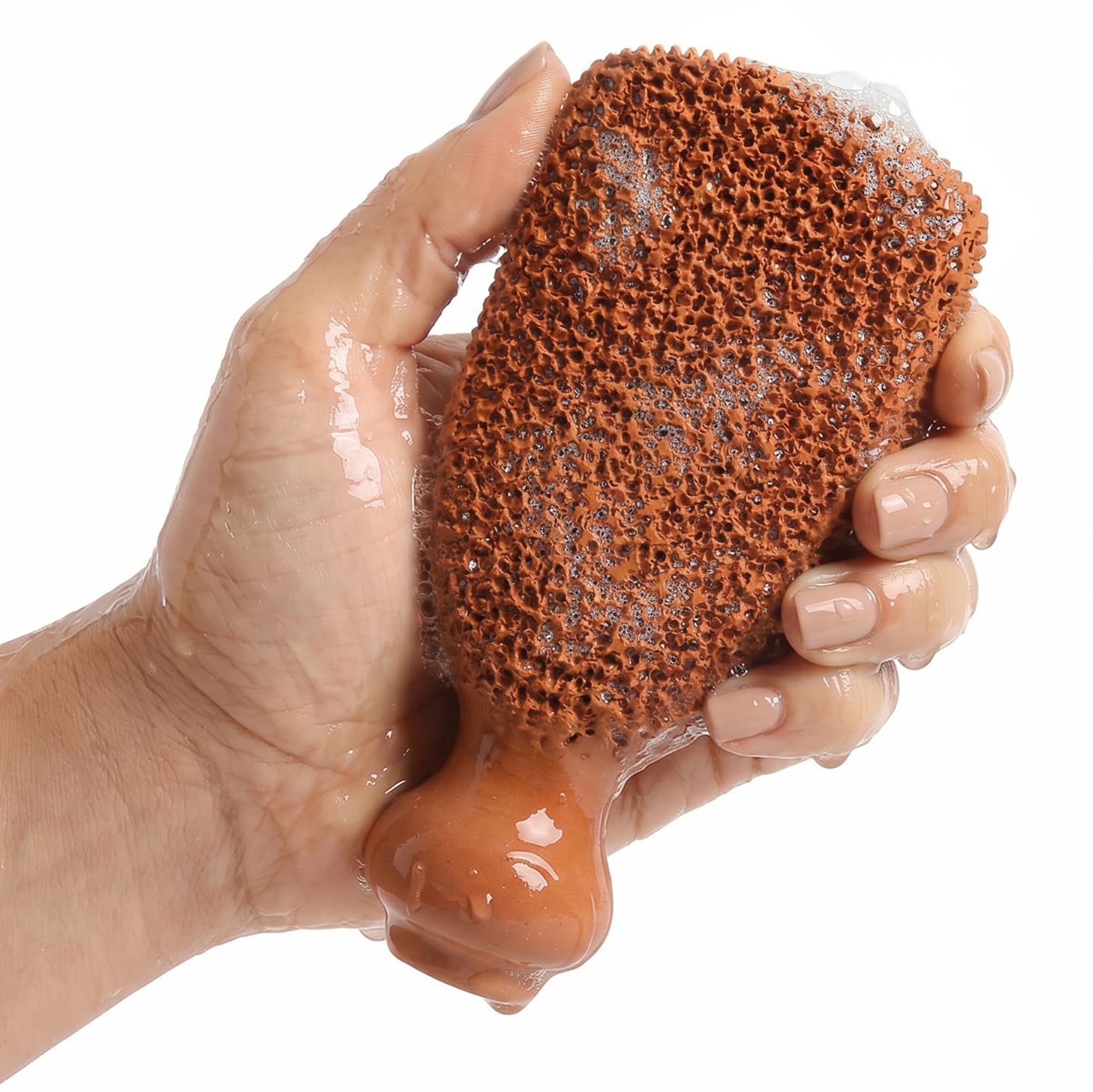
At just over seven ounces, this is the heaviest tool on our list, and the weight earns its place the moment you use it: it sits in your palm and does some of the work for you instead of skittering across a wet heel. The block is 5.5 inches long with two surfaces, a rough face for scrubbing and a smoother one for polishing, and the generous size gives you a broad contact patch so a few passes cover the whole heel.

What we appreciate most is how much more aggressive the rough face is than the synthetic bars here. On a thick, hardened heel that is exactly the right call, and the worst patch came down over a couple of sessions rather than weeks. The smooth side is not decoration either: a handful of light passes afterward leave the skin looking buffed rather than scraped, which is the closest a home tool has come to a salon finish for us.

Terracotta is fired clay, though, and it does not bounce. A short drop onto a tile floor is how these end up in two pieces, so it lives on a shelf and gets set down carefully rather than kicked around the shower floor. Treated that way the surface will not shed the way a synthetic bar does, and while the five-plus-year lifespan is the listing's claim rather than ours, nothing about this block looks inclined to crumble.

Bottom line: The most substantial tool we tested: a heavy terracotta block with a rough scrub face and a smooth polishing side, and the one to buy for genuinely hard, thickened heels.

3

Asqraqo Natural Pumice 2-Pack

Asqraqo Natural Pumice 2-Pack

Gentle weekly upkeep

Our Score 9.2/10
Check Price

Worth Noting

  • Mild grit will not touch thick calluses
Storage
Rope ring for hanging
Material
Natural lava pumice
Pack Size
2 stones

A rope loop is the least glamorous thing about a pumice stone and the one that decides whether it is still usable in six months. Hang these from a shower caddy and they dry between uses; leave one sitting wet in a soap dish and it goes soft and gritty. Hanging is the whole maintenance routine, and it is why the pair works as a shower fixture rather than a drawer tool.

The stones themselves are natural lava pumice: irregular, porous, and noticeably milder in action than the synthetic bars and the terracotta block here. That is the trade. A wet, soapy pass over the heel keeps roughness down nicely, and we found the softer grit better suited to weekly upkeep than to repair. What it will not do is flatten a thick callus in one sitting, or three. If your heels are already cracked and hard, this is the wrong end of the list.

Soft rock wears, and a stone left soaking can crumble, so drying it is not fussiness but the way to get a reasonable life out of it. Two to a pack means one for the shower and one for the guest bath, and they are small enough that the spare is not clutter.

Bottom line: Two natural lava stones with rope loops that hang dry in the shower, with the mildest grit here and the right choice for upkeep rather than serious callus removal.

4

Maryton Foot Pumice 4-Pack

Maryton Foot Pumice 4-Pack

Multi-bathroom households

Our Score 8.8/10
Check Price

Worth Noting

Grit
Two levels of coarseness
Design
Double-sided
Pack Size
4 stones

Two grit levels on a single double-sided stone is a sensible bit of design: coarse side first on the heel, finer side afterward to smooth what you have just worked over. It is a palm-sized block, the kind of thing that sits in the shower without claiming shelf space, and the double-sided shape means you are not switching tools mid-job.

The catch is that there is not much more to it, and for plenty of people that is the appeal: two grits, no learning curve, nothing to assemble or maintain beyond rinsing it. If you want a single tool that covers scrubbing and finishing without asking you to think about it, this does that.

Where it earns its place is the household case. Four stones to a pack means one per bathroom, a spare in the gym bag, and no argument about whose scrubber is whose. We reach for the Mr. Pumice bar first on texture, but for outfitting two bathrooms at once this is the practical buy.

Bottom line: A double-sided stone with two grit levels and four to a pack, a sensible inexpensive pick if you want a coarse side for heels and a finer one for touch-ups.

5

Maryton Pumice Sponge 4-Pack

Maryton Pumice Sponge 4-Pack

Sensitive, thin skin

Our Score 9.0/10
Check Price

Worth Noting

  • Wears out faster than a solid stone
Material
Synthetic pumice sponge
Pack Size
4 sponges
Packaging
Individually wrapped

The blue crumbs are the first thing to know about. These are a soft, foamy synthetic pumice rather than a solid block, and they shed as you scrub, leaving fine grit in the bottom of the shower that the next person will notice before you do. Rinse the tray when you are finished and it is a non-issue; ignore it for a week and it looks like someone sanded a wall in there.

What you get in exchange is flexibility. Around the sides of the heel and the bony edge of the ankle, the sponge follows the shape of your foot where a rigid bar skates past the contour entirely, and that is exactly where roughness tends to hide. We also found it gentler than any of the solid tools here, which makes it the better pick for thin or easily irritated skin, the kind that reddens after one pass with a coarse stone.

Each sponge comes individually wrapped, so it is simple to hand one to each person in the house and keep them separate rather than sharing a single stone. They do wear faster than a solid tool, though: expect to replace them more often than you replace a bar or a block.

Bottom line: A soft synthetic pumice sponge that flexes around the heel where a rigid stone cannot, four to a pack, with the caveat that you will be rinsing the shower afterward.

6

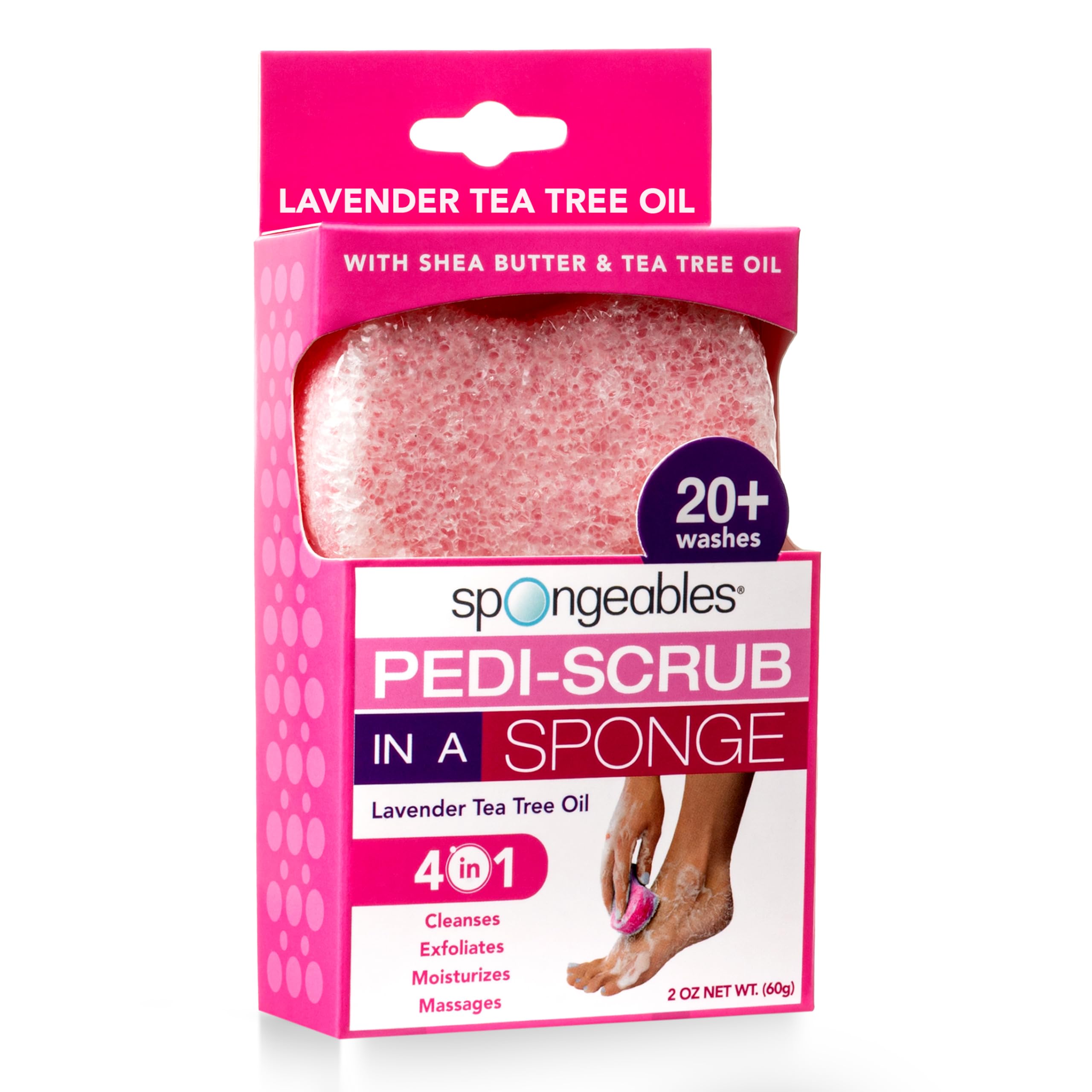
Spongeables Pedi Scrub Sponge

Spongeables Pedi Scrub Sponge

Daily shower upkeep

Our Score 8.8/10
Check Price

Worth Noting

  • Too gentle to take down a callus
Type
Soap-infused scrub sponge
Scent
Lavender
Washes
20+
Dimensions
1.1 x 3.88 x 3.88 in

Lavender is a dividing scent, and this one is strong enough to follow you out of the bathroom. If you like it, the sponge is genuinely pleasant to use in a morning shower, and the fragrance is half the reason to pick it over a plain pumice bar. If you do not, there is no unscented version here, and that settles it.

The sponge is dual-textured, with a buffer side for exfoliating and a soft side for washing, and the soap is built into the sponge itself, so there is no bottle to juggle with wet hands. It lathers generously and the buffer is gentle, closer to a good loofah than to any of the pumice tools on this list. The listing claims 20-plus washes per sponge; ours was still producing suds after a couple of weeks of daily use.

Where this one stops short is the job the rest of the list does. It will not take down a callus. On ordinary dry skin it keeps things smooth and soft with regular use, and it is the easiest of these to reach for every day because there is nothing to soak first. If your heels are already hard and cracked, start with a stone and come back to this for maintenance.

Bottom line: A soap-filled scrub sponge for feet that need a wash more than a file: it lathers, it smells of lavender, and it is gentle enough to use every day.

How We Tested the Best Foot Exfoliators

We started with the foot exfoliators that keep surfacing in customer reviews and best-seller lists — natural terra-cotta pumice, molded pumice bars, textured sponge scrubbers, and a few sudsing scrub sponges — then narrowed by material, grit, size, and whether a multipack was genuine value or just four things that would wear out on the same schedule. Fourteen made the cut, and each one stayed in rotation for four months.

Testing happened where feet actually get handled: perched on the edge of the tub after a shower, one foot propped on the opposite knee, and on dry heels before bed on Sunday nights. For each tool we counted how many passes it took to smooth a rough heel patch, checked whether that patch still snagged a cotton pad afterward, and looked at whether skin appeared ashy or flaky once it dried. Gentleness got equal weight — whether a stone left skin tight, pink, or stinging, and whether we'd reach for it twice a week or only when calluses flared up.

Durability was tested by ordinary neglect: stones left sitting in a wet shower caddy, sponges squeezed out and dropped on the tub ledge. Weekly, we checked whether grit had worn flat, whether a sponge was tearing at the edges, and how much powder collected on the shelf beneath each one, since a couple shed a fine dust that coated everything nearby. Because several picks arrive in packs of two or four, we tracked cost per use and whether the extras held up as well as the first one opened, along with whether what arrived matched the listing. By month four, only a handful were still doing what they did in week one.

How to Choose a Foot Exfoliating Scrub

Match the grit to your heel

Grit is the first decision, and the honest starting point is how hard your heels actually are. Thick, pale, cracked skin wants a coarse surface, worked over several sessions rather than one. Routine roughness, the kind that shows up after a summer in sandals, is better served by a medium grit. Thin or easily irritated skin, and anyone who simply wants to stay ahead of dryness, should stay with a mild lava stone or a soft sponge.

Buying coarser than your skin needs is the most common mistake here, and it is hard to undo once the skin is raw. Start one step gentler than you think you need; you can always add pressure, but you cannot un-scrub a heel.

Stone, synthetic, or sponge, and how each wears out

Every material on this list degrades, just differently. Fired terracotta is the most durable and the most brittle: it does not shed, but it can crack if it lands on tile. Synthetic pumice is formulated to erode in tiny particles, which is what keeps it sanitary and also why a bar or sponge has a finite life. Natural lava is a soft rock and wears with use, especially if it lives in a puddle. Soap-filled sponges simply run out.

Decide which failure you can live with before you buy. A multipack absorbs wear; a single hard block rewards careful storage.

Shape, grip, and reaching the edges

Wet hands are clumsy, so shape matters more than it looks in a product photo. Something that fills your palm and has a textured or ridged edge is easier to control than a smooth oval. Dual-surface tools, with one rough face and one smooth, let you scrub and then buff without picking up a second object, which is why we favor them for heels.

For the sides of the heel and the bony edge of the ankle, a flexible sponge follows the contour where a rigid block skates over it. If those are the spots that bother you, flexibility is worth more than coarseness.

Pack count, drying, and the shared bathroom

Pumice and pumice-style tools last longer dry. A hanging loop is a small feature with an outsized effect: a natural stone that dries between uses stays usable, while a bar left on a wet shower shelf softens and clogs. Whatever you choose, give it somewhere to air out that is not the shower floor.

Pack count is really about the rooms in your life. Four bars or four sponges cover the main bathroom, the guest bath, and a gym bag, and make it easy to keep one tool per person rather than sharing. If you travel with a scrub, favor the lightest option here; a heavy block stays home.

Frequently Asked Questions

Final Verdict

Most people should start with the Mr. Pumice Pumi Bar. Medium-coarse grit on a ridged and a flat face handles an ordinary heel without scraping it raw, and four bars in the pack turn wear and tear into an inconvenience rather than a reason to shop again.

If your heels are genuinely hard and thickened, the heavier Gilden Tree terracotta brings a rougher scrub face and a polishing side worth the extra money. If your feet are already in decent shape and you want gentle, frequent upkeep, the Asqraqo pair is the milder, less expensive route.