Skincare

Best Derma Rollers of 2026

A derma roller works on a simple premise: hundreds of tiny needles roll across the skin, open micro-channels, and your skin answers back by building collagen. What the packaging doesn't tell you is that the tool itself decides whether that feels like a faint tingling scrub or like dragging a wire brush across your cheek. Needles that arrive dull, sit unevenly in the drum, or run longer than a home routine should are exactly where tenderness, redness, and the dreaded sting come from. The right roller turns a five-minute habit into something your skin actually seems to thank you for.

I've been rolling my own face and jawline for years, which makes me a hard sell on sharpness and comfort, and my team has now spent four months living with 14 of these. Here's what nobody tells a first-timer: the needles dull long before the handle gives out, so a roller that feels prickly and precise in March can feel like a scrub brush by summer. What follows is what stayed sharp, what made us flinch, and which ones felt worth the money.

1

RoselynBoutique Derma Roller

Top Pick
RoselynBoutique Derma Roller

First-time face rolling

Our Score 8.8/10
Check Price

Worth Noting

  • No needle count published
Weight
0.42 oz
Needle Depth
0.25mm
Needle Material
Titanium

A derma roller's whole character comes down to how deep it goes, and this one puts the number first: 0.25mm, the cosmetic depth most people should start at. The needles are titanium, the head is wide enough to cross a cheek in two passes, and the handle is light enough to steer with your fingertips. Stated depth, stated needle material, and a price at the bottom of this group is why it is our top pick. You know exactly what you are pressing into your face, and you are not paying for a gift box.

What makes it easy to live with is the forgiveness. At 0.25mm the roll reads as a tingle rather than a sting, so a first-timer can work a jawline or a forehead without flinching and pressing harder to compensate, and pressing harder is where home rolling goes wrong. Short strokes, light pressure, then a serum while the skin is still flushed. The head is also narrow enough to tilt into the sides of the nose, which is where fat-handled rollers start to feel clumsy.

The head is the part that wears, and this is not the most solid build in the group: the roller can loosen at the joint after a few months of regular use. We prefer that to a stiff, over-built head at several times the price. Treat it as a consumable, buy two, and rotate so one is always clean and dry.

Bottom line: Our default first roller: a stated 0.25mm titanium head that costs next to nothing, so you can learn the technique without overthinking the purchase.

2

Sdara Derma Roller with Case

Sdara Derma Roller with Case

Face and hairline

Our Score 8.8/10
Check Price

Worth Noting

Length
6.5 inches
Weight
1.44 oz
Stated Uses
Face, hair, and beard
Storage Case
Included

The Sdara arrives in a slim, snap-shut case, and that turns out to be the detail that matters most in daily use. A roller needs somewhere dry and out of the way between sessions, and a case built around the roller alone fits a bathroom drawer or the side pocket of a bag without a second thought. The body runs about six and a half inches, so you can hold it at the angle a hairline or a beard edge wants.

As a single do-everything roller, this is the one we hand someone who wants to cover a face and a hairline without buying a kit. The roll is light, a tingle rather than a sting, and it has the strongest record in this group for the visible stuff: tighter-looking pores, more even tone, that flushed glow the next morning. Face, hair, and beard all appear in the listing, and the size suits all three.

The gap is documentation. Sdara leaves the needle depth and the needle count off this listing, and for a first roller the depth is the one number worth knowing. If you want to be certain you are at 0.25mm, our top pick and the Lexi White both state it. If you want a well-made roller and a case and are not fussed about the figure, this one is a safe buy.

Bottom line: Buy this one if you want a single roller for a face and a hairline, and you are content to trust the brand rather than a printed depth.

3

The Beard Club Derma Roller

The Beard Club Derma Roller

Beard and scalp

Our Score 9.0/10
Check Price

Worth Noting

  • Titanium-coated needles, not solid titanium
Needle Count
540
Needle Depth
0.25mm
Storage Case
Included
Needle Material
Titanium-coated

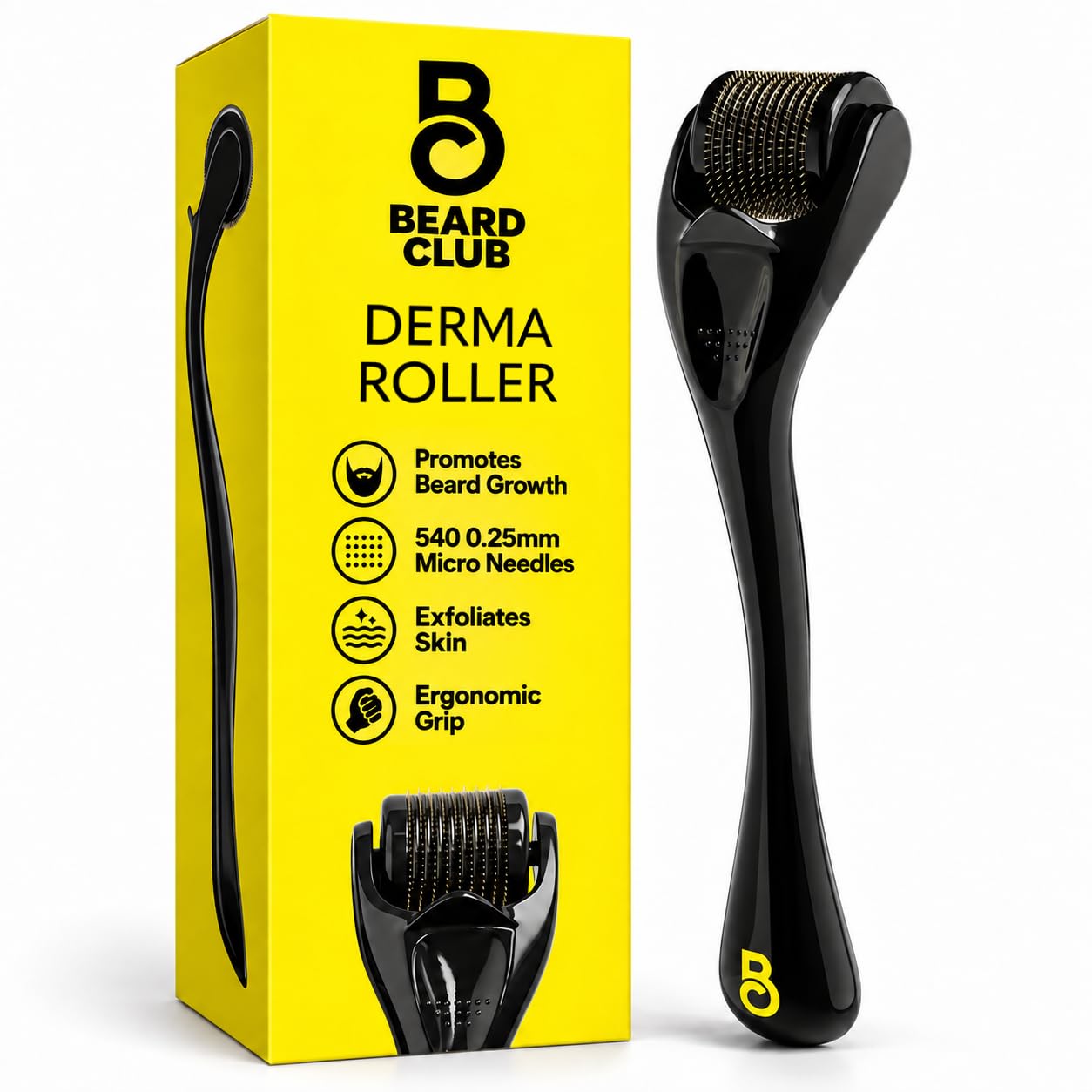
If you are rolling a beard, a hairline, or a scalp rather than a cheek, the requirements shift: you want a head that covers ground, a depth that stays comfortable on a scalp, and a case, because this is a tool that lives in a bathroom. The Beard Club roller hits all three with 540 titanium-coated needles at a stated 0.25mm, a storage case in the box, and a body you can choke up on for the jaw and neck.

The reason we keep it in the roundup rather than filing it under grooming is that it is just as good on a face. The listing names men and women as the audience, and 0.25mm backs that up. Those 540 points across the head mean fewer passes over a temple or a cheek, and fewer passes means less irritation from going over the same strip twice. The branding is the only thing working against it: shoppers see beard in the title and scroll past a roller that would do fine on a forehead.

Bottom line: The best pick here for a beard, hairline, or scalp, with 540 needles at a stated 0.25mm and a case, and it handles a forehead just as well.

4

Angel Kiss 4-in-1 Derma Roller Kit

Angel Kiss 4-in-1 Derma Roller Kit

Face and body

Our Score 8.8/10
Check Price

Worth Noting

  • Nothing deeper than 0.3mm in the kit
Heads
3 replaceable
Needle Counts
1200, 720, and 300
Needle Depths
0.25mm and 0.3mm
Needle Material
Titanium

Three heads, one handle, and a case with a cleaning station: the Angel Kiss kit asks you to swap rather than choose. A 1200-needle 0.3mm head handles body work, a 720-needle 0.25mm head is sized for a face, and a 300-needle 0.25mm head is for the awkward zones, which means the sides of the nose, the upper lip, and the gap between the brows.

The swap is the part that could have gone wrong and did not. Heads twist off without a fight, which matters more than it sounds: a head you dread changing is a head you stop changing, and a kit that stays shut in its case is money wasted. It is also the most complete answer here for anyone who wants to roll a face and a body without buying two separate tools.

The small head is what we reach for most. Rolling a nose or a mouth corner with a full-width head is guesswork, and 300 fine needles get into crevices a standard roller skips. Keep the 0.3mm head for legs, arms, and stretch marks and treat it as a separate tool from your face head, with its own pressure and its own cleaning routine.

Bottom line: Buy the kit if you want a face head, a body head, and a detail head from one purchase, and 0.25mm to 0.3mm is as deep as you intend to go.

5

Lexi White Derma Roller

Lexi White Derma Roller

Tight budgets

Our Score 8.8/10
Check Price

Worth Noting

  • Head can come apart with use
Needle Count
540
Needle Depth
0.25mm
Needle Material
Titanium

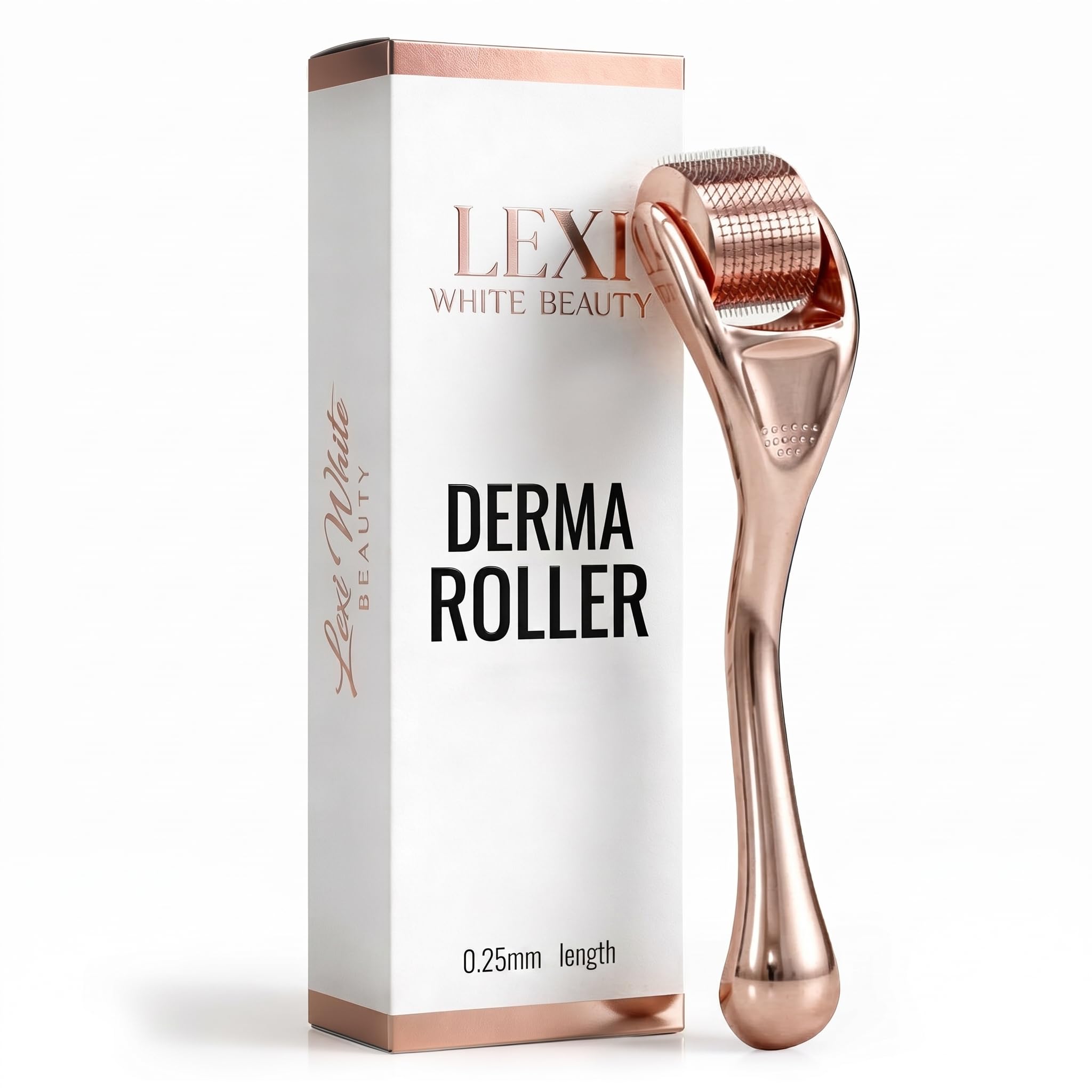
The Lexi White is the least expensive roller we kept, and nothing about it looks it. A rose-gold handle, a head that rolls without dragging, 540 titanium needles at a stated 0.25mm: there is no hint of the bottom of the price range in the presentation.

For a first roller, or a second one that lives in a travel bag, that is an easy call. The head glides, the grip stays comfortable through a pass across a forehead and jaw, and the range of use is wider than the rose-gold packaging suggests, because it turns up on hairlines and beards as often as on cheeks. Keep the alcohol on the head and off the handle, though, since wiping the whole tool down can lift the finish and leave it tacky.

Bottom line: The cheapest sensible start here: 540 titanium needles at a stated 0.25mm, so grab it if budget leads and you will keep alcohol off the handle.

6

CLETINA 540 Titanium Derma Roller

CLETINA 540 Titanium Derma Roller

Learning the technique

Our Score 9.0/10
Check Price

Worth Noting

Weight
0.32 oz
Needle Count
540
Needle Depth
0.25mm
Needle Material
Titanium

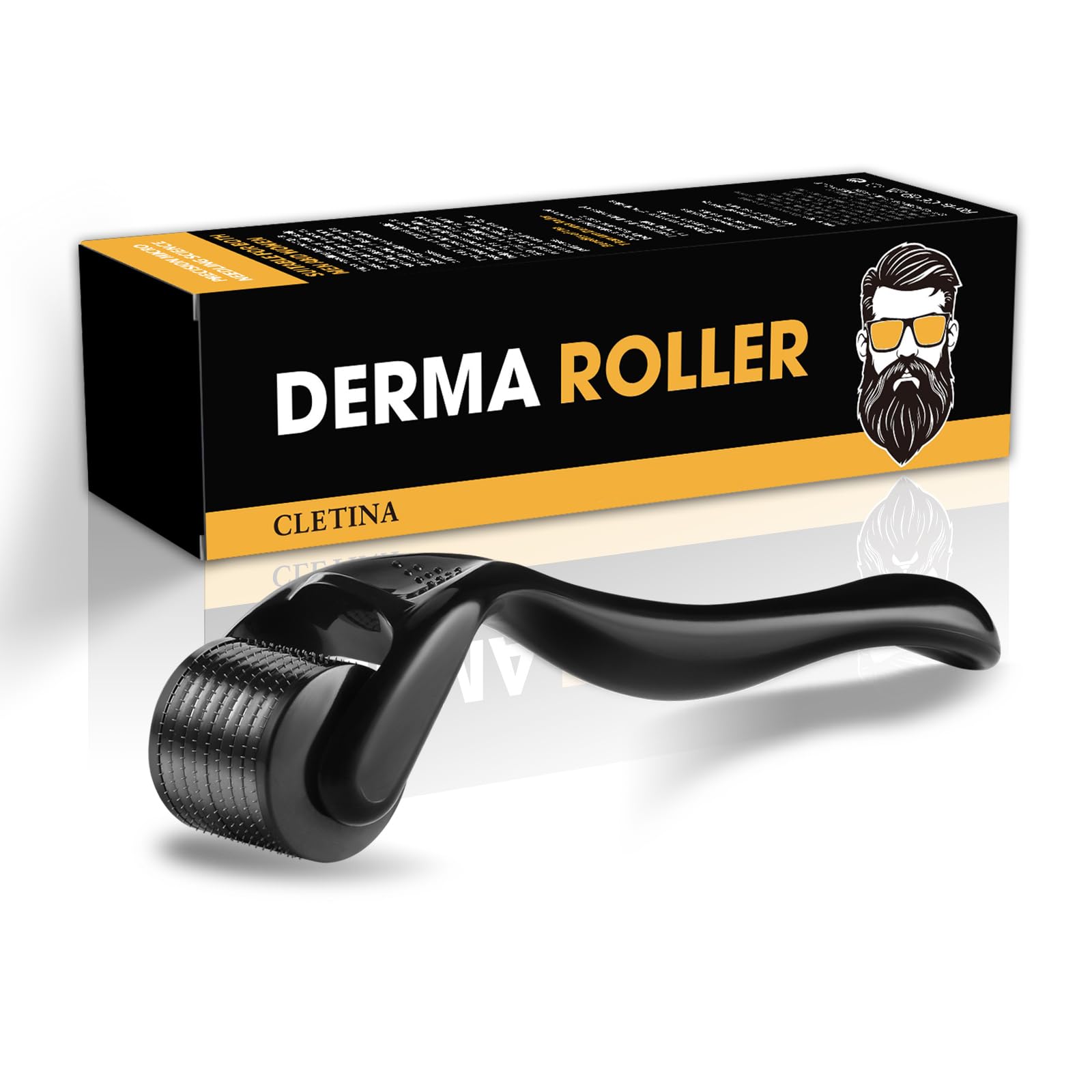
Half the rollers here claim 540 titanium needles at 0.25mm, and on paper the CLETINA is one of them. What separates it is the control: the head turns smoothly and the handle stays steady under light pressure, so short, even strokes are easy to keep up instead of scrubbing at a stubborn patch.

The case is the sleeper detail. It has a shallow well in the base, so you can stand the roller upright, add alcohol, let the head sit, and tip it out without touching the needles. Cleaning is the chore that decides whether a roller gets used three times a week or three times a month, and anything that shortens it earns its shelf space.

For a first week of rolling, this is what we want in hand: light pressure, no drama, a head that goes where you point it. It is also the plainest pick here, one head, one depth, one case, and that counts as a limitation only if you wanted a kit. Buy it if you are learning the technique and want the tool to stay out of the way of that.

Bottom line: The steadiest cheap head for a first month of rolling: 540 titanium needles at 0.25mm and a case that makes cleaning genuinely quick.

7

Prosper Beauty Derma Roller Kit

Prosper Beauty Derma Roller Kit

Long-term rolling

Our Score 8.8/10
Check Price

Worth Noting

  • Bulkiest kit in the group
Needle Count
600
Needle Depth
0.25mm
Needle Material
Titanium
Replaceable Heads
4

Derma rollers are consumables dressed up as durables. Needles dull, a head picks up a bend, and at some point you are dragging a scratchy wheel across your face. Prosper's answer is the refill: the handle takes replacement 600-needle titanium heads at 0.25mm, and the set arrives with spares, so a fresh head is ready instead of a whole new purchase.

The rolling itself is comfortable and simple to fold into an existing routine: a minute over a clean face, then serum, then bed. The heads screw on and off cleanly and the case keeps the lot together, which is why it suits people who already know they will keep going rather than people still deciding.

The neck is where it stops feeling like a tingle. Skin there is thin, and a 0.25mm head that is friendly on a cheek can sting along the jaw line and throat. Short strokes and a lighter hand than you think fix most of it, and it is the one area where we slow down.

If you have been replacing a cheap roller every couple of months, the refill model makes more sense over a year: keep the handle and swap only what wears. It is not a starter purchase, though. The kit takes up more shelf than a single roller, and someone still testing whether they will stick with rolling is better served by a plain one first.

Bottom line: Worth the outlay if you already know you will keep rolling: replacement heads mean you swap the worn part instead of the whole tool.

8

Koi Beauty Professional Derma Roller

Koi Beauty Professional Derma Roller

Precision around edges

Our Score 9.2/10
Check Price

Worth Noting

  • Heads can arrive with bent needles
Needle Type
Individual titanium pins
Needle Count
200
Storage Case
Included

Two kinds of head turn up in this category: a stamped disc with needle-shaped points cut into it, and a plate set with individual pins. Koi's professional roller is the second kind, 200 real titanium pins, and that construction is the reason it costs several times what the budget picks do.

The difference shows in how the head meets skin. A pin head rolls and lifts away; a stamped disc can drag and scrape if the edge is not clean. Whether the premium is worth it depends on where you roll and how long you plan to keep at it.

Two hundred pins is fewer than the 540-needle heads here, and the head is narrower, so a full cheek takes more passes. What you get in return is precision: a small contact area for the jaw line, the sides of the nose, and the edge of a hairline, where a wide head is guesswork. The listing does not state a depth for this head, so confirm the one you are ordering matches how you plan to use it.

In the hand it feels engineered, solid and quiet. This is the pick where we tell you to look at the head before each session, because a bent pin is the failure to watch on any pin-set roller and this one is no exception. Buy it if precision matters more than speed; if you want to cover a whole face quickly, a 540-needle roller gets there with fewer passes.

Bottom line: Buy it if precision around a jaw line and nose matters more than speed, and you will check the head for bent pins before every session.

How We Tested Derma Rollers, and What We Looked For

We started with the dozens of rollers crowding the search results and cut anything that wouldn't disclose needle length, needle material, or needle count, then narrowed by what came in the box — a storage case, replaceable heads, a cleaning tool. That left 14 rollers, from single-drum basics to multi-head kits, which we used for four months.

Testing happened in bathrooms, not a lab. Each tester rolled clean, damp skin on a Sunday or Wednesday night, working one direction per zone the way the instructions said, and we timed a full face pass so we knew how long the habit actually takes. Right after, we rated pain out loud on a scale of one to ten, then checked how red the skin went and how long the flush lasted — twenty minutes, or still visible the next morning. The beard and scalp rollers got the same treatment along the hairline and jaw, where skin is thinner and complaints come faster.

Every two weeks we looked at each drum under a magnifying glass and ran a fingertip across the tips to feel for bent or hooked needles, the quiet reason a roller stops working. We noted whether heads loosened or wobbled in the handle, how the grip behaved with serum-slick fingers, and whether a roller survived being knocked into the sink. The morning after each session, we logged whether skin felt genuinely smoother or just tight and stingy. Value came down to price per usable head rather than sticker price, since the cheapest rollers often needed replacing first.

How to Choose a Derma Roller

Choose the Depth by Where You Plan to Roll

0.25mm is the home depth for a face: short enough to stay comfortable, long enough to be worth the ritual. Move to 0.3mm for body work, stretch marks, and small areas that tolerate more, and treat anything beyond that as a conversation with a professional rather than a bathroom purchase. The brand name matters less than whether the depth is printed at all.

The trap is assuming deeper works faster. A longer needle at home mostly buys more redness, more downtime, and more chance of irritating skin that has not adapted yet. Start at 0.25mm, roll once a week, and only consider more once a month of that has been uneventful.

Read the Needle Construction, Not the Needle Count

Look at the head in the photos. Individual pins set into a plate roll and lift away from skin; points stamped out of a disc can drag. That difference is easier to see than it is to describe, and it separates the heads worth paying for from the ones that feel scratchy on the second use.

Count matters for coverage rather than quality. A 540-pin head crosses a cheek in two passes, while a 192-pin head is narrower and better for a jaw line or the sides of the nose. Our Angel Kiss kit shows the spread in one box, pairing a 1200-pin body head with a 300-pin head for detail work.

Handle and Head Size Decide Whether You Keep Using It

A roller is a control tool. A light handle and a head that turns without resistance let you keep pressure even along a jaw line; a grabby one pushes you into pressing harder, which is the opposite of what you want. If your routine is face only, one 0.25mm head does the job. If it also covers a scalp, a beard, or a knee, buy for the widest area and accept a little clumsiness at the edges.

Plan for Cleaning and Replacement

Every roller here wants the same routine: isopropyl alcohol on the head before and after, air-dry, then the case. What differs is what happens when the needles dull. Heads that take refills, like our Prosper Beauty pick, let you keep the handle and swap only the part that wears; a sealed roller gets replaced whole, which is why the cheap ones make sense as consumables.

Replace when the roll starts to drag or you spot a bent pin. A damaged needle is not something to keep using on your face, however much life you think is left in it.

Frequently Asked Questions

Final Verdict

If you want one roller and no second-guessing, buy the RoselynBoutique. It names its depth, names its needle material, and sits at the bottom of the price range, which is exactly what a first roller should be. For a face-and-hairline roller with a case in the box, the Sdara is the better fit, and if a beard or scalp is the target, the Beard Club's 540 pins cover ground faster and work on a face too.

The Lexi White is the one to grab if the price decides it, as long as you keep the alcohol on the head and off that rose-gold handle.