Fashion

Best Compression Socks for Women

A good compression sock has to do two opposite things at once: squeeze hard enough to keep blood moving out of your ankles, and stay comfortable enough that you forget you're wearing it. Most pairs pick a side. The tight ones turn getting dressed into a wrestling match and leave a red ring around your calf; the loose ones feel fine for an hour, then slide down into your shoe. The right pair threads that needle — firm at the ankle, easier up top, a footbed that doesn't twist, fabric that doesn't go swampy by mid-shift — which is what actually takes the edge off swelling and that end-of-day heaviness.

Over the past four months, my team and I have worn 16 pairs through twelve-hour shifts, red-eye flights, long runs, and plenty of ordinary Tuesdays at a desk. One thing nobody tells a first-time buyer: these are sized by calf and ankle circumference, not shoe size, so a pair that fits your neighbor perfectly can dig into your shin. Measure once, then read on — the ones below are the pairs that survived.

1

CHARMKING Compression Socks

Top Pick
CHARMKING Compression Socks

All-day wear

Our Score 9.0/10
Check Price

Worth Noting

  • Toe and heel can wear through with washing
Rise
Knee-high
Pack Size
8 pairs
Compression
15-20 mmHg

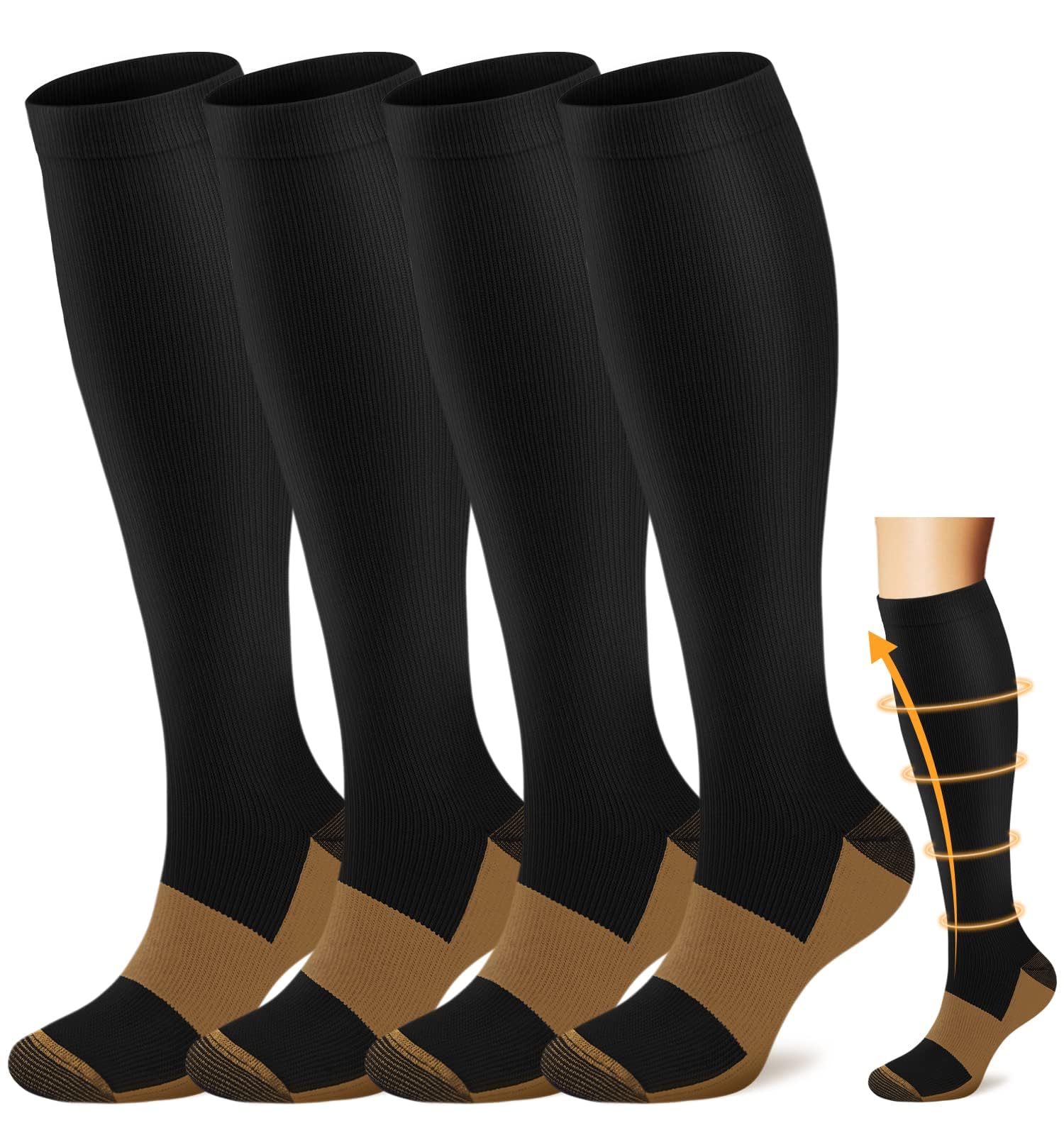
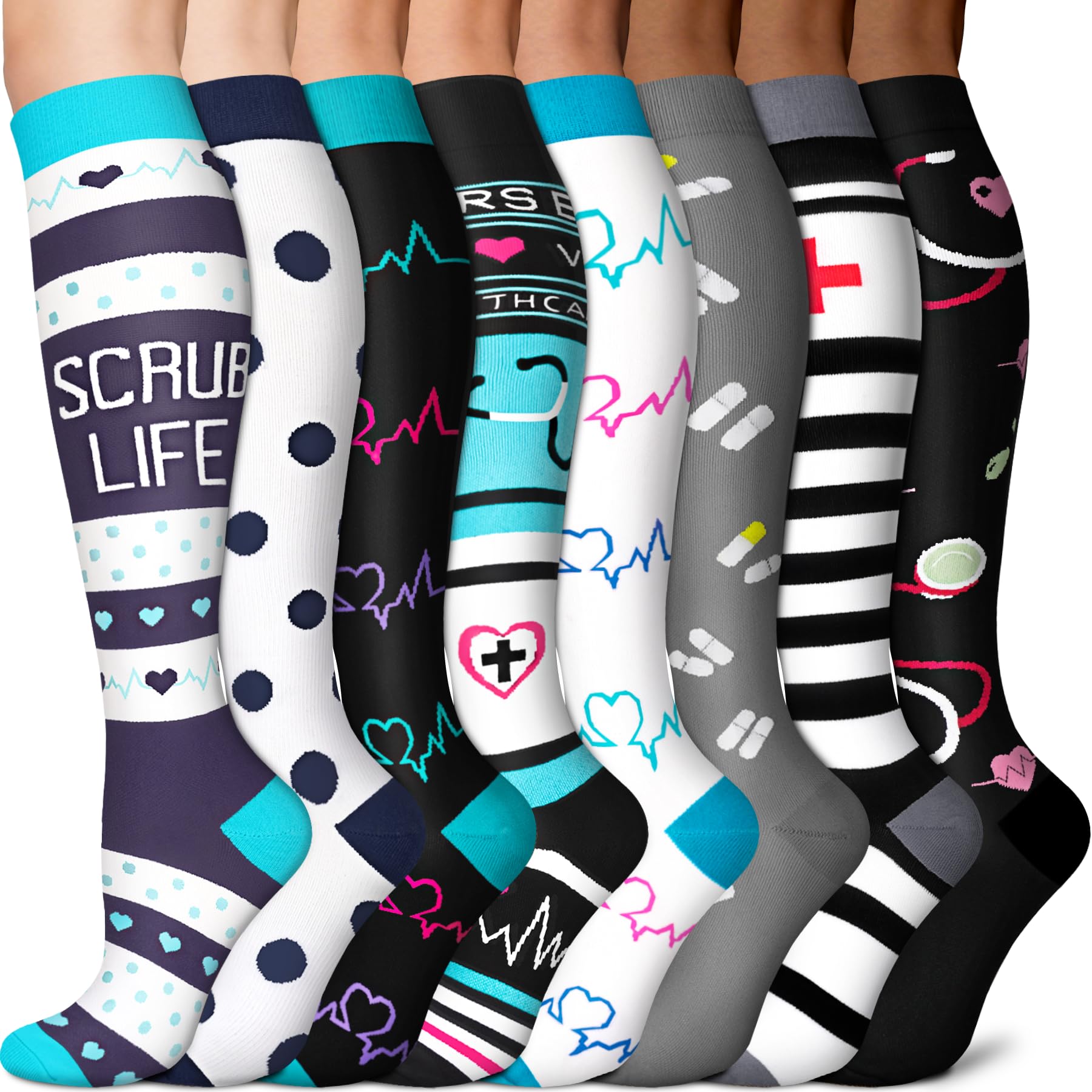
Eight pairs is the first thing you notice about the CHARMKING pack, and it is the reason it became our default. A compression sock only works if you actually wear it, and having a clean pair waiting removes the excuse. The 15-20 mmHg squeeze is gentle enough for a desk day or a long drive, and the cuff stayed at the knee without rolling.

What surprised us was the ease. We could pull these on without the usual hop-and-tug, and they came off without turning inside out. The fabric is not the thickest here, which helps them disappear under trousers, and the colors make the pack feel less clinical. For travel, nursing shifts, or pregnancy swelling, that low-friction routine matters more than a medical-style pressure number.

The fit is the other reason we keep reaching for them. The cuff stayed put through a long day, and the foot did not bunch inside sneakers. If you want a stronger squeeze, the 15-20 rating is the boundary: these are for everyday wear, not firm medical-style support. We wash them cold and air-dry to protect the stretch and keep the cuff honest.

Bottom line: We recommend the CHARMKING eight-pack as the default for everyday 15-20 mmHg wear: it pulls on easily, stays at the knee, and keeps a clean pair within reach.
2

SB SOX Compression Socks

SB SOX Compression Socks

Travel and swelling

Our Score 8.8/10
Check Price

Worth Noting

  • Premium price for one pair
  • Firm cuff takes more effort to pull on
Fit
Wide calf
Fabric
80% nylon, 20% spandex
Sizing
Calf and shoe size
Compression
20-30 mmHg

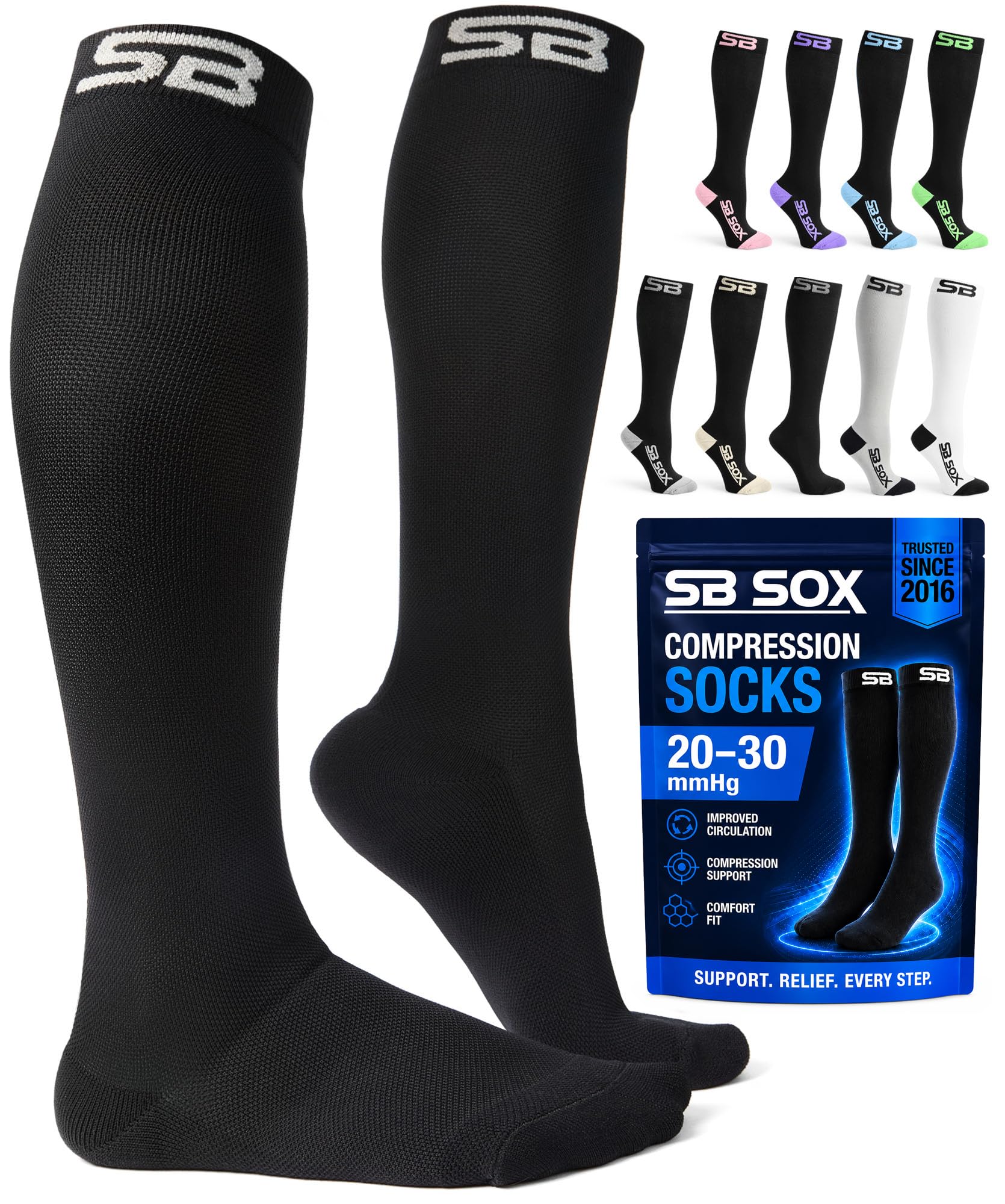
The sizing chart is the first thing to notice about SB SOX, and it is why this is the pair we trust when the day involves a flight or a swollen ankle. You choose by calf circumference and shoe size, not by dress size, and the brand gives a clear upsize rule for people at the top of a range. That sounds fussy until you have spent a day in a sock that is squeezing the wrong part of your leg.

At 20-30 mmHg, the squeeze is firm and deliberate. The 80% nylon, 20% spandex fabric has a dense, supportive feel, and the reinforced heel and toe add structure without a lump under the foot. On a long travel day, we noticed the ankle support more than the calf, which is exactly where we want a firm pair to work. The cushioned foot also kept the toe seam from announcing itself inside a sneaker.

The single-pair format is the other consideration: you get one pair for the money, so this is the pair you save for travel or a specific need rather than toss in every drawer. Sizing is less forgiving than the multipacks. If your shoe size sits above the range for your calf, take the larger size rather than hoping it relaxes. It is the pair we pack when we want to feel the compression doing something, not simply hope it is.

Bottom line: Choose SB SOX when you need firm 20-30 mmHg support and are willing to measure your calf and shoe size for a precise, travel-ready fit.

3

FITRELL Compression Socks

FITRELL Compression Socks

20-30 budget

Our Score 8.8/10
Check Price

Worth Noting

  • Knit can fray with repeated washing
  • Top band runs snug on larger calves
Rise
Knee-high
Pack Size
3 pairs
Compression
20-30 mmHg

FITRELL sits in the useful middle ground between a gentle everyday sock and a medical-style stocking. The label says 20-30 mmHg, but the knit has more give than SB SOX, so the first pull over the heel does not feel like a negotiation. If you have been told to try firmer compression and you are worried about getting them on, this is the three-pack we point to first.

We like the value most: three pairs let you keep one in the laundry, one in the drawer, and one in a travel bag without treating them as precious. The foot is reinforced at the toe, the cuff stayed at the knee on a long shift, and the fabric did not leave the deep marks we associate with a stiff cuff. The compression feels supportive rather than punishing, which is the balance most people actually want.

We wash these cold and air-dry them to keep the stretch honest. If you need a wide-calf-specific cut or the firmest medical-style squeeze, SB SOX is the safer choice. For everyone else, it is the pair that makes 20-30 feel manageable. The three-pair pack is also small enough to stash a spare at work.

Bottom line: FITRELL is the 20-30 pair for women who want firm support without a daily wrestling match, and the three-pack makes it easy to rotate.

4

fenglaoda Compression Socks

fenglaoda Compression Socks

20-30 rotation

Our Score 9.0/10
Check Price

Worth Noting

  • Compression can feel lighter than rated
Rise
Knee-high
Pack Size
8 pairs
Compression
20-30 mmHg

The toe box is what separates fenglaoda from the pile of cheap 20-30 packs. There is enough room that your toes do not feel stacked on top of each other, and the seam sits flat enough to disappear inside a sneaker. For a sock that costs less per pair than our firm single-pair pick, that is a small but meaningful luxury.

We also appreciate the eight-pair format. It gives you a pair for every workday, plus a spare for travel, and the colors are different enough that you are not matching socks in the dark. The 20-30 mmHg squeeze is firm on the first wear without feeling punishing, and the padded foot is comfortable on a long standing shift. This is the pack we keep in the rotation when we want firmness without babying the socks.

The cuff is the weak point. On a tapered calf it can slide down by the end of the day, so measure carefully if you are between sizes. We still think the toe room and price per pair make it a strong value, as long as you do not need a guaranteed stay-up band.

Bottom line: fenglaoda is a strong value for a 20-30 work rotation, especially if a roomy toe box matters more to you than a guaranteed stay-up cuff.

5

ACTINPUT Compression Socks

ACTINPUT Compression Socks

Light daily wear

Our Score 9.2/10
Check Price

Worth Noting

  • Sizing runs small in the foot
Rise
Knee-high
Fabric
Copper-infused blend
Pack Size
4 pairs

The first thing that surprised us about the ACTINPUT four-pack is how little it feels like a compression sock when you pull it on. The fabric stretches across more than it stretches up, so it slides over the foot without the usual tug-of-war. That makes it a good choice for someone who likes the idea of compression but hates the morning routine.

The pressure is gentle. These are not the pair to choose if you need a firm 20-30 squeeze for a long flight or pronounced swelling; they are better for desk days, short trips, and the kind of tired-leg feeling that comes from standing more than usual. The foot is roomy, the cuff does not dig in, and the four-pack gives you enough pairs to keep one at work and one in a carry-on.

We reach for these when we want a little support without feeling like we are wearing medical gear. The trade-off is sizing: the foot runs small for some women, so check the size chart before committing to the four-pack. And because the label does not state a mmHg rating, treat them as a light everyday sock rather than a measured compression garment.

Bottom line: ACTINPUT is the light everyday four-pack for desk days and short trips, not the pair to choose when you need firm 20-30 compression.

6

Sooverki Compression Socks

Sooverki Compression Socks

Budget backup

Our Score 9.0/10
Check Price

Worth Noting

  • Toe can wear through with repeated washing
Rise
Knee length
Fabric
85% nylon, 15% polyester
Pack Size
8 pairs
Compression
15-20 mmHg

An eight-pack for the price of a couple of specialty pairs is the obvious pitch for Sooverki, and the lightweight knit makes the value feel real rather than merely cheap. The socks are thin enough to wear under trousers, and the L/XL size stretches over a larger calf without cutting in.

The 15-20 mmHg squeeze is mild. That makes them a sensible backup pair for travel or a drawer at work, not the pair we choose for a long day on our feet. The cuff stayed up on a moderate calf, and the colors are cheerful enough that we do not mind them peeking out of a sneaker.

We keep these as the pack we do not have to baby, which is exactly the point of a budget eight-pack. The thin knit is the catch: it is comfortable and discreet, but it is not the pair to choose if you want a firm, medical-style squeeze. We wash them cold and air-dry them, and the cheerful colors are the small pleasure that keeps them in the drawer.

Bottom line: Sooverki is the budget eight-pack we keep for travel and backups, with thin fabric that is comfortable but not built for years.

7

Bluemaple Compression Socks

Bluemaple Compression Socks

Soft daily wear

Our Score 8.8/10
Check Price

Worth Noting

  • Runs snug through the calf
  • Heel seams can wear with rough washing
Rise
Knee-high
Fabric
Copper-infused blend
Pack Size
6 pairs

Bluemaple is the pack we reach for when we want compression without announcing it. The colors stay bright, the knit feels soft against the skin, and the socks look enough like ordinary knee-highs that no one asks why you are wearing them. That matters more than it sounds: a sock you are happy to put on is a sock you actually wear.

The six-pair format gives you a drawer’s worth of rotation, and the copper-infused fabric has a smooth, slightly cool feel that works under trousers. The cuff stayed up on a normal calf, and the foot did not bunch. For nurses, teachers, or anyone who stands through a shift, the gentle support is easy to forget about in a good way.

The fit is the part to watch: check the calf range before ordering, and wash cold to protect the seams. If you are between sizes, do not assume the stretch will make up the difference.

We still like Bluemaple as the soft, colorful everyday pack. It is comfortable enough for a long day, and the six-pair format makes it easy to keep a clean pair in the drawer. That softness is the reason it stays in our rotation.

Bottom line: Bluemaple is the soft, colorful six-pack for everyday compression, best for normal calves and women who want support without a medical look.

8

Iseasoo Compression Socks

Iseasoo Compression Socks

Pregnancy swelling

Our Score 9.0/10
Check Price

Worth Noting

  • Runs generous in the foot
Rise
Knee-high
Size
Large-X-Large
Fabric
85% nylon, 15% polyester
Pack Size
4 pairs

The Iseasoo four-pack is built for the days when your ankles and your patience are both swollen. The pressure is gentle, the sock pulls on without a fight, and the colors are a nice change from black medical hose. That combination makes it a sensible budget pick for pregnancy, travel, or the weeks after surgery when you want light support rather than a firm squeeze.

The 85% nylon, 15% polyester fabric is soft and slightly thick, which makes the sock feel more like a cozy knee-high than a piece of equipment. The cuff goes over the calf, the foot is roomy, and the four-pack gives you enough pairs to keep one in the hospital bag and one in the laundry. We like that it does not try to be a 20-30 medical stocking; it is honest about being gentle.

The compression is the part to know before you buy: it is light, so it is not the pair for a long flight with pronounced swelling or for firm 20-30 support. Check the size chart rather than ordering your usual shoe size. We still think it is a good value for light daily wear.

For pregnancy, travel, or a first pair of compression socks, Iseasoo is an easy place to start: soft, affordable, and simple to put on. The four-pack is small enough to stash in a hospital bag and inexpensive enough to replace if your size changes.

Bottom line: Iseasoo is a gentle, easy-on four-pack for pregnancy, travel, and light swelling, provided you size for a roomy foot and expect light support.

What Four Months of Wearing Compression Socks Taught Us

We started with a long list and cut it down at the spec-sheet stage: the mmHg rating, the actual size range offered, whether the size chart asked for ankle and calf measurements, fabric content, and whether a multipack was a set of identical pairs or a mix of colors. Price per pair mattered too, since a big pack can look like a bargain until you divide it out, and we dropped anything that wouldn't state its compression class in plain numbers. That left us with 16 pairs, some from names we knew and several we didn't.

Each pair then went into rotation for four months: twelve-hour shifts on hard floors, a six-hour flight and a long drive, a few weekend runs, and plenty of desk days. We noted how hard each one was to pull on first thing in the morning — inside out or straight up, over bare skin or a thin liner — and whether the cuff was still sitting at the knee by hour eight or had rolled and bunched behind it. We checked where the toe seam landed, whether the heel pocket stayed put when we crouched, and how much the fabric had relaxed by evening. Anyone on the team with a wider calf worked through the extended sizes so we could say whether the fit held up outside the middle of the chart.

Durability got its own round. Every pair was machine washed and dried per its label five times, and we looked for pilling at the heel, thinning at the toe, and whether the elastic snapped back or stayed slack. We watched for color, too — whether a deep navy bled onto a white towel or faded noticeably. Fit and comfort were judged on the second wear rather than the first, since almost anything feels fine before it's been through a full day and a wash. The pairs that made the list are the ones we reached for again on a morning when our legs already felt heavy.

How to Choose Compression Socks for Women

Match the Pressure to the Day

A 15-20 mmHg sock is the easier everyday choice: it gives gentle squeeze for desk days, travel, and long shifts without the wrestle of a firm medical stocking. A 20-30 mmHg pair is firmer and better suited to travel days, pronounced swelling, or a clinician’s direction, but it takes more effort to pull on and can feel like too much by evening. We think most women should start with 15-20 unless they have a specific reason to go firmer. If a clinician has prescribed a pressure, follow that instead of a product title.

Measure Your Calf, Then Your Shoe Size

Compression socks are sized by calf circumference for a reason: the band has to grip without pinching, and a dress size tells you very little about that. Measure the widest part of your calf and match it to the chart, then check the shoe-size range for the foot. If you are between calf sizes, choose the larger one rather than sizing down for a tighter squeeze. SB SOX is the clearest example here, with a calf-and-shoe chart that includes wide-calf options.

Decide How Much Effort You Want at 6 A.M.

Firmness and ease pull in opposite directions. A 20-30 mmHg sock can be exactly what you want for a flight or a long day on your feet, but it is also the pair that takes two hands, a firm grip, and a minute of tugging. If you have limited hand strength, arthritis, or simply know you will skip a difficult sock, choose a 15-20 pair or a style with more give. FITRELL is the compromise we reach for when we want 20-30 support without a wrestling match.

Check Length and Staying Power

A knee-high sock should sit below the knee, not roll behind it or bunch at the ankle. On a shorter leg, extra length can fold behind the knee; on a wider calf, a narrow band can roll down. Look for a wide, flat cuff and a rise that matches your leg length, and check the calf range before ordering. A cuff that leaves a deep mark after an hour is too tight, even if the foot fits.

Buy for Rotation, Not Forever

Multipacks are the practical way to keep a clean pair in the drawer, but the per-pair price is only half the value. Thin knits tend to wear at the toe, heel, or cuff, and heat from a dryer can turn a firm sock loose. Wash compression socks cold, skip fabric softener, and air-dry them. We treat an eight-pack as a season of rotation rather than a lifetime supply, and we keep one firm pair aside for travel.

Frequently Asked Questions

Final Verdict

For most women, the CHARMKING eight-pack is the right first buy: the 15-20 mmHg squeeze is comfortable enough for a full day, the cuff stays put, and eight pairs make the routine easy to keep.

If you need firm 20-30 compression for travel or swelling, SB SOX is the better tool because its calf-and-shoe sizing is the most precise here. Measure before you order, and do not choose the firmest pair if it means you will not wear it.