Makeup

Best Color Correctors for Dark Circles of 2026

A color corrector doesn't cover a dark circle so much as cancel it. Peach and orange sit opposite the blue-purple that shows through thin under-eye skin, so a thin layer of the right one can do more than three layers of concealer — while the wrong one leaves a gray, chalky patch that no amount of blending rescues. That's the gamble: shade, texture, and how the thing behaves eight hours in. Get it right and your concealer has almost nothing left to do.

I've had hereditary dark circles my whole adult life, which makes me a sucker for every corrector that promised to erase them. Over the past four months, my team and I put 14 of them through real mornings and long days, weighing shade match, coverage, texture, and how they held up past hour eight. The short version: a pinhead of pigment beats a full pump every time, and the best ones disappear on the skin. The picks below are the ones that earned a permanent spot in my bag.

1

Catrice Under Eye Brightener

Top Pick
Catrice Under Eye Brightener

Fair to light

Our Score 8.4/10
Check Price

Worth Noting

  • Shade 010 is limited to fair-to-light skin
Shade
010 Light Rose
Coverage
Medium, buildable
Shade Range
5 shades
Key Ingredients
Hyaluronic acid, shea butter

The Light Rose cream is the rare corrector that looks like a lip balm and still does under-eye work. Pink neutralizes the blue-gray cast that fair skin often gets, so a small dot in the inner corner lifts the whole eye without the peach-orange warmth of a traditional corrector. We like that it can be worn alone on a no-makeup day or under concealer when the shadow is deeper. A little goes a long way, especially on mature skin, where too much product is what usually settles into lines.

The texture is the real reason it earns the top spot. It is creamy, blends with a fingertip, and has enough slip to press into the delicate under-eye without dragging. We found the medium coverage buildable: one layer brightens, two layers soften a stronger shadow, and a third starts to look like makeup rather than skin. Hyaluronic acid and shea butter make it comfortable on dry under-eyes, though oily skin may want a light powder over the top. It can settle into fine lines if you apply it heavily, so thin layers are the move.

It also brightens rather than hides, so a very dark circle still needs concealer on top. That is not a flaw so much as the job: a corrector is a layer, not a full-coverage substitute. The small tube is the one we keep in a travel bag because the cream does not need a brush to look blended. For a quick, fresh-eyed finish, that convenience counts for more than another shade in the drawer.

Bottom line: We recommend Catrice's Light Rose brightener for fair-to-light under-eyes that need a creamy, natural-looking lift rather than full coverage.

2

L.A. Girl Pro Conceal Peach

L.A. Girl Pro Conceal Peach

Medium to tan

Our Score 8.8/10
Check Price

Worth Noting

  • Tube can get messy around the cap
Wear
Crease-resistant
Shade
994 Peach
Formula
Creamy, fragrance-free
Skin Types
All skin types

L.A. Girl's peach corrector is the closest thing here to a classic color-correction step: a warm, creamy layer that goes under concealer and makes a blue-brown shadow easier to cover. We reach for it on medium and tan skin because the peach has enough pigment to warm the under-eye without looking like a second foundation. The tube is simple and the formula is fragrance-free, which matters if your under-eye area is easily irritated.

It is a corrector, not a magic eraser. On fair skin, the peach can pull orange fast, so use the smallest amount and blend the edges before adding concealer. On medium skin, it layers well with both matte and dewy foundations, and it does not feel heavy when you keep it thin. The finish is creamy rather than silicone-smooth, and the coverage builds without turning paste-like. We also appreciate that it is the least expensive corrector here, which makes it an easy way to test whether peach correction works for you.

Creasing is the trade-off. If you apply it thickly or skip powder, it can settle into lines after a few hours; a thin layer and a light setting powder keep it neater. For the money, it is the peach corrector we recommend when you want a straightforward color step and do not need a custom-mixed shade. The squeeze tube is not precious, which makes it a good kit product rather than a display piece.

Bottom line: We recommend L.A. Girl's peach corrector for medium and tan skin, especially when you want a simple, low-cost color step under concealer.

3

e.l.f. Camo Color Corrector

e.l.f. Camo Color Corrector

Deep skin

Our Score 8.4/10
Check Price

Worth Noting

  • Too orange for fair skin
Shade
Orange
Finish
Satin
Coverage
Full
Key Ingredient
Hyaluronic acid

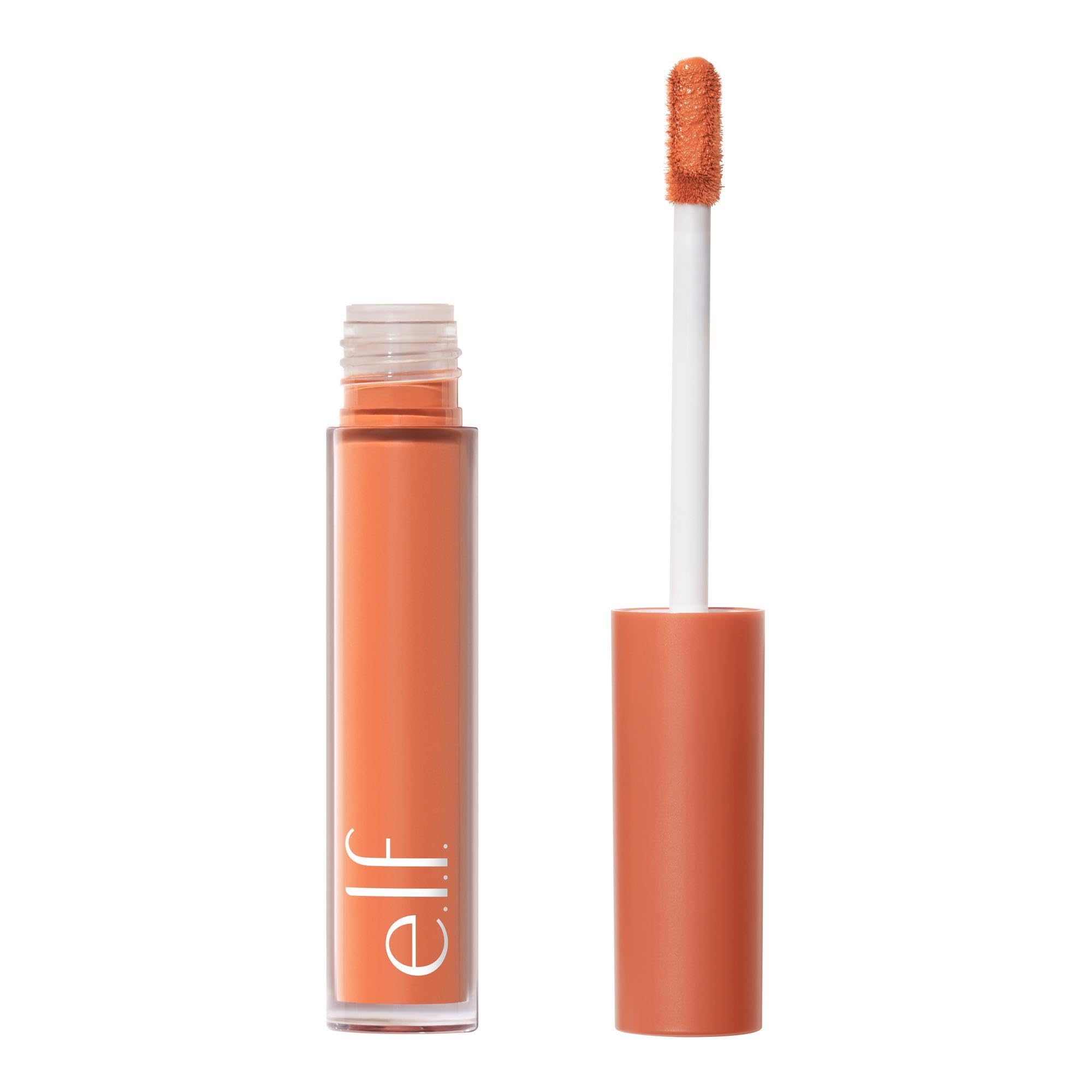
Orange is both the shade and the instruction: e.l.f.'s Camo corrector is made for tan-to-rich skin and for the stubborn blue-purple circles that peach can leave gray. The color is saturated, so it is not a subtle brightener, and the satin finish sits well under a foundation that is not too matte. On deeper skin, it warms the shadow with more force than the peach options here.

The formula includes hyaluronic acid and feels smoother than a traditional waxy corrector. It still needs a light hand: build it in two thin layers rather than one thick one, or it can look dry and chalky around the inner corner. A hydrating eye cream underneath helps, and a concealer with a little radiance on top keeps the area from going flat. This is a corrector that rewards placement more than coverage, so put it where the shadow is, not all around the eye.

What we like most is how much correction a tiny dot gives on deep skin. The orange has enough strength to neutralize without a separate peach layer, and it does not fight a warm foundation. We prefer it to L.A. Girl's peach for rich skin tones, while medium skin may find the L.A. Girl easier to blend. If your circles are brown rather than blue, a peach is the better tool; orange can make brown shadows look muddy.

Bottom line: We recommend e.l.f.'s orange corrector for tan-to-rich skin and blue-purple circles that need more saturation than peach.

4

NYX Color Correcting Palette

NYX Color Correcting Palette

Custom mixing

Our Score 8.4/10
Check Price

Worth Noting

  • More shades than a single-shadow routine needs
Format
Cream palette
Shades
6 color correctors
Dimensions
3.06 x 3.01 x 0.55 inches

Six corrector creams in one small palette sounds like overkill until you have tried to match a corrector to a shadow that is neither pure blue nor pure purple. The NYX palette gives you yellow and peach shades to mix, so you can warm the under-eye without committing to a single tube. We like having the two tones side by side; a tiny mix under the inner corner often looks more natural than either shade alone.

We think it is the most flexible shade-matching tool here, and that is its main advantage. You can correct with peach, soften with yellow, and adjust the mix as the seasons change your skin tone. The creams are thick, though, and they can cake if you sweep them on. Warm a small amount on the back of your hand, tap it under the eye, and keep the layers thin. A separate concealer still does the covering; the palette does the neutralizing.

The compact is small enough to keep in a makeup bag, and the six shades make it useful for anyone who does makeup on more than one face. It is not a quick one-step product; a single corrector is easier when you already know what works. We reach for it when we want to troubleshoot a shadow that a single corrector keeps turning gray. If you are still guessing at your shade, the palette earns its place.

Bottom line: We recommend the NYX palette for anyone who wants to mix a corrector to their exact shadow tone instead of guessing at a single shade.

5

Revlon ColorStay Skin Awaken

Revlon ColorStay Skin Awaken

Quick mornings

Our Score 8.8/10
Check Price

Worth Noting

  • Universal shade is not deep-skin friendly
Wear
Up to 24 hours
Shade
Universal Brightener
Applicator
Antibacterial sponge tip
Key Ingredients
Caffeine, vitamin C

The sponge tip is the first thing you notice on Revlon's Skin Awaken, and it is also the reason the product is so easy to use. A small press releases a controlled dot of brightener right under the lash line, so you can tap it in without a separate brush or wand. The shade is a universal pink-peach, which is flattering on many light-to-medium tones.

The formula is lightweight and buildable, with caffeine and vitamin C in the mix. It brightens more than it conceals, so it works best on mild shadows or on days when you want a fresh face rather than full coverage. We found it comfortable on normal-to-dry skin and easy to layer under foundation. The 24-hour claim is marketing, not a promise; in practice, it wears like a good everyday concealer and may need a touch-up on oily under-eyes.

What we appreciate most is the speed. The cushion tip makes it a one-product step for mornings when you do not want to dip into a pot or clean a brush. The trade-off is maintenance: the sponge can get grubby, so wipe it after use and do not share it. For a quick brightening swipe before work, it is the one we reach for.

Bottom line: We recommend Revlon's Skin Awaken for quick morning brightening on normal-to-dry skin, especially when you want one product and no brush.

6

Elizabeth Mott Under Eye Brightener

Elizabeth Mott Under Eye Brightener

Mature under-eyes

Our Score 8.8/10
Check Price

Worth Noting

  • Small 5ml tube
Use
Brightener base
Size
5ml
Shade
Pink
Key Ingredients
Shea butter, niacinamide, hyaluronic acid

The word base in the name is not decoration: Elizabeth Mott's pink brightener is designed to go under concealer, and it will not hide a strong shadow by itself. What it does is soften the blue-gray cast that makes under-eyes look tired, then give concealer a smoother surface. We like that distinction because it keeps the product from being judged as a full-coverage concealer it was never meant to be.

The formula is creamy and hydrating, with shea butter, niacinamide, and hyaluronic acid. On dry or mature under-eyes, that matters more than a little extra pigment; the cream presses in without dragging and leaves a comfortable base rather than a tight film. The pink is cooler than a peach corrector, so it suits fair skin and cool-toned shadows especially well. Warm-toned or deeper skin may find the effect too subtle.

It works best as a first step: dot, tap, let it settle, then conceal. The pink is not a substitute for peach on deep blue circles, and it is not a multi-use product. If your under-eye is very dry, this is the layer that makes concealer look less like powder. The small tube is easy to keep in a travel bag, though it will not last as long as a full-coverage product used in the same way.

What we like most is the comfort. It feels like a light eye cream, and that is why it earns a place for mature or dry under-eyes even though it is not a standalone corrector. We reach for it when a peach corrector looks too warm or a full-coverage formula starts to crack. It is a support product, not the star, and it does that job well.

Bottom line: We recommend Elizabeth Mott's pink base for dry or mature under-eyes that need hydration and a smoother canvas before concealer.

7

Physicians Formula Gentle Cover Stick

Physicians Formula Gentle Cover Stick

Fair, sensitive skin

Our Score 8.6/10
Check Price

Worth Noting

  • Single yellow shade
Shade
Yellow
Finish
Creamy, non-drying
Format
Twist-up stick
Skin Suitability
Hypoallergenic, fragrance-free

The yellow stick is the most old-school product here, and for fair skin it still earns its place. Yellow neutralizes the purple-blue tones that show up under the eyes, and the slim stick puts the color exactly where you need it without a brush. We like it for spot correction on the inner corner and for travel, where a twist-up stick is easier to manage than a pot.

The formula glides on and blends with a fingertip, but it is not the creamiest stick in this group. On dry under-eyes, it can drag or look patchy if you skip moisturizer, so prep with eye cream and warm the stick on the back of your hand first. The yellow is also strong enough to help with red spots and blemishes, which makes it more versatile than a dedicated peach corrector. It is hypoallergenic and fragrance-free, a useful combination for sensitive skin.

What we appreciate is the precision. The stick is small enough to trace the shadow line and then tap it out, and it does not require a separate corrector palette to get a fair-skin match. It is less forgiving than Catrice's cream and can look dry if you build it, so thin layers are essential. For a simple yellow corrector that lives in a bag, it is the one we keep coming back to.

Bottom line: We recommend the Physicians Formula yellow stick for fair, sensitive skin and anyone who wants precise, portable correction without a palette.

8

tarte Colored Clay CC Corrector

tarte Colored Clay CC Corrector

Dry under-eyes

Our Score 8.4/10
Check Price

Worth Noting

  • Premium price for a small pot
Size
Full size
Shade
Light-medium peach
Coverage
Full-coverage
Key Ingredients
Vegan squalane, caffeine

The tarte CC corrector is the premium option here, and the difference is in the cream rather than the coverage. It feels more like a treatment balm than a thick corrector, with vegan squalane and caffeine in the formula. The light-medium peach is designed to brighten dark, sunken areas, and it looks most natural when you tap on a small amount with a finger.

The texture is the selling point. It is smooth and creamy, and it stays workable long enough to blend the edges. Rose clay and yellow clay are included to help brighten and diffuse the look of dark circles, and the finish is comfortable rather than tight. On very dry under-eyes, that slip is welcome; on oily skin, it may need a powder to stay put.

The color is where it gets tricky. The light-medium peach can look orange on fair skin, and a little goes a long way. We found it best for mild-to-moderate shadows rather than very deep ones; for a strong blue-purple circle, a more saturated corrector or a second layer of concealer does more. It also does not completely escape creasing, so a light setting powder helps.

What we like most is the comfort. It is the corrector we choose when our under-eyes feel dry and a matte concealer looks chalky, because the cream leaves a softer finish. It is not the best value in this group, and the shade range is limited, but the texture is genuinely pleasant. If you want a moisturizing corrector that doubles as a light concealer, this is the one that feels most like skincare.

Bottom line: We recommend tarte's CC corrector for dry or mature under-eyes when a moisturizing cream matters more than shade range or price.

How We Tested the Best Color Correctors for Dark Circles

We started by gathering every product sold as a color corrector rather than a concealer with a brightening claim — peach, orange, yellow, pink, and the multi-pan palettes — then narrowed by shade range, formula type (cream, liquid, stick), and price per ounce. Fourteen made the cut and went into daily rotation for four months, tested by me and three editors with different skin tones and different kinds of darkness: blue-purple hereditary circles, brownish shadows, and the sallow, tired look that shows up after a bad night.

Nothing about the testing looked like a lab. Each corrector got a stretch of real mornings: applied at 6:40 a.m. under one warm bathroom bulb, rechecked in a daylight mirror by the window, then worn through a humid commute, a full workday of video calls, and one outdoor Saturday and one evening event per month. We looked at it at hour four, hour eight, and wherever the day ended, specifically in the two fine lines under each eye and along the inner corner where product likes to pool.

Along the way we swatched each one on the back of the hand to see whether it spread or dragged, then applied it with fingertips and with a small brush to compare. We counted how many taps of product it took to kill the blue tone — the strongest needed a pinhead, the weakest needed a pea — and noted whether a concealer layered on top without pilling or separating at the edges. Coverage got judged at the end of the day rather than the start: whether the peach had gone gray, whether it had settled into creases, and whether it came off cleanly with micellar water at night.

How to Choose a Color Corrector for Dark Circles

Match the color to the shadow, not your foundation

Peach and orange warm up blue or purple circles; yellow suits olive or sallow tones; pink brightens gray-blue on fair skin. A corrector should look slightly off on its own because that is the color doing its job. We prefer to test a dot on the inner corner before committing, since the same peach can turn orange on a fair complexion and disappear on a deep one. e.l.f.'s orange is built for tan-to-rich skin, while L.A. Girl's peach is better for medium and tan.

Single corrector or palette?

A single shade is faster; a palette is insurance. If you already know your circles read blue-purple, a peach or orange single is enough. If you switch between concealer tones, have both blue and brown shadows, or do makeup for others, the NYX palette's six creams give you room to mix. The trap is assuming more shades make a thick formula easier. Warm the cream on your hand and tap a thin layer; a palette used heavily will cake as fast as a stick.

Put texture ahead of coverage

Under-eye skin is thin and creases easily, so a lighter cream or liquid usually looks better than a full-coverage paste. We look for slip, not slip-and-slide: the product should press into the skin and stay put with a light setting powder. Catrice's cream and Revlon's liquid both work best in a thin layer; building three coats is what creates cracks. If your circles are very dark, correct first, then use a separate concealer rather than piling on more corrector.

Match the formula to your skin

Dry or mature under-eyes benefit from hyaluronic acid, shea butter, squalane, or caffeine, ingredients that add slip and comfort. Elizabeth Mott and tarte lean that way; oily lids and under-eyes often do better with a lighter, faster-setting formula and a translucent powder. A stick is convenient, but it can drag on dry skin, so warm it first. If your skin is sensitive, fragrance-free and hypoallergenic options such as Physicians Formula are the safer starting point.

Choose a format you will actually use

Application decides whether a corrector gets used. A sponge tip like Revlon's is quick but needs cleaning; a stick like Physicians Formula is precise but can snap if you twist too much product up; a pot or palette needs a brush or clean finger. If you do makeup on the train, pick the format that needs no extra tool. If you want a no-makeup finish, a brightening cream worn alone is more useful than a full-coverage corrector that needs concealer on top.

Frequently Asked Questions

Final Verdict

We recommend Catrice's Light Rose brightener for fair-to-light under-eyes and a creamy, natural-looking lift; it is the easiest corrector to use well in this group. If you need one product to handle several shadow tones, the NYX palette is the more flexible choice, and e.l.f.'s orange is the one for deep skin. The point is not to buy every shade, but to neutralize your own circle before concealer.