Body Care

Best Callus Removers of 2026

A callus remover looks simple until you’re staring at rasps, pumice stones, and rechargeable files that all promise the same smooth finish. I’ve had a heel that snags socks, so I care less about marketing and more about whether a tool removes hard skin without stinging, nicking healthy skin, or dulling after a few uses. Over four months, my team and I tried 16 callus removers in real bathroom sessions, judging smoothness, pressure needed, control, and value.

The surprise was that the most aggressive rasp isn’t automatically the best. Sharpness cuts both ways: a file that bites fast can be satisfying on thick skin, but if it feels unpredictable or too big in your hand, you’re more likely to overdo it and end up sore. I also checked wet versus dry use, because a tool that glides after a shower can feel useless on a dry heel at night. Durability matters, too—clogged grit, dull blades, and flexing handles turn promising tools into drawer clutter, while the picks ahead stayed effective and easy to live with.

1

Rikans Colossal Foot File

Top Pick
Rikans Colossal Foot File

Thick heel calluses

Our Score 9.4/10
Check Price

Worth Noting

  • ⚠️ Needs light pressure to avoid nicks
Weight
3.2 oz
Rasp Type
Colossal grater rasp
Wet Or Dry
Both
Overall Size
10.78 x 2.7 x 0.29 inches

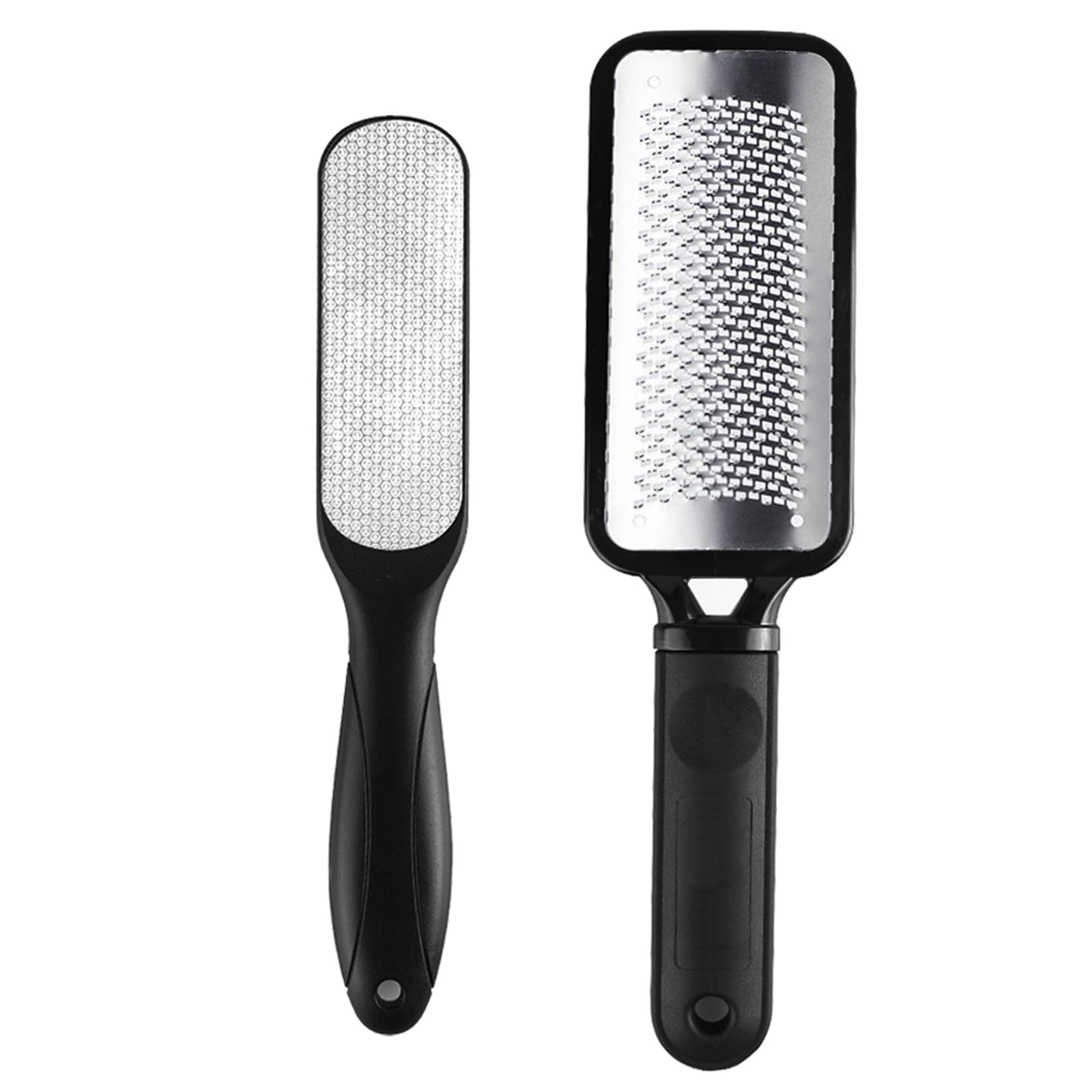
The Rikans looks like a big, blunt grater, and that size is the first thing we noticed: the rasp covers more of a heel in one stroke than the small files we tried. The surface bites hard, so we kept our strokes light and let the teeth do the work. What we liked most is the feedback — you can feel the callus come down before the tool starts skating over live skin. For a thick, stubborn heel, it is the one we reach for first.

It works on dry skin, but we preferred it after a shower. A few minutes of soaking softened the callus, and the rasp cleared it without the dust and tugging we got on a dry heel. The 10.78-inch length gives you a real handle to hold, and at 3.2 ounces it is not tiring to use. Cleanup is a rinse and a tap; there is no chamber or replaceable head to fuss with.

This is not a tool for mindless back-and-forth. Light passes on a soaked heel feel comfortable while pressure and dry skin do not. We kept it to the heel and the edges of the foot and stopped while the skin was still slightly rough. If your calluses are thin or your skin is sensitive, start with the Dr. Scholl's instead.

Where it earns its place is in the time it saves. One session does the work that a pumice stone spreads over several, and the result is smooth enough that we do not need to follow with a finer file. We keep ours within reach of the shower and use it less often than the gentler tools here, because it does more in one go.

Bottom line: We recommend the Rikans as our best overall callus remover for thick heel calluses, because its wide rasp clears hard skin in a few light passes.

2

Dr. Scholl's Nano Glass Foot File

Dr. Scholl's Nano Glass Foot File

Sensitive skin

Our Score 9.2/10
Check Price

Worth Noting

  • ⚠️ Glass can break if dropped
Handle
Soft-touch
Weight
3.88 oz
Material
Nano glass
Waterproof
Yes

The Dr. Scholl's is the callus remover we hand to anyone who winces at the idea of a metal grater. Its nano-glass surface looks like a frosted panel rather than a blade, and it works by buffing rather than gouging. The soft-touch handle is comfortable even with wet hands, and the whole tool is waterproof and rustproof.

We used it on damp heels after a shower, and the difference is control: it removes thin layers, so you can pause and check instead of taking a whole ridge off at once. That makes it far less nerve-racking on thin or sensitive skin, though a rock-hard callus takes more passes. The finish is more even than a coarse rasp, and it rinses clean without trapping dead skin.

The patience is the point. We could stop before the skin went pink, and the result was smooth rather than scraped. We keep ours in a drawer rather than tossing it loose into a gym bag, which is the right habit for a glass tool.

Bottom line: Choose the Dr. Scholl's if you want gentle, controlled smoothing and your calluses are not rock-hard; the glass surface is far less intimidating than a metal rasp.

3

Elmchee Rechargeable Electric Callus Remover

Elmchee Rechargeable Electric Callus Remover

Electric filing

Our Score 9.2/10
Check Price

Worth Noting

  • Replacement heads are ongoing upkeep
Speeds
2
Battery
1200mAh rechargeable
Waterproof
IPX7
Grinding Heads
3 quartz sand

If the idea of sawing at a heel with a metal rasp makes you tired, the Elmchee is the electric option we point to first. It is a compact rechargeable roller with two speeds and three quartz-sand heads, and it does the work with a slow, controlled pass rather than pressure.

We used the coarse head on damp heels and the finer one to finish, and what we appreciated most was the adjustability: low speed for a cautious first pass, high speed when the skin is thick and tolerant. The 1200mAh battery arrived charged, and the LED display takes the guesswork out of whether it will quit mid-foot. IPX7 means you can rinse the body, though we still dried the charging area carefully.

What settles it for us is the lack of hand fatigue. A manual rasp asks you to keep a steady angle and pressure for several minutes; the Elmchee lets you guide the head and stop when the skin looks right. It is not the tool for a rock-hard ridge that needs a rasp, but for regular maintenance it is the least fiddly tool in this group.

Bottom line: The Elmchee is our electric pick for anyone who wants less hand effort and an even finish, though very thick calluses still need patience.

4

Easkep Stainless Foot Rasp

Easkep Stainless Foot Rasp

Stubborn calluses

Our Score 9.4/10
Check Price

Worth Noting

  • ⚠️ Unforgiving on thin or sensitive skin
Frame
One-piece
Handle
Anti-slip
Material
Stainless steel
Wet Or Dry
Both

The Easkep's frame and rasp are one continuous piece of stainless steel, which is the detail that sold us: nothing flexes or separates mid-stroke. The large holes are meant to keep dead skin from clogging the surface, and in use that held true better than the finer rasps we tried. It feels like a solid kitchen tool, not a plastic handle with a blade clipped on.

The rasp is aggressive. We used it on a soaked heel, let the weight of the tool do the work, and stopped after a few passes. The anti-slip handle is comfortable, and the whole thing rinses clean without a brush.

At 3.67 ounces it feels substantial without being heavy, and the open holes let you see how much skin is coming off. We kept ours in the shower caddy because it dries fast and does not need a case. For a callus that has been there for years, it is one of the most efficient rasps here.

Bottom line: The Easkep is the one we choose for thick, stubborn heel calluses, thanks to a rigid one-piece stainless rasp that clears skin fast.

5

Maryton Pumice Stone 4-Pack

Maryton Pumice Stone 4-Pack

Gentle upkeep

Our Score 8.8/10
Check Price

Worth Noting

  • Slow on thick, hardened calluses
Color
Blue
Sides
Double-sided
Coarseness
2 levels
Pack Count
4

A four-pack of pumice stones sounds like more than anyone needs, until you put one in the shower, one by the tub, and one in a travel bag. The Maryton stones are small enough to fit in the palm, with two levels of coarseness on each block.

We used the rougher side on damp heels and the smoother side for a final pass, and the appeal is how little thought it requires: no blades, no charging, no replacement heads. It is gentler than a rasp, and harder to overdo. For maintenance between more aggressive sessions, that is exactly what we want.

What we like best is the rotation. The stones are lightweight and easy to rinse, and having four means one can live in the shower, one in a gym bag, and two can wait as spares. They will wear down with use, so the multi-pack is less about having four at once and more about replacing them without a special order.

Bottom line: The Maryton pumice set is our pick for gentle upkeep and shower use, especially if you want to avoid blades and batteries.

6

Fu Store 2-Pack Foot Files

Fu Store 2-Pack Foot Files

Two-file kit

Our Score 9.4/10
Check Price

Worth Noting

  • Plastic frame can crack with heavy use
Sides
Dual-sided
Material
Stainless steel and plastic
Pack Count
2
Waterproof
Yes

The small file in the Fu Store pair is the one that surprised us: it is easier to control around the edges of a heel than the big rasp, and it gives you a finer finish without reaching for a separate buffer. The larger file is the workhorse, a dual-sided stainless rasp that takes off dry skin in broad strokes, but it is also the more aggressive half of the set.

We liked having both in one pack because they split the job: the big rasp for the heel, the small one for the sides and any spot where we wanted to slow down. Both are waterproof and rinse clean, and the blue protective film on the small file needs to come off before the first use. That film is easy to miss if you start in a hurry.

The larger file is the one we keep at home; the small file is the one that goes in a bag. That division works, and it means the pair gets more use than a single rasp. It is a simple set, and the size difference is the whole point.

Bottom line: The Fu Store two-pack is the practical choice if you want a coarse rasp and a smaller finishing file without buying them separately.

7

IWEEL Electric Callus Remover

IWEEL Electric Callus Remover

Extra roller heads

Our Score 9.2/10
Check Price

Worth Noting

  • Durability is mixed; some units fail after months
Speeds
2
Display
LCD
Waterproof
IPX7
Heads Included
5 replacement heads

Five roller heads is the reason to look at the IWEEL: you get two coarse, two regular, and one fine head, so the tool can follow a callus from thick to smooth without changing devices. The LCD battery display is another small convenience we appreciated, especially compared with tools that just blink a light when the charge is low.

We used the coarse head first, then the fine one, and the two-speed button is easy to find with wet hands. It is IPX7, so the body can be rinsed, and the heads pop off for cleaning. The shape is comfortable to hold, and it feels less like a nail tool and more like a small appliance.

The battery life is good enough for several sessions between charges, and the display means you are not guessing. The fine head is the one that makes the biggest difference for us: it leaves a smoother finish than the coarse roller alone, which is why the five-head kit makes more sense than a single-head electric tool.

What we like is the flexibility: five grits, two speeds, and a clear battery readout make it a useful electric alternative for someone who wants more control than a basic roller offers. It is not the simplest tool to store, but the kit earns its space for anyone who files regularly.

Bottom line: The IWEEL is the electric pick for anyone who wants five grits and a clear battery readout in one kit.

8

Pefei Colossal Foot File

Pefei Colossal Foot File

Curved heels

Our Score 9.2/10
Check Price

Worth Noting

  • Sharpness varies from unit to unit
Use
Wet feet
Surface
Wavy pattern
Material
Stainless steel
Overall Size
10.63 x 2.76 x 0.39 inches

The Pefei's wavy stainless surface is shaped to follow the curve of a heel, and it is the manual rasp we reach for when the shower has already done the softening. It is a long, light tool with a frosted handle, and the curve does make it easier to keep contact across the heel without angling the wrist.

Wet use is where it makes the most sense. We soaked first, then used short strokes, and the wavy surface cleared dead skin without the fine dust a dry rasp can throw. The trade-off is that it is aggressive enough to take more than you intended if you lean on it, so we kept the pressure almost weightless.

The tool is light and easy to rinse, and the frosted handle stays secure with wet hands. It is a useful shape for the sides of the heel, where a flat rasp can feel clumsy. For a spare or a travel rasp, it is easy to live with.

What keeps it out of our top tier is the build. The tool is less durable than the one-piece rasps here, and the handle and plate are the parts to watch. But if you want a curved surface for wet filing and a spare for the shower, it does the job.

Bottom line: The Pefei is a good spare or shower rasp if you like a curved stainless surface and already know how to use a light touch.

How We Tested Callus Removers

We started by pulling together manual rasps, pumice stones, dual-sided files, and rechargeable electric callus removers, then narrowed the field by specs, price, size, and replacement needs. We ruled out tools with flimsy handles, vague grit descriptions, awkward grips, or heads that looked hard to clean. That left 16 units, which we used over four months in the places they’d actually live: on the edge of the bathtub after a shower, on dry heels before bed, in a travel bag, and for quick touch-ups before sandals or socks.

Each tool got the same routine. I counted how many passes it took to smooth a rough heel patch, then ran a fingertip over the area to check for leftover grit and snags. I noted whether a file bit immediately or needed pressure, whether it scratched healthy skin, and whether my heel felt tender afterward. For wet-and-dry models, I repeated the test on a freshly showered foot and again on a completely dry one, because the difference in control was often bigger than the difference in claims.

Size and grip came next: I used each one one-handed, reached the edges of my heel, and checked whether it slipped when wet. After every session, I rinsed and dried each tool, then looked for clogged grit, rust, dull blades, flexing handles, or loose parts. Value was judged by how consistently each one delivered a smooth finish without extra effort or discomfort, not by the number on the box. The tools that held up were the ones that stayed sharp enough to work but predictable enough to use without wincing.

How to Choose a Callus Remover

Start With the Callus, Not the Tool

A coarse metal rasp like the Rikans or Easkep takes down a thick heel fastest, but it also gives you the least margin for a heavy hand. Nano-glass, like the Dr. Scholl's, and pumice, like the Maryton set, remove thinner layers and let you stop and check. If your callus is thick and numb-feeling, start coarse; if it is thin, tender, or new, start gentle. The mistake is buying the most aggressive rasp because it sounds more effective, then avoiding it because it hurts.

Manual or Electric?

Manual rasps ask for a steady hand and a few minutes of work; electric rollers trade some of that effort for a battery, a charger, and replacement heads. We reach for the Elmchee when our hands are tired or when we want an even finish around the curve of a heel, and for a manual rasp when we want immediate feedback on a thick spot. Neither is automatically better. If you dislike maintenance or travel a lot, a manual tool is simpler; if you file regularly and want less hand fatigue, a rechargeable roller earns its keep.

Wet or Dry, and How to Keep Control

Most rasps and rollers work on both wet and dry skin, but wet skin is more forgiving: it softens the callus and cuts down on dust. Soak for a few minutes, then use light, short passes and check the skin between them. A rasp that bites hard is not an invitation to press; pressure is how nicks happen. Stop while the skin is still slightly rough rather than chasing a perfectly smooth finish in one session. That is also the safer habit if your skin is sensitive.

Grip, Reach, and Cleaning

A callus remover spends half its life in a wet bathroom, so grip and cleanup matter. A long handle gives you leverage on a heel; a compact pumice fits into the palm and reaches the sides of the foot. Open holes or a wavy surface can keep dead skin from packing into the teeth, while a closed rasp needs a brush or a firm rinse. Detachable heads and blades make cleaning easier, but they also add a part that can loosen. Look for a tool you can rinse and dry without disassembling it every time.

Replacement Parts and Longevity

Pumice wears down, glass can chip or break, and electric rollers need fresh heads. None of that is a dealbreaker, but it changes the cost of ownership. A one-piece stainless rasp has the fewest parts to replace; an electric kit with five heads gives you more grits but more upkeep. Before you choose, decide whether you want a tool that lasts for years with minimal fuss or one that is easy to refresh. For most people, a simple rasp plus a pumice for maintenance covers both jobs.

Frequently Asked Questions

Final Verdict

After testing the lot, the Rikans is the callus remover we recommend first for thick heel calluses: the wide rasp is decisive, and a few light passes do more than a pumice stone does in a week. If your skin is sensitive or the callus is thin, the Dr. Scholl's nano-glass file is the better choice; it is slower but far harder to overdo. For an electric option, the Elmchee is the one we reach for when our hands need a break. Start with the tool that matches your skin, not the most aggressive one on the page.