Makeup

Best Brush for Cream Blush of 2026

Few things in a makeup routine are as quietly satisfying as cream blush, and few are as easy to botch. A formula that looks dewy in the pan can go streaky the moment it hits your cheek, and the wrong brush either drinks half the product before it reaches your face or drags a hard edge through your foundation. I've watched a genuinely good blush get wrecked by a brush that was too big, too stiff, or too fluffy to do anything but smear.

What a cream blush brush actually fixes is control: a head small enough to land on the cheekbone, bristles dense enough to pick up a putty or liquid formula without swallowing it, and a tip soft enough to diffuse edges with a few taps. Here's what surprised me most — the big fluffy brush that flatters a powder blush is usually the worst tool for cream. We spent four months with 15 brushes, running each through rushed weekday mornings and slower weekend full faces. Softness, blending, and how much product each one wasted sorted the field fast, and the ones worth keeping are just below.

1

Camo Liquid Blush Brush

Top Pick
Camo Liquid Blush Brush

Everyday cream blush

Our Score 9.6/10
Check Price

Worth Noting

  • Too focused for a wide, all-over wash
Bristles
Dense, soft synthetic
Best With
Cream and liquid blush
Head Shape
Angled

The least expensive brush in this group is the one that stayed on our counter. The head is short and angled, and the bristles are packed tightly enough that they don't splay when you press them into a cream: the color goes down in a controlled stripe you can then work outward, rather than a cloud you chase around your cheek.

Density cuts both ways. Because the fibers hold product, a very pigmented liquid blush can load the head more heavily than you want, so we tap it once against the rim of the pan and stipple the first pass before switching to the flat of the brush. The angled edge is the part we appreciate most: it fits along the top of the cheekbone without dragging color down toward the jaw.

It has come through repeated washing without shedding or losing its shape, and the handle still sits tight in the ferrule. The one thing to plan for is cleaning — cream sits deeper in a dense head than in a fluffy one, so this brush needs washing more often than the powder brushes in your cup. That's the trade for the control.

Bottom line: It's the brush we hand people who ask what to buy: a dense angled head that places cream and liquid blush where you want it, then diffuses the edge, for less than anything else here.

2

Tapered Blush Brush

Tapered Blush Brush

Soft diffused wash

Our Score 9.6/10
Check Price

Worth Noting

  • Big fluffy head is less precise for placement
Skin
Suitable for sensitive skin
Bristles
UltraPlush synthetic
Head Shape
Tapered, rounded
Application
Tapping and sweeping

Where the e.l.f. brush is dense and angled, this one is soft and rounded, and that's the point. Real Techniques cuts the head so the tip carries the pigment and the sides diffuse it, which makes it the brush we reach for when we want a wash of color across the cheek rather than a placed stripe.

It's at its best with a cream that has some slip. Tap the color on with the tip, then sweep the flat of the head outward, and the edge disappears on its own — no hard border to fix afterward, which is the part people actually struggle with. It's also the pick here for someone with sensitive skin: the bristles are custom-cut, dermatologist tested, and soft enough that we felt nothing sharp along the cheek, even on a first pass.

What it gives up is control. The head is big and fluffy, so a defined placement high on the cheekbone takes more care than it does with an angled brush, and a firm putty will skip rather than spread. As a second brush beside a dense blender, though, it's the one that makes a cream blush look like skin.

Bottom line: If your cream blush is sheer and you want it spread wide, this soft tapered brush does it better than anything else here, and it's gentle enough for reactive skin.

3

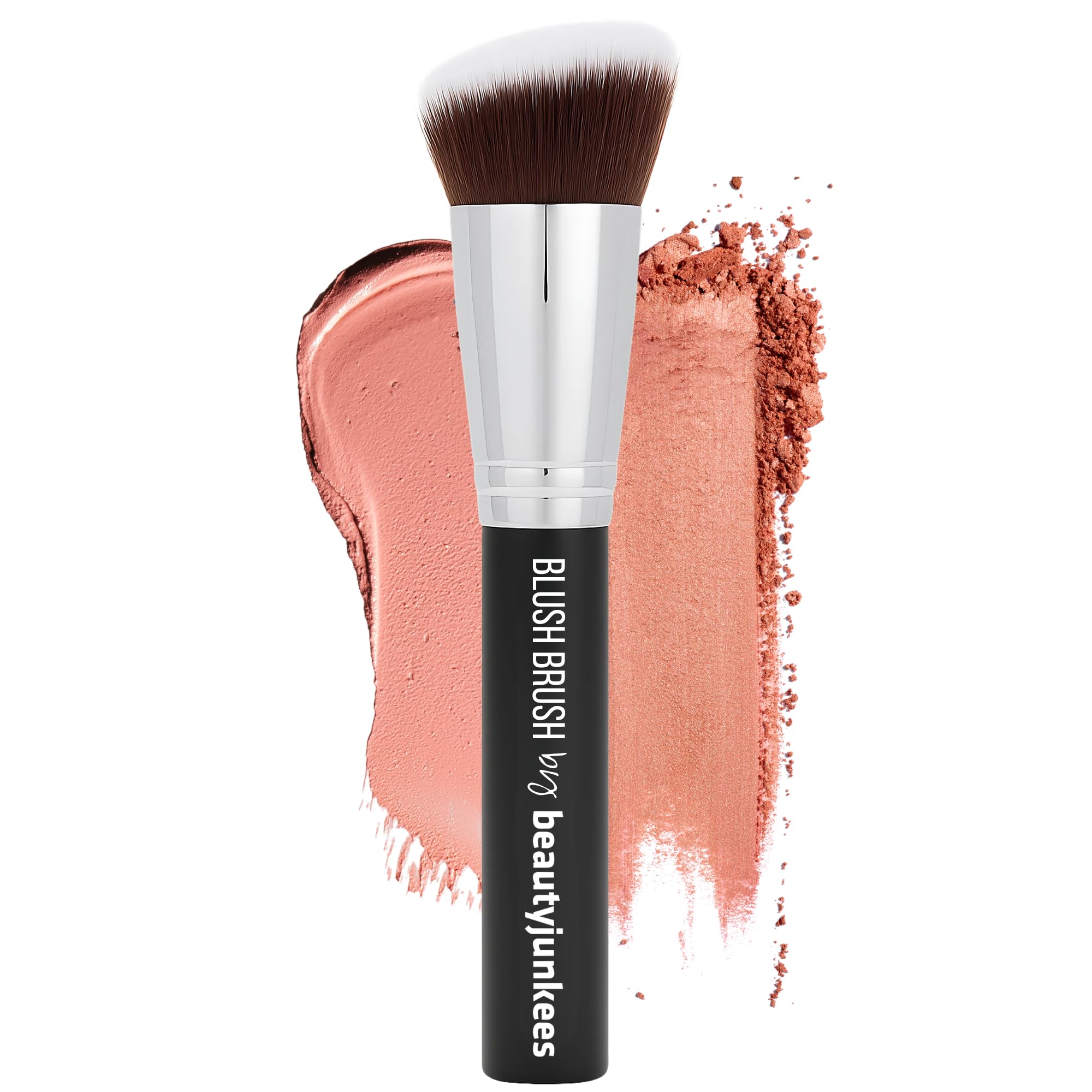
Beauty Junkees Angled Blush Brush

Beauty Junkees Angled Blush Brush

Sculpted cheek placement

Our Score 9.2/10
Check Price

Worth Noting

  • Thick head is too broad for tiny placement
Bristles
Dense synthetic
Best With
Liquid, cream, and powder
Head Shape
Angled

This is the firmest brush in the group, and the first thing we noticed was how much cream it lifts. Press an angled head this dense into a pot and you can end up with more color on the brush than you meant to put on your face.

With a light hand, it's the most controlled way here to place color along the cheekbone. The density keeps the head from splaying, so the edge stays where you set it, and you can build from a sheer stripe to something closer to a draped flush without going patchy. It's also the most versatile of the picks: the same head works with a liquid tint, a cream, and a powder, and the bristles haven't shed or lost their shape through regular washing.

Where it falls short is detail. The head is thick — thicker than the tapered Real Techniques or the small domed TEOYALL — so it isn't the tool for a tiny, precise dot of color. We still reach for it for a sculpted cheek with a cream or cream-to-powder formula, the kind of placement that reads as cheekbone rather than flush.

Bottom line: Buy this one when you want the blush to sit exactly where you put it — it's the firmest, most controllable head here, as long as you load it lightly.

4

Putty Blush Brush

Putty Blush Brush

Thick cream formulas

Our Score 9.0/10
Check Price

Worth Noting

  • Takes several passes to build a bold flush
Bristles
Duo-fiber synthetic
Best With
Putty and cream formulas
Head Shape
Rounded

Pot blushes — the thick, putty kind you press a fingertip into — are where most brushes struggle: a dense head drags them, and a stiff one won't lift them at all. The Putty Blush Brush is built for that texture, and we think it's the best of these for a cream that lives in a jar, with duo fibers and a head that's soft and a little loose rather than packed tight.

The looser fibers lift a film of product and put it back down already half-blended, so what you get is a diffused, airbrushed flush rather than a stripe. Building it up takes a couple of passes, and that's the trade: this is a brush for someone who wants a soft, blurred cheek rather than a graphic one.

Size is the next thing to know. The head is small — small enough to work inside a pot without hitting the walls, which is exactly why it does well with thick formulas, but also why covering a whole cheek takes a few more passes than it does with the Camo brush. For a blush you apply in two dabs, we didn't mind at all.

Bottom line: For thick putty and cream blushes in a pot, this is the one that lifts the formula instead of dragging it, and the diffused finish is the whole point.

5

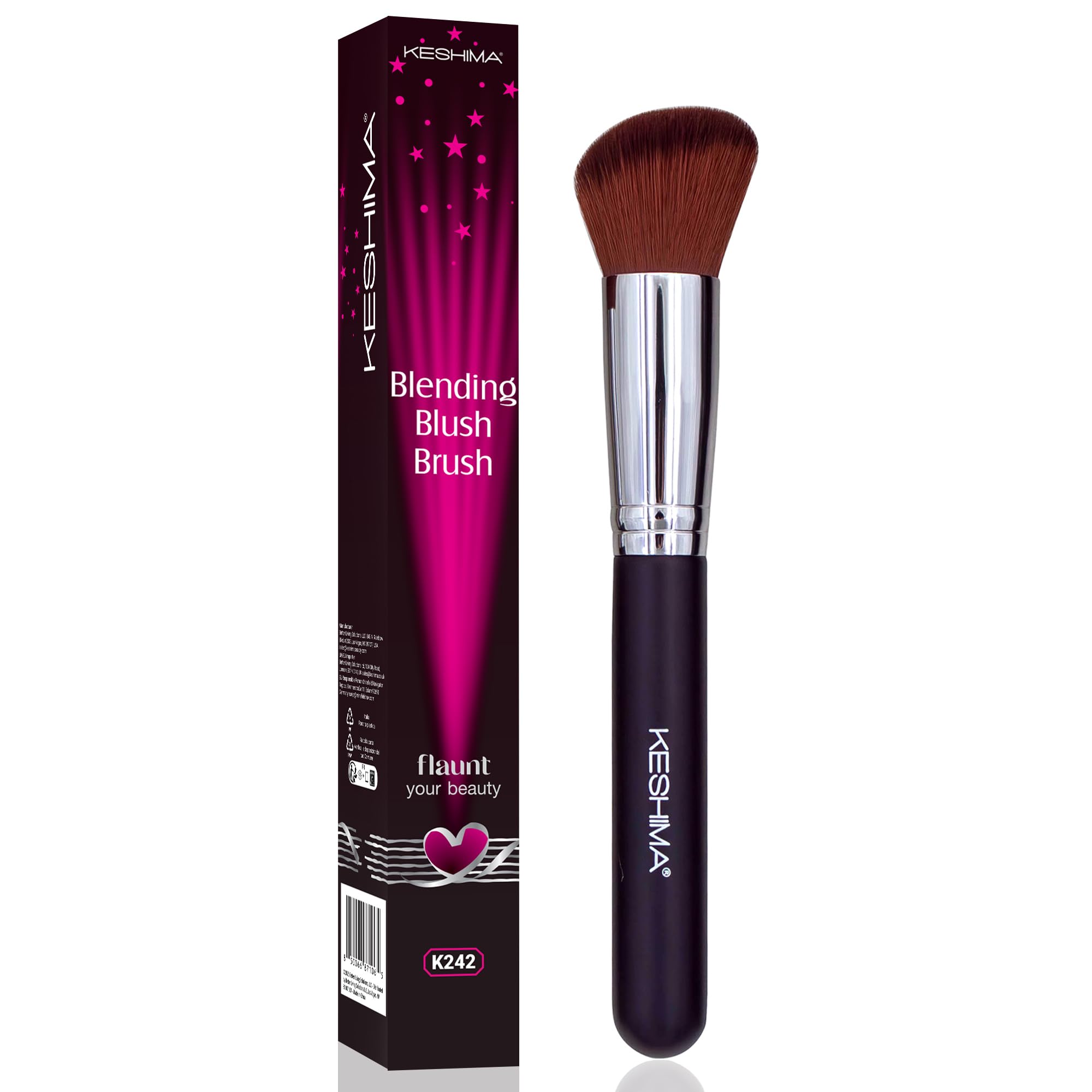
Keshima Angled Blush Brush

Keshima Angled Blush Brush

Controlled liquid blush

Our Score 9.2/10
Check Price

Worth Noting

  • Wooden handle needs wiping, not soaking
Handle
Wooden
Bristles
Ultra-soft synthetic
Head Shape
Angled

The handle is the first thing we noticed: light wood, balanced so the weight sits back in your palm rather than over the head. On a brush this small that matters more than it sounds, because the tip stays steady while you work along the cheekbone instead of wandering off the angle.

The fibers are softer than the angled cut suggests, and they pick up a measured amount of liquid blush rather than a puddle. We found the angle useful at the top of the cheek and around the outer edge of the face, where a round head tends to drop too much color at once. With a runnier tint it releases gradually, so the first touch isn't the darkest thing that happens to your face.

It isn't a luxury object — plain wood, a simple ferrule, almost no weight — but the shape has held and the bristles haven't shed through washing. What it does well is the one thing we ask of an angled brush: it puts color exactly where the angle points, and it doesn't demand a particular formula to do it.

Bottom line: The steadiest hand-feel of the angled brushes here, thanks to a light wooden handle and fibers that release a runny tint gradually rather than all at once.

6

TEOYALL Domed Cheek Brush

TEOYALL Domed Cheek Brush

Detail and touch-ups

Our Score 9.4/10
Check Price

Worth Noting

  • Small head takes longer to cover a full cheek
Ferrule
Metal
Bristles
Dense synthetic
Head Shape
Medium domed

Buy this one for its size, or not at all. The domed head is small — closer to a detail brush than a cheek brush — and that single fact decides whether it suits you.

For color you want high on the cheekbone and nowhere else, small is useful. The dense round head presses cream into a contained area without pushing it toward the nose, and the soft synthetic fibers and metal ferrule feel better built than most brushes at this level. It also cleans up easily, which matters more with cream than with powder, since cream is the formula that lingers in a head.

Across a whole cheek, though, it's the wrong shape: small passes take longer and can leave a faintly stippled edge if you don't blend between them. Where it earns its place is in a travel bag or a small pouch, and alongside blushes pressed into narrow pans that a wide fluffy brush smears.

Bottom line: Worth it if you blush a small zone or carry your makeup with you; the little domed head is precise, but it isn't built to cover a whole cheek in one pass.

How We Chose and Tested the Best Cream Blush Brushes

We built the shortlist by pulling every cheek brush sold specifically for cream, liquid, or putty formulas, plus the angled and domed shapes shoppers keep recommending to each other. From there we filtered by bristle type, head width, density, and price, and cut anything that read as a leftover powder brush with new marketing copy. That left 15 brushes, which we used for four months.

Each brush got the same workout: three cream formulas — a firm putty in a pot, a runny liquid, and a cream stick — applied half the time to bare skin and half over foundation. We counted how many dips it took to cover one cheek, counted strokes needed to soften a stripe of color into a seamless edge, and noted whether the bristles splayed or skipped. Softness got judged on the back of the hand and along the cheekbone, where scratchy bristles show up immediately. For size, we measured each head against a cheekbone and checked whether the tip could tuck under the eye without smearing concealer, or whether it sprawled onto the nose.

Quality and value came last but decided a lot. Every brush was washed three times, and we counted loose bristles in the sink and checked the ferrule for wobble afterward. The cheap brushes that held their shape and shed nothing beat the pricier ones that bloomed after a single wash — a reminder that in this category, price tells you very little about how a brush will behave by week three.

How to Choose a Brush for Cream Blush

Match the density to the formula

Density is the decision that matters most. A tightly packed head picks up more cream and keeps it near the surface, which gives you placement and control; a loose, fluffy head picks up less and puts it back down already diffused. If your blush is a pigmented liquid or a gel tint, dense plus a light hand is the easier pairing. If it's a soft cream you want sheered across the cheek, fluffy is more forgiving.

The trap is choosing by appearance. A big fluffy brush looks like the professional choice, but drag one through a thick putty and it either skips across the surface or grabs a patch. Match the head to the pot, not to the photo.

Angled, tapered, or domed

Shape decides where the color lands. An angled cut puts pigment where the edge points, and you flip to the flat side to blend — the most controlled option, and the reason four of our six picks are angled. A tapered round head diffuses over a wider area and hides an uneven hand. A small domed head is for precision, for two-dab application, and for narrow pans where a wide brush smears.

Think about the area you actually blush. Cheekbone only, or cheekbone sweeping up toward the temple? The first wants a smaller, firmer head; the second wants width.

Bristles, softness, and skin

Every brush here is synthetic and cruelty-free, which is now the norm for cream formulas: synthetic fibers don't drink up the oils in a cream the way natural hair can, so more of the product ends up on your cheek and less inside the brush. What separates these picks is softness and cut. Cheek skin is thin and you're pressing rather than sweeping, so a prickle that's tolerable in a powder brush becomes irritating by the end of the week.

If your skin reacts easily, prioritise a brush described as suitable for sensitive skin and wash it often — softness is the one thing worth judging in person, while density and shape you can judge from the description.

What you actually need to spend

Cream blush brushes are one of the few tools where the budget end genuinely holds up: our top pick is also the least expensive brush in this group, and it earned that on control rather than price. Spending more buys a nicer handle, a specific head shape, or a softer feel — not a better blend. Decide on density and shape first, then let handle material break the tie.

One brush is enough for one blush. A second earns its place when you keep two very different formulas, such as a pigmented liquid and a thick pot, or when you want both a dense placer and a fluffy diffuser in rotation.

Frequently Asked Questions

Final Verdict

Most people should buy the e.l.f. Camo Liquid Blush Brush and stop looking. It's dense enough to place cream and liquid blush precisely, angled enough to work along a cheekbone, and inexpensive enough that a second one for a travel bag isn't a decision.

If your blush is a sheer tint you want spread wide, the Real Techniques Tapered Blush Brush does that better. And if your blush lives in a pot as a thick putty, the e.l.f. Putty Blush Brush lifts it without dragging.