Body Care

Best Body Oils of 2026

Body oil doesn't add moisture so much as seal in the water already on your skin, which is why the bottle matters less than the moment you reach for it: damp skin, straight out of the shower, not dry skin an hour later. Do that and a thin layer holds water where lotion alone lets it evaporate; skip it and you're wearing a slick film that transfers to your pajamas. What a good one fixes is the twice-a-day lotion habit that still leaves you tight by evening.

I've kept some form of body oil on my bathroom shelf for years, and the gap between a great one and a fine one comes down to how fast it sinks in and what it smells like an hour later. We've spent four months with 16 bottles and a gel, from fragrance-free sprays to heavily scented cocoa butter pours, and the ones worth keeping absorbed without leaving a handprint on the doorknob. Format matters more than I expected: a spray reaches a shoulder blade in two passes, while a pump gives you control when you're targeting a scar. The bottles that earned a permanent spot by the tub are below.

1

Bio-Oil Skincare Body Oil

Top Pick
Bio-Oil Skincare Body Oil

Tone and scars

Our Score 9.2/10
Check Price

Worth Noting

  • Priciest per ounce of the picks here
  • Noticeable scent that will not suit everyone
Size
6.7 fl oz
Format
Pump bottle
Skin Types
All skin types
Key Ingredients
Vitamin E, chamomile, lavender oils

A body oil usually has one job: hold moisture in and leave skin soft, and most of the bottles here do it well. Bio-Oil is the one we hand to someone who wants a second job done at the same time. It is sold for the look of scars, stretch marks, and uneven tone, and it earns the top spot because it does that without feeling like a treatment. It is serum-light rather than syrupy, so a couple of pumps cover a leg and it is gone before you have capped the bottle.

The formula is a blend rather than a single oil: vitamin E with chamomile and lavender oils, no parabens, and a non-comedogenic finish that will not clog pores. That last part matters if you plan to use it on your chest and back as well as your legs, where heavier oils tend to sit and cause trouble. The pump is a small thing we came to appreciate, because it doses a controlled amount and a 6.7-ounce bottle goes further than the size suggests.

It is worth being realistic about the scar and stretch-mark side. An oil can keep the skin over a mark soft and hydrated, and hydrated skin tends to look less pronounced; nothing in a bottle erases a mark, and the ones that fade do it slowly. What we can say is that this is the bottle we keep reaching for long enough to find out, because applying it twice a day never feels like a chore.

Bottom line: Buy it if you want daily moisture plus help with the look of scars and stretch marks, in a light oil that is absorbed before you finish dressing.

2

Palmer's Cocoa Butter Body Oil

Palmer's Cocoa Butter Body Oil

Daily all-over use

Our Score 9.4/10
Check Price

Worth Noting

  • Cocoa scent is strong and divides people
Size
8.5 fl oz
Finish
Non-greasy
Format
Bottle
Key Ingredients
Cocoa butter, vitamin E

Palmer's built its name on cocoa butter, and this is the liquid version of that idea: cocoa butter and vitamin E in a light oil made to sink in without a greasy film. It is an 8.5-ounce bottle of the plain stuff, and it is the one we reach for when we are oiling everything from ankles to shoulders and do not want to think about it.

What makes it our value pick is the combination of price and performance. It is the cheapest per ounce of the daily-use oils here, and it still delivers the softness and glow you buy body oil for. Skin feels smooth rather than slick within a minute or two, and there is enough sheen left on the surface to skip highlighter on your shoulders in summer.

Dry, itchy winter legs are where we noticed it most. It takes the tight feeling out of skin that has been under tights all day, and it layers under a heavier cream without turning into a slip hazard. It is also the bottle we are least precious about, which in practice means we use it more often than the expensive ones.

Bottom line: The everyday bottle: cheap enough per ounce to use by the handful, and it leaves skin soft and glowing without a greasy film.

3

Neutrogena Fragrance-Free Body Oil

Neutrogena Fragrance-Free Body Oil

Scent-free routines

Our Score 9.4/10
Check Price

Worth Noting

  • Only sold as a two-bottle pack
Size
8.5 fl oz each, 2-pack
Scent
Fragrance-free
Format
Bottle
Key Ingredient
Sesame oil

If scent is the reason you have avoided body oils, start here. Neutrogena's fragrance-free version is a light sesame oil with nothing added to smell of anything, and it is the one we hand to anyone who wears perfume daily or has skin that reacts to fragrance. It goes on thin, absorbs quickly, and leaves the faint sheen of a dry oil rather than a film.

Sesame oil is what makes it feel lighter than the richer blends here. We used it most on arms and legs after an evening shower and found it gone by the time we got into bed, with no sticking to the sheets and no residue coming away on a towel in the morning. As a massage oil it is slippy enough to work with and light enough that you do not need to shower afterward.

It is also a sensible first bottle for anyone who has reacted to a scented oil before. Patch test on an inner forearm for two or three nights before you commit to a whole leg, because sesame is a known allergen for a small number of people and it is better to find that out on a wrist than on both shins.

Bottom line: The one to buy if fragrance-free is non-negotiable and you want a light oil that is gone before bed.

4

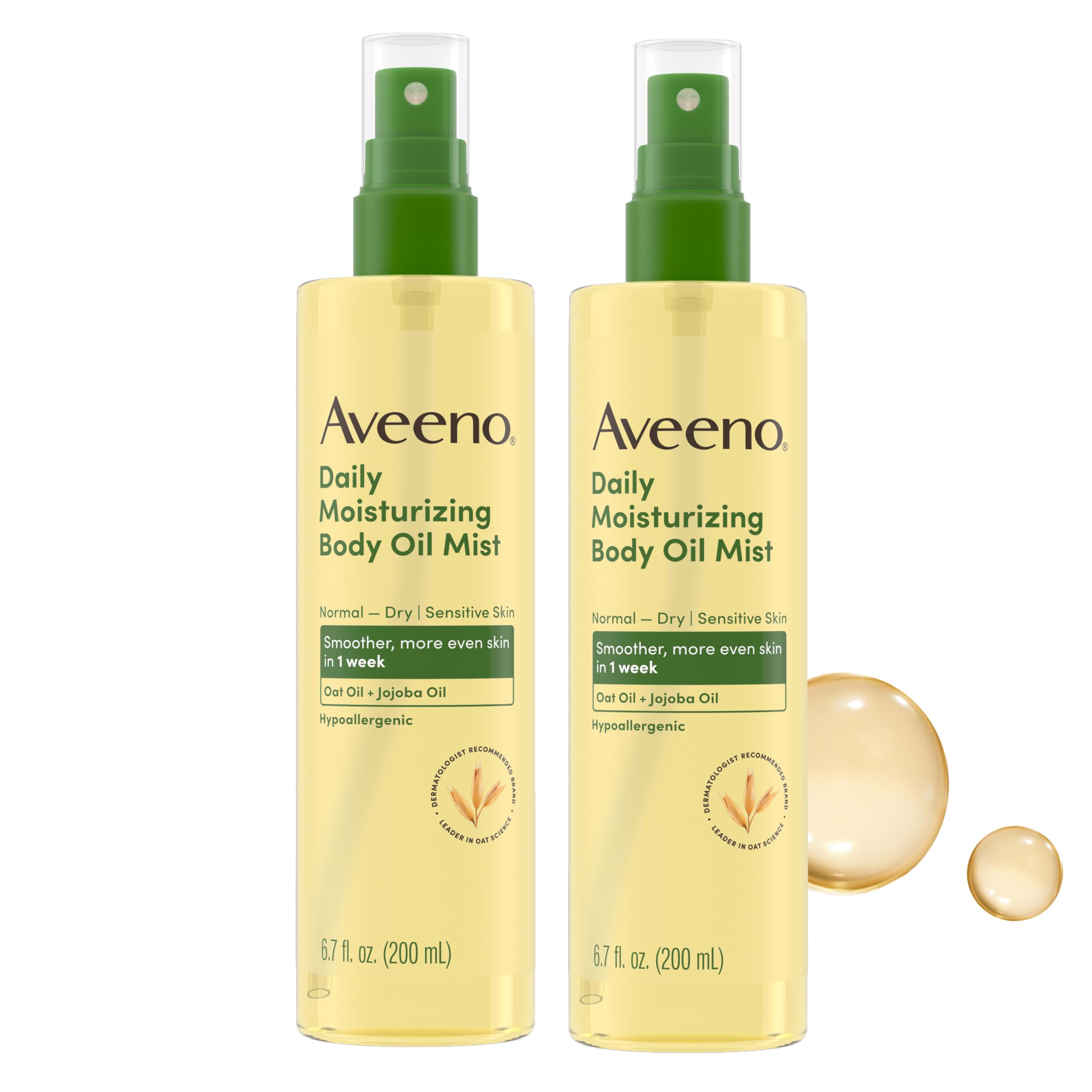
Aveeno Daily Body Oil Mist

Aveeno Daily Body Oil Mist

Hard-to-reach areas

Our Score 9.2/10
Check Price

Worth Noting

  • Spray nozzle can stick or spray unevenly
Size
6.7 fl oz each, 2-pack
Format
Spray mist
Key Ingredients
Oat oil, jojoba oil, vitamin E

Your back is the part a pump bottle cannot reach, which is why a mist earns a place in a routine. Aveeno's version is a fine spray that lands on shoulders, shoulder blades, and the middle of your back without asking anyone for help.

The formula is oat oil and jojoba with vitamin E, and it is aimed at sensitive skin: allergy tested and 98% naturally derived by the brand's own calculation. It sprays as a fine mist rather than a jet, so you get an even layer instead of a puddle in one spot, and it settles quickly enough that you are not standing in a towel waiting.

We rate it the easiest of these to use on a busy morning. Two or three passes and you are covered, and the oil is light enough to be absorbed by the time you have put the bottle down. For anyone who has given up on body oil because rubbing it into a whole body is a chore, that is the entire argument.

Worth knowing: a mist puts some of the oil past you, especially if you spray from arm's length. Aim it close to the skin and it lasts like a normal oil; stand back and you will be replacing the twin pack more often than you expect.

Bottom line: Buy it if reaching your back is the problem, or if rubbing oil into a whole body every morning is a step too far.

5

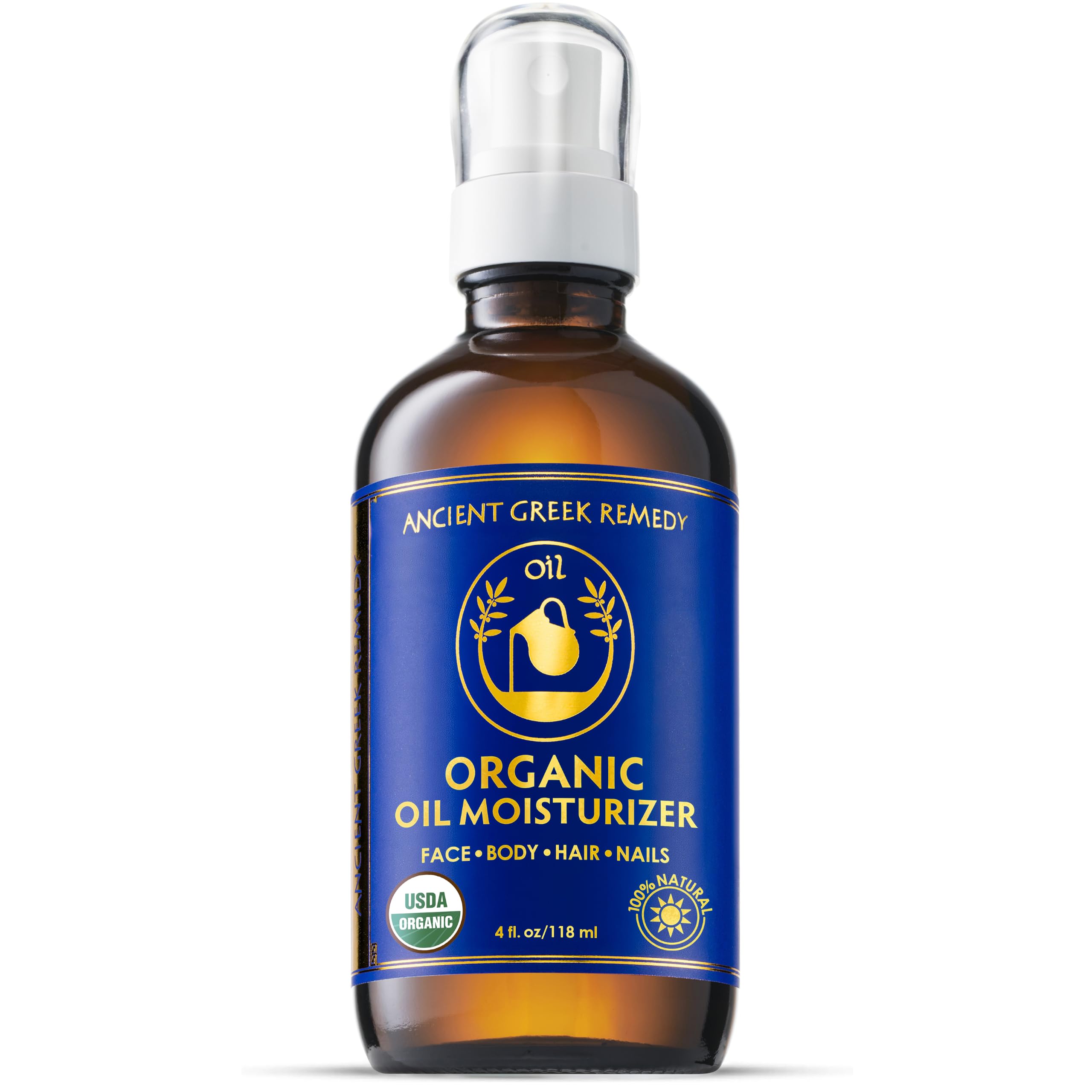
Ancient Greek Remedy Body Oil

Ancient Greek Remedy Body Oil

Evening ritual

Our Score 9.2/10
Check Price

Worth Noting

  • Only 4 ounces per bottle
Size
4 fl oz
Scent
Lavender
Format
Bottle
Key Oils
Almond, jojoba, olive, lavender

The lavender arrives before the oil does. Open this one and the room smells like a spa before you have touched your legs, which is either the whole point or a reason to keep walking, and it is why the bottle ends up in evening routines rather than morning ones.

As a body oil it earns its place on more than scent. It is 99% organic and cold-pressed, blending almond and jojoba with olive oil, vitamin E, and lavender, which gives it a slightly richer feel than the pure jojoba here without turning syrupy. Skin felt smoother the next morning rather than just during application, and it is the one bottle in this group that makes a plain post-shower routine feel like something you did for yourself.

It comes in dark glass, which is the right container for a blend this rich in plant oils: light is what turns them over time, and a dark bottle keeps the last ounce smelling like the first.

Bottom line: Buy it if you want the oil to be the nicest part of your evening, and lavender is a scent you already love.

6

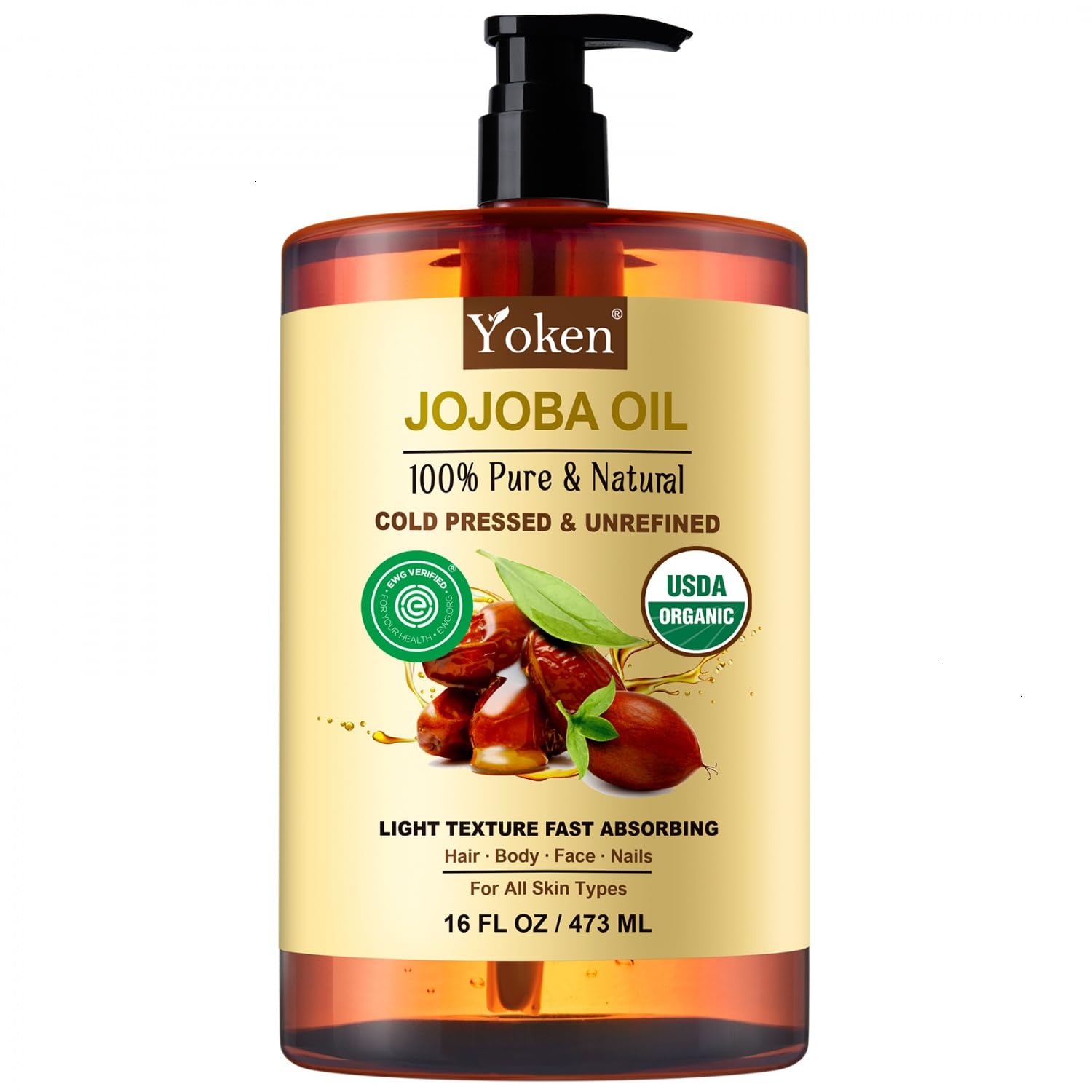
Yoken Organic Jojoba Oil

Yoken Organic Jojoba Oil

Face and body

Our Score 9.4/10
Check Price

Worth Noting

  • Only sold in a 16-ounce bottle
Size
16 fl oz
Scent
Fragrance-free
Format
Pump bottle
Key Ingredient
USDA organic jojoba oil

One ingredient, one bottle, nothing to argue with. Jojoba is the plant oil closest to the sebum your skin already produces, which is why a single bottle suits a dry shin and an oily back equally well and why it is the least complicated thing you can put on your body.

Yoken sells 16 ounces of USDA-certified, cold-pressed jojoba in an amber bottle with a pump. It is thin, thinner than the blends here, so it spreads in a few strokes and leaves almost nothing behind but softness. There is no fragrance, which makes it the easiest oil to layer under a scented lotion or a perfume without a fight.

What settles it for us is how little there is to think about. No scent to clash with anything, no richness to work around in July, and a pump that lets you take a small amount. It is the bottle we leave in the bathroom for everyone to use, and the one that gets finished rather than forgotten.

It is also a carrier oil, so blending is fair use: a few drops mixed into unscented lotion make a richer winter layer, and it dilutes essential oils without adding a scent of its own.

Bottom line: Buy it if you want one unscented oil that works on its own or as a base for blends, in a size that lasts.

7

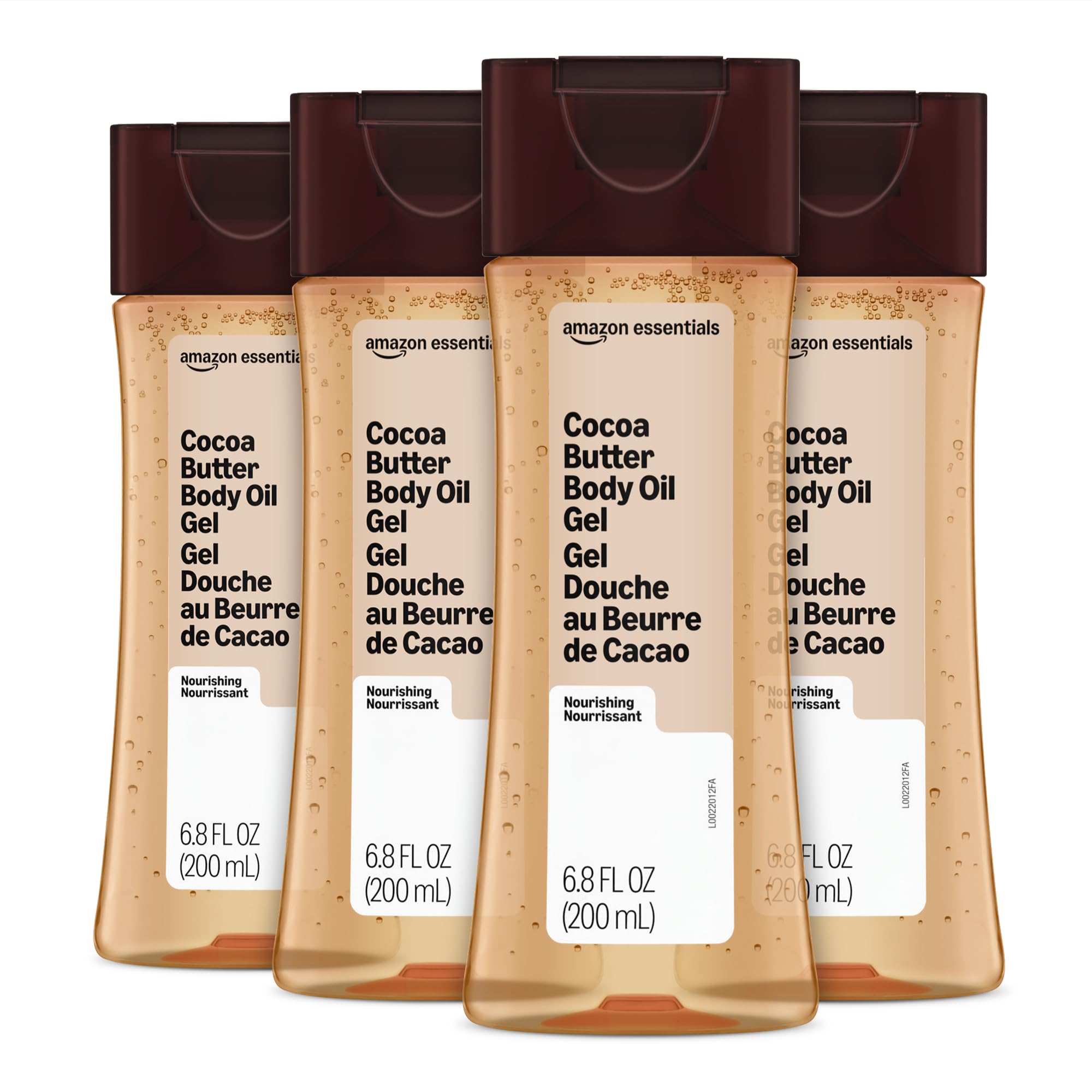
Amazon Essentials Body Oil Gel

Amazon Essentials Body Oil Gel

Very dry skin

Our Score 9.2/10
Check Price

Worth Noting

  • Tacky until it fully absorbs
  • Four-bottle pack is a bulk buy
Size
6.8 fl oz each, 4-pack
Format
Gel
Key Ingredient
Cocoa butter

A gel is a different animal from a liquid oil. It holds its shape on your palm, so it goes exactly where you put it instead of running down your wrist, and you can work it into a heel or an elbow without chasing it across your leg. Amazon Essentials' version is a cocoa butter gel, and that texture is the reason to consider it.

It is built for very dry skin and behaves more like a balm than the liquids here. On winter shins, elbows, and heels that richness is the point: it leaves a barrier you can still feel the next morning, which is more than the light oils manage.

It is also the tidiest of these to use. Nothing drips off your hand onto the bathroom floor, and a little goes a long way because the gel does not spread thin and disappear. If you have ever given up on body oil because of the mess, this is the format that fixes it.

Where it wins for us is deep winter, when skin is past what a light oil can fix and lotion stings going on. That is a seasonal recommendation rather than a year-round one, since by June you will want something that vanishes, but for January legs a barrier that is still there the next morning is worth a slower application.

Bottom line: Buy it for winter legs and heels if you want a rich barrier that stays put and do not mind a slower rub-in.

8

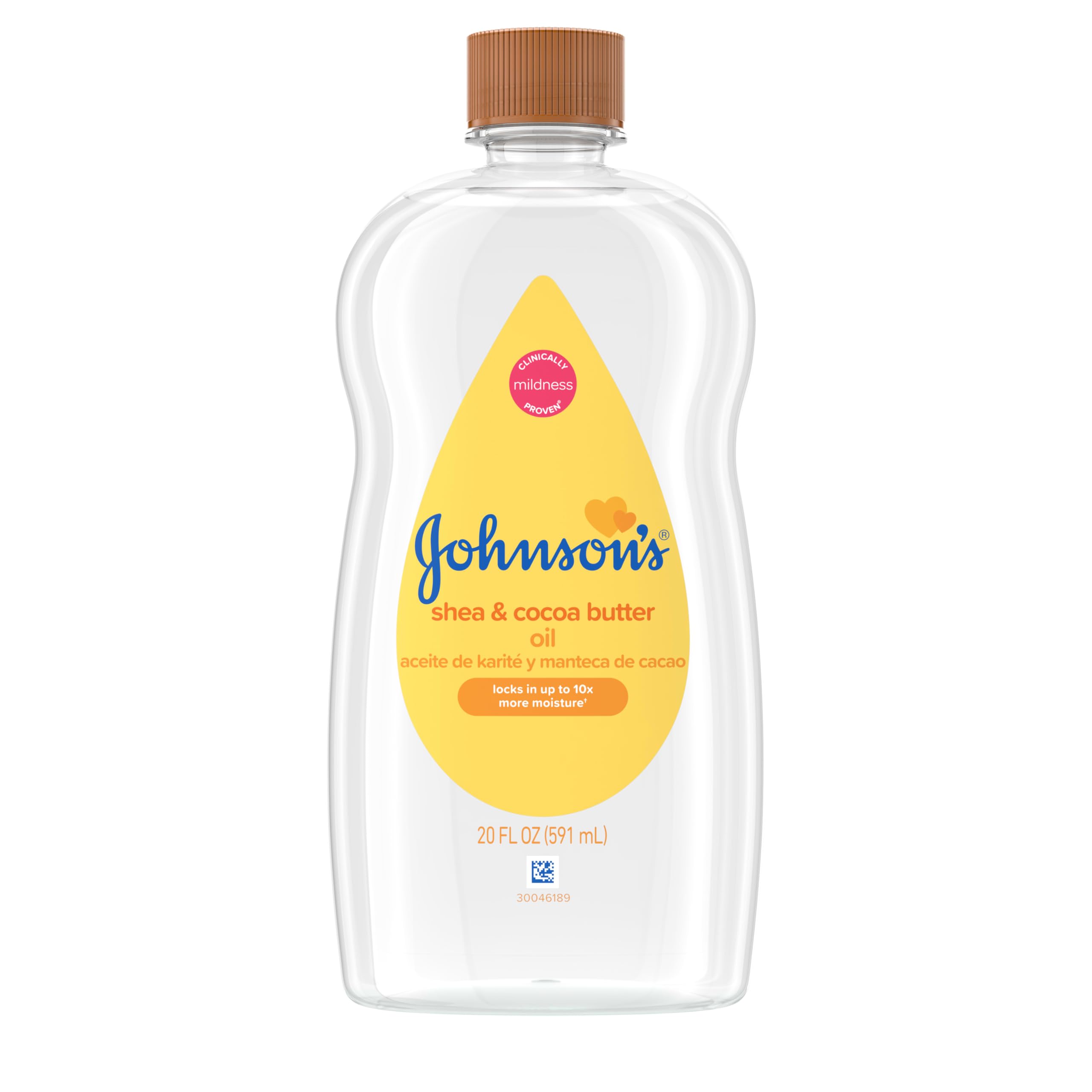
Johnson's Baby Oil with Shea & Cocoa Butter

Johnson's Baby Oil with Shea & Cocoa Butter

Bulk budget buy

Our Score 9.6/10
Check Price

Worth Noting

  • Lightly scented, not fragrance-free
Size
20 fl oz each, 6-pack
Scent
Lightly scented
Format
Bottle
Key Ingredients
Mineral oil, shea and cocoa butter

Six 20-ounce bottles arrive in one order. That is the first thing to get your head around, because it changes what this is: not a bottle you try, but a supply you commit to.

Underneath the packaging it is the classic: mineral oil with shea and cocoa butter, lightly scented, allergy tested, and made to sit on the skin as a barrier that slows moisture loss. It is the simplest formula here, and the one with the fewest ways to go wrong on sensitive skin.

It is also the most versatile bottle in this group by a distance: a massage oil, a shaving shortcut, a post-shower layer. And it is still a baby product, so it is fine used that way too, with a little worked into the scalp before a bath being the sort of thing it was made for.

Two pumps after a shower do the work of a lotion and an oil together, and it is absorbed by the time you have pulled on a T-shirt, which is more than we can say for the richer formulas here. It is not a treat and does not pretend to be. It is the bottle you buy when the goal is soft skin at the lowest cost, and it does that as well as anything on this list.

Bottom line: Buy it when one bottle will not last a month in your house and you want the cheapest oil per ounce that still treats skin gently.

How We Chose and Tested the Best Body Oils

We started with a shortlist of about 40 oils pulled from bestseller pages, dermatologist roundups, and the ingredient panels of the products readers ask about most, then narrowed by formula base — mineral, jojoba, almond, olive, cocoa butter — and by how the oil gets out of the bottle: pump, spray, or pour. Anything with alcohol listed high on the panel was cut, as were near-duplicate sizes of the same formula. That left 16, which we used for four months.

Testing happened where body oil actually lives. Every bottle went into a bathroom rotation and was applied to damp skin within three minutes of a shower; I timed how long each took to stop feeling wet, then pressed a palm to a black cotton T-shirt to see what transferred. Mornings were the real test, since one tester had ten minutes between applying and walking out the door, which is where the greasier formulas gave themselves away. At night we dabbed the same oils on stretch marks and older scars on knees and forearms, photographing the same patch of skin at week one, week six, and week twelve to judge whether anything changed beyond general softness.

Sprays got their own scrutiny: whether the mist landed evenly or spat droplets, whether the nozzle clogged, and how much of a bottle ended up on the bathroom floor. Fragrance was judged twice — on the scent itself and on how long it lingered, because a cocoa butter note that's pleasant at 7 a.m. can be a lot by mid-morning. Finally, value: we divided price by ounce, then weighed that against how many pumps a full leg actually took, since a thin oil that needs four passes is no bargain.

How to Choose a Body Oil

Light or rich: match the oil to your skin and the season

The single biggest difference between these bottles is weight. Thin oils such as sesame, jojoba, and fractionated coconut spread over a whole leg in a few strokes and leave little behind, which is what you want in summer or when you dress within minutes of a shower. Rich formulas such as the cocoa butter gel or a mineral oil leave a barrier you can still feel the next morning, which is what very dry winter skin needs.

Treat the word non-greasy on a listing as a description of the finish, not of the speed. A rich oil can dry down without feeling greasy and still take several minutes to settle. If you know you will not stand around in a towel, buy the lighter bottle.

Scent decides whether the bottle gets finished

Fragrance is the most divisive thing about body oils and the hardest to work around, because you wear it all day. The fragrances here range from none at all, through a light oat or baby-oil softness, to a full lavender or cocoa presence. None of those is better; they suit different routines.

The trap is layering. A scented body oil and a daily perfume compete for the same space, and the combination rarely smells like either. If you wear fragrance, buy an unscented oil and save the lavender bottle for evenings when the oil is the point.

Pump, mist, gel, or bottle: pick for where you cannot reach

Format is mostly about reach and mess. A mist covers shoulders and the middle of your back without help, a pump doses a controlled amount into your hand, a gel stays where you put it and cannot run down a wrist, and a plain bottle is usually the cheapest way to buy the same ingredients.

A mist still needs a quick rub, and spraying from arm's length sends a share of the product past you into the air. Aim close to the skin. If your back is the problem area, the mist pays for itself; otherwise a pump is tidier.

What is actually in the bottle

Mineral oil is the cheapest, most occlusive option and the most inert, which is why it suits reactive skin and babies. Jojoba behaves most like the oil your skin already makes; fractionated coconut is the lightest and most neutral; olive and almond bring richness; castor is thick enough that it is better diluted than used alone.

The one mechanism worth understanding: oil does not add water, it seals in what is there. Applied to skin that is already dry, it sits on the surface and feels greasy. If your skin is reactive, choose a single oil over a scented blend and patch test before committing to a whole bottle.

Size, packs, and the cost per ounce

Per-ounce math compresses the price gaps between these bottles far more than the shelf prices suggest. A four-ounce spa bottle and a sixteen-ounce workhorse can cost the same, and one of them will last a season.

Watch the multi-packs. Two-, four-, and six-bottle packs look cheap per bottle and commit you to a formula your skin has not met yet. Buy a single bottle first if you can, and if you do buy a pack, buy it in a size you will actually finish.

Frequently Asked Questions

Final Verdict

Bio-Oil is the one we buy first. It is light enough to use every day, it is the only pick here built for tone, scars, and stretch marks as well as moisture, and the pump keeps a small bottle going longer than the size suggests.

If that is more than you want to spend on a body oil, Palmer's does the everyday job for a fraction of the per-ounce cost. And if scent is the thing that has kept you away from body oils altogether, Neutrogena's fragrance-free sesame oil clears that hurdle without asking you to give up the finish.