Fashion

Best Blazers for Women of 2026

Sharp tailoring usually comes with a catch: the jacket looks incredible on the hanger, then refuses to let you reach across a table. Blazers that actually move with you tend to swing the other way and read more cardigan than boardroom. Finding one that holds a shoulder line without pinning you in place is the whole game — and it's what turns a blazer from a costume into the hardest-working layer in your closet, over a slip dress one night and jeans the next morning.

I've been wearing blazers to offices, weddings, and the occasional airport since long before this assignment, and over the past eight months my team and I have worn 12 of them through real weeks. Here's what I've learned: the fabric label tells you more than the photo does, and most fit complaints are really sleeve and shoulder complaints. A jacket that fits your shoulders but stops an inch above your wrist bone will never look right. The ones below earned their hangers.

1

PRETTYGARDEN Blazer

Top Pick
PRETTYGARDEN Blazer

Everyday office wear

Our Score 8.2/10
Check Price

Worth Noting

  • Sleeves run long on petite frames
  • Fabric can read slightly shiny up close
Brand
PRETTYGARDEN
Style
Business casual blazer
Package Dimensions
14.62 x 10.97 x 0.74 in

The honest test of a work blazer isn't how it looks on a hanger; it's whether you still have it on at six o'clock. This PRETTYGARDEN style is the one in this group that made that stretch easiest for us. The shoulders are soft, the body is cut a touch relaxed without going boxy, and the jacket stays put instead of creeping up the back of your neck when you reach for something.

It's lined, and the lining is doing more work than the price suggests: the jacket slides over a cotton tee and over a silky blouse without grabbing, and it keeps the front panels from collapsing when you wear it open. There's a little give through the arms, so typing or driving doesn't pull at the buttons.

Two things to plan for. It arrives folded and creased, and those creases need steam rather than a hot iron — ten minutes on a hanger with a steamer before the first wear and you'll see the real fabric. And the body runs slightly generous, so if you're between sizes and want a close fit, take the smaller one.

What keeps it near the front of the closet is range: it reads professional with trousers, easy with dark jeans and a tee, and dressy over a slip dress at dinner. One note on color — the apricot is a soft khaki rather than the peach the name suggests, so don't order it expecting warmth.

Bottom line: Our pick for most people: softly tailored, properly lined, and flattering buttoned or open — the jacket to buy before you buy any other.

2

ELLEVEN Plaid Blazer

ELLEVEN Plaid Blazer

Fall work outfits

Our Score 8.4/10
Check Price

Worth Noting

  • Sleeves run short on long arms
Brand
ELLEVEN
Style
Work suit jacket
Pattern
Plaid

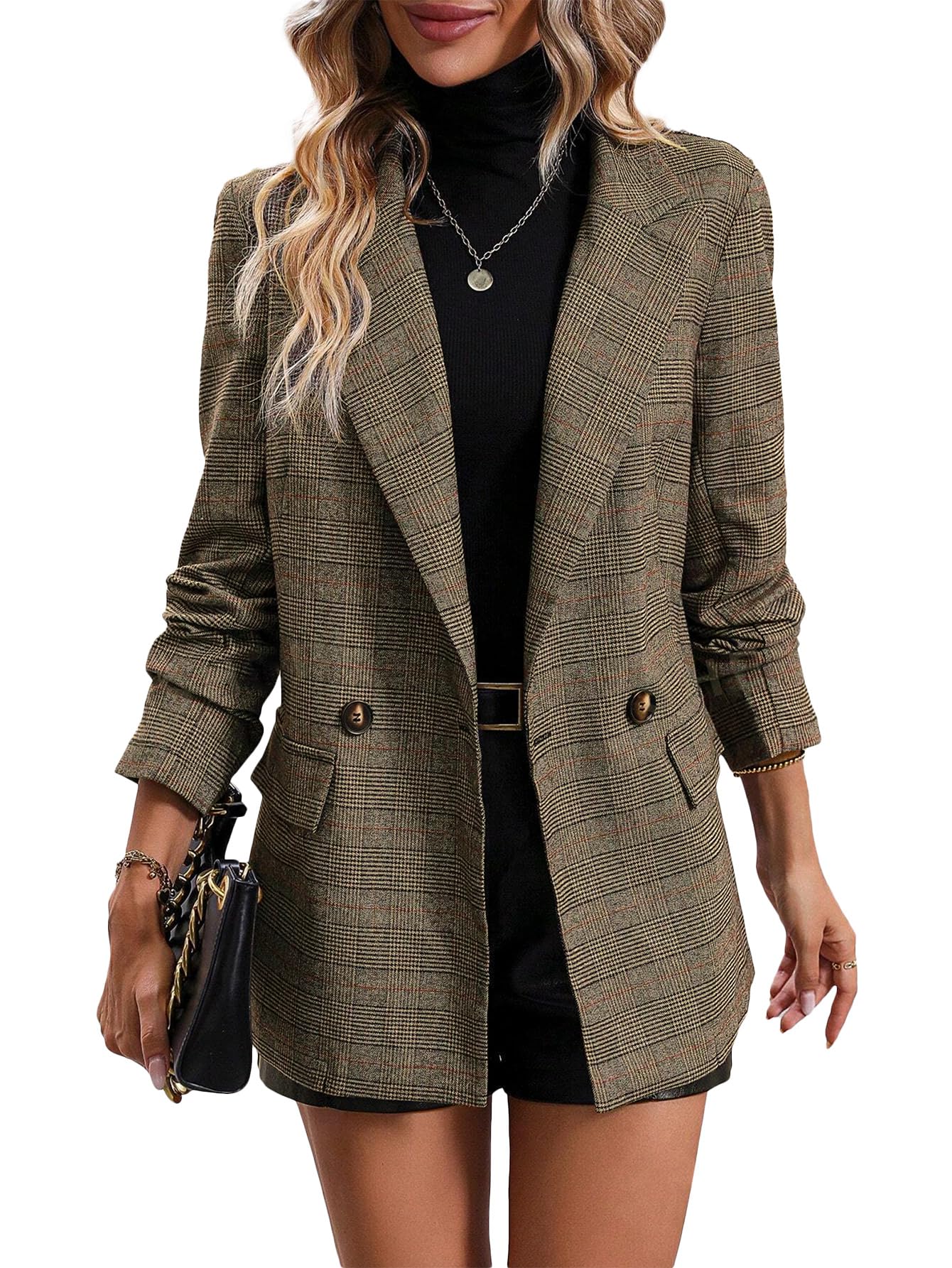
Plaid is the quickest way to make a plain trouser and a white shirt look intentional, and this is the plaid we kept coming back to. It's cut close through the body and tapers at the waist instead of hanging straight, so it reads tailored over a dress and still works open over denim.

What settled it for us is how much jacket you get for the money. The fabric has a dry, lightly brushed hand that photographs like wool, the lining is properly set in rather than tacked, and it came out of the packaging with barely a crease — unusual in this group, where most arrive folded into submission.

Sizing runs close to true, and the taper means you can button it over a blouse without it pulling across the chest. If you plan to layer a heavy knit underneath, take your usual size up.

Fall is where it earns its keep: with boots and a dark roll-neck it looks like the most expensive thing in the outfit, and the plaid is quiet enough for a conservative office. It's the patterned jacket to buy if you already own the solid one.

Bottom line: If you want one patterned blazer that still looks boardroom-appropriate, this is it: crisp plaid, a waist that tapers, and a finish that passes for far more money.

3

ebossy Houndstooth Blazer

ebossy Houndstooth Blazer

Polished business casual

Our Score 8.4/10
Check Price

Worth Noting

  • Runs small through the chest
Brand
ebossy
Closure
Double-breasted
Pattern
Houndstooth plaid

The lining is the first thing you notice. It's a smooth, silky layer rather than the stiff polyester you find in most jackets at this level, and it changes how the blazer goes on — over a sweater it slides instead of dragging, and against a bare arm it doesn't scratch.

The build is why it's on this list. Seams sit flat, the double-breasted front holds its shape instead of sagging open, and the cloth has enough weight to hang properly from the shoulder. Worn closed, the extra layer across the chest is warm enough for a cold office.

For business-casual offices this is close to ideal. The houndstooth is quiet enough for a client meeting and interesting enough that you don't need much else, it photographs beautifully, and the busy pattern hides a crease better than a solid does.

It ships folded, so plan on a real steam before the first wear; once it relaxes, the fabric looks far more expensive than it is. On a cold morning that extra layer across the chest is the difference between a jacket and a coat.

Bottom line: The tailoring pick: a silky lining, flat seams, and a double-breasted front that holds its shape. Buy it if looking polished matters more than blending in.

4

SSOULM Stretch Blazer

SSOULM Stretch Blazer

Starter work jacket

Our Score 8.4/10
Check Price

Worth Noting

  • Runs small, often by a size or two
Lapel
Notch
Fabric
Stretch
Size Range
S–3XL

This is the least expensive blazer we recommend, and it's the one we point to when someone needs a jacket for an interview next week and doesn't want to think hard about it. It does the job: light, stretchy, soft against the arms, and easy to dress up over a shell top or down over a tank and jeans.

The fabric is closer to a ponte knit than a suit cloth. It moves with you, it doesn't scratch, and it hangs without padding or stiffness, which is why it stays comfortable through a full day at a desk. The flip side is shape: there's no shoulder structure and no canvas, so it skims the body rather than defining it. On a narrow frame that's an easy, modern look; if you want a jacket that squares your shoulders, this isn't it.

The colors are the other reason it's here. The red and pink are genuinely vivid rather than washed out, and the black and white are the ones that will earn their keep. Treat it like the stretch it is: cold wash, hang to dry, and skip the dryer entirely.

It's the jacket you buy when the budget is the constraint and you'd rather put the difference toward shoes. Just measure before you order — this one is covered in the drawback below, and it's the only thing that trips people up.

Bottom line: The least expensive jacket here, and a good one for an interview you booked this week — light, stretchy, and easy to wear all day.

5

Hybrid & Company Office Blazer

Hybrid & Company Office Blazer

Forgiving everyday fit

Our Score 8.0/10
Check Price

Worth Noting

  • Unlined, with visible seams when open
Brand
Hybrid & Company
Style
Office blazer
Fabric
Stretch

Anyone who has buttoned a blazer over a soft middle knows the choice: leave it open and feel unfinished, or fasten it and feel every button. This Hybrid & Company jacket is built for that moment. The fabric gives, the cut skims rather than grips, and it stays comfortable when you sit down.

It's the most forgiving fit here, and that's the entire reason it made the cut. The stretch runs through the body and the sleeves, enough that reaching across a desk or driving doesn't pull at the armhole, and it's light enough to forget you're wearing it by mid-afternoon.

The trade is polish. This is a soft, stretchy jacket rather than a structured one, so it looks best worn open over a shell or a thin knit, where the stretch reads as ease rather than as a lack of tailoring. The lapels can sit flat instead of rolling, and it will never look bespoke.

Where it wins is repetition. It's the one you'll wear to the grocery store, not just the office, and that's the highest compliment a work jacket can get. Wear it with the matching trousers for a suit-ish effect, or with dark jeans on a Friday.

Bottom line: The forgiving one: stretch through the body and sleeves makes it the jacket to buy if you want to keep it on all day rather than take it off the moment you sit down.

6

CRAZY GRID Double-Breasted Blazer

CRAZY GRID Double-Breasted Blazer

Dressy evenings

Our Score 8.2/10
Check Price

Worth Noting

  • Runs small through the chest and shoulders
Style
Business casual
Buttons
Gold-tone
Closure
Double-breasted

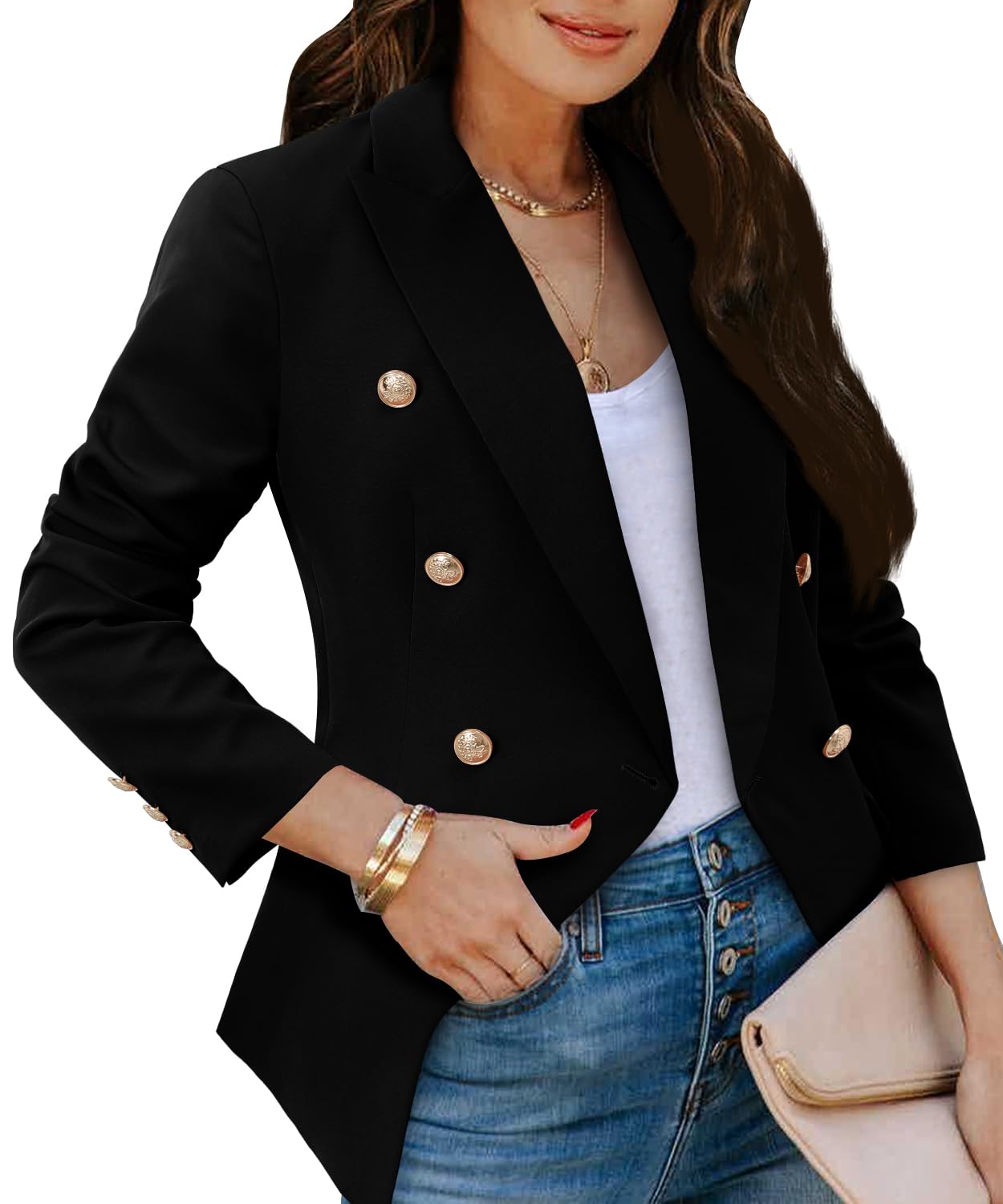
Gold buttons are a commitment. On the wrong jacket they read band uniform; on this double-breasted CRAZY GRID blazer they're the reason it works — sharp against navy or white, and dressy enough that you can leave the necklace at home.

The cloth is heavier than most of the jackets here, with a satin lining, and the double-breasted overlap gives it a shape that holds rather than drapes. Buttoned over a slip dress it's an evening jacket; open over a plain top and straight trousers it's a strong layer for a dinner that isn't formal.

It does hold a crease from shipping, and those wrinkles take a proper steamer to release rather than a quick shake-out, so plan on that before the first wear. The heavier fabric also makes it a fall and winter jacket; in a warm office you'll want it off by lunch.

Where it beats everything else here is after dark. The weight and the metal buttons do the styling for you, so a black tee and dark trousers are enough, and unlike the softer jackets on this list it still looks dressed at nine in the evening.

Bottom line: The evening jacket of the group: gold buttons, heavy cloth, and enough structure to make a plain tee and trousers look deliberate after dark.

7

ZESICA Open-Front Blazer

ZESICA Open-Front Blazer

Casual layering

Our Score 8.6/10
Check Price

Worth Noting

  • Open front with no closure
Brand
ZESICA
Style
Fall business casual
Closure
Open front

The leopard lining is the whole point. Roll the cuffs once and you get a flash of print at the wrist, the kind of detail that makes a plain black blazer look like you thought about it.

It's an open-front jacket, so there's no closure to fight with: it layers over a slip dress or a fine knit and stays where you put it. The front pockets are real and lined, which is less common than it should be, and the body is cut boxy on purpose so it skims instead of shaping.

What keeps it out of the top tier is range. The boxy cut swallows a defined waist, and it works over a dress or jeans rather than over tailoring. We like it as the third blazer in a rotation — the one you throw on for a Friday — rather than the jacket you build a work wardrobe around.

Fit runs true and slightly generous, so if you're between sizes, take the smaller. Worth knowing too: the shoulder is lightly padded, which is what gives it that boxy line, so it's not the jacket for anyone who wants a soft, unstructured shoulder.

Bottom line: A layering jacket with a leopard lining that flashes at the cuff — fun, well made, and best bought as a third blazer rather than your only one.

8

Mina Self Plaid Blazer

Mina Self Plaid Blazer

Oversized fall layers

Our Score 8.6/10
Check Price

Worth Noting

  • Sleeves run long and wide
Brand
Mina Self
Style
Business casual
Pattern
Plaid houndstooth

This one is cut big, and that's the point. It's a boyfriend-shape plaid that hangs from the shoulder rather than following the body, so it layers over a chunky knit or a hoodie without strain.

The pattern is matched across the front seams, which is exactly the detail that separates a considered jacket from a printed one. You notice it when it's off; here it lines up.

Weight sits in the middle, warm enough for a cool office and light enough that you can push the sleeves up on a mild afternoon. It's an October-to-March jacket rather than a year-round one.

On a narrow or petite frame it will read oversized rather than tailored, which is a look, not a fault — just know which one you're buying. On taller frames, or over layers, it's the most character in this group for the least effort.

Bottom line: A deliberately oversized plaid that layers over knits and looks far better made than its price — buy it if you want a fall jacket with some character.

How We Wore, Measured, and Stress-Tested 12 Blazers

We started with a list of about 60 blazers and cut it down using the two things a product page can't fudge: the fiber content on the tag and whether the brand publishes real garment measurements. Anything that hid its fabric blend, came in a single fit with no size chart, or listed only model stats got dropped. Twelve made it to testing, and each was worn for at least three full days over eight months — at desks, on commutes, through video calls, out to dinner, and stuffed into a tote for a weekend trip.

Sizing came first, because that's where most returns come from. We laid every jacket flat and measured the shoulder seam, the sleeve from shoulder to cuff, and the body length, then compared those numbers to the size chart. Two testers of different heights wore the same size to see where the cuffs actually landed — at the wrist bone, at the knuckle, or past the thumb.

Then we moved in them. We reached across tables, drove, typed for hours, and raised both arms overhead to see whether shoulders pulled or hems climbed. At the end of each day we checked elbows and seats for bagging, since stretch is only useful if it springs back. To judge wrinkles, we balled each blazer into a tote for an hour, shook it out, and gave it 20 minutes on a hanger before deciding whether it needed a steamer. Finally, every jacket was turned inside out — we counted seams, tugged the lining at the armscye, pulled at the buttons, and checked whether the pockets were real or stitched shut. Eight months in, the ones still holding their shape are the ones below.

How to Choose a Blazer That Actually Gets Worn

Fit Starts at the Shoulder, Not the Size Tag

Ignore the size you wear in tops. A blazer's shoulder seam should land at the edge of your shoulder bone — if it hangs past it, the jacket is too big whatever the tag says, and if it bites, sizing up won't fix the armhole. Waist, hem, and sleeve length are all things a tailor can adjust; the shoulder is the one measurement you have to get right off the rack.

When a jacket in this category runs small, it usually runs small through the chest and shoulder first, so try it on over the thickest thing you'd realistically wear underneath. If it only closes with a camisole on, it's a summer jacket.

Lined, Unlined, or Somewhere Between

A full lining lets a jacket slide over a blouse, keeps the front panels from collapsing, and adds a little warmth — and it's the fastest way to tell a considered jacket from a cheap one. Unlined styles are cooler and lighter, but they can cling to a knit and they show their seams when worn open.

If you run hot or work in a warm office, an unlined or half-lined jacket is the sensible buy. If you want one jacket that looks polished in a meeting, pay for the lining. Double-breasted fronts add a second layer across the chest, so size up if you're full-busted.

Sleeves Are the Alteration That Saves a Jacket

Sleeve length is the most common complaint about blazers and the easiest thing to fix: a tailor shortens from the cuff in a day or two, and the jacket suddenly looks made for you. The trap runs the other way. Short sleeves cannot be lengthened, and a cuff with working buttonholes is far more work to alter because the buttons have to be moved.

If you have long arms, check the sleeve measurement before you order rather than after. If you have short arms, buy the jacket you like and budget for the tailor — it's a small job with a big payoff.

How Many Blazers You Actually Need

Two covers most wardrobes: one solid in navy, black, or gray that reads professional, and one with pattern or texture for the days you want to look like you thought about it. Tweed and plaid do more work in fall and winter than a third black jacket ever will.

If you're only buying one, buy the solid. And don't count an open-front style as your work jacket — it's a layering piece for over a dress or a knit, not a substitute for something with a closure.

Weight and Season Matter More Than You Think

Heavier cloth hangs better and looks more expensive, but it's warm on a crowded train and it's a cool-weather jacket. Lightweight stretch styles pack flat, travel well, and stay comfortable in a heated office — at the cost of structure and the crisp shoulder line.

Think about where the jacket will spend its day. A cold open-plan office and a long commute pull you in different directions, and the answer for most people is a mid-weight jacket plus one heavier patterned option for the coldest months.

Frequently Asked Questions

Final Verdict

If we were buying one blazer this fall, it would be the PRETTYGARDEN: soft shoulders, a lined body, and a cut that flatters without feeling like armor, at a price that leaves room for a second jacket later.

Spend more only if tailoring is the point — the ebossy's silk lining and flat seams make it the better jacket for a conservative office. Everyone else can start with the top pick and stop looking.