Nails

Best Base Coats of 2026

A base coat does two jobs, and only one of them gets advertised. It bonds color to the nail plate so polish grips instead of sliding off, and it puts a barrier between pigment and your nail bed, which is why a dark red doesn't leave yellow stains behind. Skip it and even a good lacquer starts lifting at the edges by day two. Whether a base coat works rarely shows on application day; it shows up on day four, in the shower.

Nobody warns a first-time buyer: a good base coat feels slightly tacky, not slick, when color goes on — too wet and the brush drags streaks, and a few stayed sticky for half an hour. My team and I spent four months with 16 base coats, traditional lacquer formulas, gel bases cured under a lamp, and two-in-one bottles that double as top coat. What separates the winners is the exit. The best ones let color come off cleanly with remover instead of peeling away in one wrong sheet, and the picks below earned their place on both counts.

1

Orly Bonder Base Coat

Top Pick
Orly Bonder Base Coat

Long-wear lacquer

Our Score 9.2/10
Check Price

Worth Noting

  • Tinted formula can leave a yellow cast on bare nails
Cure
Air-dry, no lamp
Size
0.6 fl oz
Type
Rubberized base coat
Finish
Tacky grip film

Orly Bonder goes on like an ordinary clear base and then never quite dries down. It keeps a faint rubbery tack, and that is the mechanism rather than a mistake: color grabs the sticky surface instead of sliding around on something slick, and the first coat of polish locks the whole thing together. One coat is enough, there is no lamp involved, and you can start painting within a minute or two.

Wear is why it takes the top spot. Of the air-dry base coats here, this is the one we trust to hold a manicure together on the days that actually test it: washing up, hot showers, hours at a keyboard. Where the others start lifting at the sidewalls and tips by midweek, Bonder keeps the color sealed down and makes a mid-priced polish behave like a better one.

The tack is worth expecting rather than fighting. Bonder never dries to a slick film, so it is not a base coat you can wear alone as a glossy clear. It wants color and a top coat over it, and the finish you end up with is whatever that top coat gives you.

Bottom line: Our pick if you want a manicure to survive the week: Bonder's rubbery grip is the strongest adhesion story in this group, and one thin coat is all it takes.
2

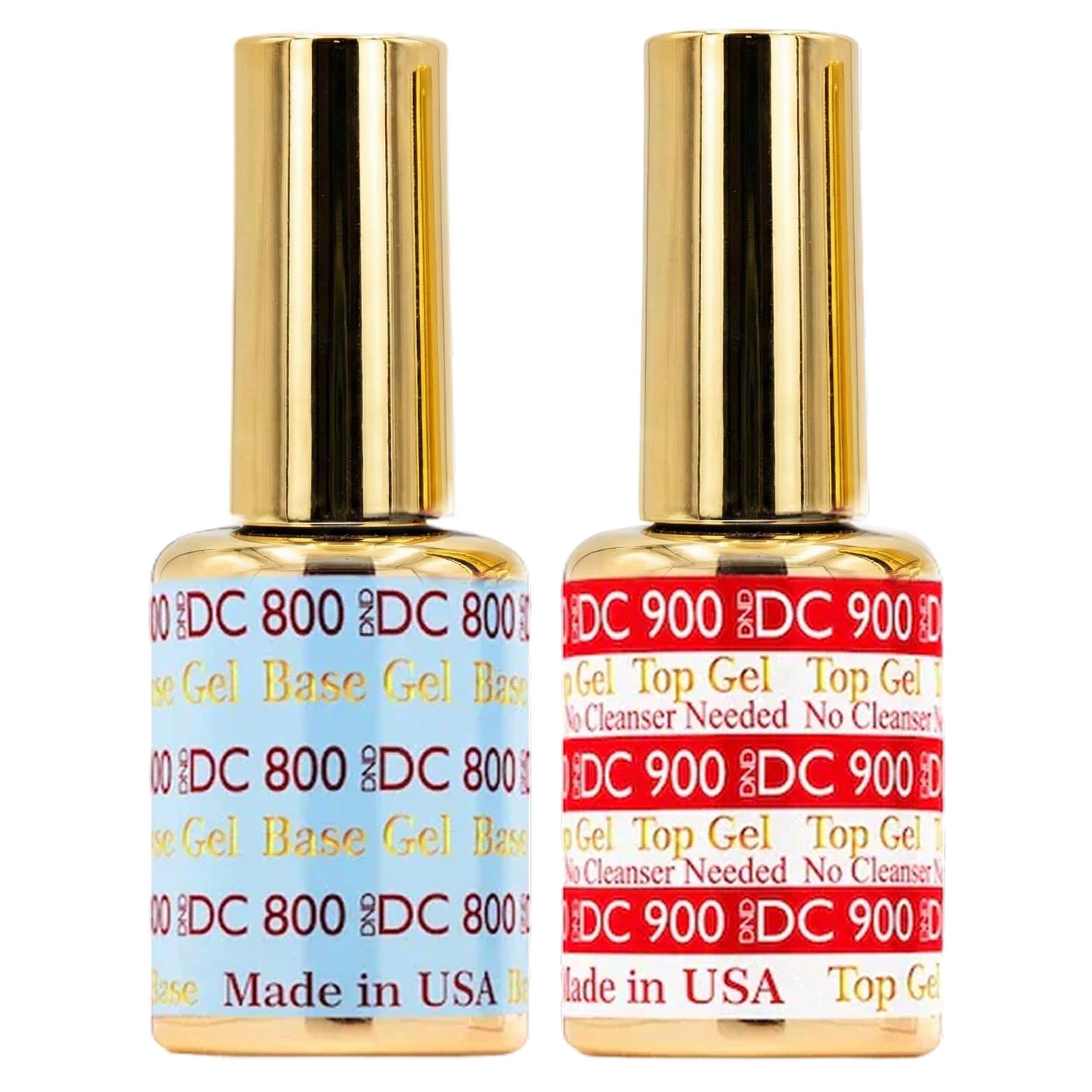
DND Base and Top Gel Duo

DND Base and Top Gel Duo

Salon-style gel sets

Our Score 9.6/10
Check Price

Worth Noting

  • Requires a UV or LED lamp, sold separately
  • The priciest set in this group
Cure
30 sec LED / 2 min UV
Type
Gel base and top duo
Finish
No-cleanse gloss
Wear Claim
Up to 21 days

If you already own a lamp, this is the gel duo we point people to first. DND is the sort of brand that turns up on salon shelves, and the pair is built like it: the base grips, the top cures hard and glossy with no sticky layer to wipe, and both take 30 seconds under LED instead of the two minutes a UV-only setup wants.

No-cleanse is the detail we appreciate most. There is no inhibition layer to wipe off the top, so you finish a set and you are actually finished: no alcohol, no lint, no risk of dulling the shine you just cured. The base also levels well enough to carry chrome powder or dip without the patchiness cheaper duos leave behind.

The 21-day claim is a ceiling rather than a promise, and the shine outlasts the color for most people. What we tell a first-timer is that thin coats and a bone-dry nail matter more than the bottle. Flood the base on and any gel lifts at the cuticle, this one included.

Bottom line: The gel duo we reach for when a set needs to look salon-done: 30-second LED cures, a no-cleanse top that stays glassy, and the most consistent wear of the gel sets here.

3

Sally Hansen Double Duty

Sally Hansen Double Duty

Cheap everyday manis

Our Score 9.4/10
Check Price

Worth Noting

  • Wear fades around the end of a week
Cure
Air-dry, no lamp
Type
2-in-1 base and top coat
Finish
Clear gloss
Key Ingredients
Panthenol, nylon, pro-vitamin B5

One bottle, two jobs. Sally Hansen's Double Duty goes on before color as a base and over it as a top coat, which means a home manicure needs one fewer purchase on the shelf. For a lot of people that is the entire pitch, and it is a good one.

As a base it is a panthenol, nylon and pro-vitamin B5 formula that smooths the nail surface so color lays flat instead of pooling in ridges, and it dries quickly enough that you are not sitting with your hands fanned out. As a top coat it leaves a hard, glassy film with real shine. Over a cream polish it reads closer to a gel finish than the price suggests.

We recommend it as the everyday bottle, with one honest caveat: a two-in-one never bonds the way a dedicated base does, so it asks more of your prep. Clean, dry, oil-free nails and a thin first coat are the difference between a set that holds and one that lifts in the shower.

Bottom line: The best value here by a wide margin: one bottle that goes under your color and over it, dries fast, and costs less than any other pick in this group.

4

Seche Clear and Vite Set

Seche Clear and Vite Set

Fast-dry manicures

Our Score 9.2/10
Check Price

Worth Noting

  • Noticeable solvent smell while it dries
Cure
Air-dry, fast set
Type
Base and top coat bundle
Includes
Seche Clear + Seche Vite
Use With
Any polish brand

Seche Vite has one famous trick: you paint it over polish that is still tacky and the whole manicure sets in minutes, hard enough to dig in your bag for keys. This bundle pairs it with Seche Clear, the matching base, so you get the full system in one box.

We keep this pair for the nights when speed is the point. Clear is a competent base, thin and quick with no streaking, and it does not tint the nail. But Vite is why you buy the box, and the way it penetrates down through the color to fuse with the base is what makes a home manicure feel finished instead of fragile. Nothing else in this group dries down that fast.

Technique matters more here than with a slower top coat. Vite wants to go on wet and generous, because a thin, mean layer is what leaves the brush marks, and it should wrap the tip of the nail. Wear lands around a week, with longer being a bonus rather than a promise.

Bottom line: Buy it for the top coat: Vite sets a manicure in minutes and fuses through the color to the base, with a clear base underneath that will not tint the nail.

5

OPI Natural Nail Base Coat

OPI Natural Nail Base Coat

Even, smooth base

Our Score 9.4/10
Check Price

Worth Noting

  • About a week of wear before edges lift
  • Priciest air-dry base in this group
Cure
Air-dry, no lamp
Type
Natural nail base coat
Brush
Pro-wide applicator
Wear Claim
Up to 7 days

The brush is the reason to choose this over a cheaper clear base. OPI's pro-wide applicator is flatter and broader than the skinny rounds most base coats carry, so one stroke covers the nail and you are far less likely to flood the cuticle, which is the mistake that makes a manicure lift first.

Underneath it is a classic: clear, fast-drying, and it sets to a slightly hard surface that color sits on rather than sinks into. It is built for natural nails, and on ridged or peel-prone ones the smoothing is what we noticed. Deep reds and near-blacks go on more evenly over it than over bare nail.

Thin coats are non-negotiable. One heavy pass pools at the cuticle and takes much longer to set, so paint two thin layers and let the first lose its tack before the second. Done that way the finish is genuinely flat and the wide brush earns its keep.

Bottom line: Pick this one for the brush: OPI's wide applicator lays an even, streak-free film in a single pass, and the base underneath is smooth and quick for a weekday manicure.

6

AIMEILI Gel Base and Top Set

AIMEILI Gel Base and Top Set

HEMA-free gel sets

Our Score 9.0/10
Check Price

Worth Noting

  • Wear varies noticeably from set to set
Cure
UV/LED lamp
Size
2 x 10 ml
Type
Gel base and top duo
Formula
HEMA-free, TPO-free, vegan

What is not in the bottle is the pitch: no HEMA, no TPO, and a vegan, cruelty-free formula. If you read the back of a gel kit before you buy it, and more people do now, this is the most explicit ingredient list in this group.

In use it is a conventional two-bottle system. The base goes on thin and builds a little, so a ridge or a peel can be leveled before color. The top cures clear with no sticky layer to wipe, which is the detail that makes a home set feel professional. The bottles are 10 ml, on the small side against the 15 and 16 ml sets here.

Curing is quick under a decent LED lamp and the shine holds. Where it varies is adhesion: plenty of sets run close to two weeks without a chip, and some lift at a corner within the first few days. Prep is the lever, and that means dehydrated nails, thin coats, and no oil anywhere near the plate.

We rate it as the best-value HEMA-free option here rather than the most reliable gel in the group. What it rewards is patience: two thin coats with a full cure on each, and it behaves like a kit that costs a good deal more.

Bottom line: The gel set to try if the ingredient list matters to you: HEMA-free, TPO-free and vegan, with a no-wipe top that cures clear, as long as you prep properly.

7

GAOY Glassy Gel Duo

GAOY Glassy Gel Duo

Large gel bottles

Our Score 9.2/10
Check Price

Worth Noting

  • Thick coats stay tacky after curing
Cure
About 60 sec UV
Size
2 x 16 ml
Type
Gel base and top duo
Finish
No-wipe glass gloss

Sixteen milliliters a bottle is the first thing you notice here, noticeably more than the 10 ml sets in this price bracket, in brushed-silver bottles that look more expensive than they are.

The top coat is the standout. It cures rock hard and glassy, and it does not flatten or dull the color underneath, which is where cheap no-wipe coats usually show their cost. The base is a no-wipe foundation too, so there is no wiping step at either end of a set.

Patience is the price with this one. Thin coats set in about a minute under a good lamp, while thick ones stay tacky, and an old or weak bulb will make the formula look at fault. If your sets have ever come out gummy, this is a product that will show you why.

We like it as the value option in the gel half of this group, with the lamp treated as part of the purchase rather than an accessory. Get the coats thin and the cure right and it gets close to the four weeks the box promises. Rush either step and you will blame the bottle for something the lamp did.

Bottom line: The gel set to buy if you go through bottles quickly: 16 ml each, a top coat that cures glass-hard, and a gloss that does not dull the color under it.

8

Beetles Gel Base and Top Set

Beetles Gel Base and Top Set

First gel kit

Our Score 9.2/10
Check Price

Worth Noting

  • Can peel within a few days
Cure
UV/LED lamp
Size
2 x 15 ml
Type
Gel base and top duo
Finish
No-wipe gloss

The cheapest way to get a base and a no-wipe top in one box is usually this set, which is why so many first gel kits start here. Two 15 ml bottles, both cured under a lamp, and a glossy finish that photographs like a salon set.

Application is genuinely beginner-friendly. The base is fluid enough to spread thin, the top self-levels instead of dragging, and neither leaves a sticky layer once cured. On well-prepped nails the finish is the glass-like surface the pictures promise.

Wear is the gamble, and it is why this sits below the DND duo for us. If you change color weekly and do not need three weeks out of a set, the trade is fine. One practical warning: the base thickens in a cold room and can get clumpy enough to snap a brush, so warm the bottle in your hands for a minute before you start.

Bottom line: A solid first gel set: two 15 ml bottles, a no-wipe top that cures glassy, and a price that makes experimenting with color feel cheap.

How We Tested 16 Base Coats, One Manicure at a Time

We started with more than 30 base coats on the market — drugstore bottles, salon formulas, gel bases sold alongside a lamp-cured top coat, and the two-in-one products people buy when they don't want to choose. From that pile we cut anything with recurring complaints about lifting, anything sold only in bulk multipacks, and anything that overlapped heavily with a formula we already owned. That left 16, which we tested over four months.

Testing looked like a Sunday night at my kitchen table, because that's when most of us actually paint our nails. Each tester, including two with oily, peel-prone nail beds and one with ridged nails, did a full manicure every week with the same two coats of red over a different base, so the only variable was the base itself. We timed how long it took to go from wet to tacky by touch at two, five, and ten minutes, watched whether the color dragged or streaked where the base was still soft, noted whether the red covered in two coats or needed a third, and checked shine under the bathroom light once the top coat was on.

The rest of the week was the real test: dishes without gloves, typing, laundry, a couple of us traveling for work. Every day we checked the tips and sidewalls for lifting and wrote down where the first chip appeared. On day seven — or earlier, when a base gave up — we removed everything with straight acetone and noted how long it took, whether the polish came off in flakes or one clean sheet, and whether any pigment was left behind on the nail. Gel bases got a second round under a 48-watt lamp to see whether cure time and lamp strength changed the results.

How to Choose a Base Coat

Lacquer or gel comes first

Air-dry and gel base coats are not interchangeable. A gel base needs a UV or LED lamp to cure, and a lacquer base will never set hard enough under a gel color. If you paint your nails at the kitchen table, buy in the air-dry column, where Orly Bonder, Sally Hansen and Seche sit. If you already own a lamp, the gel duos here are where your money goes. Plenty of people keep one bottle of each, and that is not indecision, it is two different manicures.

Adhesion is the whole job

What a base coat buys you is grip. Rubberized formulas stay faintly tacky so color physically sticks to them; clear bases dry harder and smoother, which suits ridged or peeling nails where a flat surface matters more than tack. Either way, thin beats thick. A flooded base pools at the cuticle, and that pool is what lifts first, no matter how good the formula is.

Prep explains most failures

Wipe each nail with alcohol or a dehydrator, push back the cuticles, and do not over-file. A shiny, over-buffed nail plate gives polish nothing to grab. Oil is the enemy, so save the hand cream until the set is finished, and cap the free edge with base as well as color. If your manicures routinely peel off in one sheet, the formula is rarely the culprit.

What bottle size and formula buy you

Gel bottles here run from 10 to 16 ml, and the difference is real if you do a set every couple of weeks: the 16 ml option stretches furthest per manicure. Lacquer bottles are smaller but go further. Formula matters if your nails have reacted badly before, and the HEMA-free set here is the explicit choice. Check the cure requirement before you fall for a finish, because a glassy top coat is only as good as the lamp under it.

Frequently Asked Questions

Final Verdict

If you want one bottle and no equipment, buy Orly Bonder. Its rubbery grip is the strongest adhesion story in this group, it layers under the polish you already own, and a week of wear is realistic rather than optimistic.

For gel, the DND duo is the safer spend: 30-second cures, a no-cleanse top coat, and the most consistent wear among the gel sets here. If a gentler formula matters more to you than maximum wear, AIMEILI is the one to try, as long as you are willing to do the prep.