Skincare

Best At-Home Microneedling Devices of 2026

At-home microneedling sounds like a shortcut to smoother, bouncier skin until you picture dragging a tiny bed of needles across your face. The right tool should feel like a firm massage, not a dare; the wrong one leaves you red, itchy, or unconvinced anything happened. A good microneedling tool makes gentle, even passes possible and works with the serum or moisturizer you put on afterward, rather than against it. We've spent four months with 14 rollers, pens, and kits to see which ones get that balance right.

I started on my jawline, where I notice texture first, and learned that needle length, pressure, and aftercare matter more than the number of needles on the box. Shorter needles are the sensible starting point for home use, and a light hand beats a heroic one. We watched for pain, irritation, and how skin felt and looked the next morning, and we paid attention to included serums, especially fragrance, which can turn a tingle into a sting. The picks below made the routine feel manageable rather than medical.

1

Angel Kiss 4-in-1 Derma Roller Kit

Top Pick
Angel Kiss 4-in-1 Derma Roller Kit

Face and body

Our Score 8.8/10
Check Price

Worth Noting

  • Costs more than the single-head rollers here
  • Two of three heads go unused on a face-only routine
Storage
Disinfection case
Needle Depths
0.25 mm and 0.3 mm
Heads Included
Three (1,200, 720 and 300 needles)
Package Weight
7.37 oz

Three heads, one handle: 1,200 needles at 0.3 mm for body work, 720 at 0.25 mm for the face, and a 300-needle head small enough for the sides of the nose and the space above the cheekbones. That's the shape of the Angel Kiss kit, and it starts from a problem anyone who has rolled for a while will recognize — a face, a thigh and a nostril don't want the same head.

The 720-needle head is the one to start with. It's 0.25 mm, it covers a cheek in a couple of passes, and it's mild enough that a first session doesn't feel like a mistake. The small head is the detail we ended up appreciating most: it gets along the sides of the nose and under the brow bone, which is exactly where a wide roller either skips or drags. The 1,200-needle body head is the one for thighs, knees and stretch marks, and it's a clear step up in feel.

The case is more than packaging. It holds the head you're using in alcohol between sessions, so cleaning happens before the roller goes back in the drawer rather than a week later when you remember. Swapping heads is quick enough to do mid-session, which matters when you're moving from face to body in one go.

What settles it for us is the routine the kit makes possible: one handle, three heads and a cleaning step built into the case. The 0.3 mm body head is the one to grow into rather than open with — the 720-needle face head is where a first session belongs, and everything after that is repetition.

Bottom line: We recommend the Angel Kiss kit first for anyone new to at-home microneedling: three heads cover face, body and small areas, and the disinfection case makes cleanup part of the routine.

2

Sdara Derma Roller

Sdara Derma Roller

Everyday face rolling

Our Score 8.8/10
Check Price

Worth Noting

  • Single head, with no body or detail option
Weight
1.44 oz
Included
Storage case
Dimensions
1.57 x 6.5 x 1.89 inches
Roller Type
Manual derma roller

A derma roller only earns its space if you actually keep using it, and this is the one here that makes that easy. It weighs almost nothing, it arrives in its own case, and the roll itself feels closer to a tingle than an event — the kind of thing you do while the kettle boils rather than a session you schedule.

The handle is slim and long enough to get up into a hairline and along a jaw without much aiming, and the listing pitches it for face, hair and beard, which matches how it handles. We used it after a shower with a hyaluronic serum, and the smooth, faintly tight feeling afterward is why it stayed in reach. There are no settings, no cartridges and nothing to charge.

One thing to settle before you roll: the listing doesn't state a needle depth anywhere. Check the number on the box or the insert. If it's 0.25 mm or 0.3 mm, it's a face tool exactly as described; if it's deeper, keep it for the body and buy a shallower head for your cheeks. That's the only hesitation we have, and reading the packaging answers it without spending more.

Bottom line: Buy the Sdara if you want one light, cased roller to try at-home microneedling without committing to a whole system.

3

Eva Naturals Peptide Serum Kit

Eva Naturals Peptide Serum Kit

One-box routine

Our Score 8.6/10
Check Price

Worth Noting

  • The scent is the most divisive thing about it
Needles
540
Kit Contents
Peptide serum, roller and carrying case
Needle Depth
0.25 mm
Package Weight
7.83 oz

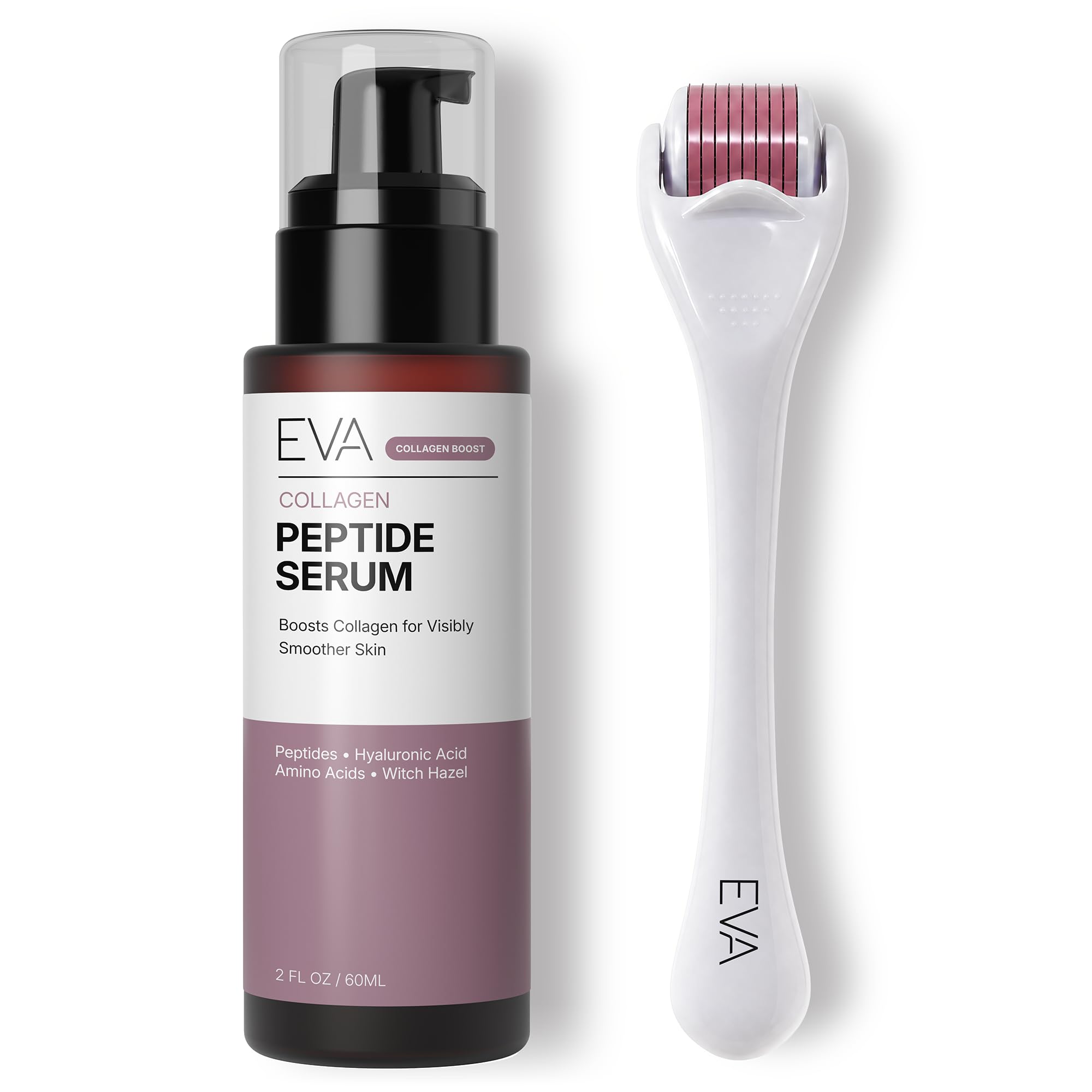
You're buying two things here: a full-size peptide serum and a 540-needle, 0.25 mm roller, packed together in a carrying case. The honest way to think about the kit is that you're getting a formula you didn't choose alongside a tool you probably would have picked anyway — which is either the appeal or the deal-breaker, depending on whether you already have a serum you trust.

The pairing works because 0.25 mm is a mild depth. You roll, then press the serum in over the micro-channels, and the bottle is large enough to outlast the honeymoon phase by a wide margin. Skin feels soft and hydrated the next morning, and the case keeps the roller and the bottle as one object in the cabinet — a small thing, but we've found it's the difference between a routine and a drawer full of parts.

One caution, and it's about the formula rather than the roller: on reactive skin it can sting, and rolling plus an unfamiliar serum is a lot to introduce in the same week. Patch-test on the jaw for two nights before you roll, and if it stings going on, rinse it off instead of pushing through. If you already have a serum that works, buy a roller on its own and keep the formula you know.

Bottom line: Worth it if you want one box that covers rolling and what goes on afterward; skip it if you already have a serum you love.

4

Glemme Microneedling Pen

Glemme Microneedling Pen

Adjustable depth

Our Score 9.4/10
Check Price

Worth Noting

  • Priciest device here by a wide margin
  • Depth dial makes overdoing it easy
Device Type
Powered microneedling pen
Needle Depth
0.25 mm
Package Weight
15.5 oz
Package Dimensions
7.91 x 5.24 x 2.91 inches

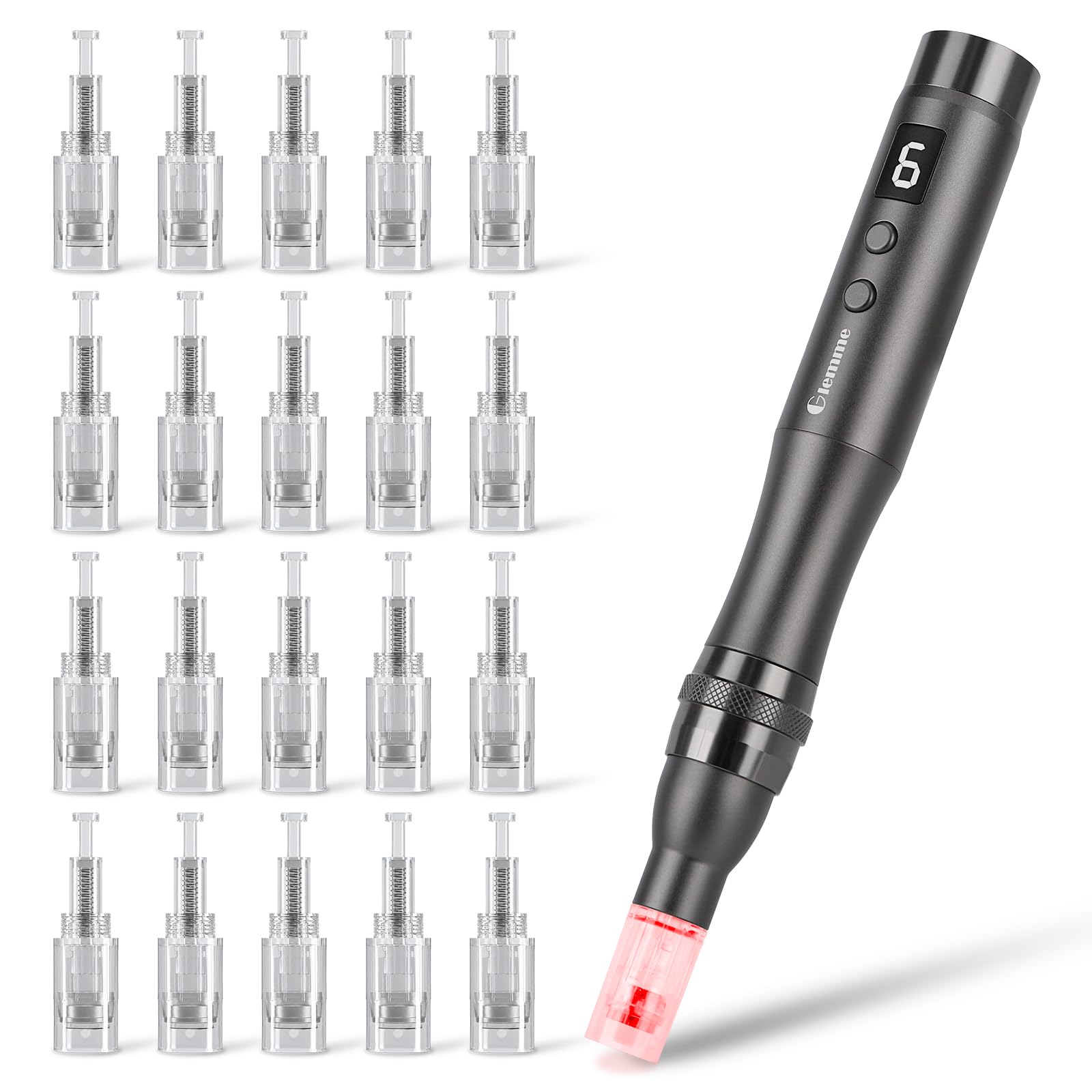
A pen is a different animal from a roller. Instead of a fixed head that dulls, you get disposable cartridges and dials, so depth and speed become choices you make at the start of a session rather than constants you work around. That's the whole case for the Glemme, and it's the only powered device in this set.

What's in the box matters nearly as much as the pen: cartridges in two pin counts, a charging cable and a booklet that walks through a first session. The higher pin count covers ground; the lower one concentrates the same action into a smaller area for lines and edges. We read the booklet before touching the dial — the settings are the entire point here, and guessing at them is how a mild session turns into a red face.

It's comfortable to hold and steady in the hand, and the depth adjustment is genuinely fine-grained, which cuts both ways: the same dial that lets you work gently over a cheekbone lets you go too far along a jaw. Treat the shallowest setting as home base. The package is also the heaviest thing here by a wide margin, so it lives in a cabinet rather than a travel bag.

If you've been rolling for a few months and want to work on specific lines rather than whole areas, the control is worth the money. If you haven't started yet, it isn't — a pen hands you more rope, and the learning curve is real. That's the trade: capability in exchange for attention.

Bottom line: The pick for anyone who has outgrown a roller: adjustable depth and speed, disposable cartridges, and a real learning curve.

5

The Beard Club Derma Roller

The Beard Club Derma Roller

Beard and scalp

Our Score 9.0/10
Check Price

Worth Noting

  • A 540-pin head is slow going on large areas
Weight
1 oz
Needles
540 titanium-coated
Included
Storage case
Needle Depth
0.25 mm

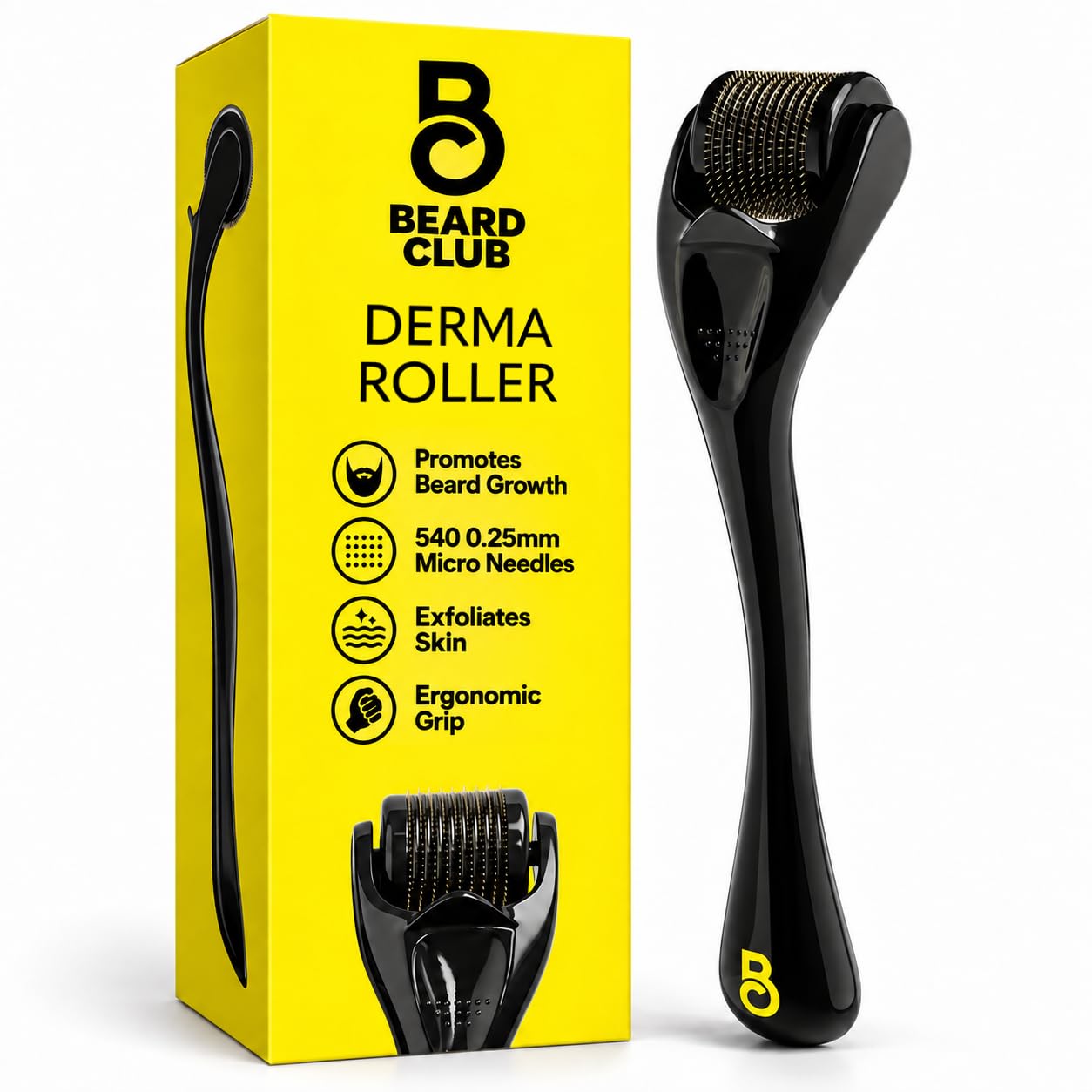
The Beard Club roller states its depth plainly — 0.25 mm, 540 titanium-coated needles — and that transparency is worth something in a category where plenty of listings leave the number out. On a beard line or a scalp, 0.25 mm is mild enough to use regularly, which is what hair-focused rolling actually requires.

It weighs an ounce, which makes it the lightest tool in this set, and that matters more than it sounds when you're reaching around to the back of your own head. The case is included, the handle is grippy without being bulky, and the same head works along a jaw and up a hairline. On the scalp the roll is more of a wake-up than a sting.

For hair and beard use, this is the one we point to. The depth is sensible, it's light enough to work the back of a scalp without your arm aching, and it costs less than most of the tools here — which makes it easy to keep a second one in a gym bag without thinking about it.

Bottom line: The Beard Club roller is the one to buy if your goal is a fuller beard or a scalp routine: stated 0.25 mm depth, 540 pins and a case at the low end of the range.

6

Koi Beauty 200-Needle Derma Roller

Koi Beauty 200-Needle Derma Roller

Precision work

Our Score 9.2/10
Check Price

Worth Noting

  • Costs close to the top of the manual rollers here
Weight
2.68 oz
Needles
200 individual titanium pins
Included
Storage case

Two hundred individually set titanium pins in a head that's sparser than the 540-pin rollers that dominate this set. Fewer needles per pass is the whole proposition: each pass is a bit more deliberate, and you feel individual pins rather than a general scrub.

That's the reason to pick it. If a 540-pin head feels like a blur across the skin and you'd rather work slowly over one scar or one line, the Koi Beauty 200 rewards a slow hand — we could feel the head track rather than skim. The pins are the other draw. This is the one that reads as engineered rather than stamped, and the included case makes it easy to keep clean between sessions.

Two things to accept. It costs close to the top of the manual rollers here, which is a lot for a tool with no dial and no cartridge. And the pins are the weak point, so store it in the case, keep it off bathroom counters, and don't press harder to compensate for the sparser coverage — that's how a head bends early.

Bottom line: For a slower, more deliberate roll with individually set pins, the Koi Beauty 200 is the one — as long as you're comfortable paying near the top of the manual rollers.

7

Lexi White 0.25 mm Derma Roller

Lexi White 0.25 mm Derma Roller

First-time buyers

Our Score 8.8/10
Check Price

Worth Noting

  • Head can separate from the handle with use
Handle
Rose gold, easy grip
Weight
2.4 oz
Needles
540 titanium
Needle Depth
0.25 mm

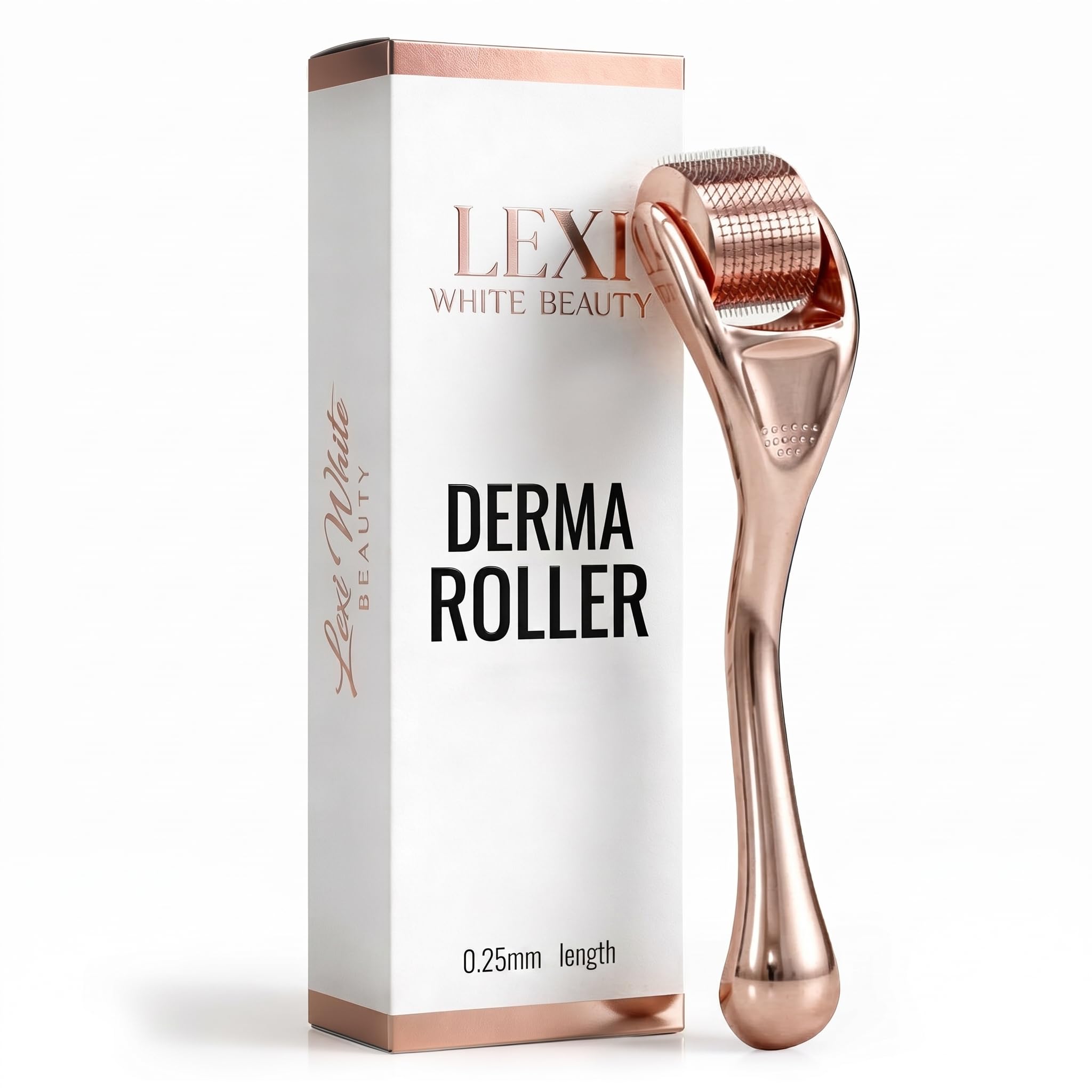
At the bottom of this set's price range you get a stated 0.25 mm depth, 540 titanium pins and a rose-gold handle that's genuinely comfortable to hold — a 2.4-ounce roller that doesn't ask you to learn anything. Nothing essential is missing. The head is as dense as rollers costing more here, and the roll is light enough to do while you're waiting for moisturizer to sink in.

We think it's the right first purchase if you want a month of rolling before deciding whether the habit sticks. One care note: the rose-gold finish doesn't like sitting in alcohol, so wipe the head rather than soaking the whole roller and it'll keep its looks. Expect to replace it eventually rather than refurbish it, which is true of everything on this page.

Bottom line: The cheapest sensible way to try at-home rolling: a stated 0.25 mm depth, 540 pins and a comfortable handle, with build quality as the trade-off.

8

Follicly 192-Needle Derma Roller

Follicly 192-Needle Derma Roller

Hairline and edges

Our Score 9.0/10
Check Price

Worth Noting

  • 192 pins need more passes on large areas
Needles
192 titanium
Included
Protective storage case
Dimensions
5.51 x 0.79 x 0.79 inches
Needle Depth
0.25 mm

The slim head is the whole point: 192 titanium pins at 0.25 mm on a 5.5-inch body that gets along a hairline, into the space above the ear and around the edges of a beard, where a wide 540-pin roller is more surface than you need. We reach for this one when the job is narrow and the roller has to be aimed.

It's gentle on a scalp — more of a prickle than a sting — and the protective case means it can live in a bathroom drawer without the pins collecting lint. The trade-off is coverage: 192 pins take more passes over a cheek or a thigh than a denser head will, so treat it as a detail tool rather than the only roller you own. For a hairline routine, that's exactly the right shape.

Bottom line: Follicly's slim 192-pin head gets into hairlines, brows and beard edges where a wide roller can't, but it won't cover a leg.

How We Tested At-Home Microneedling Tools

We built the shortlist by combing through customer reviews and spec sheets, then filtering by needle length, head size, price, and whether replacement heads or storage cases were included. From that pool, we tested 14 rollers, pens, and kits over four months. Every tester started with a clean, dry face in their own bathroom, usually at night, and used the tool on cheeks, jawline, and forehead with light, even passes, following with the included serum or a plain moisturizer.

We noted drag and snagging on the first pass and the tenth, whether pressure felt sharp or comfortable, and how much redness lingered after we finished. Pain and skin comfort got rated immediately and again the next morning; skin compatibility showed up in who stayed comfortable with a 0.25mm roller and who needed to stop after a few passes. We also checked how skin looked and felt over the following days—whether it seemed smoother, tighter, or just irritated—and whether moisturizer absorbed comfortably or stung.

Because at-home tools are reused, durability mattered as much as the first session. After each use, we rinsed the heads, disinfected them, air-dried them, and inspected the needles for bends or rust; we also checked handles for wobble and cases for whether they actually protected the head. Fragrance was a separate mark: we smelled every included serum, noted whether the scent lingered, and watched for stinging on freshly rolled skin. We also noted how each tool looked and felt in hand—whether the handle was grippy or awkward—because a tool you don't want to pick up won't get used. By the end, the tools that held up were the ones that stayed comfortable, easy to clean, and consistent from week to week.

How to Choose an At-Home Microneedling Device

Depth Comes First

Every device in this set is sold at a cosmetic depth: 0.25 mm almost everywhere, with a 0.3 mm head on the Angel Kiss body roller. That's the range the home tools are built around, and it's the range to stay in while you're learning what your skin tolerates.

The trap is a roller that never states a depth at all. If you can't find the number on the listing, check the box or the insert before your first pass rather than assuming. A roller that turns out to be deeper than you expected is a body tool, not a face tool, and using it on cheeks because it was marketed for faces is how people end up red for days.

Roller, Kit, or Pen

A manual roller is the cheapest way in and the easiest to travel with. A kit such as the Angel Kiss adds heads, so one handle covers a face, a body and the corners between. A pen like the Glemme swaps the fixed head for disposable cartridges and puts depth and speed on a dial.

That control is the pen's whole appeal and also its risk: it lets you change depth session to session, which makes it easy to overdo. Start at the shallowest setting and stay there until you know how your skin responds. Budget for the format, too — cartridges and replacement heads are a recurring cost that a plain roller mostly avoids.

Cleaning and Replacement Decide How Long It Lasts

Needles dull and bend, and a bent pin drags instead of gliding. Rinse the head, soak it in isopropyl alcohol, let it air-dry, then put it back in its case rather than loose in a drawer where the pins take the knocks.

The little case most of these ship with is a protector, not a sterilizer, so it doesn't replace the alcohol step. Lexi White's own care instructions call for replacing the roller periodically, and that advice holds for every device here — a roller is a consumable, not an heirloom.

Match the Head to the Area

Pin count isn't a quality score. A 1,200-pin head is wide and dense enough to work a thigh; a 300-pin head is small enough to sit beside the nose. Buy the widest head you can find and you'll spend your sessions fighting the corners of your face and the space under your eyes.

A useful rule: if you'll only ever roll your face, a 540-pin roller is the sensible default; if you want scalp and body coverage from the same handle, a kit earns its price. If you're chasing a hairline or a scar, the slim 192-pin Follicly does a job the wide heads can't.

Frequently Asked Questions

Final Verdict

For most people starting at home, the Angel Kiss kit is the one to buy. Three heads at 0.25 and 0.3 mm cover a face, a body and the spots a single roller skips, and the disinfection case turns cleaning into part of the routine instead of an afterthought.

Two exceptions worth naming. If you want one light roller for a bag and nothing more, the Sdara does that for less. If you've already been rolling and want depth and speed under your control, the Glemme pen is the upgrade — used shallow, and used slowly.